
Understanding the Purpose and Process of an Annual Roof Condition Evaluation
A formal roof evaluation serves as a comprehensive health check for a building’s primary defense system against the elements. Rather than waiting for interior leaks, ceiling stains, or structural rot to reveal roof problems, an evaluation establishes baseline condition data to track material performance over time.
Building envelope safety standards, such as those outlined in the Existing Building Condition Assessment Guide, emphasize periodic physical examinations to catch minor structural, thermal, and moisture defects before they compromise the interior. In coastal areas across the Space Coast, roofs face relentless UV radiation, salt-laden breezes, high humidity, and intense seasonal downpours. A structured assessment helps property owners maintain weather resistance while planning for maintenance.
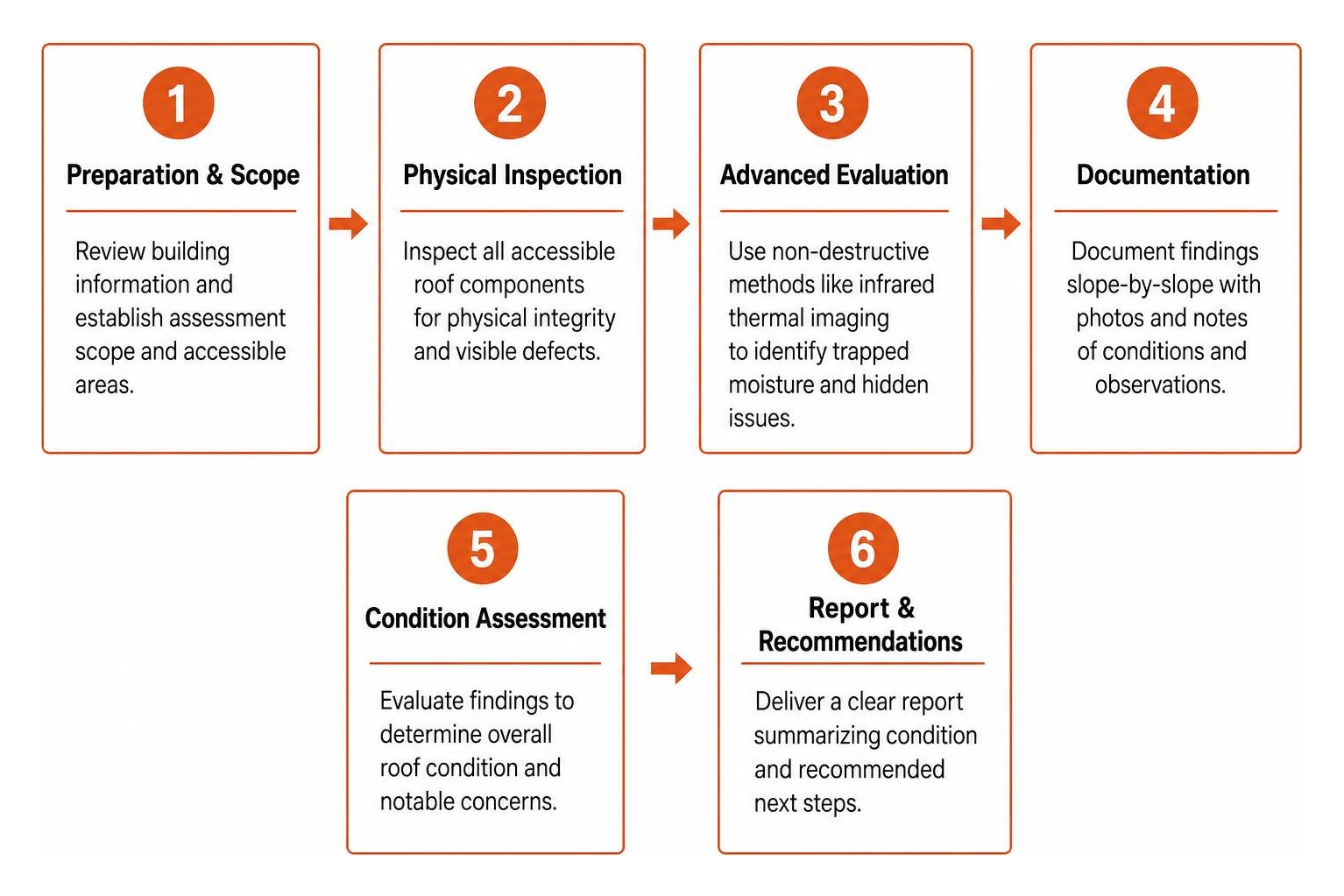
During an evaluation, a qualified professional assesses the physical integrity of all accessible components. This process often incorporates non-destructive testing methods, such as infrared thermal imaging to identify trapped moisture within insulation or underlying decking, alongside slope-by-slope photographic documentation.
Visual Checks vs. Certified Professional Roof Assessments
There is a significant difference between a basic visual glance from ground level and a certified professional roof condition assessment:
- Basic Visual Checks: Often performed quickly with binoculars or a cursory ladder walk, basic checks identify only glaring deficiencies like completely missing shingles or massive tree impact. They rarely uncover underlying water migration, hidden flashing failures, or early membrane degradation.
- Certified Professional Assessments: Conducted by licensed roofing contractors who follow standardized inspection frameworks. These assessments include walked slope analyses, drone photography, physical tactile testing of seals and flashings, attic intrusion checks, and formal written reports that satisfy lenders and insurers.
For homeowners dealing with coverage policies or disaster recovery, understanding specific insurance roof inspection requirements is vital. Unbiased diagnostic reporting provides clear documentation of pre-existing maintenance, helping clarify when sudden storm activity has caused isolated physical damage.
Roof Certification vs. Roof Warranty: Knowing the Difference
Property owners often confuse a roof certification with a manufacturer or workmanship warranty, but the two serve distinct purposes:
- Roof Certification: A point-in-time snapshot of the roof’s current physical condition issued by an inspector or roofing company. It typically states that the roof has an estimated remaining useful life (often 2 to 5 years) and is currently free of actively leaking defects under normal conditions. It is commonly used during real estate transactions or insurance underwriting.
- Roof Warranty: A formal contractual guarantee. A manufacturer material warranty covers product defects over a specified duration, while a contractor workmanship warranty covers installation errors.
Most manufacturer warranties contain maintenance mandates requiring property owners to perform and document routine evaluations. Skipping these regular reviews can give manufacturers grounds to deny claims if premature failure stems from unaddressed debris accumulation, clogged drainage, or unauthorized alterations.
The Roof Condition Index (RCI) and Decision Framework
Engineering and asset management practices frequently employ a Roof Condition Index (RCI) to eliminate guesswork from property maintenance. Following industry standards like the DS 1-32 Inspection and Maintenance guidelines, an RCI translates complex physical observations into an actionable 0 to 100 numerical score.
How the 0 to 100 Scoring Scale Determines Repair, Restoration, or Replacement
The RCI scoring scale provides clear thresholds that dictate whether a roof requires routine maintenance, specialized restoration, or full replacement:
| RCI Score Range | General Condition Status | Recommended Action | Typical Expected Outcome |
|---|---|---|---|
| 70 – 100 | Good to Excellent | Preventative Maintenance & Minor Repairs | Sustains design lifespan; prevents premature aging. |
| 40 – 69 | Fair to Marginal | Targeted Restoration & Component Overhaul | Can extend remaining life at a fraction of replacement cost. |
| 0 – 39 | Poor to Critical Failure | Complete Roof System Replacement | Eliminates ongoing deck decay and moisture hazards. |
A score between 70 and 100 indicates that the roofing assembly is performing as intended, requiring only localized sealant touch-ups, fastener tightening, or minor tile resetting.
When a roof enters the 40 to 69 range, a well-timed professional restoration—such as resealing seams, replacing worn underlayment sections, or applying specialized coatings—can extend the assembly’s service life significantly for a fraction of the cost of a complete tear-off.
Roofs falling below 40 exhibit widespread deck decay, extensive wet insulation, or pervasive covering failures, making total replacement the most cost-effective path.
Integrating an Annual Roof Condition Evaluation into Long-Term Capital Planning
A roof condition evaluation is a central pillar of long-term property budgeting. Incorporating these findings into reserve studies or annual household budgets helps avoid the high costs of emergency repairs. Proactively addressing minor issues through structured roof repair and maintenance strategies protects structural decking, prevents moisture intrusion into living spaces, and allows property owners to schedule planned reroofing projects on their own terms.
Critical Components Checked During an Evaluation

A comprehensive evaluation inspects every accessible layer of the roof envelope, focusing on transitions where leaks frequently originate.
Surface Coverings and Material-Specific Vulnerabilities
Different roofing materials fail in different ways, particularly in coastal Central Florida environments:
- Asphalt Shingles: Inspectors check for granule loss along drainage paths, curling or cupping edges, thermal cracking, and loss of adhesive sealant strips that resist wind uplift.
- Standing Seam and Metal Panels: Focus areas include fastener fatigue, neoprene washer degradation, surface corrosion from marine salt air, seam deflection, and protective coating chalking.
- Concrete and Clay Tiles: Common issues include cracked or slipped tiles, broken mortar or adhesive foam patty bonds, and degradation of the underlying underlayment caused by extreme attic heat.
- Single-Ply Membranes (TPO, PVC, EPDM): Inspectors look for seam delamination, membrane shrinkage, surface punctures, and blistering.
Flashing, Penetrations, Drainage, and Attic Ventilation
Flashing and drainage components are critical areas of focus during any professional review:
- Transitions and Flashings: Step flashing along sidewalls, chimney saddles, valley metal, and drip edges are evaluated for corrosion, separation, or mechanical damage.
- Penetration Boots: Neoprene and rubber plumbing vent boots endure severe sun exposure, often cracking or splitting within 8 to 12 years.
- Drainage Systems: Scuppers, eavestroughs, and interior drains must be clear of silt and debris. Industry standards define positive roof drainage as having no standing water 48 hours after rain; water ponding past this threshold can accelerate membrane breakdown and add unwanted dead load to trusses.
- Attic and Interior Decking: Inspectors check the underside of the roof deck for dark water stains, rusty nail shanks, soft spots, and adequate airflow through soffit and ridge vents to prevent moisture buildup.
Financial and Insurance Advantages of Routine Assessments
Regular evaluations offer strong financial returns by addressing minor sealant gaps or isolated shingle damage early, preventing costly repairs to interior ceilings, insulation, and framing.
Best Seasonal Timing for an Annual Roof Condition Evaluation
Industry baselines from the National Roofing Contractors Association (NRCA) recommend conducting evaluations semi-annually—ideally during spring and fall.
For Space Coast residents in communities like Melbourne, Rockledge, and Merritt Island, a late spring evaluation ensures the building envelope is secure before the Atlantic hurricane season begins. A fall evaluation checks for wind displacement, loose fasteners, or hail impacts following summer convective storms. Supplemental evaluations should always be arranged after any named storm or significant wind event.
Supporting Insurance Claims and Real Estate Transactions
Insurance carriers scrutinize damage claims closely. Having consecutive, dated inspection reports establishes a clear paper trail proving that the roof was well maintained prior to a severe weather event, helping distinguish sudden storm damage from long-term wear and tear.
When selling or purchasing property in cities like Palm Bay or Viera, a recent evaluation provides transparency that prevents last-minute closing delays. Reviewing the cost of a professional roof inspection helps homeowners plan their maintenance budgets effectively before transactions move forward.
Frequently Asked Questions About Roof Condition Evaluations
How much does a professional roof evaluation typically cost?
Professional roof inspection costs depend on several property-specific variables rather than a flat national rate. In Florida, overall pricing varies based on total square footage, roof pitch and complexity, building height, roofing material (such as tile or metal versus standard shingles), accessibility, and whether advanced diagnostic tools like infrared thermography or drone photography are utilized.
What warning signs should property owners watch for between evaluations?
Between scheduled professional assessments, property owners should watch for:
- Dark water spots or peeling paint on ceilings and near exterior walls.
- Displaced, cracked, or sliding shingles and roof tiles.
- Excessive granule buildup collecting at roof drainage outlets and downspouts.
- Rusted, loose, or bent metal flashing along roof intersections.
- Deteriorated, split rubber boots surrounding plumbing vent pipes.
- Persistent standing water on flat or low-slope roof sections past 48 hours after precipitation.
What qualifications should a professional roof inspector hold?
When hiring a professional for a roof condition assessment, verify that they carry active licensing as a certified roofing or building contractor within the state of Florida. They should hold comprehensive general liability and workers’ compensation insurance coverage. Look for industry credentials and proven experience with local coastal weather conditions, hurricane building requirements, and the specific material installed on your property.
Conclusion
A reliable roofing system is essential for protecting homes across Space Coast communities, from Titusville down to Sebastian. Implementing a scheduled inspection routine shifts property management from reactive emergency repairs to predictable, proactive asset care. Regular documentation preserves manufacturer warranties, simplifies insurance claim reviews, and maximizes the service life of your roof.
To ensure your home remains protected against severe weather, excessive heat, and salt air corrosion, partner with experienced local specialists who understand regional building practices. Property owners can schedule comprehensive roofing services to establish a dependable condition evaluation routine that safeguards their investment throughout every storm season.