4 Core Annual Roof Inspection Advantages for Homeowners
An annual roof inspection can catch loose roofing materials, worn flashing, and drainage problems before they lead to leaks. It also helps you plan repairs, track your roof’s condition, and keep records that may support an insurance claim or warranty request. On the Space Coast in Brevard County, FL, sun, salt air, and strong storms make those regular checks especially useful. Independent guidance on the benefits of an annual roof check also explains how routine inspections can help identify smaller issues before they become larger repairs.
Is a maintenance plan worth the money? It depends on what the plan includes. A comprehensive inspection, a written report, and clear repair priorities are more useful than a quick look from the driveway.
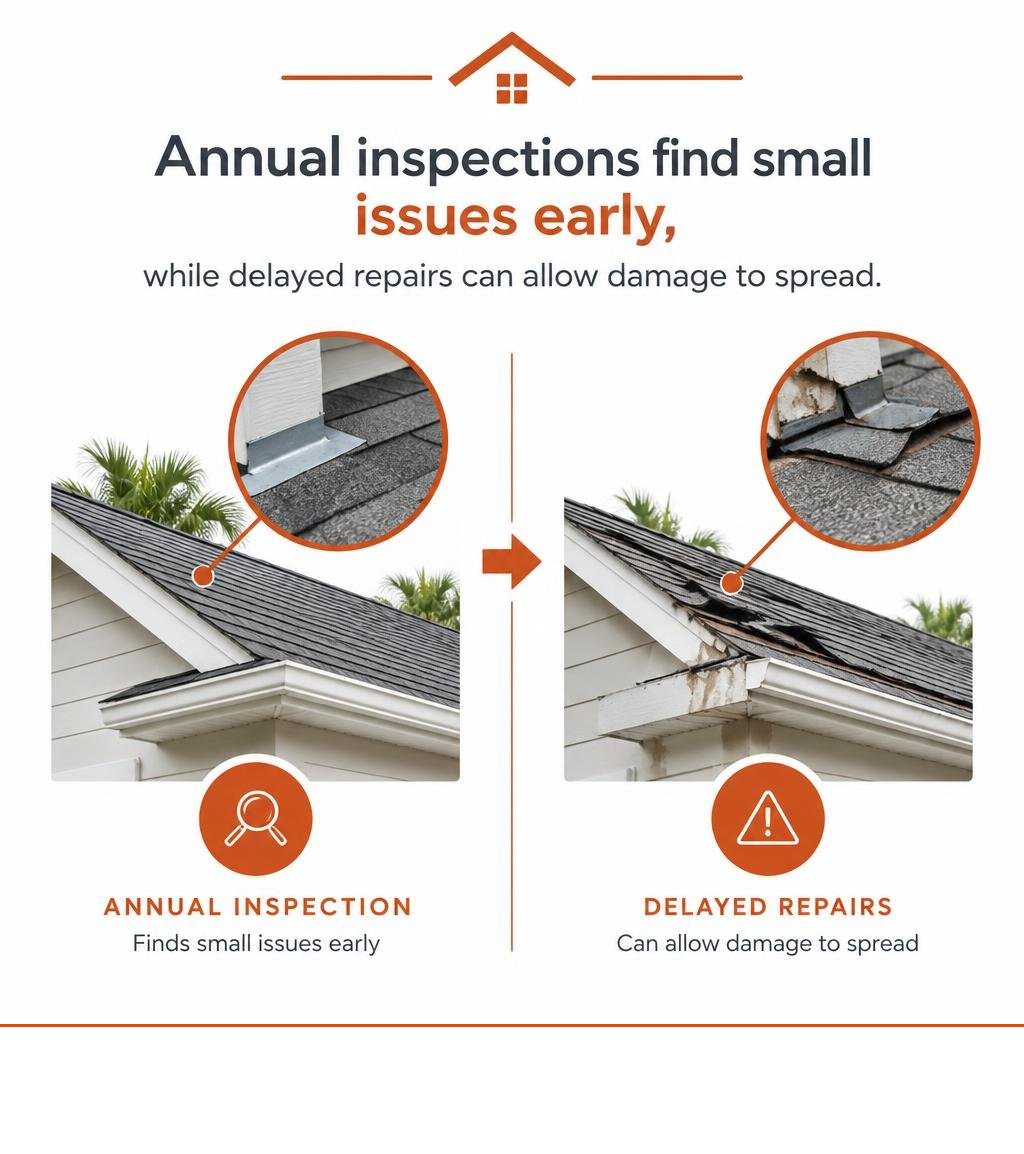
Living along the Space Coast means homes in Melbourne, Palm Bay, and Rockledge face intense ultraviolet radiation, high humidity, and driving tropical rains. A proactive assessment routine delivers distinct operational and financial benefits.
Catching Minor Damage Before Costly Leaks Develop
Small defects rarely stay small under Florida weather conditions. A lifted shingle corner or a cracked sealant bead around a plumbing vent pipe can allow wind-driven rain to reach the underlayment.
Following the expert guide to roof repair and maintenance helps homeowners understand that catching flashing defects early keeps repair costs low. Addressing a minor leak promptly is significantly less expensive than repairing an undetected leak that has saturated attic insulation, rotted structural decking, and ruined drywall over several months.
Maximizing Lifespan and Energy Efficiency
Intense sunlight gradually degrades asphalt binders and causes thermal expansion in metal panels. When an inspection verifies that attic intake and exhaust vents remain unobstructed, your roof system stays cooler.
Balanced attic airflow reduces heat transfer into your living space, lowering the demand on air conditioning systems during hot summer months. Proper ventilation also prevents trapped heat from baking shingles from the underside, helping you extend your roof’s life in the Florida sun.
Annual Roof Inspection Advantages for Insurance Claims and Warranties
Homeowners insurance carriers in coastal Florida closely evaluate property condition. Maintaining an annual written report establishes an official record of routine care. If a severe storm impacts Viera or Merritt Island, these records demonstrate that interior water intrusion stemmed from recent storm damage rather than deferred maintenance.
Coverage outcomes depend on the specific policy language, exclusions, deductibles, roof age provisions, and the carrier’s claim determination. A documented maintenance history can support your position, but it does not guarantee a specific claim result. If your policy includes Ordinance or Law coverage, that coverage may help with code-required upgrades after a covered loss, subject to policy terms and limits. For questions about your specific situation, consult your insurance agent or carrier.
Material manufacturers also require regular maintenance to keep system warranties in good standing. An annual evaluation ensures you have the documentation required should you ever need to file a manufacturer claim.
Boosting Property Value and Resale Standing
A documented history of professional roof evaluations provides clear leverage during property appraisals and real estate transactions. Prospective buyers are often wary of aging roofs in coastal regions. Presenting multi-year condition reports and prompt repair receipts offers peace of mind, removes friction during buyer inspections, and supports strong market valuation.
The Financial ROI: Proactive Maintenance vs. Reactive Roof Repairs
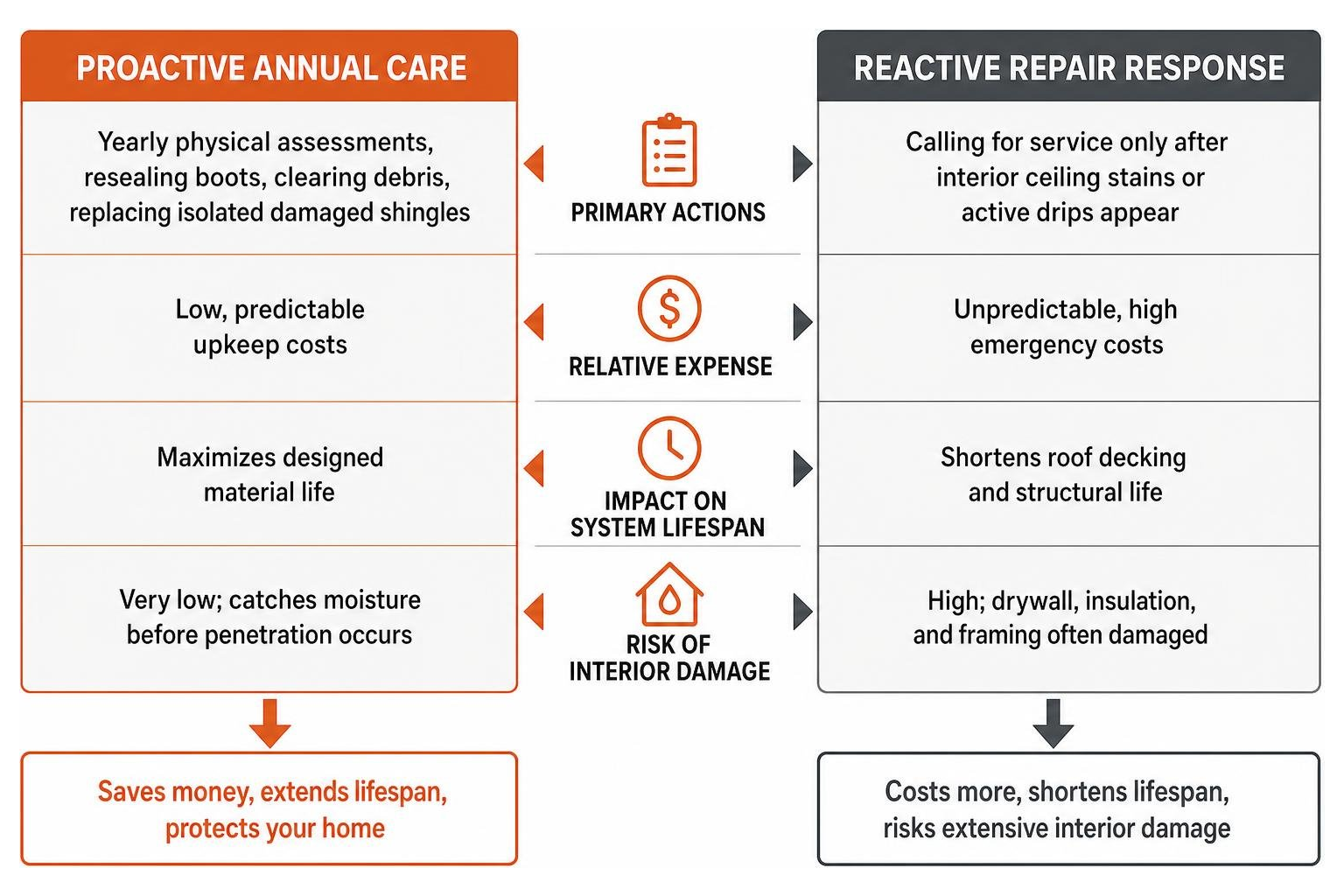
Proactive roof management typically requires allocating a small fraction of overall system value annually toward routine maintenance and evaluations. In contrast, operating reactively—waiting for visible water damage inside the living space—can substantially increase overall repair costs due to structural remediation, drywall replacement, and moisture treatment.
Understanding what a professional roof evaluation involves and costs shows that routine upkeep consistently saves property owners money over the life of the system.
There are times, however, when replacement becomes more cost-effective than continuing repeated repairs. If recurring repair costs begin to approach or exceed the residual value of the existing roof, or if an inspection reveals widespread decking deterioration, failing underlayment, or material degradation across large sections, a full replacement often provides better long-term value. A professional evaluation can help you compare the cost of ongoing patchwork against the cost of a new system designed for Florida’s coastal conditions.
| Maintenance Strategy | Primary Actions | Relative Expense | Impact on System Lifespan | Risk of Interior Damage |
|---|---|---|---|---|
| Proactive Annual Care | Yearly physical assessments, resealing boots, clearing debris, replacing isolated damaged shingles | Low, predictable upkeep costs | Maximizes designed material life | Very low; catches moisture before penetration occurs |
| Reactive Repair Response | Calling for service only after interior ceiling stains or active drips appear | Unpredictable, high emergency costs | Shortens roof decking and structural life | High; drywall, insulation, and framing often damaged |
What Happens During a Professional Roof Inspection?
A professional evaluation takes between 45 minutes and two hours, depending on roof size, pitch, and complexity. Inspectors evaluate exterior waterproofing layers as well as interior attic conditions to form an accurate picture of system performance.
Key Exterior Components Evaluated by Inspectors
The exterior assessment focuses on high-risk transition zones and primary roofing materials:
- Field Coverings: Checking shingles for granule loss, blistering, or wind uplift; verifying metal panel fastener seals; inspecting specialized Brevard County tile roof installations for cracked or misaligned tiles.
- Roof Flashing Details: Inspecting metal aprons, step flashing along sidewalls, and chimney crickets for corrosion or detachment.
- Penetrations and Pipe Boots: Evaluating rubber plumbing collars and electrical mast seals for UV dry rot.
- Valleys and Drainage: Clearing debris from roof valleys and verifying that drainage pathways direct water away from fascia boards.
Interior Attic and Structural Moisture Checks
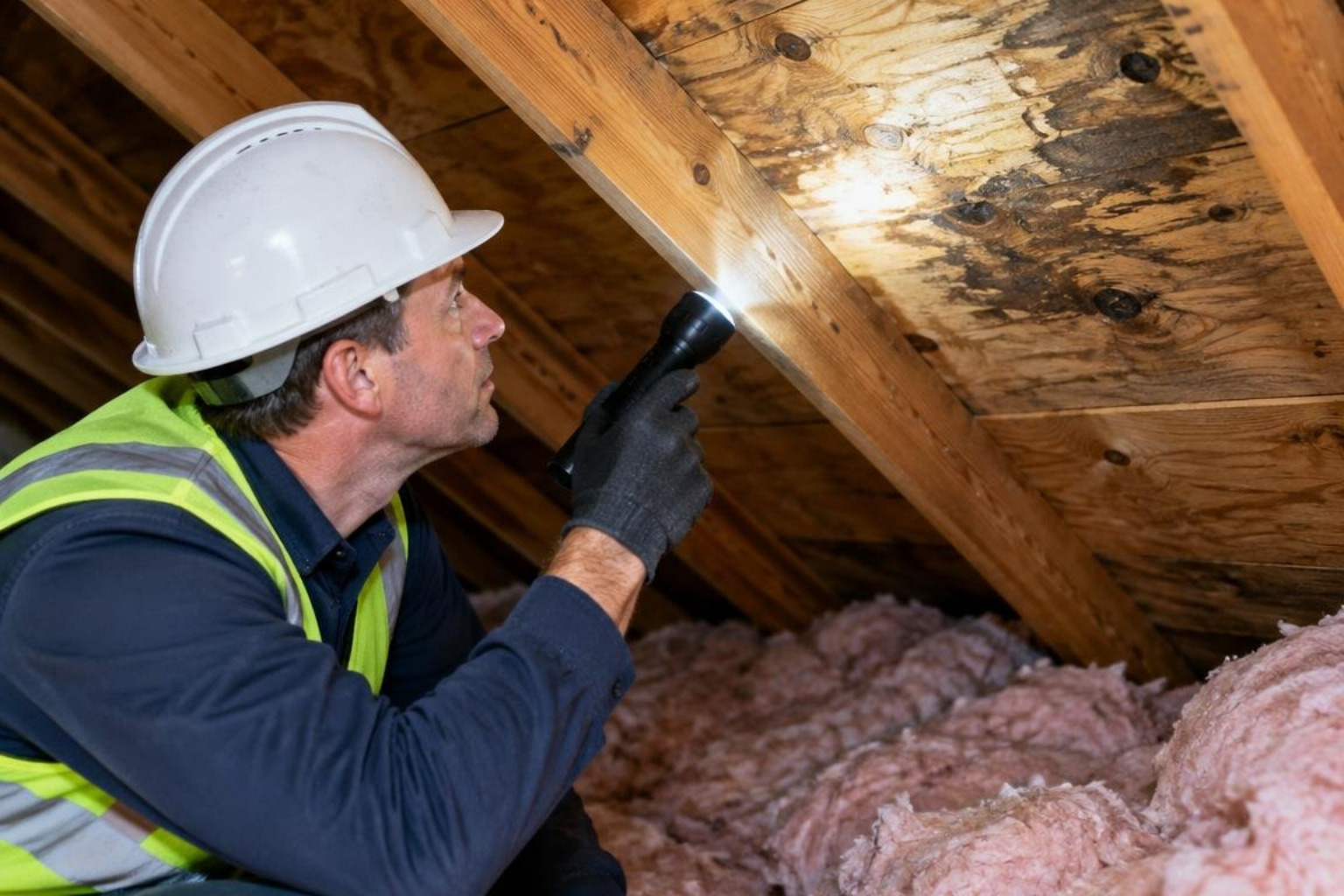
An exterior check only tells half the story. A full assessment includes entering the attic space to inspect the underside of the roof decking. Inspectors look for rust on roofing nails, dark water staining on plywood or OSB, compressed insulation, and signs of moisture intrusion. Catching decking rot early protects the structural integrity of your roof trusses.
Professional Assessments vs. DIY Ground Checks
Homeowners can conduct a visual ground walk with binoculars to spot obvious issues like missing ridge caps or accumulated valley debris. While a ground check catches obvious surface defects, it cannot identify compromised underlayment, brittle pipe boot collars, or hidden attic moisture.
Attempting to walk a roof introduces substantial personal fall risks and can easily fracture roofing materials, inadvertently creating new leak pathways.
| Inspection Method | Safety Profile | Defect Detection Rate | Documentation Quality | Attic & Structural Insight |
|---|---|---|---|---|
| DIY Ground Walk (Binoculars) | Completely safe from ground level | Limited to obvious surface defects | Informal homeowner notes | None |
| Professional Roof Evaluation | Managed safely by licensed, insured pros | Comprehensive (surface, flashings, attic) | Formal photo-annotated report for records | Thorough evaluation of decking and insulation |
When seeking an evaluation, reviewing how to avoid scams when seeking roof evaluations helps homeowners identify legitimate contractors. Working with established local professionals ensures thorough documentation and reliable service.
Ideal Timing: When to Schedule Inspections and When to Escalate
In Central Florida, late autumn is an excellent baseline time for your annual checkup. This timing allows you to assess any wear sustained during the summer rainy season and prepare for winter weather. A secondary evaluation in late spring ensures your roof is ready before hurricane season begins.
Annual Roof Inspection Advantages for Aging Roofs and Post-Storm Events
Once an asphalt or metal roof approaches the later years of its expected service life, switching to a twice-yearly inspection schedule—spring and fall—helps identify aging materials before they fail.
Additionally, you should schedule a professional assessment promptly following any severe weather event involving gale-force winds, hail, or fallen tree limbs. Documenting conditions promptly provides clear evidence of storm-related impact for insurance carriers.
Frequently Asked Questions About Roof Maintenance Plans
How much does an annual roof inspection typically cost?
Professional evaluations generally vary depending on building height, pitch, square footage, and accessibility. Many local contractors offer initial visual assessments for residential properties, while specialized multi-point written reports or drone-assisted evaluations involve modest service fees.
How often should older residential roofs be inspected?
Roofs that are past 15 years of age benefit from twice-yearly evaluations (every six months). Older materials lose flexibility over time, making regular checks around flashings and valleys essential.
Can an annual roof check help with homeowners insurance claims?
Yes. Having dated inspection reports shows your carrier that the roof was properly maintained prior to a storm. If hurricane winds damage your home in Cocoa or Sebastian, these records help validate that the loss was sudden and storm-related.
Conclusion
A consistent roof assessment plan is one of the most cost-effective investments you can make in your home. By identifying localized wear, sealing penetrations, and maintaining detailed condition records, property owners across the Space Coast can avoid expensive interior repairs and maximize their roof’s service life.
When you need an experienced evaluation or repair plan, explore residential roofing services from MLG Roofing to keep your home protected through every season. If severe weather causes immediate leaks, our team also provides dedicated emergency roof repair services to secure your property quickly.