
Are Metal Roofs a Good Choice for Florida Homes?
Are metal roofs good in Florida? Yes — for many homeowners, especially on the Space Coast, metal roofing is one of the strongest long-term choices available. Here is a quick summary:
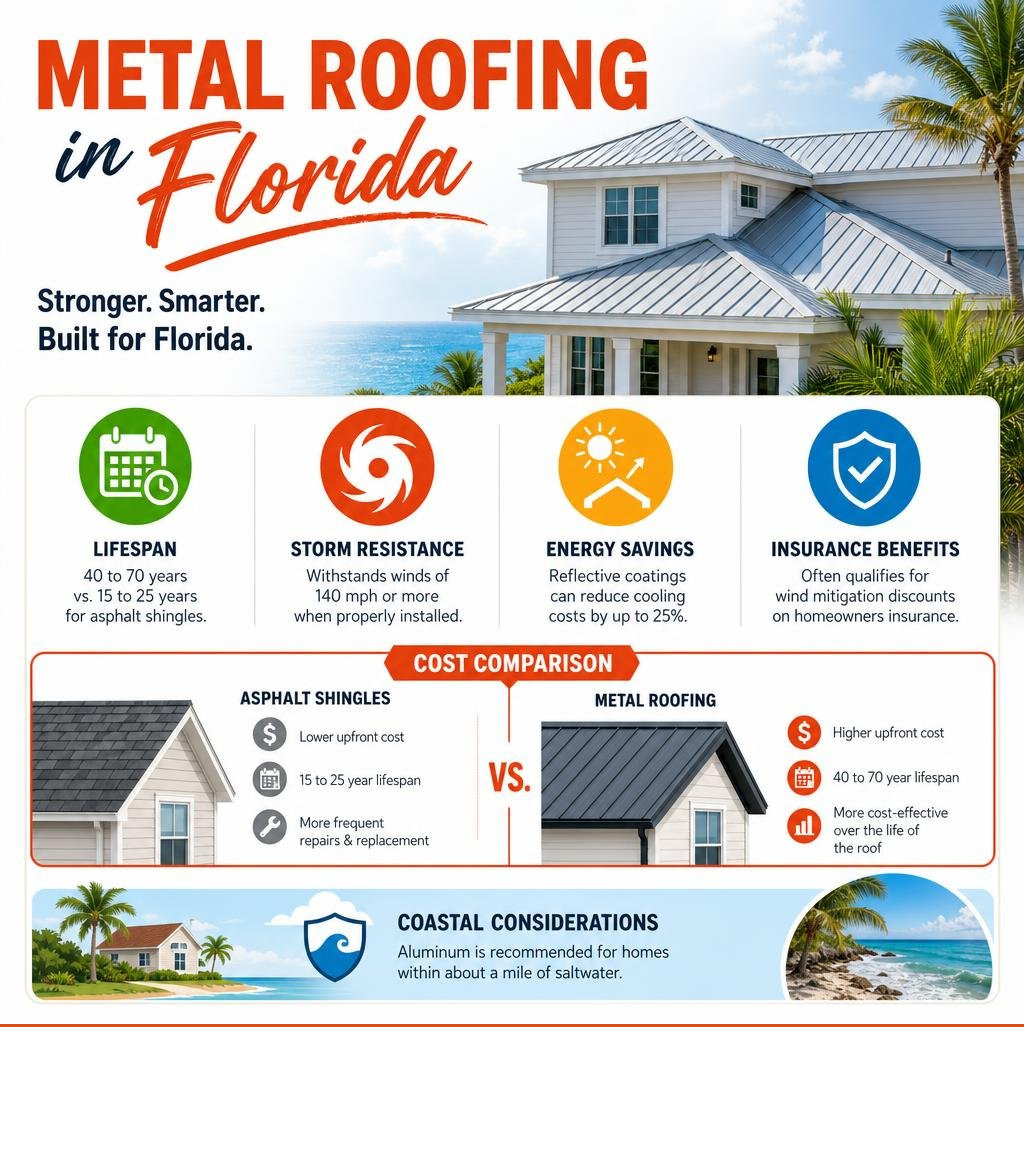
- Lifespan: Metal roofs are often estimated to last 40 to 70 years under ideal conditions, compared to 15 to 25 years for asphalt shingles in Florida’s climate
- Storm resistance: Properly installed and code-compliant metal roofing systems are designed to withstand high winds, with many systems rated for extreme storm conditions
- Energy savings: Reflective coatings can help reduce cooling costs by reflecting solar radiation
- Insurance: Some metal roofs may qualify for wind mitigation discounts on homeowners insurance, depending on the roof system, installation, inspection, and insurance carrier
- Cost: Higher upfront than shingles, but typically more cost-effective over the life of the roof
- Coastal considerations: Homes located along the Atlantic coastline or within roughly one mile of the ocean or Indian River Lagoon often benefit most from aluminum because of its exceptional corrosion resistance
If you own a home in Brevard County, FL, you’ve probably noticed more metal roofs showing up in your neighborhood. That’s not a coincidence. Between the intense UV exposure, humid summers, salt air off the Atlantic, and an active hurricane season, Florida puts roofs under serious pressure year after year. Many homeowners who’ve replaced shingles once or twice are now looking at materials that won’t need replacing again for decades. Metal roofing has moved from a niche option to a mainstream choice — and there are real, practical reasons why.
This guide breaks down what metal roofing actually delivers in Florida conditions, where it falls short, and how to decide whether it makes sense for your home. If you are still comparing options, our guide to choosing the best roofing material for Florida homes can help you weigh metal against shingles, tile, and other common choices.
At MLG Roofing, we’ve installed metal roofing systems throughout Brevard County on both inland and coastal homes. One of the biggest questions homeowners ask is whether the higher upfront investment is worth it. For many Florida homes, the answer is yes — but the right metal, fastening system, and installation method matter just as much as the material itself. Homeowners who want a broader overview can also review our metal roofing guide for Brevard County for more local context.
Why Metal Roofs Perform So Well in Florida
To truly evaluate how metal performs under the Florida sun, it helps to weigh the advantages against the practical challenges. Every roofing material has its trade-offs, and understanding these factors is essential for understanding the impact of Florida’s climate on your roofing material choices.
| If your priority is… | Best choice |
|---|---|
| Lowest upfront cost | Architectural shingles |
| Longest lifespan | Standing seam metal |
| Oceanfront home | Aluminum metal roofing |
| Best hurricane performance | Standing seam metal |
| Lowest maintenance | Standing seam metal |
| Highest resale value | Metal or tile |
Four Pros of Metal Roofing in Florida
- Exceptional Durability: Metal does not suffer from granule loss, warping, or curling under the intense tropical sun.
- Algae and Mildew Resistance: Unlike asphalt shingles, which frequently develop dark streaks from algae in humid climates, metal surfaces resist organic growth.
- Superior Wind Performance: The interlocking design of modern metal panels provides exceptional wind resistance, keeping the roof structure secure when tropical storms roll through.
- Long-Term Financial Value: Because a single metal roof can potentially outlast multiple shingle roofs under typical conditions, it reduces the long-term cycle of reroofing expenses.
Four Cons of Metal Roofing in Florida
- Higher Initial Investment: The upfront cost of materials and specialized labor is significantly higher than that of traditional asphalt shingles.
- Installation Complexity: Metal roofing requires specialized training, precise flashing details, and experienced craftsmanship. Mistakes during installation can lead to leaks that are difficult to diagnose.
- Aesthetic and HOA Restrictions: While attitudes are shifting across Florida, some homeowners associations still have strict guidelines regarding roof materials, colors, and profiles.
- Thermal Expansion and Contraction: Metal naturally expands and contracts as temperatures change. If the fastening system does not account for this movement, fasteners can back out or panels can distort over time.

Why Are Metal Roofs Good in Florida for Storm Protection?
When tropical storms and hurricanes approach the Space Coast, the roof is a home’s primary line of defense. Traditional shingles rely on adhesive strips that can dry out and degrade over time under constant UV exposure. Once the seal on a shingle fails, high winds can easily peel it back, exposing the underlayment and decking to torrential rains.
Metal roofing systems, particularly standing seam profiles, offer superior wind resistance. Because these systems use continuous vertical panels that run from the ridge to the eaves, there are no horizontal seams or overlapping shingles for the wind to grab. The panels are mechanically locked together and secured to the deck with heavy-duty clips. This design distributes wind forces evenly across the entire structure, making it highly effective at resisting wind uplift. Taking the time to understand these structural benefits is a key part of preparing your roof for Florida’s climate before storm season arrives. Homeowners should also review FEMA’s hurricane preparedness recommendations so they can plan for evacuation, emergency supplies, communication, and property protection before a storm is approaching.
When Are Metal Roofs Good in Florida for Energy Savings?
Florida roofs can reach high surface temperatures on hot summer afternoons. Dark asphalt shingles absorb this radiant heat and transfer it directly into the attic, forcing air conditioning systems to work harder to keep living spaces cool.
Metal roofs are highly reflective. Unpainted metal and pre-painted panels coated with specialized finishes reflect a massive portion of solar radiation back into the atmosphere. Additionally, metal has high thermal emissivity, meaning it quickly sheds any heat it does absorb once the sun goes down, rather than storing it the way heavy tile or asphalt shingles do. Homeowners who switch to reflective metal roofing often notice substantial relief on their monthly utility bills. Exploring these solar-reflective properties illustrates why energy efficient roofing is a smart investment for long-term property ownership in Melbourne, Palm Bay, and surrounding areas. The ENERGY STAR cool roofs guidance is another useful reference point for understanding how reflective roofing surfaces can help reduce heat gain and cooling demand.
Why Factory-Applied Metal Roof Coatings Matter
The finish on a metal roof is just as important as the panel itself. Many quality metal roofing products use factory-applied coil coatings designed to protect the panel from Florida sun, humidity, and salt-air exposure. High-performance PVDF coating systems, including Sherwin-Williams metal roof paint and coil coating products where specified by the manufacturer, are valued for color retention, UV resistance, and fade resistance. Homeowners can also compare tested roof-product reflectance data through the Cool Roof Rating Council when evaluating reflective coatings and cool-roof performance.
For Florida homeowners, that matters because roof color and finish are constantly exposed to intense sunlight. A durable factory-applied coating can help the roof maintain its appearance longer, reduce chalking and fading, and support the reflective performance that makes metal roofing attractive in hot climates.
Metal Roofs vs. Asphalt Shingles: Durability, Lifespan, and Cost
For decades, asphalt shingles have been the default choice for residential roofs due to their low entry cost and simple installation. However, when evaluating the total cost of ownership over several decades, the math often shifts in favor of metal.
| Performance Metric | Asphalt Shingles | Metal Roofing (Standing Seam) |
|---|---|---|
| Estimated Lifespan | Often 15 to 25 years under typical conditions | Often 40 to 70 years with proper maintenance |
| Wind Resistance | Standard ratings vary by product | High-velocity ratings available |
| Algae & Mold Resistance | May require periodic cleaning | Naturally resistant surface |
| Upfront Cost Factor | Generally lower initial investment | Generally higher initial investment |
| Recyclability | Limited recycling options | Highly recyclable material |
| Maintenance Needs | Periodic repairs and monitoring | Low maintenance with regular inspections |
Evaluating these metrics side-by-side is incredibly helpful when choosing the right roofing material for your budget and long-term housing plans.
Lifespan and Long-Term Value
In the harsh Central Florida climate, asphalt shingles age rapidly. The intense heat dries out the asphalt binding agents, leading to curling, cracking, and premature granule loss. In contrast, high-quality metal roofing materials do not suffer from these organic degradation processes.
A properly installed metal roof can potentially achieve a forty-year to seventy-year lifespan under favorable conditions, even when exposed to coastal humidity and salt air. This longevity makes metal a highly reliable shield for homes in historic or high-exposure areas. Homeowners researching long-term upgrades can consult with local professionals in Palm Bay and surrounding Space Coast communities.
Four Factors Influencing Upfront Installation Costs
There is no getting around the fact that metal roofing requires a larger initial investment. On average, a standing seam metal roof can cost more than a standard architectural shingle roof. This pricing varies greatly based on factors such as:
- The complexity and pitch of the roof deck.
- The thickness (gauge) and type of metal selected (e.g., aluminum vs. steel).
- The choice between standing seam and exposed fastener profiles.
- The cost of local permitting and structural code compliance.
While the upfront cost is higher, the lifecycle savings can be substantial. Over an extended period, a homeowner with a shingle roof may have to pay for multiple full roof replacements, alongside ongoing maintenance and leak repairs. A metal roof owner, however, will typically only pay for a single installation. Additionally, potential energy savings and possible insurance premium reductions may help offset the initial cost over time, making it a highly practical investment for those planning to stay in their homes for an extended period.
Hurricane Performance and Storm Resilience on the Coast
Living on the Space Coast means preparing for high winds, driving rains, and tropical storms. A roof’s performance during these extreme weather events can mean the difference between minor cosmetic wear and severe structural water damage.

Wind Resistance and Hurricane Protection
During a storm, high winds blowing over a roof can create upward lifting forces. If a roofing material is not securely anchored, these forces can peel the roof covering away from the deck.
Modern metal roofing systems are engineered to meet strict wind resistance standards. Standing seam panels are locked together with heavy-duty clips that are fastened directly to the roof deck, creating a continuous, interlocking shield across the entire home. With no loose edges or overlapping seams for the wind to get under, these systems are designed to withstand extreme wind speeds, providing peace of mind for homeowners in coastal communities like Merritt Island and Cocoa Beach. For a deeper dive into these engineered systems, check out our modern metal roof guide Brevard County to see how local building standards shape material choices. Homeowners can also review the Florida Building Code roofing requirements to better understand why product approvals, fastening patterns, and installation details matter so much in hurricane-prone areas.
Fire and Lightning Safety
A common misconception is that metal roofs attract lightning. In reality, lightning is attracted to the highest point in an area, regardless of the material. However, if a home is struck, metal provides a significant safety advantage.
Metal is a noncombustible material with a Class A fire rating, which is the highest level of fire resistance available. Instead of catching fire, a metal roof safely disperses the electrical charge across its surface. In a state prone to frequent thunderstorms and wildfires, this fire-resistant property adds an extra layer of protection for your family and property.
Choosing the Right Metal Roofing Material for Coastal Exposure
Not all metal roofs are created equal. The right choice for an inland home in West Melbourne or Rockledge might not be the best choice for a waterfront property in Satellite Beach or Indian Harbour Beach.
Two Primary Metal Roofing Systems
When selecting a metal roof, one of the most important decisions is choosing between a standing seam system and an exposed fastener system.
- Standing Seam Systems: These systems feature vertical panels joined by raised, interlocking seams. The fastening clips are completely hidden beneath the metal surface (concealed fasteners). Because there are no screws penetrating the exterior of the panels, the risk of water intrusion over time is virtually zero. This design also allows the panels to slide smoothly on their clips during thermal expansion and contraction.
- Exposed Fastener Systems (such as 5V Crimp or Corrugated): These systems are screwed directly through the face of the metal panels into the wood decking below. While they are more budget-friendly upfront, they require thousands of screw penetrations. Each screw relies on a rubber neoprene washer to keep water out. Over time, Florida’s intense heat and UV rays degrade these washers, which can lead to leaks and require regular maintenance or screw replacement over time.
Exposed-fastener systems can be an excellent value for certain homes when properly installed and maintained, but standing seam generally provides better long-term performance in Florida’s climate. If you are choosing between the two, this comparison of standing seam and exposed fastener metal roofing systems explains the trade-offs in more detail.
Three Material Options for Salt-Air Environments
For homes located close to the ocean or the Indian River Lagoon, salt-air exposure is a critical factor. Saltwater accelerates the corrosion of standard steel, which can lead to premature rust and failure. Homes located along the Atlantic coastline or within roughly one mile of the ocean or Indian River Lagoon often benefit most from aluminum because of its exceptional corrosion resistance.
- Aluminum: This is the gold standard for coastal properties. Aluminum naturally resists saltwater corrosion because it forms an oxide layer that protects the metal from degrading. It is highly recommended for homes along the Atlantic coastline or within roughly one mile of the ocean or Indian River Lagoon.
- Alloy-Coated Steel: Often referred to as Galvalume, this is steel coated with an alloy of aluminum and zinc. It offers excellent corrosion resistance for inland properties, but is more susceptible to edge-rust when exposed to direct, heavy salt spray.
- Copper and Zinc: These premium metals offer incredible natural corrosion resistance and develop a beautiful patina over time, but they come with a significantly higher price tag.
Regardless of the material chosen, working with a contractor who utilizes top-tier fabrication techniques ensures that every panel is cut and coated to resist edge rust and environmental wear.
Frequently Asked Questions About Florida Metal Roofing
Navigating roof replacement options often brings up questions about insurance, noise, maintenance, and resale value. Here are clear answers to the most common questions Florida homeowners ask.
Do metal roofs rust in coastal Florida environments?
Modern metal roofs are highly resistant to rust when the correct materials and protective coatings are used. While steel can experience edge-rust over time if exposed to constant salt spray, aluminum panels are virtually immune to saltwater corrosion. For homes located inland, alloy-coated steel panels coated with premium finishes provide outstanding protection against rust and weathering for decades.
Are metal roofs noisy during heavy Florida rainstorms?
This is one of the most common myths about metal roofing. Many people associate metal roofs with the loud drumming sound heard on barns or open-sided sheds. On a residential home, however, the metal panels are installed over solid wood sheathing, high-quality underlayment, and a fully insulated attic space. These layers act as highly effective sound barriers, making a metal roof no louder than a traditional shingle roof during a typical Florida afternoon thunderstorm.
Will a metal roof increase my home’s value?
Many homeowners view metal roofing as a premium upgrade because of its durability, longevity, and energy efficiency. While resale value varies by market, a high-quality metal roof can make a home more attractive to buyers looking for lower long-term maintenance.
Three Key Maintenance Steps for Florida Metal Roofs
Metal roofs are incredibly low-maintenance, but they are not entirely maintenance-free. Homeowners should have their roofs visually inspected once a year, preferably in the spring before hurricane season begins. Maintenance typically involves:
- Clearing fallen leaves, pine needles, and branches from valleys and drainage areas to prevent moisture retention.
- Checking the flashing around chimneys, skylights, and vents.
- Inspecting exposed fasteners (if applicable) to ensure the rubber washers are intact and have not backed out.
If minor issues like scratches or loose flashing are identified early, a simple residential metal roof repair can prevent water intrusion and keep the roof performing beautifully for its full lifespan.
Conclusion
Investing in a new roof is one of the most significant decisions you will make for your home. While asphalt shingles remain a popular choice for shorter-term budgets, metal roofing offers unmatched durability, wind resistance, and energy efficiency in Florida’s challenging climate. For homeowners on the Space Coast who want to secure their property against major storms, lower their cooling bills, and avoid the cycle of frequent roof replacements, metal is a highly practical, long-term solution.
The best roofing material is ultimately the one that matches your home’s location, budget, maintenance expectations, and long-term goals.
If you’re comparing roofing materials for your home, a professional inspection and consultation can help determine whether metal roofing is the right fit for your location, budget, and long-term plans. If your current roof is near the end of its lifespan, reviewing the roof replacement process in Brevard County can help you understand what to expect before choosing a material. We invite you to explore our professional roofing services at MLG Roofing. Our team of experienced, licensed, and insured professionals is proud to serve families across Melbourne, Palm Bay, Merritt Island, and the surrounding Brevard County communities.