

What Should Homeowners Look for in Brevard County Roofing Companies?
When you live on Florida’s Space Coast, choosing a qualified local roofer is an important part of protecting your home.
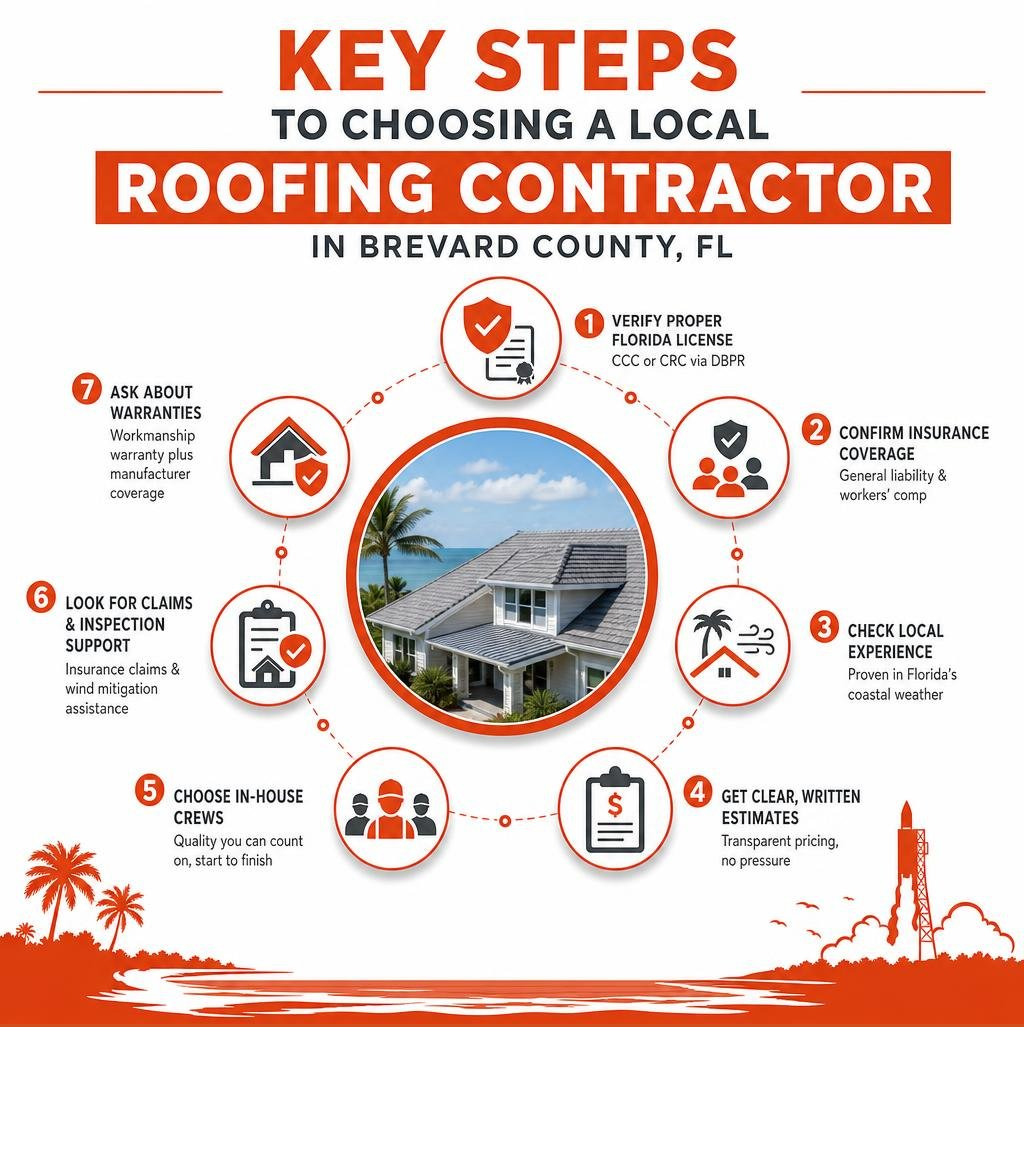
Here’s a quick overview of what to look for when comparing local roofers:
Top factors to evaluate when choosing a Brevard County roofing company:
- Valid Florida roofing license (CCC) or residential contractor license (CRC) through DBPR
- General liability insurance and workers’ compensation coverage
- Proven local experience with Florida’s coastal weather conditions
- Clear, written estimates with no-pressure sales approach
- In-house crews rather than subcontracted labor
- Assistance with insurance claims and wind mitigation inspections
- Workmanship warranty in addition to manufacturer coverage
Brevard County sits directly on the Atlantic coast, which means roofs here face a combination of stresses that most parts of the country never see — annual hurricane season, intense UV exposure, salt-air corrosion, and wind uplift that can work shingles loose over time even without a named storm.
With numerous roofing contractors listed near Melbourne on the BBB, the challenge isn’t finding a roofer. It’s knowing which ones are worth your time and trust.
This guide helps you cut through the noise and focus on what actually matters when comparing contractors in Melbourne, Palm Bay, Merritt Island, and across the Space Coast.
While many homeowners search for Brevard County roofing companies, comparing Brevard County roofing contractors based on licensing, insurance, and local experience often leads to a better hiring decision.
Key Credentials to Verify When Comparing Brevard County Roofing Companies
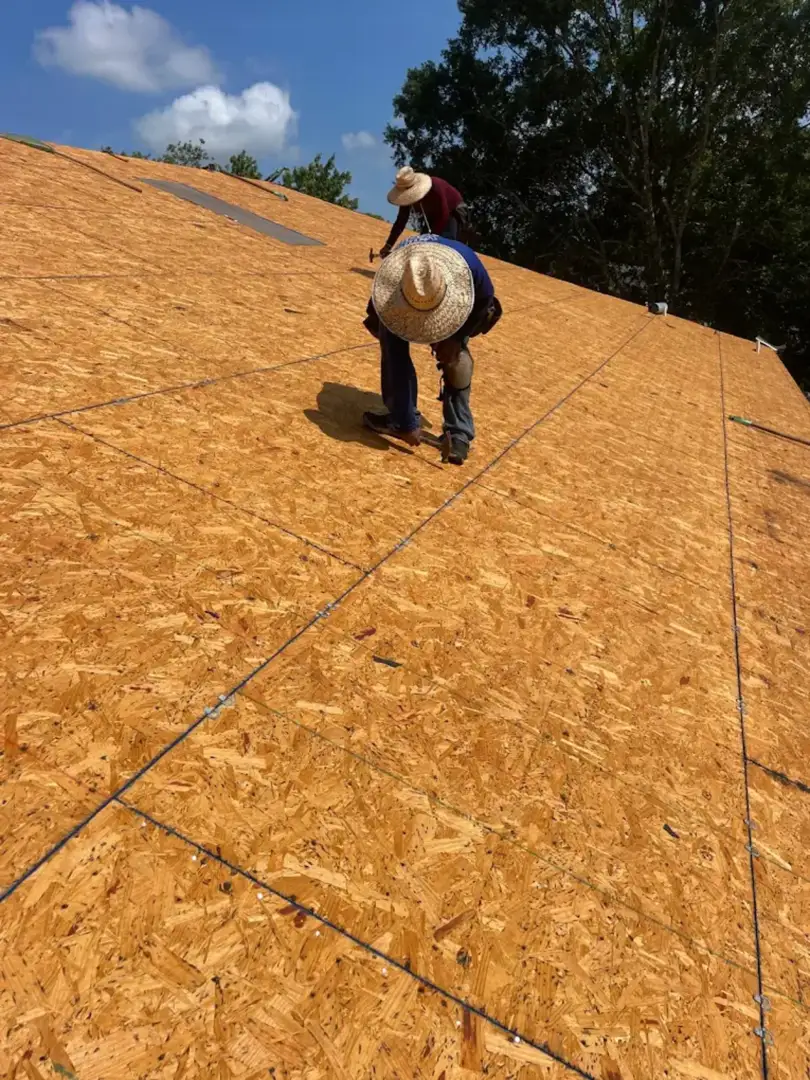
In Florida, a roofing license is not just a piece of paper; it is a legal requirement designed to protect homeowners. When narrowing down your list of potential roofers, the very first step is to verify their licensing through the Florida Department of Business and Professional Regulation (DBPR). A legitimate local contractor should hold a Certified Roofing Contractor (CCC) license or a Certified Residential Contractor (CRC) license.
These licenses ensure that the individual qualifying the business has passed rigorous examinations, demonstrated financial stability, and keeps up with the latest Florida Building Code requirements. Working with an unlicensed contractor can leave you with no legal recourse, voided manufacturer warranties, and potential fines from local building departments.
Beyond the license, a reputable contractor must carry two types of insurance:
- General Liability Insurance: This protects your home and property from damage during the roofing process. If a heavy bundle of shingles accidentally damages your siding or a sudden rainstorm causes interior water damage while the roof is open, this coverage ensures you are not left holding the bill.
- Workers’ Compensation Insurance: Roofing is inherently hazardous. If a worker is injured on your property and the roofing company does not carry active workers’ compensation, you could be held liable for medical expenses. Always ask for proof of insurance sent directly from the contractor’s insurance agency.
Better Business Bureau (BBB) accreditation is another valuable tool for vetting local contractors. With hundreds of listings in the region, looking for businesses with an A+ rating and active accreditation helps filter out transient operations. Accredited businesses commit to a strict set of ethical standards, including honest advertising and a good-faith effort to resolve any consumer complaints. To help protect your investment, you can review some essential tips for verifying your contractor’s legitimacy before signing any agreements.
Essential Services Offered by Space Coast Roofers

A true local roofing contractor understands that coastal homes require specialized services. From minor leak repairs in Melbourne to full-scale roof replacements in Palm Bay, the services offered should address the unique climate challenges of the Space Coast. High humidity, heavy seasonal rains, salt-air exposure, and strong coastal winds dictate how roofs must be built and repaired.
A comprehensive roofing company should offer:
- Professional Roof Inspections: Documenting wear and tear, storm damage, and structural conditions.
- Leak Detection and Repair: Locating the exact entry point of water, which is often far from where the leak actually drips inside the home.
- Emergency Roof Tarping: Providing immediate protection to prevent secondary water damage after a storm.
- Full Roof Replacement: Tearing off old materials down to the wood deck, replacing damaged sheathing, and installing a modern, code-compliant roof system.
For homeowners trying to navigate the local market, a helpful resource is our guide to professional roofers which provides baseline information on what services to expect and how local crews handle residential projects.
Shingle and Metal Roofing Options from Brevard County Roofing Companies
Asphalt shingles remain the most common choice for Space Coast homeowners due to their versatility and upfront affordability. Modern architectural shingles offer excellent wind resistance ratings, with many designed to withstand high winds when installed using specific high-wind fastening patterns. They come in a wide variety of colors and styles, allowing you to enhance your home’s curb appeal while maintaining reliable protection.
However, metal roofing has grown rapidly in popularity across coastal communities. Metal roofing options, such as standing seam or exposed fastener panels, offer superior durability against the elements. Metal reflects a significant portion of solar radiation, which helps lower attic temperatures and reduce cooling costs during hot Florida summers. Additionally, metal roofs are highly resistant to wind uplift, do not suffer from granule loss, and are immune to the mold and algae growth that commonly plagues damp shingle roofs. You can explore localized options for these systems through specialized local contractors who understand the unique wind mitigation requirements of the Space Coast.
Emergency Repairs and Storm Response by Brevard County Roofing Companies
When a tropical storm or hurricane sweeps through the Space Coast, the demand for immediate roofing assistance spikes. Wind uplift mitigation is a critical focus during storm prep and recovery. High winds can get underneath shingles or loose metal panels, peeling them back and exposing the underlayment underneath. If the underlayment is aged or damaged, water will quickly find its way into your living space.
A reliable contractor must be equipped to handle emergency tarping quickly. Tarping prevents further water intrusion while you wait for insurance adjusters to assess the damage. Professional storm damage documentation is also essential. A qualified storm damage roofing contractor will provide detailed photo reports and clear, itemized estimates that help streamline the insurance claims process. For more information on finding a team that handles these situations, you can read about Brevard County roofing contractors.
Understanding Roofing Costs, Warranties, and Financing in Coastal Florida
Roofing pricing in coastal Florida is highly variable and depends on several factors, including the size of your home, the pitch and complexity of the roof deck, material choices, and any structural repairs needed during the tear-off phase.
Local estimates for a complete residential roof replacement vary based on the size and complexity of the structure. Shingle replacements generally represent the lower to mid-end of this range, while premium metal systems or complex tile configurations represent the higher end.
For repairs, costs are highly variable based on the scope of the issue:
- Minor Shingle or Flashing Repairs: Often address localized wind damage or minor wear around penetrations.
- Active Leak Repairs: Involve removing materials, replacing damaged roof decking, and sealing the area.
- Emergency Tarping Services: Provide temporary protection immediately following a storm event.
When repairs start becoming frequent, it may be time to compare the short-term cost of patching with the long-term value of replacement. If the roof is near the end of its expected lifespan and has widespread deterioration, repeated leaks, or damage across multiple areas, a full roof replacement may be the more practical option.
What Do Brevard County Roofing Companies Typically Charge?
Roofing costs in Brevard County vary by roof size, pitch, material, access, permitting needs, and how much damage is found during a comprehensive inspection. Most reputable roofers will avoid giving a firm number until they have seen the roof in person.
Common service categories include:
- Leak Repairs – Localized roof leak repairs may involve sealing a vulnerable area, replacing damaged roofing materials, repairing flashing, or addressing storm-related damage.
- Flashing Repairs – Flashing repairs are commonly needed around chimneys, walls, skylights, vents, and other roof penetrations where water intrusion often begins.
- Emergency Roof Tarping – Following hurricanes, tropical storms, or severe thunderstorms, emergency tarping can help limit additional water intrusion while permanent repairs are being planned.
- Shingle Replacement – Replacing missing, lifted, cracked, or storm-damaged shingles is often a cost-effective solution when the surrounding roof system remains in good condition.
- Full Roof Replacement – A complete roof replacement may be recommended when a roof has widespread deterioration, recurring leaks, aging materials, storm damage, or repair costs that are becoming substantial compared to replacement.
| Roofing Material | Typical Lifespan in Florida | Relative Upfront Cost | Wind Resistance | Energy Efficiency |
|---|---|---|---|---|
| Architectural Shingles | Estimated 15–20 Years (subject to weather) | Moderate | High | Standard |
| Metal Roofing | Estimated 40–50+ Years (subject to weather) | Higher | Excellent | Very High |
| Tile Roofing | Estimated 30–50 Years (subject to weather) | Highest | High | High |
When investing in a new roof, it is vital to understand the difference between warranties:
- Manufacturer Warranties: Cover defects in the roofing materials themselves (e.g., shingles cracking prematurely or losing granules excessively).
- Workmanship Warranties: Offered by the contractor to cover installation errors. Even the best materials will fail if they are not installed correctly, making a strong workmanship warranty highly valuable.
To make larger roofing projects easier to plan for, some local contractors offer financing options or staged payment schedules. Before signing, ask for a written estimate that separates materials, labor, permits, disposal, and any optional upgrades. It is also worth asking how workmanship coverage differs from the manufacturer warranty on the roofing materials. After installation, a wind mitigation inspection may document features such as roof deck attachment, a secondary water barrier, or roof-to-wall connections, which could affect insurance pricing depending on your carrier. For more budgeting guidance, read about choosing the right roofer.
Red Flags to Avoid When Hiring a Local Contractor
Unfortunately, the roofing industry attracts its share of bad actors, particularly after major storm events. Knowing the warning signs of a questionable contractor can save you thousands of dollars and months of frustration.
Common red flags to watch out for:
- Out-of-State Storm Chasers: These companies travel from state to state following major storms. They often use high-pressure sales tactics, promise to “waive your deductible” (which is insurance fraud in Florida), and perform hasty installations. Once the storm season ends, they pack up and leave, leaving you with no local point of contact if your roof begins to leak a few months later.
- Lack of a Physical Local Office: A reputable contractor should have a permanent, physical office within our Space Coast service communities, not just a P.O. Box or a temporary hotel room address.
- Vague Subcontractor Policies: Some companies operate merely as sales organizations, selling the job and then hiring the cheapest subcontracted crew they can find to perform the actual work. It is always preferable to choose a contractor that utilizes their own trained, in-house crews, ensuring better quality control and accountability.
Before signing any paperwork or making a deposit, you can review our checklist of questions to ask before hiring.
Frequently Asked Questions about Space Coast Roofing
How long does a typical roof replacement take in Palm Bay or Melbourne?
For a standard single-family home, the physical tear-off and installation of a new shingle roof typically takes a few days. Metal roof installations may take slightly longer, often ranging from several days depending on the complexity of the roof’s design.
However, the overall project timeline involves more than just the physical labor. The permitting process and coordination of municipal inspections can add several weeks to the front and back ends of the project. Your contractor should handle all permitting requirements directly. Weather is another major variable; afternoon thunderstorms or high winds can halt work to ensure crew safety and protect your exposed home. For details on local project timelines, you can read our guide on finding a roofing company in Palm Bay.
How do I compare Brevard County roofing companies?
Compare Brevard County roofing companies by checking the basics first: an active Florida DBPR roofing license, current general liability insurance, workers’ compensation coverage, and a clear local service history. Then look at the details in each estimate.
A good roofing estimate should explain:
- The roofing material being used
- Underlayment and flashing details
- Permit handling
- Cleanup and disposal
- Workmanship warranty terms
- Manufacturer warranty terms
- Expected project timeline
- Payment schedule
For homes in Brevard County, it also helps to ask about coastal roofing experience. Salt air, heavy rain, UV exposure, and hurricane-season wind can all affect how a roof performs over time. Choose a contractor who can explain those conditions in plain language and provide a comprehensive inspection before recommending repair or replacement.
What Is a Wind Mitigation Inspection and Why Does It Matter?
A wind mitigation inspection is a report that checks how well your roof and key structural features are built to resist high winds. In Florida, it matters because documented features like roof deck attachment, roof-to-wall connections, opening protection, and secondary water barriers may qualify homeowners for insurance discounts.
The inspector will look at several key structural elements:
- Roof Covering: When the roof was installed and if it meets current building codes.
- Roof Deck Attachment: The size of the nails used and how closely they are spaced to secure the wood decking to the rafters.
- Roof-to-Wall Connections: Whether your roof is secured using nails, clips, or single/double wrap hurricane straps.
- Secondary Water Barrier: The presence of a self-adhering polymer modified bitumen underlayment, which prevents water from entering the home even if the primary shingles are blown off.
A wind mitigation inspection matters because it documents storm-resistant roof features that may reduce damage risk and qualify your home for insurance discounts.
When should I repair my roof versus replacing it entirely?
Deciding whether to repair or replace depends on a few key factors: the age of your roof, the extent of the damage, and your long-term plans for the property.
Many asphalt shingle roofs on the Space Coast begin showing significant wear after many years due to constant UV degradation and storm exposure. If your roof is approaching this age and you are experiencing multiple leaks or notice widespread deterioration—such as curled shingles, bald spots from granule loss, or sagging roof decking—a full replacement is generally the most cost-effective path forward.
Conversely, if your roof is relatively new and has sustained localized damage—such as a few shingles damaged by a fallen branch or a minor leak around a chimney pipe—a targeted repair is usually sufficient. To help weigh your options, you can read what local experts recommend regarding dependable roofing contractors.
Conclusion
Choosing the right partner among the many Brevard County roofing companies requires looking beyond the lowest price. It is about verifying credentials, understanding material options suited for our unique coastal climate, and selecting a team with a proven local reputation.
MLG Roofing is a licensed and insured residential roofing contractor based in Melbourne. We proudly serve homeowners across Space Coast communities, including Palm Bay, West Melbourne, Rockledge, Viera, Merritt Island, Cocoa, Cocoa Beach, Satellite Beach, Indian Harbour Beach, Sebastian, Grant-Valkaria, Malabar, and Titusville.
Whether your home has an aging roof that is ready for an upgrade, or you need professional assistance with storm damage repairs, leak detection, or emergency tarping, our team is here to help. We focus on providing honest communication, transparent pricing, and quality craftsmanship to ensure your home remains safe and secure through every season.
Ready to discuss your next residential roofing project? Visit our roof replacement services page to schedule a professional assessment for your home today.