
The Science Behind Florida Sun Roof Fading
The primary driver behind surface discoloration on residential roofs across the Space Coast is continuous photodegradation. Florida averages over 2,800 hours of intense sunshine annually, with ultraviolet (UV) index ratings consistently reaching levels of 10 to 12 between April and October. This level of radiation bombards exterior building materials with shortwave energy, initiating photo-oxidation that breaks molecular polymer bonds within roof coatings, asphalt binding resins, and metal paint finishes.
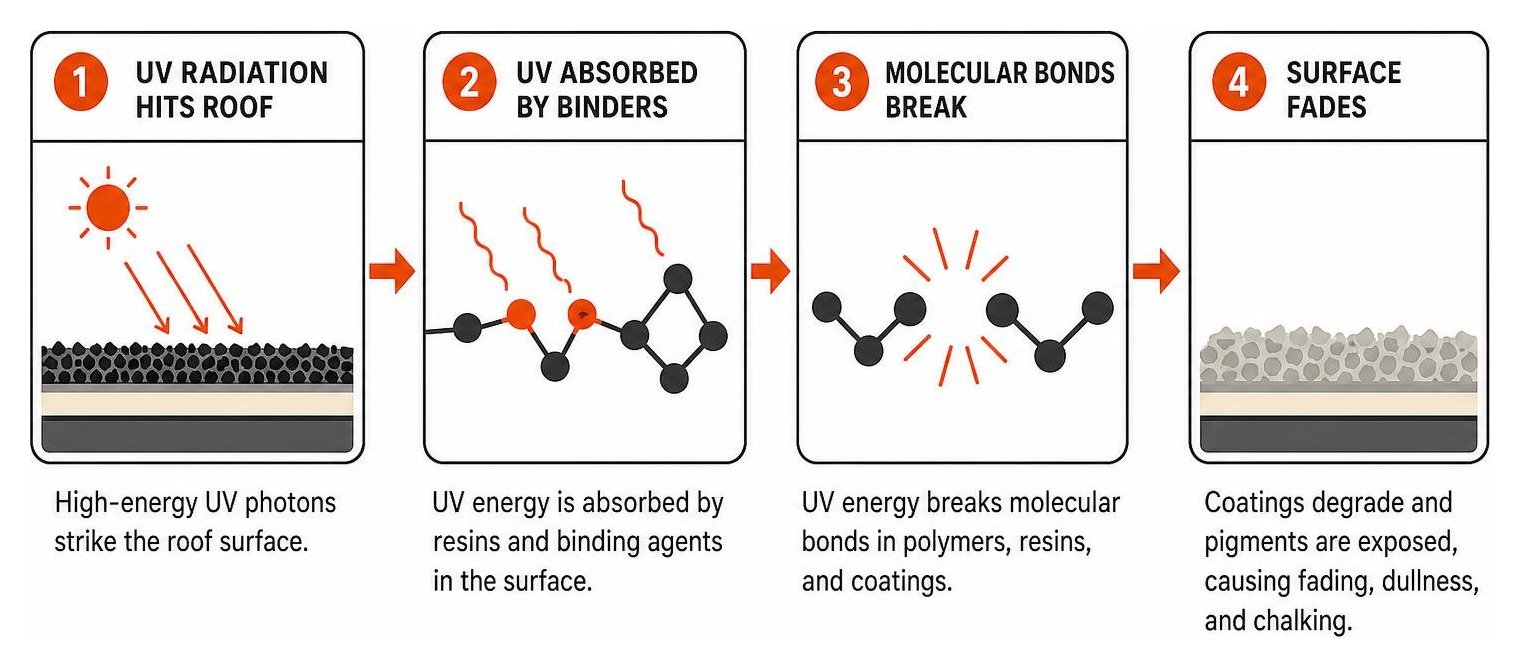
When solar radiation strikes an exterior surface, the clear resins and binding agents absorb high-energy UV photons. This energy breaks chemical bonds, causing the surface to lose its protective flexibility and reflective gloss. As the top protective layers break down, embedded color pigments become exposed to direct environmental elements, leading to a bleached, dull, or chalky look.
At the statutory level, Florida acknowledges the physical impact of intense solar energy on building and vehicle surfaces. For example, Florida statutory standards on solar reflectance establish baseline limits for solar reflectance and light transmission to manage thermal stress on glass surfaces. Similarly, roofing systems require carefully balanced reflectance and emissivity to prevent excessive thermal absorption. Along coastal environments, this photo-chemical breakdown accelerates significantly when property owners do not actively protect beachfront properties from salt air corrosion to maintain building envelope resilience.
Why Solar Exposure Accelerates Florida Sun Roof Fading on Darker Materials
Darker exterior surfaces absorb a much wider spectrum of solar radiation than lighter materials. On a typical summer afternoon in Brevard County, FL, dark roof planes routinely reach surface temperatures exceeding 150°F to 160°F. This intense thermal absorption magnifies the rate of underlying chemical breakdown.
When organic and synthetic color pigments undergo sustained thermal stress alongside UV exposure, their chemical structures degrade rapidly. Asphalt shingles in deep hues, such as charcoal gray shingles, absorb considerable radiant heat. This continuous daily cycling between extreme afternoon heat and evening cooling causes microscopic expansion and contraction across the material substrate, weakening the adhesion between protective surface granules and underlying asphalt layers.
Coastal Humidity and Salt Air as Degradation Multipliers
In coastal cities like Melbourne, Satellite Beach, and Cocoa Beach, solar radiation does not work in isolation. High ambient humidity, often lingering between 70% and 90%, pairs with airborne ocean salt to create a continuous electrochemical assault on roofing systems.
Microscopic salt crystals carried inland by coastal breezes settle across the surface of the roof. When morning dew and high humidity dissolve these salt particles, they create a conductive, electrolytic solution. This active liquid film accelerates the oxidation of exposed metal fasteners, flashing details, and protective organic topcoats.
Furthermore, rapid evaporation during sudden afternoon rainstorms leaves behind acidic deposits that etch hot protective surfaces. Establishing a proactive routine with coastal roof maintenance tips helps homeowners mitigate this corrosive cycle before protective barriers wear away.
Early Warning Signs of Roof Sun Damage and Color Loss
Detecting UV-driven wear in its earliest stages allows homeowners to intervene before superficial weathering turns into a leaking roof. Sun damage begins at a microscopic level, gradually revealing clear, visible indicators across the surface.
Key physical indicators of advancing sun damage include:
- Loss of Surface Gloss and Depth: The original deep, uniform sheen transitions into a flat, dry, or patchy appearance across sun-exposed slopes.
- Surface Hazing and Chalking: A powdery, white-to-gray oxidized residue forms over the surface, which rubs off easily during professional cleaning or touch.
- Granule Erosion on Shingles: Ceramic-coated granules loosen and wash down through drainage channels, leaving bare patches on asphalt layers. Homeowners can learn how to fix roof granule loss to understand how contractors evaluate remaining surface protection.
- Micro-Pitting and Color Blotches: Localized patches where intense UV exposure has burned away top sealants, creating an uneven, mottled texture.
Distinguishing Superficial Fading from Structural Breakdown
It is important to understand the boundary between cosmetic fading and material failure. Color loss alone is often an aesthetic concern that may be managed with specialized coatings. However, once UV degradation penetrates deep into the roofing substrate, the structural integrity of the roof envelope is compromised.
When asphalt shingles become brittle, curl at the edges, or crack under minor flexure, their water-shedding capabilities are significantly reduced. On metal roof installations, clear signs of structural concern include peeling paint layers, chalking that exposes bare primer or metal, and rusted fastener points. When these advanced conditions appear, evaluating signs you need a new roof with a licensed contractor helps determine whether protective treatments remain a viable path forward.
How to Protect and Restore Faded Roofing Systems
Preserving an aging roof against intense Central Florida weather requires a combination of routine maintenance, properly matched restoration products, and smart architectural ventilation. Property owners can learn practical methods to extend roof lifespan in the Florida sun by adopting proactive care strategies rather than waiting for leaks to develop.
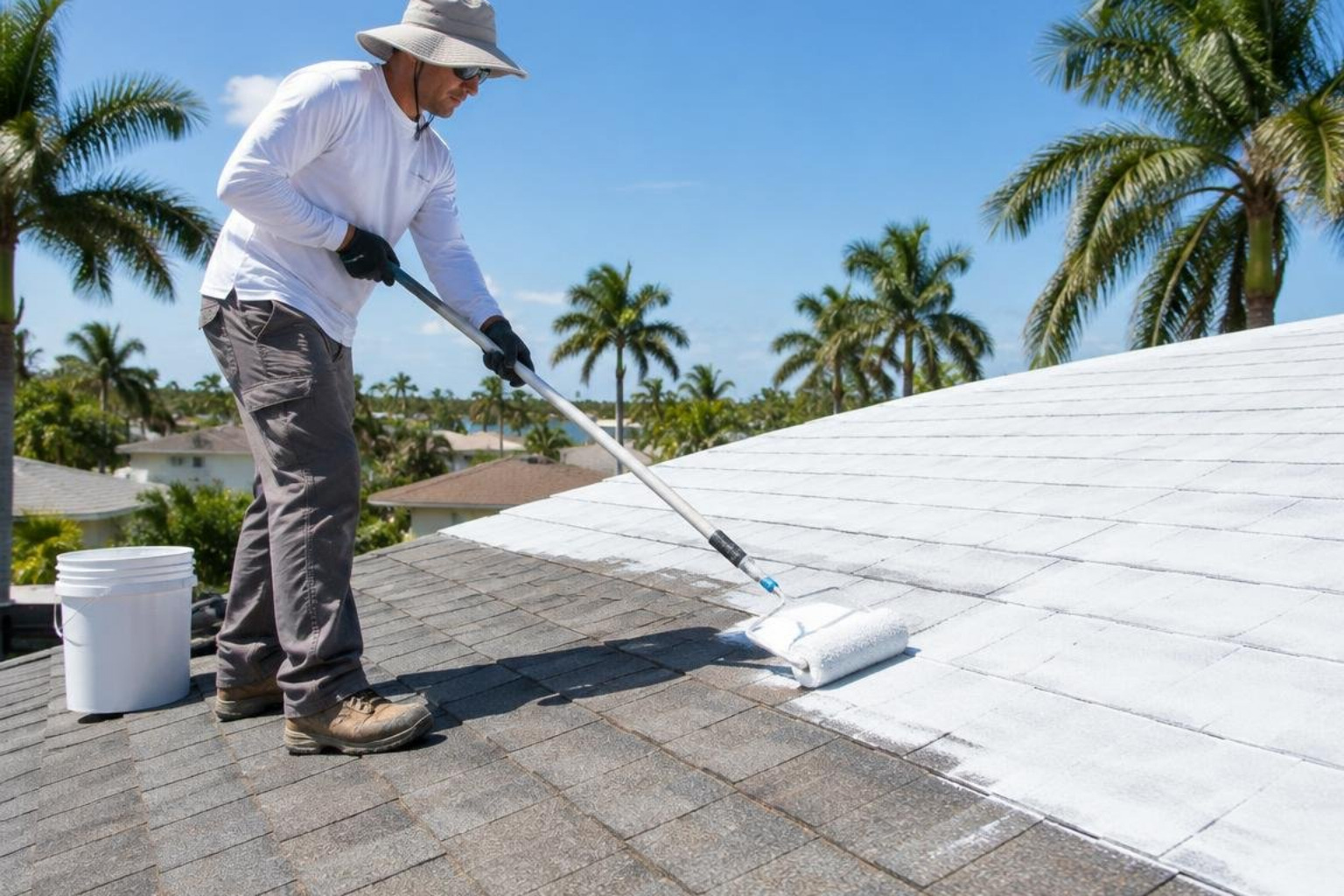
Key Protective Treatments for Mitigating Florida Sun Roof Fading
Different roofing assemblies require specific restorative treatments to establish an effective UV barrier without trapping moisture inside the building envelope:
- Elastomeric Roof Coatings: These liquid-applied, rubberized coatings form a seamless, flexible membrane over approved roof substrates. They offer strong elasticity, expanding and contracting with diurnal temperature changes while blocking UV radiation.
- High-Grade Acrylic Sealants: Formulated for compatibility with various roofing profiles, premium 100% acrylic coatings provide reliable solar reflectance and color retention, helping to lower exterior surface temperatures.
- Fluoropolymer and PVDF Metal Finishes: For architectural metal roofs, polyvinylidene fluoride (PVDF) factory finishes deliver exceptional defense against fading, chalking, and coastal chemical exposure. Understanding the impact of climate on roofing materials helps ensure the right finish is selected for long-term resistance.
Ventilation and Reflectance Strategies to Reduce Heat Buildup
A durable roof relies on balanced attic airflow. When an attic space traps intense radiant heat, the underside of the roof deck can reach temperatures well over 140°F. This prolonged thermal baking cooks asphalt shingles and underlayment membranes from beneath, dramatically speeding up top-surface fading, binder drying, and shingle cracking.
A properly configured ventilation network combines intake soffit vents with exhaust ridge vents or off-ridge baffles to maintain continuous passive airflow. Understanding the science behind roof ventilation clarifies how continuous thermal exhaust reduces structural cooling loads and preserves exterior surface treatments.
Repair vs. Replacement: When Is Sun Damage Beyond Coating?
When assessing sun-damaged roofing across Palm Bay, Rockledge, or Merritt Island, homeowners often weigh the costs and benefits of restorative coatings against full roof replacement. Pricing for both options varies considerably based on square footage, roof pitch, accessibility, underlying deck condition, material type, and code-mandated wind mitigation requirements. An in-person inspection by a professional is necessary to determine actual investment needs.
The decision between repairing, recoating, or replacing depends on structural health, permitting parameters, current local building codes, and material condition.
| Evaluation Factor | Restorative Coating / Repair | Full Roof Replacement | Repayment / Funding Option |
|---|---|---|---|
| Primary Indication | Minor fading, intact substrate, early chalking, minimal granule loss | Severe shingle cracking, extensive granule loss, delamination, active interior leaks | Grants / Assistance: Repayment not required |
| Expected Lifespan | Extends functional service life typically by several years with maintenance | Provides a completely new full-system warranty (multi-decade life) | Financing / Loans: Regular monthly repayment required |
| Structural Impact | Seals hairline micro-porosity and improves solar reflectance | Replaces compromised underlayment, flashing, fasteners, and structural decking | Private Capital / Insurance: Policy terms, deductibles, and carrier decisions dictate out-of-pocket balance |
Homeowners evaluating funding paths should note that government mitigation grants generally do not require repayment if compliance criteria are satisfied, whereas home improvement financing and private loans require regular monthly principal and interest payments.
When evaluating an aging roof, consulting a roof repair and replacement guide assists property owners in determining whether a restorative treatment is technically practical or if a complete system upgrade is needed.
Frequently Asked Questions About Roof Sun Damage
Can severe sun fading be restored without a complete roof replacement?
If the base roofing material remains structurally sound, uncracked, and properly adhered, a qualified roofing contractor can often apply specialized, UV-blocking restorative coatings to revive color and add a protective layer. However, if the underlying shingles are curled, brittle, or suffering from widespread granule loss, applying a coating will only mask visual defects without fixing the underlying water-intrusion risk.
How much does severe roof fading impact property resale value?
Pronounced discoloration, blotchy patches, and visible chalking can reduce a home’s curb appeal, prompting prospective buyers and property appraisers to question the overall age and condition of the roof system. In many instances, visible exterior weathering leads prospective purchasers to request repair credits or full replacement allowances during purchase negotiations.
What role does physical shade or a carport play in preventing UV damage?
Overhead structures, carports, and natural shade canopies block direct solar radiation and keep surface temperatures lower, helping to minimize photo-oxidation and thermal expansion. For residential structures where full overhanging shade is not feasible, utilizing high-reflectance materials and proper attic ventilation provides a similar protective effect against daily thermal stress.
Conclusion
Managing Florida sun roof fading across Brevard County, FL requires a clear understanding of how intense UV radiation, high temperatures, humidity, and salt air interact to wear down exterior building materials. While cosmetic color loss is a natural consequence of the local climate, early surface chalking, erosion, and granule degradation require proactive professional attention before water intrusion occurs.
MLG Roofing assists homeowners across Melbourne, West Melbourne, Palm Bay, Viera, and nearby communities with professional roof evaluations, targeted leak repairs, restorative maintenance, and complete system replacements. To schedule an in-person assessment of your roof’s condition and explore suitable protective solutions, reach out to our team for expert roof repair services tailored to local coastal conditions.