
What to Do Right Now If You Need a Storm Damage Roofing Company Near Me
If you’re searching for a storm damage roofing company near me in Brevard County, FL, here’s what to do first:
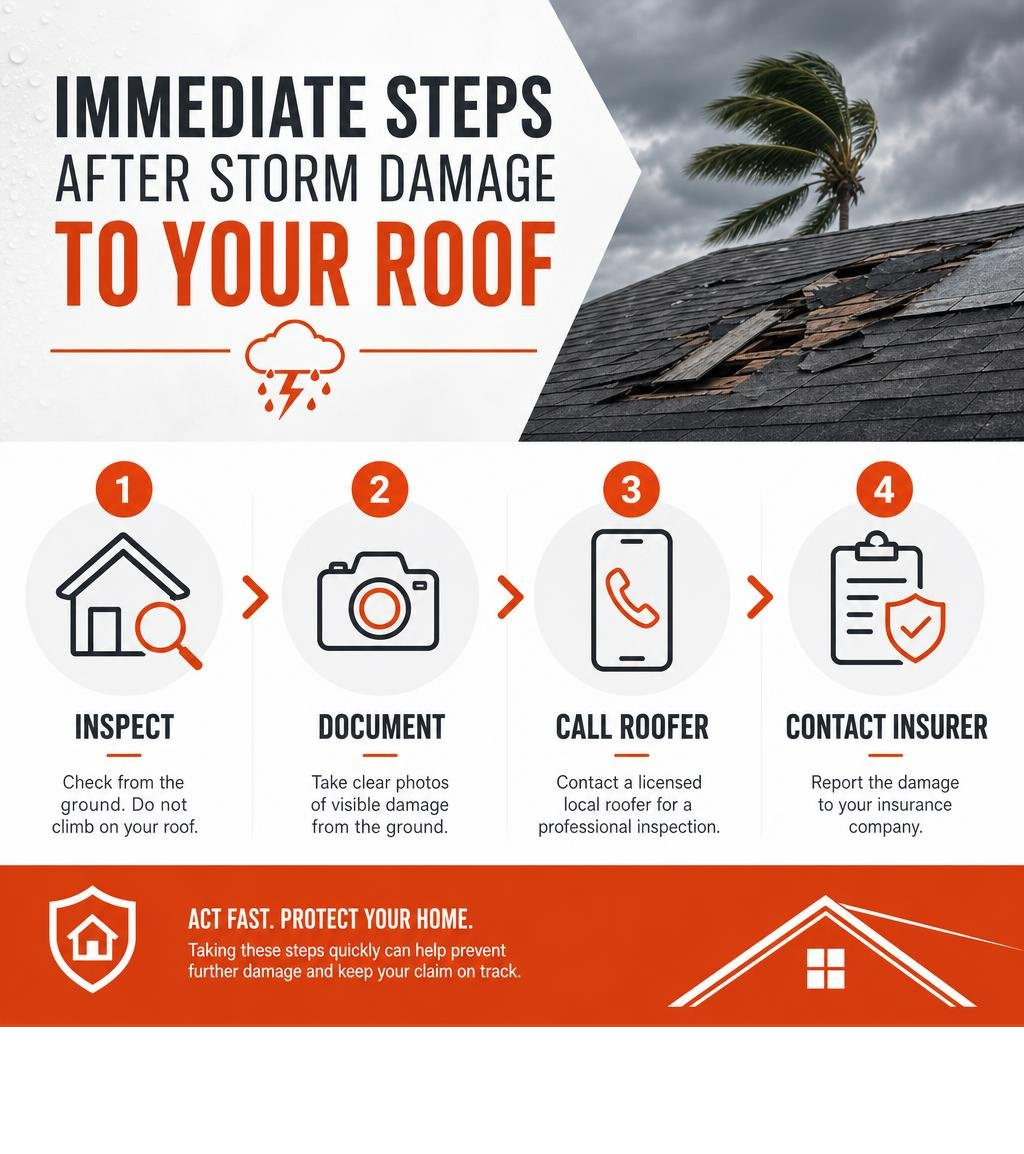
- Stay safe — do not climb on your roof
- Document visible damage with photos from the ground
- Call a licensed local roofer for a professional inspection
- Contact your insurance company to report the damage
- Ask about emergency tarping if you have an active leak
Living on Florida’s Space Coast means your roof takes a beating from coastal weather elements. Hurricane-force winds, salt air, intense UV exposure, and sudden heavy rain all work against your roof year-round. After a major storm, the damage isn’t always obvious from the ground — but that doesn’t mean it isn’t there.
The problem most homeowners run into isn’t the storm itself. It’s figuring out who to call. After severe weather, out-of-town contractors flood local neighborhoods offering quick fixes. Some are legitimate. Many are not. Knowing how to find a trustworthy local roofing company can be the difference between a solid repair and a costly headache.
This guide walks you through exactly what to look for when choosing a storm damage roofer in Brevard County — from credentials and warranties to insurance claims and repair timelines.
What to Look For in a Storm Damage Roofing Company Near Me
When severe weather rolls through the Space Coast, the sudden demand for roof repairs brings out two very different types of contractors: established local professionals and out-of-town storm chasers. Storm chasers travel from state to state following major weather events, offering cheap prices and quick timelines. However, once their trucks roll out of town, any warranties they promised may be difficult to enforce.
Working with a local contractor helps ensure that your roof is repaired with Florida’s coastal conditions in mind, including wind exposure, heavy rain, salt air, and local permitting requirements. Local companies are also invested in the community and remain available to service their workmanship guarantees years down the road.
| Feature | Local Certified Roofers | Out-of-Town Storm Chasers |
|---|---|---|
| Physical Office | Permanent local address in Brevard County | Temporary PO Box or out-of-state address |
| Florida Licensing | Verified Florida state license (CCC) | Out-of-state license or working under someone else’s |
| Local Code Knowledge | Familiar with coastal wind exposure and local permitting expectations | Generic national installation practices |
| Warranties | Backed by local physical presence and manufacturer credentials | Often difficult to service once the company leaves the area |
| Insurance Knowledge | Experience documenting Florida storm damage for claims | High-pressure sales tactics or rushed paperwork |
To find a reputable provider, verify licensing directly instead of relying only on a truck decal or business card. Homeowners can search contractor licenses through the Florida Department of Business and Professional Regulation license lookup. You can also review local reputation through trusted resources such as reputable business directories and recent customer reviews.
Essential Credentials for a Storm Damage Roofing Company Near Me in Melbourne
A reputable roofing contractor operating in Melbourne, Palm Bay, or the surrounding Space Coast should have specific credentials before setting foot on your property. First and foremost, ask for an active certified roofing contractor license (CCC) from the Florida Department of Business and Professional Regulation. This license helps show that the contractor is authorized to perform roofing work in Florida and understands the structural and permitting expectations that apply to coastal roofing projects.
Additionally, a legitimate contractor should carry active general liability insurance and workers’ compensation insurance. Without these, you as the property owner could potentially face legal or financial complications if accidental property damage or worker injuries occur on your site. When evaluating local teams, always ask for proof of these policies sent directly from their insurance agency. If you are dealing with minor wear or suspect hidden issues after a storm, scheduling a professional assessment is a reliable way to safeguard your investment. You can read about roof repair in Brevard County to understand the process, which helps you make an informed decision before hiring a team.
Evaluating Warranties and Workmanship Guarantees
When investing in storm restoration, you are paying for long-term peace of mind. This is why understanding the difference between manufacturer material warranties and contractor workmanship guarantees is vital.
Material warranties cover defects in the roofing components themselves, such as asphalt shingles or metal panels. Major manufacturers offer extended warranties, but these are typically only valid if the system is installed by a certified manufacturer installer. Workmanship guarantees, on the other hand, are provided directly by the contractor to cover installation errors. A local contractor with a solid reputation will stand behind their work with a multi-year workmanship warranty, ensuring that if a leak develops due to an installation oversight, they will return to evaluate and address the issue according to the warranty terms.
Identifying Storm Damage on Space Coast Roofs
Storm damage in coastal Central Florida is unique. While other parts of the country deal primarily with heavy weather loads, our main adversaries are high-velocity winds, torrential downpours, and flying debris.
In communities like Rockledge and Viera, a storm’s impact can range from highly visible structural damage to subtle compromises in your roof’s water barrier. Water intrusion is particularly insidious; wind-driven rain can find its way under shingles or tile systems without causing an immediate drip inside your living room. Over time, this hidden moisture leads to rotted roof decking and mold growth. To protect your home, you should familiarize yourself with the subtle warning signs of storm-related wear. For detailed guidance, you can review expert tips for identifying roof damage after a storm in Melbourne to help you spot issues early.
Spotting Wind and Hurricane Damage
High winds create a powerful vacuum effect known as wind uplift. As wind sweeps up and over your roofline, it pulls at the edges and corners of your roofing materials.
On asphalt shingle roofs, this uplift can crease, lift, or completely tear shingles away. Creased shingles occur when the wind lifts the shingle flap upward, snapping the internal fiberglass mat. Even if the shingle settles back down, the seal is broken, and its water-shedding capability is permanently compromised. On metal roofs, high winds can loosen fasteners, causing metal panels to lift or rattle. If you live in Merritt Island or Cocoa, checking your roof’s perimeter, eaves, and ridges after a windstorm is critical, as these areas experience the highest wind pressures. If your home has sustained wind damage, acting quickly is key to preventing major leaks. You can explore targeted solutions for hurricane roof repair in Melbourne to address these issues before they worsen.
Recognizing Hail and Debris Impact
While giant hail is rare on the Space Coast, small hail and wind-borne debris are common during severe thunderstorms and tropical weather. When hail or debris strikes an asphalt shingle, it knocks away the protective ceramic granules, exposing the underlying asphalt layer to raw UV radiation. This is often referred to as “bruising.” These damaged spots appear as dark, soft circles on the shingle and will quickly degrade under the hot Florida sun, leading to premature leaks.
Other signs of impact damage include dented metal valley flashing, cracked roof vents, and bent metal trim. In coastal areas like Cocoa Beach and Sebastian, fallen tree limbs and flying debris from nearby palm trees can also puncture roofing membranes or crack clay tiles. Identifying these issues early prevents minor punctures from turning into major structural problems. For a complete walkthrough on how to inspect your property safely, consult this Detailed Guide to Storm Damage Roof Assessment.
Immediate Steps After Discovering Roof Damage
If you discover that your roof has sustained damage during a storm, taking swift, organized action can save you thousands of dollars in secondary repairs.
Your first priority must always be safety. Never walk on a wet, storm-damaged roof, and stay clear of any areas with visible structural sagging or downed power lines. Perform a visual inspection from ground level using binoculars, noting any missing materials, exposed underlayment, or damaged trim. Inside your home, check the attic and ceilings for fresh water stains, bubbling drywall, or active drips. Managing moisture immediately is essential to prevent mold from taking hold in the humid Florida climate.

Securing Your Property with Emergency Services
When a storm leaves a gaping hole in your roof or tears away large sections of shingles, you cannot afford to wait weeks for a permanent replacement. Active water intrusion will quickly destroy insulation, ruin drywall, and damage your personal belongings.
This is where emergency tarping services become essential. Professional emergency roof tarping involves securing heavy-duty, UV-resistant tarps over the damaged areas using wooden furring strips. This temporary barrier keeps water out while you navigate the insurance process and schedule permanent repairs. If you live in West Melbourne or surrounding areas and are dealing with an active leak, securing professional temporary protection is critical. You can find prompt assistance by exploring Emergency Roof Tarping Services for Brevard County and Beyond.
Documenting Damage for Your Insurance Claim
To ensure a smooth insurance claim process, you must act as a meticulous documentarian. As soon as it is safe to go outside, take clear photos and videos of all visible damage from multiple angles. Be sure to capture the surrounding yard, dented trim, damaged window screens, and any fallen tree limbs, as these serve as supporting evidence of the storm’s severity.
Keep a detailed log of the date and time of the storm, as well as any local news reports or weather advisories describing the event. Inside your home, photograph any water stains on ceilings, walls, or personal property. Having a professional roofer conduct a comprehensive inspection will provide you with an insurance-ready damage report, complete with close-up photos of roof-level damage that you cannot safely see from the ground. Our Brevard County storm damage repair and identification guide offers a complete checklist to help you prepare your home for the next steps, ensuring you have all the necessary information ready for your provider.
Navigating the Insurance Claim Process for Storm Damage
Navigating a homeowners insurance claim for roof damage can feel overwhelming, but understanding the general process helps you maintain control. Most standard Florida homeowners policies cover sudden storm damage caused by wind, hurricanes, and falling objects. However, policies typically carry separate deductibles for hurricane damage versus standard windstorm damage, which are often calculated as a percentage of your home’s total insured value.
For commercial property owners and business managers, a storm-damaged roof presents additional challenges, such as potential business interruption, tenant complaints, and mold liabilities. Commercial claims require precise documentation of structural damage, code upgrade requirements, and operational impacts to ensure fair compensation. To understand the step-by-step mechanics of filing a successful claim, you can read our guide on navigating insurance claims for roofing damages to prepare for the process.
Working with Adjusters and Contractors
Once you file a claim, your insurance company will assign an insurance adjuster to inspect your property and estimate the cost of repairs. It is highly beneficial to have your chosen roofing contractor present during the adjuster’s visit. A knowledgeable local roofer can point out hidden damage, such as compromised flashing or structural bruising, that the adjuster might otherwise overlook.
Roofing contractors and insurance adjusters often use the same industry-standard estimating software to calculate repair costs based on standardized local material and labor rates. If the adjuster’s initial estimate is too low to cover the actual cost of a quality repair, your contractor can submit a “supplement.” This is a formal request supported by photo documentation and code requirements to adjust the claim payout to cover the necessary work.
Understanding Repair vs. Replacement Decisions
Deciding whether to repair a section of your roof or replace the entire system depends on several key factors:
- Extent of the Damage: If the storm damage is isolated to a small area, a targeted repair may be the most logical and cost-effective solution. However, if the damage is widespread across multiple roof slopes, a complete replacement is usually necessary.
- Age of the Roof: An older asphalt shingle roof near the end of its natural lifespan is more brittle and difficult to repair without damaging surrounding shingles. In these cases, insurance companies may approve a full replacement.
- Florida Building Code Requirements: Local building codes dictate when a roof must be fully replaced rather than repaired. If a professional evaluation determines that repairing the damaged section will compromise the structural integrity of the overall system, a full replacement is often the safest choice.
For homeowners considering their options, balancing immediate repair costs against the long-term value of a new system is critical. You can learn more about making this decision by reading about residential roof repairs in Brevard County to weigh your options carefully. This helps ensure you choose the most cost-effective path for your property.
Frequently Asked Questions About Storm Damage Roofers
How long does it take to repair or replace a storm-damaged roof?
The timeline for storm restoration varies based on the extent of the damage, material availability, and the local permitting process. Minor repairs can often be completed in a single day. A full residential roof replacement typically takes one to three days of active labor once work begins. However, the preparation phase—which includes obtaining building permits from your local municipality, scheduling municipal inspections, and waiting for insurance claim approvals—can take anywhere from a few weeks to a couple of months.
Will my homeowners insurance cover a full roof replacement?
Whether your insurance covers a full replacement depends on your specific policy terms, the age of your roof, and the extent of the storm damage. If a professional inspection proves that the roof sustained significant, widespread damage from a covered peril (such as hurricane-force winds), many policies will cover the cost of a replacement, minus your deductible. That some policies pay “Actual Cash Value” (which factors in depreciation based on the roof’s age) rather than “Replacement Cost Value” (which covers the full cost of a new roof today).
How do I find a reputable storm damage roofing company near me?
To find a trustworthy contractor on the Space Coast, start by asking neighbors for local recommendations and checking online reviews on platforms like Google and reputable business directories. Verify that the company has a physical office in the area and holds an active Florida certified roofing contractor license. Avoid any contractor who knocks on your door offering “free roofs” or asking you to sign over your insurance benefits before an inspection has occurred. For more tips on vetting local companies, you can read about home roof repair in Brevard County to guide your search. Taking these precautions helps protect your home from unreliable operators.
Conclusion
When a severe storm impacts your property on the Space Coast, your roof is your home’s first and most important line of defense. Navigating the aftermath of storm damage requires quick action, clear documentation, and a partnership with a professional contractor who understands the unique demands of Florida’s coastal climate.
Whether you need a minor leak repaired or a full residential or commercial roof system replaced, choosing a licensed, insured, and locally established roofing partner ensures your home remains protected for years to come. If you suspect your roof has suffered damage in a recent storm, do not wait for a leak to appear inside your home. Contact a local expert today to schedule a professional, honest evaluation.
If you are ready to take the next step in protecting your home, you can request an inspection through our emergency roof repair services portal, or read our comprehensive Brevard County storm damage repair and identification guide to learn more about what to expect.
