
When Your Roof Fails in Central Florida, Here’s What to Do First
If you need emergency roofing services in Central Florida right now, here is what matters most:
- Stay safe — move away from active leaks, avoid sagging ceilings, and turn off electricity in affected areas.
- Contain the damage — place buckets under drips and move valuables away from the leak.
- Document everything — take date-stamped photos and ground-level video before any repairs begin.
- Call a licensed local contractor — look for a Florida DBPR-licensed roofer who can provide same-day or next-day response and emergency tarping.
- Contact your insurance company — report the damage as soon as it is safe to do so.
Central Florida experiences some of the highest thunderstorm activity in the country, and Brevard County homeowners also face tropical storms, hurricanes, coastal winds, salt air, and heavy seasonal rainfall. For homeowners along the Space Coast, that means coastal wind exposure, salt air, and fast-moving squalls are a recurring reality — not a rare event.
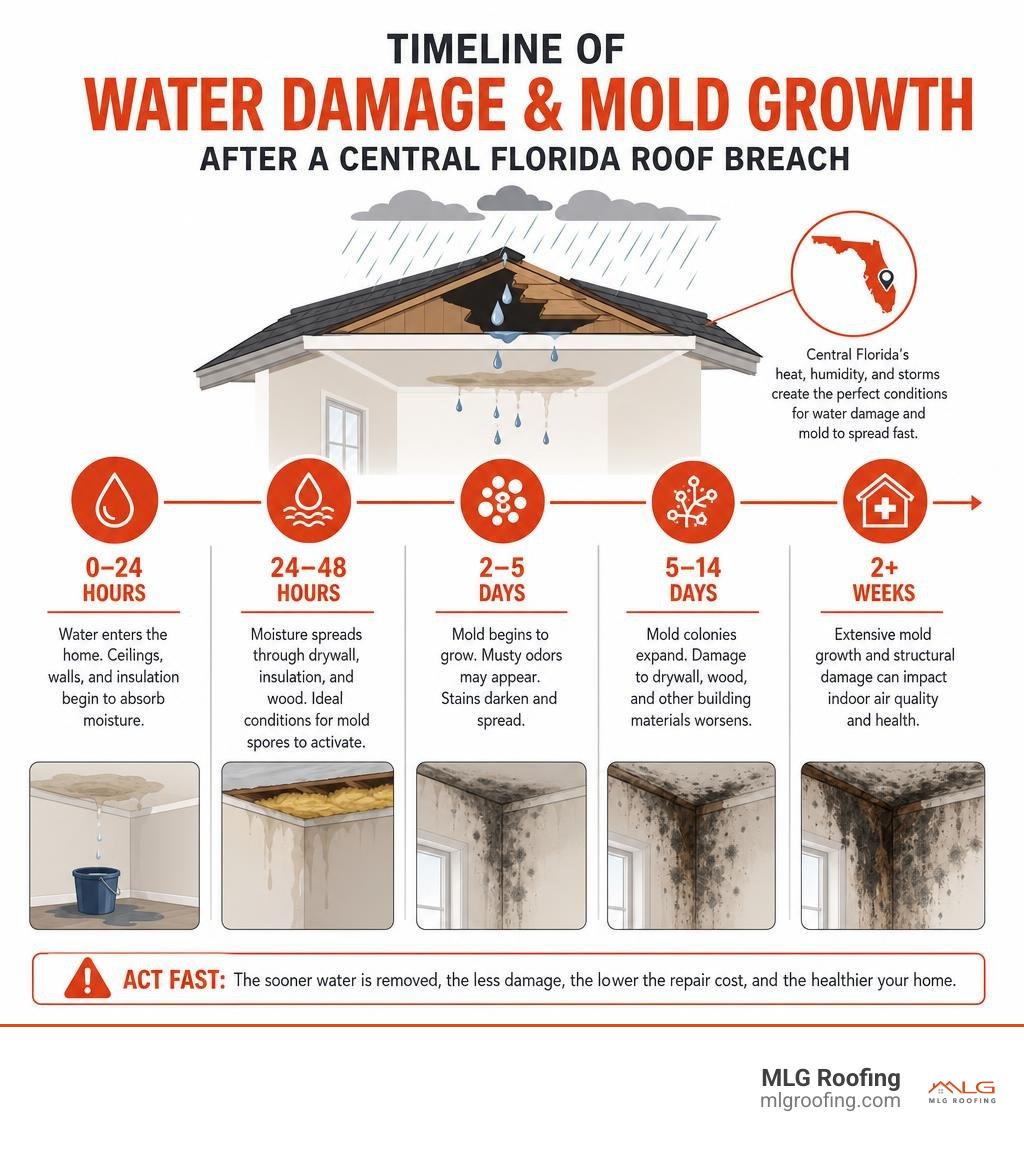
When a storm tears through and water starts coming in through your ceiling, the first 24 to 48 hours are critical. In Florida’s humidity, mold can begin developing within that window. Acting quickly — and calling the right contractor — limits how far the damage spreads and how much the repair ultimately costs.
This guide walks you through exactly what to do, from the moment you notice a leak to understanding your insurance options and deciding between repair and full replacement.
At MLG Roofing, we’ve responded to emergency roof leaks, hurricane damage, and wind-related failures across Brevard County for years. One of the biggest mistakes homeowners make is waiting too long to call after discovering active water intrusion. Even a few hours can allow moisture to spread into insulation, drywall, and framing.
What Qualifies as a Roofing Emergency in Central Florida?
Not every roof issue requires immediate, middle-of-the-night emergency intervention. A small, slow-dripping leak that only occurs during prolonged rainy days is a serious issue that needs a prompt professional inspection, but it does not carry the same immediate threat as a major structural breach. In contrast, a true roofing emergency is any situation where the structural integrity of your home is compromised, or where water is entering the living space in an uncontrolled manner.
In Brevard County, FL, the combination of intense summer heat, high winds, and torrential downpours means that minor vulnerabilities can escalate into catastrophic failures in a matter of hours. When water gets past the primary roofing material, it immediately tests the secondary water barrier. If that barrier is aged or degraded, water quickly saturates the underlying wooden decking, leading to rot and interior ceiling failures.
To determine if you need to call for leaking roof emergency repair in Brevard County, FL, it is helpful to understand the specific conditions that require rapid stabilization. True emergency situations generally fall into two categories: structural impact and severe weather breaches. If your home has sustained an opening that allows the elements inside, securing immediate emergency roofing services in Central Florida is the only way to prevent compounding structural damage.
Structural Failures and Impact Damage
Impact damage is one of the most common reasons homeowners require urgent assistance. During high-wind events, older trees and heavy limbs can easily snap, landing directly on residential properties. A fallen tree limb does not just damage shingles; it can crack rafters, puncture the roof deck, and compromise the structural stability of the entire system.
When a structural failure occurs, the immediate safety hazard is high. A punctured roof deck allows massive amounts of rainwater to pour directly into the attic and living spaces, saturating insulation and drywall. If you are dealing with structural damage, a professional contractor must perform detailed decking inspections to determine if the rafters are safe before any temporary waterproofing can begin. Homeowners facing these severe conditions can learn more about securing their properties by reading about emergency roofing in Merritt Island, FL.
Severe Weather and Wind Uplift
Another common emergency scenario is severe wind uplift. Florida storms are notorious for producing high-velocity winds that get underneath the edges of roofing materials. This wind uplift can cause significant seal strip damage, lifting entire sections of asphalt shingles or tearing away metal panels.
When shingles are stripped away, the underlayment is left completely exposed to wind-driven rain. While modern underlayments provide some temporary water resistance, they are not designed to withstand direct, heavy rainfall without the protection of shingles or metal. With Central Florida averaging 90 thunderstorm days per year and experiencing frequent tropical systems, wind-driven rain can push gallons of water under compromised materials in minutes. If a storm has stripped large sections of your roof, scheduling a hurricane roof repair in Melbourne, FL is necessary to stabilize the system before the next storm system rolls through.
Immediate Steps to Take During a Roof Emergency in Melbourne, FL
When water is actively entering your home, it is easy to feel overwhelmed. However, taking systematic, calm action can save you thousands of dollars in interior restoration costs and protect your family from unnecessary hazards.
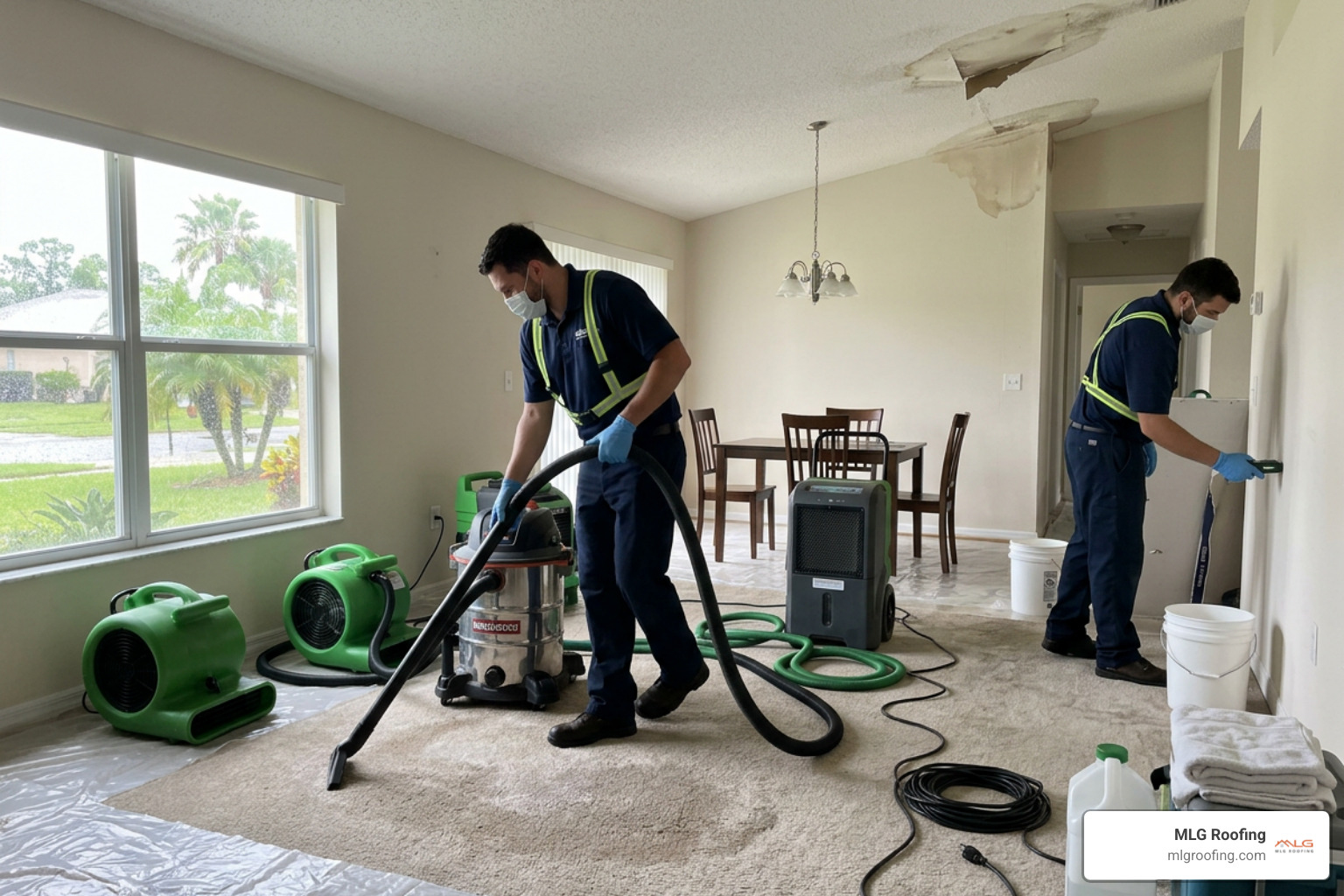
The moments immediately following a roof breach are about containment and safety. Do not attempt to climb onto the roof during a storm to assess the damage or install a temporary patch. Wet roofing materials are incredibly slick, and high winds make the environment extremely dangerous. Instead, focus on managing the situation from inside the home and preparing the necessary documentation for your contractor and insurance company. Homeowners can find more detailed guidance on assessing these situations by reading about identifying roof damage after a storm in Melbourne, FL.
Ensuring Household Safety
Your absolute first priority is safety. Water traveling through a home does not just damage drywall; it also poses a severe electrical hazard. If water is dripping near light fixtures, electrical outlets, or major appliances, go to your home’s main electrical panel and shut off power to those specific zones immediately. If you smell burning, hear buzzing, or suspect electrical damage, leave the affected area and contact your utility or emergency services before attempting any cleanup.
Additionally, saturated drywall is heavy and prone to sudden collapse. If you notice a ceiling sagging or bulging under the weight of trapped water, keep your distance. Saturated plaster or drywall can give way without warning, releasing gallons of trapped water and heavy debris into the room. For more information on managing these hazards, consult our guide on urgent roof repairs and maintenance.
Mitigating Interior Damage
Once you have ensured the area is electrically safe, focus on containing the water to minimize interior damage. Move all electronics, furniture, clothing, and valuables out of the affected room entirely. If items are too heavy to move, cover them securely with heavy plastic sheeting.
Place buckets, plastic bins, or pots directly under active drips to catch incoming water. To prevent splashing and reduce noise, place an old towel in the bottom of each bucket. Because mold can set in within 24 to 48 hours in Florida’s warm, humid climate, containing the spread of moisture is essential. The dryer you can keep your home’s interior during the initial hours of a leak, the easier the eventual restoration process will be.
Documenting the Damage Safely
Before any cleanup or professional mitigation begins, you must document the damage. This documentation is vital for your future insurance claim and helps your roofing contractor understand exactly how the system failed.
Take clear, date-stamped photos and short videos of:
- Active water dripping or pooling inside the home.
- Damaged drywall, stained ceilings, and saturated carpets.
- Ruined furniture, electronics, or personal belongings.
- The exterior of your home from a safe distance on the ground, capturing any visible missing shingles, bent metal panels, or fallen debris.
Do not climb a ladder or walk on the roof to take photos. Ground-level photos and interior documentation are more than sufficient for starting the emergency mitigation process.
Professional Mitigation: Emergency Roofing Services in Central Florida
Once you have stabilized the interior of your home, the next step is calling a licensed professional to perform emergency mitigation. A licensed contractor has the proper safety equipment, heavy-duty materials, and experience required to stabilize a compromised roof under challenging post-storm conditions.
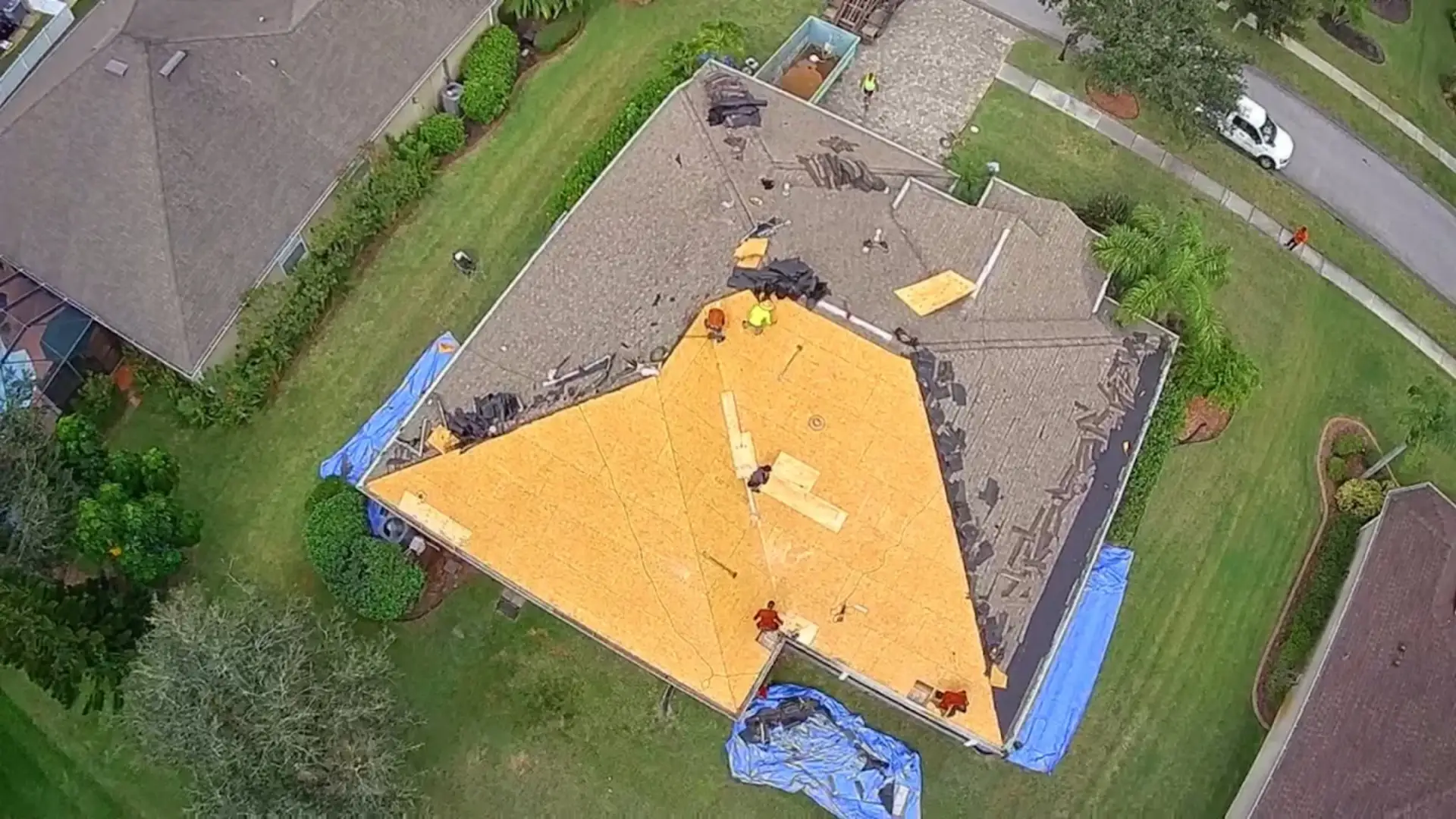
When you contact a professional team for emergency services, their primary goal is to provide immediate, temporary waterproofing to stop active water intrusion. Professional emergency crews also evaluate whether the roof can be safely accessed before anyone climbs onto it, especially after structural damage or ongoing severe weather. This temporary stabilization protects your home’s structural framing and interior finishes while a permanent repair plan is developed. Homeowners in the region can connect with a qualified team by visiting MLG Roofing: Central Florida Roofing Contractor.
The Role of Emergency Roof Tarping
The most common and effective method for temporary post-storm stabilization is professional roof tarping. This involves securing a heavy-duty, UV-resistant, waterproof tarp over the damaged areas of the roof.
Emergency tarping typically costs between $500 and $2,000, depending on the overall size of the roof, its pitch, and the accessibility of the damaged sections. Professional crews use specialized high-wind tarps and secure them using wooden furring strips fastened along the edges. This prevents the wind from getting under the tarp and tearing it away during subsequent storms. If your home has sustained wind or impact damage, arranging for professional tarping is a critical first step. Homeowners in surrounding areas can find specialized local support by looking into emergency roof repair in Rockledge, FL.
Material-Specific Emergency Handling
Different roofing materials require distinct handling techniques during an emergency. A professional contractor understands these differences and will tailor their mitigation strategy to match your specific roof type:
- Asphalt Shingles: These are highly susceptible to wind uplift and seal strip damage. Emergency tarping is highly effective for shingles because the flat surface allows for secure fastening with furring strips.
- Concrete Tiles: Tile roofs are popular in coastal Florida for their durability, but they are heavy and can crack under impact from debris. Walking on a damaged tile roof requires extreme care, as stepping on cracked tiles can break adjacent ones. Crews must carefully locate the source of the leak beneath the tiles and apply targeted underlayment patches or specialized tarps.
- Metal Roofing: Metal panels are incredibly wind-resistant, but if a panel does lift or tear, it can expose large areas of the roof deck. Securing a tarp over metal roofing requires specific fastening techniques to avoid causing unnecessary damage to the surrounding metal panels, while accounting for the slick surface of the material.
Additionally, homes in coastal environments face constant salt air exposure and coastal corrosion. Fasteners and sealants used during emergency repairs must be highly corrosion-resistant to prevent rapid degradation.
Navigating Insurance Claims and Florida Roofing Code Considerations
For many homeowners, the cost of repairing storm damage is handled through a homeowner’s insurance policy. Navigating the claims process can feel complicated, but keeping a detailed, neutral record of all damage and repairs is the best way to ensure a smooth process.
To support your claim, your contractor will provide professional assessments, detailed photo documentation, and moisture readings that prove the extent of the water intrusion. Homeowners looking for a step-by-step breakdown of this process can refer to our guide on navigating insurance claims or consult our comprehensive Brevard County, FL storm damage repair guide.
Understanding Florida’s Former 25% Rule
Historically, Florida’s building code included a “25% Rule” that often required full roof replacement when repairs exceeded a certain threshold. Recent legislative updates have created exceptions for many existing roofs, but roof age, code requirements, available matching materials, and the extent of storm damage all continue to influence whether repair or replacement is appropriate. A licensed roofing contractor can evaluate how current code requirements apply to your specific roof.
This is especially important after storm damage because the right path is not always obvious from the ground. A roof with isolated damage and compatible materials available may be a repair candidate, while an older roof with widespread wind uplift, brittle shingles, compromised decking, or repeated leaks may still require a larger scope of work. The goal is to choose the option that restores the roof safely, meets current requirements, and protects the home against future Central Florida storms.
Working with Your Insurance Adjuster
When your insurance adjuster inspects your property, having clear, objective evidence is invaluable. Your roofing contractor can provide a detailed, written estimate and a comprehensive photo-based inspection report to hand directly to the adjuster.
Always ensure you are working with a licensed, local contractor. After major storms, out-of-state “storm chasers” often flood coastal Florida communities, offering quick repairs or promising guaranteed insurance approvals. These unlicensed operations often perform subpar work, fail to pull the necessary permits, and leave the area before their warranties can be tested. Working with an established local contractor ensures your repairs are fully permitted, compliant with the Florida Building Code, and backed by a real local warranty.
Repair vs. Replacement: Making the Right Decision After Storm Damage
Deciding whether to perform a localized repair or invest in a full roof replacement is a common challenge for homeowners after a severe weather event. While localized repairs are faster and less expensive upfront, they may not always be the safest or most cost-effective long-term solution.
To help protect your home against future storms, you must weigh the age of your current roof, the extent of the physical damage, and the long-term durability of the system. Homeowners can find practical advice on preparing their properties for severe weather by reading about preparing your roof for Florida’s climate and how to safeguard your roof against severe Florida weather.
| Decision Factor | Localized Repair | Full Roof Replacement |
|---|---|---|
| Roof Age | Best for roofs under 15 years old with pliable materials. | Highly recommended for roofs over 15–20 years old. |
| Damage Extent | Isolated to a single area (less than 25% of the surface). | Widespread wind uplift, multiple leaks, or structural impact. |
| Decking Condition | Clean, dry decking with zero signs of rot or sagging. | Compromised, soft, or water-saturated wooden decking. |
| Long-Term Protection | Resolves the immediate leak but does not address aging materials. | Installs a complete, modern system with a secondary water barrier. |
When a Localized Repair is Sufficient
A localized repair is often the most sensible choice if the damage is isolated and the rest of the roof is in good condition. For example, if a minor wind event lifts a few shingles on a ten-year-old roof, or if a localized leak is traced directly to a cracked pipe boot or failing flashing, a targeted repair can resolve the issue completely.
As long as the surrounding shingles remain pliable, the underlayment is intact, and the damage does not approach the 25 percent threshold, a professional repair will restore the integrity of the system without the need for a full replacement.
When a Full Roof Replacement is Required
A full roof replacement becomes necessary when the structural integrity of the roof is compromised, or when the materials are simply too old to withstand another Florida storm season. If your roof is over 20 years old, the asphalt shingles have likely suffered severe UV degradation, losing their protective granules and becoming brittle. Brittle shingles cannot be easily repaired because nailing into them often causes adjacent shingles to crack and fail.
Additionally, if decking inspections reveal widespread rot, or if wind uplift has detached large sections of the secondary water barrier, a complete replacement is the only way to ensure your home remains safe. While costs are highly variable based on roof size, materials, accessibility, and structural conditions, local Brevard County, FL contractor estimates for a professional, fully permitted residential roof replacement typically range from $12,000 to $30,000+ in 2026. A qualified contractor will handle all municipal permitting as part of the project.
Frequently Asked Questions About Emergency Roofing Services
How quickly can crews respond for emergency roofing services in Central Florida?
Response times for emergency roofing services depend heavily on current weather conditions and overall demand. During active storms with high winds, heavy rain, or lightning, it is not safe for crews to work on a roof. In these situations, dispatch protocols focus on scheduling immediate response as soon as the severe weather subsides. Under normal conditions, local teams can often respond within a few hours to assess the damage and install temporary waterproofing. Homeowners in need of urgent assistance can find localized support by exploring options for emergency roof repair in Merritt Island, FL.
Will my homeowners insurance pay for emergency roof tarping?
Most policies require homeowners to take reasonable steps to prevent additional damage after a covered loss. Professional emergency tarping is often considered part of that mitigation process, although coverage depends on your individual policy, deductible, cause of loss, and claim approval. Keep photos, invoices, and written documentation from your roofing contractor so you can provide them to your insurance adjuster.
How do I find reliable emergency roofing services in Central Florida after a major storm?
To find a reliable contractor after a major storm, always verify their licensing and insurance through the Florida Department of Business and Professional Regulation (DBPR). Look for an established business with a physical office in the region and a local phone number. Avoid out-of-state storm chasers who knock on doors offering quick fixes. Working with a contractor who employs HAAG-certified inspectors ensures you receive an accurate, professional damage assessment that will stand up to insurance scrutiny.
Conclusion
Handling a roofing emergency in Central Florida does not have to be an overwhelming experience. By prioritizing your family’s safety, taking immediate steps to contain interior water damage, and securing detailed photo documentation, you set the stage for a successful restoration.
When severe weather compromises your home, partnering with an established, licensed local contractor is the most reliable way to protect your property. MLG Roofing is a licensed and insured residential roofing contractor based in Melbourne, Florida, serving Brevard County, FL and surrounding Space Coast communities, including Palm Bay, West Melbourne, Rockledge, Viera, Merritt Island, and Sebastian. Whether you need immediate tarping to stop a leak or a comprehensive storm damage assessment, our team is dedicated to providing practical, code-compliant solutions tailored to Florida’s coastal climate.
If your home has sustained storm damage or is actively leaking, contact our team today to schedule professional emergency roof repair services and protect your home for the future.