
Emergency Roofing Services in Melbourne, FL
Emergency roofing services provide immediate protection when sudden roof damage threatens your home. Whether you’re dealing with an active leak, hurricane damage, or a fallen tree, emergency roofing helps stabilize the property until permanent repairs can be completed.
The good news is that most roofing emergencies can be stabilized quickly when addressed promptly. Emergency tarping, temporary weatherproofing, and professional inspections are designed to prevent additional damage until permanent repairs can safely be completed.
Here is a quick overview of what qualifies as a roofing emergency and what to do first:
- Active water intrusion – Water entering through the roof into living spaces requires same-day attention
- Structural damage or sagging – Any visible sagging, collapse, or decking exposure is an immediate safety concern
- Storm or hurricane damage – Missing shingles, blown-off flashing, or debris impact after a storm
- Fallen tree or large debris – Any impact that punctures or compresses the roof structure
- Exposed roof decking – Decking left open to rain accelerates rot and mold risk rapidly
Knowing what qualifies as a true roofing emergency helps homeowners respond quickly without overreacting to minor issues that can safely wait for a scheduled repair.
What to do right away:
- Move valuables and electronics away from the leak
- Place containers to catch dripping water
- Stay away from the roof — do not attempt to climb it
- Photograph all visible damage from the ground
- Call a licensed emergency roofing contractor as soon as it is safe so emergency stabilization can begin.
In Brevard County, FL, roofing emergencies are a year-round reality. The Space Coast sits in a high hurricane-exposure zone, and even storms that don’t make direct landfall can produce wind uplift, flying debris, and heavy rain that overwhelm aging or poorly maintained roofs. A roofing emergency service can help stabilize the home quickly, reduce interior damage, and give homeowners a clear next step after a stressful storm or sudden leak.
At MLG Roofing, we’ve responded to emergency roof damage across Brevard County following hurricanes, severe thunderstorms, fallen trees, and sudden roof leaks. In many cases, acting quickly with temporary stabilization has prevented thousands of dollars in additional interior damage.
This guide walks you through everything you need to know — from recognizing a true emergency to navigating insurance documentation and choosing a qualified contractor in Brevard County, FL.
Identifying When You Need Emergency Roofing Services
Not every minor leak or misplaced shingle requires a frantic midnight call to a roofing crew. However, misjudging a major vulnerability can result in costly interior damage. Homeowners should focus first on visible warning signs they can recognize safely from the ground or from inside the home.
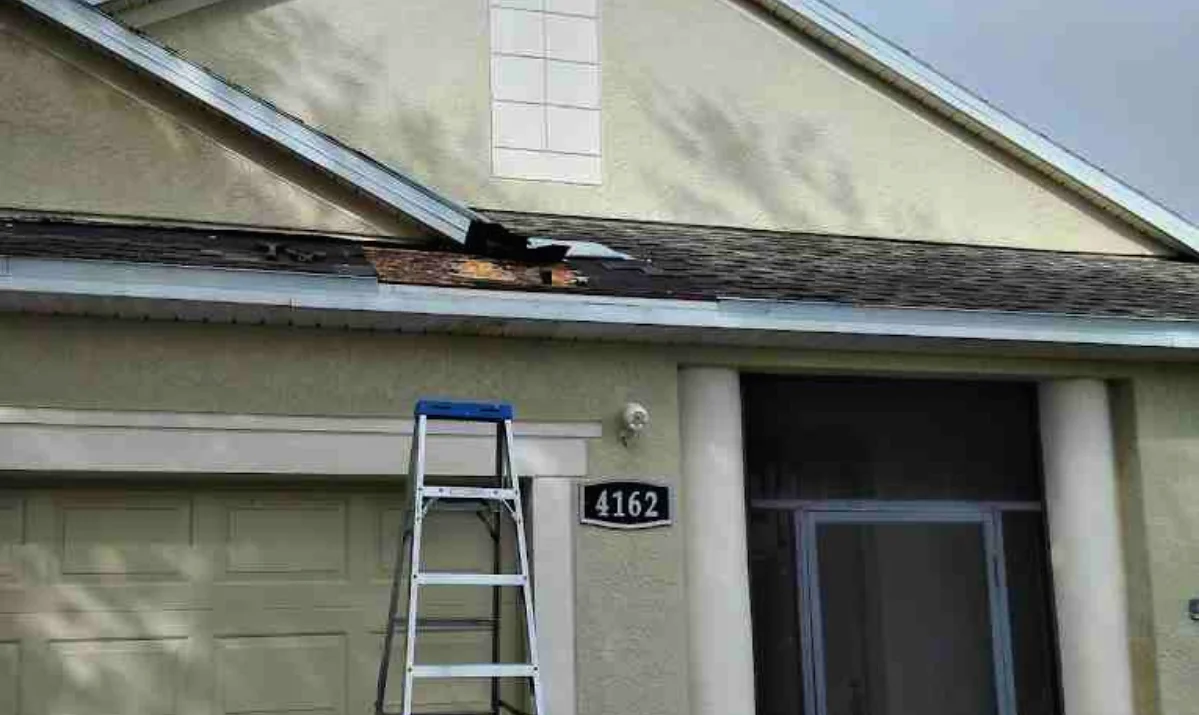
Call for emergency roofing help if you see missing shingles over a large area, exposed roof decking, visible holes, active leaks, sagging ceilings, or damage from a fallen tree or large debris. These conditions can leave the home vulnerable to additional rain, mold growth, electrical hazards, and structural deterioration.
If storm damage exposes the roof deck or water is entering the home, scheduling emergency roof repair in Merritt Island, FL or your local community is essential to stabilize the structure before the next afternoon downpour arrives.
Structural Compromise and Fallen Debris
A direct impact from a fallen oak branch or flying debris during a tropical storm is a clear emergency. These impacts can puncture the roof surface, damage the decking, and create visible sagging or movement.
When a professional contractor arrives on-site, one of their first steps is to conduct safety checks and decking inspections. If the roof deck is cracked or punctured, the roof may not be safe for ordinary repair work until the damage is evaluated. Any roof showing signs of structural movement or sagging should be evaluated by a licensed roofing contractor before repairs begin.
Active Water Intrusion and Severe Leaks
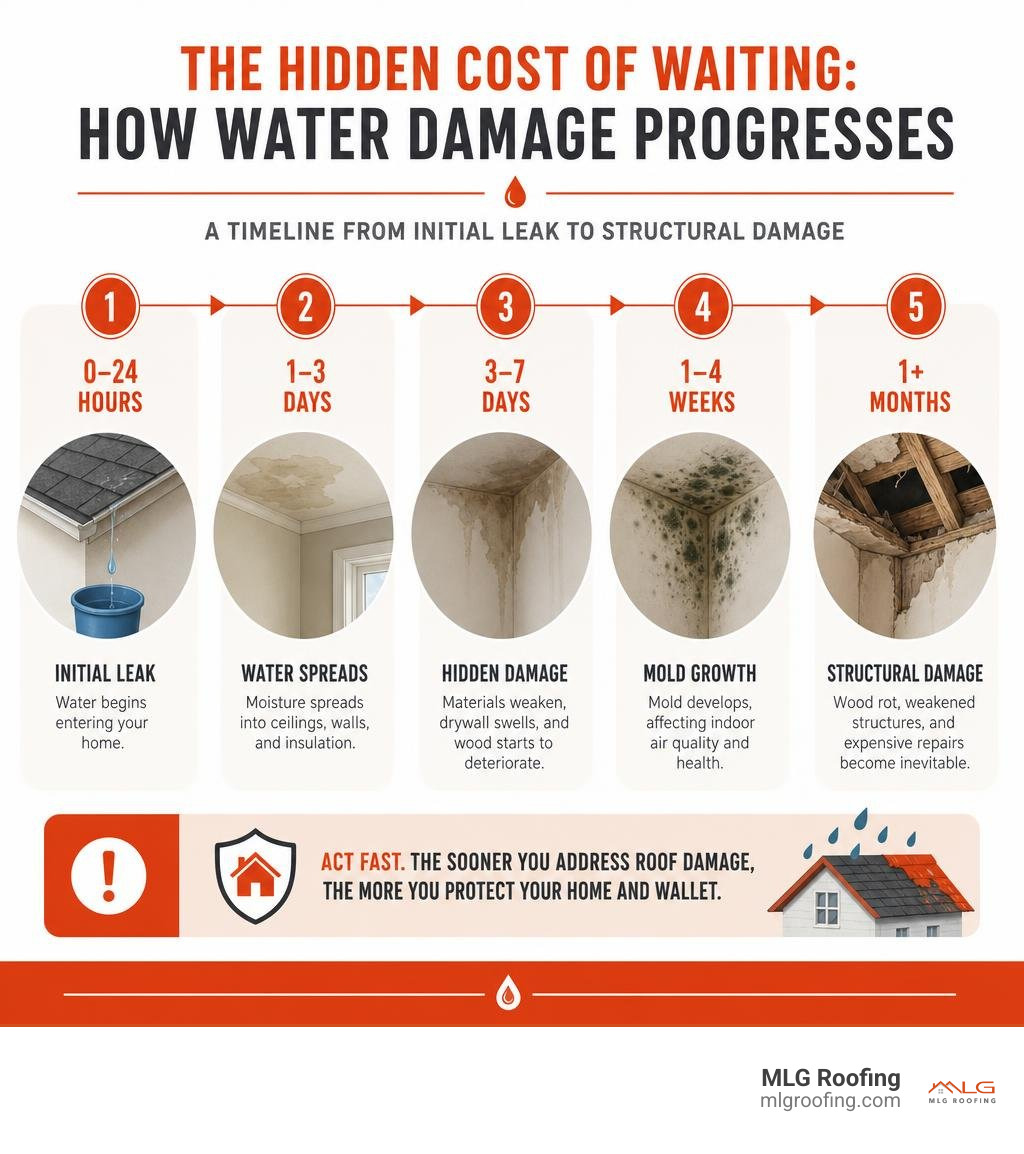
An active water leak is a progressive issue that quickly escalates. When water penetrates the roof deck, it can spread into drywall, insulation, attic spaces, and electrical areas.
If you notice water actively dripping from a ceiling, sagging drywall, or rapidly expanding interior water stains, you need a leaking roof emergency repair in Brevard County, FL. Beyond the immediate threat to your furniture and electronics, unaddressed water intrusion creates a high mold risk. In the warm, humid climate of coastal Florida, mold spores can colonize wet drywall and insulation quickly, making rapid mitigation a necessity.
Common Causes of Roof Damage in Brevard County, FL
The coastal environment of the Florida peninsula is beautiful, but it is notoriously harsh on residential roofing systems. Homeowners throughout Brevard County face a unique combination of weather patterns that accelerate the aging process of even the highest-quality materials.
Roofs along the Space Coast endure relentless UV degradation. The intense Florida sun bakes asphalt shingles year-round, causing the protective asphalt oils to dry out, making shingles brittle and prone to cracking. Combined with constant salt air exposure, metal components like flashing, valley tin, and fasteners suffer from accelerated coastal corrosion. After a major weather event, a storm damage roof assessment can help homeowners understand whether visible damage is minor, urgent, or likely to require permanent repair.
Hurricane and Tropical Storm Impacts
The most dramatic roofing emergencies are caused by hurricanes and tropical storms. These systems bring sustained high winds, wind-driven rain, and flying debris that can loosen shingles, damage flashing, or expose the roof deck.
If the roof already has aging materials, loose fasteners, or worn flashing, entire sections may fail during a storm, leaving the decking vulnerable to torrential rain. Flying debris, such as broken tree limbs, loose patio furniture, or neighborhood roof tiles, can puncture the roof surface upon impact. Managing these sudden failures requires an emergency roofing contractor who understands how to secure a home quickly under chaotic post-storm conditions.
Gradual Wear and Flashing Failures
Not all emergencies start with a hurricane. Many begin with gradual wear that goes unnoticed until a standard summer thunderstorm triggers a sudden failure. The high coastal humidity in East Central Florida keeps moisture levels elevated, allowing algae and moss to grow in shaded areas of the roof, which slowly degrades the shingle surface.
The most common point of failure on any roof is where two different planes meet, or where a penetration occurs. This includes:
- Chimney flashing: Metal sheets can pull away as the house settles or sealants dry out.
- Valleys: Heavy water runoff can wear away shingle granules, leading to valley leaks.
- Plumbing vents: Rubber boots dry out and crack under the intense Florida sun, allowing water to run directly down the vent pipe into the attic.
When these sealants and flashing elements fail, water slowly rots the surrounding roof deck. By the time a visible stain appears on your ceiling, the wood beneath may be compromised, turning a standard wear-and-tear issue into an urgent emergency repair.
Immediate Mitigation: Emergency Roof Tarping and Stabilization
When a roof is severely damaged during a storm, permanent repairs cannot always happen immediately. High winds, active rainfall, and material shortages after a widespread storm can delay permanent reconstruction. In these scenarios, emergency mitigation is the most critical step to protect the home.
The primary tool for immediate mitigation is emergency roof tarping. A professionally installed, heavy-duty tarp acts as a temporary shield, providing temporary waterproofing against Florida’s unpredictable weather. However, throwing a tarp over a roof and weighing it down with sandbags or bricks is not enough. To survive coastal winds, tarps must be tightly stretched and anchored by a trained crew using appropriate materials and safe installation methods.
Homeowners facing sudden storm damage can secure these critical mitigation services through emergency roof tarping services in Brevard County, FL to stabilize their properties quickly.
What Happens When You Call for Emergency Roofing Help
Calling an emergency roof service should reduce anxiety, not add confusion. Most emergency stabilization visits can begin shortly after conditions are safe, although response times may vary depending on storm severity and community-wide demand.
| Stage | What Happens |
|---|---|
| Initial Call | Damage assessment over the phone |
| Dispatch | Crew scheduled when conditions are safe |
| Inspection | Roof evaluated for immediate hazards |
| Emergency Stabilization | Tarping or temporary repairs |
| Documentation | Photos and written estimate |
| Permanent Repairs | Scheduled after stabilization |
Once conditions are safe for crews, the contractor dispatches a team to inspect the property, identify immediate hazards, and complete temporary stabilization such as tarping or sealing exposed areas. After the home is protected, the contractor can provide a written estimate, document visible damage for insurance purposes, and schedule permanent repairs or a replacement evaluation if needed. Emergency response focuses first on making the home safe and weather-resistant. Permanent repairs are typically scheduled only after the property has been stabilized.
The Role of Emergency Roofing Services in Storm Mitigation
The primary goal of emergency stabilization is preventing secondary damage. When water pours into an unprotected roof opening, it doesn’t stop at the attic floor. It can ruin ceiling drywall, destroy wall insulation, damage electrical wiring, and ruin personal property.
By acting quickly to secure structural stabilization, homeowners can keep the interior of their homes dry while they plan permanent repairs. This rapid response is especially critical in coastal areas like Merritt Island, where high humidity can turn a minor damp spot into a major mold issue within days.
Temporary Tarping vs. Permanent Repairs
It is important to remember that a tarp is a temporary solution, not a permanent fix. Temporary tarps are designed to protect the home until permanent repairs can safely be completed. Their effective lifespan varies depending on weather, installation quality, and storm activity.
| Feature | Emergency Tarping | Permanent Repair / Replacement |
|---|---|---|
| Primary Purpose | Immediate water mitigation & stabilization | Restoring long-term structural integrity |
| Lifespan | Temporary protection until permanent work can be completed | Long-term protection based on material and installation quality |
| Typical Work Performed | Temporary weather protection, water mitigation, damage stabilization | Roof repairs, replacement materials, flashing, underlayment, finished roofing system |
| Aesthetics | High-visibility utility appearance | Matched to home design, clean finish |
When deciding on the next steps, homeowners must weigh the choice of a roof repair vs roof replacement in Melbourne, FL. If the damage is isolated to a small area, a targeted permanent repair with matching materials may restore the roof’s integrity. However, if the roof is near the end of its useful life or has sustained widespread storm damage, a full system replacement may be the safer and more cost-effective path forward.
Navigating Insurance Claims and Documentation
Dealing with roof damage is stressful enough without the added headache of navigating an insurance claim. However, understanding how to document damage and communicate with your carrier can make a significant difference in how smoothly your claim is processed.
Most homeowner insurance policies expect policyholders to take reasonable steps to help prevent additional damage after a covered loss. Installing an emergency tarp is a common example of fulfilling this requirement. If a homeowner fails to secure a leaking roof, and subsequent rain causes extensive interior drywall damage, it could affect coverage for additional damage depending on the policy language.
When working through this process, having a clear, step-by-step insurance claims guide for roofing damages can help keep your claim organized and moving forward. Homeowners can also review general consumer information from the Florida Department of Financial Services to better understand common homeowner insurance considerations in Florida.
Documenting the Damage Safely
Before any cleanup or temporary repairs begin, you must document the damage. Property owners should never climb onto a wet, damaged, or wind-compromised roof to take photos. Leave the on-roof inspections to licensed professionals.
Instead, focus on gathering safe, ground-level photos of the exterior. Take pictures of any fallen tree limbs, missing shingles visible from the yard, or damaged drainage systems. Inside the home, document every detail. Take clear, date-stamped records of water dripping, stained drywall, ruined insulation, and any damaged personal belongings. Avoid throwing away damaged roofing materials until your insurance carrier or contractor advises that it’s appropriate, as they may be needed during the inspection process. These photos and materials can serve as helpful evidence for your adjuster, helping document the relationship between the storm event and the interior damage.
Working with Your Adjuster
Once you file a claim, your insurance company will assign an adjuster to inspect the damage. It is often beneficial to have a professional roofing contractor present during this inspection. A licensed contractor can point out technical roofing conditions, such as subtle wind uplift damage, compromised seal strips, or cracked decking that might otherwise be difficult to evaluate from the ground.
Your contractor will provide a detailed, written estimate outlining the exact scope of work required to repair the roof. In Florida, the repair scope may need to account for permitting, wind resistance, product approvals, and local requirements. A reputable contractor will focus on providing neutral, factual documentation of the damage, allowing you and your adjuster to work through the claim based on the policy and observed conditions.
What to Expect Regarding Timelines and Costs
When a roofing emergency strikes, two questions are on every homeowner’s mind: How fast can you get here? and How much is this going to cost? Exact pricing changes constantly because emergency response depends on storm demand, crew availability, material availability, roof conditions, and the amount of temporary stabilization required. Most reputable contractors cannot provide accurate emergency repair pricing over the phone because the extent of the damage often isn’t fully visible until the roof has been inspected safely.
Rather than relying on fixed dollar ranges, homeowners should understand the factors that affect emergency roofing costs:
- Severity of damage: Active interior leaks, structural movement, and large openings require faster, more involved response.
- Roof accessibility: Multi-story homes, steep pitches, and limited access areas require additional safety planning and labor.
- Temporary stabilization: Tarping, sealing, debris removal, and emergency dry-in work vary based on the size and location of the damaged area.
- Permanent repair needs: A small flashing repair is very different from replacing a large storm-damaged roof section.
- Material type: Asphalt shingles, metal roofing, tile, and specialty systems each involve different materials and labor requirements.
- Roof pitch and complexity: Valleys, dormers, chimneys, skylights, and low-slope transitions can increase repair complexity.
- Storm demand: After hurricanes or widespread wind events, emergency roofing crews and materials may be in high demand.
Response times and material availability can fluctuate depending on the scale of the storm. If a major hurricane hits communities like Palm Bay, West Melbourne, or Rockledge, local emergency crews will be stretched thin, and reputable companies often prioritize active interior leaks and structural hazards first. Homeowners should compare the scope of work, materials, warranty coverage, and contractor experience rather than selecting an emergency roofing contractor based solely on price. Following major hurricanes, reputable contractors often work through emergency requests based on safety and severity rather than the order in which calls are received.
What to Expect When Hiring Emergency Roofing Services
When you call an emergency roofing line, the process typically moves in rapid stages. First, the dispatch team will confirm your location and assess the severity of the situation over the phone to determine if immediate dispatch is safe. If a severe storm is still raging with high winds and active lightning, crew members cannot safely work on top of a roof.
Once conditions are safe, a team will arrive to perform an initial safety assessment. They will identify structural hazards, locate the source of active water entry, and install temporary tarping or seals to stabilize the home. Once the property is secure, the contractor will provide a detailed written estimate for the permanent repairs. Homeowners in Rockledge can secure this rapid-response stabilization by reaching out to local specialists for emergency roof repair in Rockledge, FL for immediate assistance.
Homeowners should ask whether the contractor provides temporary stabilization, permanent repairs, documentation for insurance claims, and follow-up inspections. These services help ensure the emergency roof service addresses the immediate leak while also creating a clear plan for what happens next.
Choosing the Right Emergency Roofing Contractor
A good emergency roofing contractor should be licensed, insured, responsive, and able to explain the difference between temporary stabilization and permanent repair. Homeowners should verify the contractor’s license, insurance coverage, and local experience before moving forward. Look for a contractor who documents the damage clearly, communicates realistic timelines, and avoids pressuring you into decisions before the roof has been safely evaluated.
The right roofing emergency service should help you answer the most important questions quickly: Is the home safe? Is water still entering? What temporary work is needed today? What permanent repairs should be scheduled next? Will documentation be available for the insurance claim?
A dependable emergency roofing contractor should also explain what temporary work is being performed, when permanent repairs can begin, and whether additional emergency roof service visits may be needed before the project is complete.
Preventing Future Roofing Emergencies through Maintenance
While some roofing emergencies are unavoidable, many sudden roof failures can be reduced through consistent inspections and timely minor repairs. In Brevard County, roofs face year-round UV exposure, coastal corrosion, heavy rain, and tropical storm risk, so small weaknesses can turn into active leaks quickly.
Regular Inspections and Minor Repairs
A professional roof inspection should be performed at least once a year, and ideally after any major storm event. These inspections should include the condition of shingles or metal panels, flashing points, roof penetrations, and visible signs of decking movement or moisture damage.
Catching flashing failures early is especially important because valleys, chimneys, vent pipes, and wall transitions often fail before the main roofing material reaches the end of its lifespan. Replacing dried-out sealant, correcting loose flashing, or addressing a small leak early can prevent a stressful emergency call later.
Hurricane Preparedness and Professional Maintenance
Before hurricane season, homeowners should have vulnerable roof areas checked by a licensed contractor rather than attempting DIY roof work. A professional inspection can document existing conditions, identify loose materials, and recommend repairs before severe weather arrives.
This proactive approach keeps the focus on safety and gives homeowners a clearer understanding of their roof’s condition before the next storm.
Frequently Asked Questions about Emergency Roof Repairs
What should I do while waiting for emergency roofers to arrive?
First and foremost, prioritize your safety. Never attempt to climb onto a wet or storm-damaged roof yourself. Instead, focus on protecting the interior of your home. Move any valuable electronics, furniture, and family heirlooms away from the area of the leak.
Use buckets, plastic bins, or pots to catch dripping water, and place towels on the floor to prevent water damage to your flooring. If you have clean plastic sheeting, you can drape it over larger furniture items or electronics to shield them. Take photos from a safe location and wait for the emergency roofing contractor to inspect the roof.
How quickly should I call for emergency roofing services after a storm?
Call immediately if you have an active leak, exposed decking, visible structural damage, or a tree impact. These conditions can worsen quickly, especially during Florida’s rainy season.
If you do not see active water intrusion but suspect wind or hail damage, schedule an inspection as soon as practical, ideally within 24–48 hours. A prompt emergency roof service or post-storm inspection can identify loose shingles, flashing damage, or hidden vulnerabilities before the next storm arrives.
How long can an emergency roof tarp remain in place?
A professionally installed, high-quality tarp is designed to provide temporary protection until permanent repairs can safely be completed. Its actual lifespan depends heavily on local weather conditions, UV exposure, storm activity, and installation quality.
The intense Florida sun will slowly degrade the polyethylene material, and high winds can eventually loosen the fasteners. A tarp is meant to buy you enough time to secure written estimates, coordinate with your insurance adjuster, and schedule permanent repairs. It should never be viewed as a long-term solution.
Does homeowner insurance cover the cost of emergency tarping?
Emergency tarping is commonly treated as a mitigation step after covered storm damage, but coverage depends on the policy language, deductible, exclusions, roof age provisions, and carrier decision. Homeowners should contact their insurance carrier and review their policy before assuming how a claim will be handled.
Be sure to keep all receipts, written invoices, and photo documentation provided by your emergency contractor to submit with your formal insurance claim.
Can I stay in my home during emergency roof repairs?
In many cases, homeowners can stay in the home during emergency tarping or temporary repairs if the damage is limited and there are no major safety hazards. However, if there is structural sagging, electrical exposure, ceiling collapse risk, heavy water intrusion, or unsafe storm conditions, you may need to avoid affected areas or temporarily leave until the home is evaluated.
A licensed roofing contractor can help determine whether the roof area is stable enough for emergency work, but homeowners should also follow guidance from emergency responders, their insurance carrier, or other qualified professionals when safety is uncertain.
Can emergency roofing services be performed during a hurricane?
No. Roofing crews cannot safely work during active hurricanes, lightning, or dangerous wind conditions. Emergency roofing services typically begin as soon as weather conditions allow crews to safely access the roof. Most reputable contractors begin contacting customers and scheduling emergency visits as soon as local conditions are safe for crews to travel and work.
Contractors often prioritize active leaks, structural damage, and homes with exposed roof decking immediately after the storm passes.
Conclusion
When a roofing emergency strikes, the key to protecting your home is fast, decisive action. The sooner temporary stabilization begins, the better the chance of limiting interior damage and reducing the scope of permanent repairs. Ignoring active storm damage can allow water to compromise your roof deck, ruin your interior drywall, and create a serious mold hazard that is costly to remediate.
By understanding what qualifies as an emergency, securing immediate mitigation like professional tarping, and documenting the damage for your insurance carrier, you can navigate a stressful situation with confidence. Even if the damage appears minor, having your roof inspected promptly after a severe storm can help identify hidden problems before they become major repairs.
If you are facing active storm damage, a sudden leak, or need a professional emergency roof inspection in Brevard County, FL, MLG Roofing is here to help. Serving homeowners across the Space Coast—including Melbourne, Palm Bay, West Melbourne, Rockledge, Viera, Merritt Island, and Sebastian—we specialize in providing reliable inspections, emergency stabilization, and high-quality residential roof repairs and replacements designed to withstand Florida’s harsh coastal weather.
Don’t wait for minor storm damage to become a major repair. Contact MLG Roofing today to schedule professional emergency roof repair services and protect your home from further damage.