
Types of Insurance Roof Inspections and How They Work
Insurance roof inspections generally fall into two broad categories: underwriting assessments and claims evaluations. Underwriting inspections take place when an insurer is deciding whether to issue a new policy, renew an existing one, or adjust coverage terms. In contrast, claims evaluations occur after you report damage from a specific weather event, such as a severe storm or fallen debris.
During an evaluation, the inspector determines whether the roof system meets carrier guidelines or has sustained sudden, covered damage. The assessment typically pairs an exterior visual evaluation of the coverings, flashings, and drainage assemblies with an interior attic check whenever accessible. In the attic, inspectors look for water staining, decking rot, active moisture intrusion, or light penetrating the decking.
Pricing for private or independent assessments is highly variable and depends on factors such as roof pitch, square footage, building height, material type, and whether specialized diagnostic equipment is deployed. Homeowners evaluating their options can review what a roof inspection really costs to understand how local contractors scope and price these assessments.
Drive-By, Drone, and On-Site Inspection Methods
Insurance carriers deploy several methods to inspect residential roofs across the Space Coast:
- Drive-By Inspections: Often conducted without prior scheduling, an inspector or field technician photographs visible roof slopes from the street or driveway. While fast, drive-by checks cannot see low-slope sections or hidden valleys.
- Aerial and Drone Surveys: Commercial drones operated under FAA Part 107 remote pilot regulations capture high-resolution imagery of every slope, ridge, valley, and penetration. This non-contact method protects fragile shingles and tiles while documenting damage on steep or complex rooflines.
- Physical On-Site Ladder Walks: An inspector physically climbs onto the roof to touch flashing details, check for loose or unbonded shingles, evaluate soft decking, and inspect vent stacks.
- Thermal Moisture Imaging: Infrared cameras identify temperature differentials caused by moisture trapped under membranes or within insulation before stains appear on interior drywall. Specialized forensic assessments may use these techniques to build detailed visual records for claim documentation.
Why Carriers Mandate Insurance Roof Inspections for Underwriting
Insurance providers manage portfolio risk using actuarial data and physical property evaluations. Water intrusion represents a frequent source of property damage, making the roof a major focus during underwriting reviews. Additionally, aging roofs or pre-existing minor leaks present ongoing risks that carriers seek to identify before binding coverage.
When writing a policy, underwriters must verify that the roof has sufficient remaining useful life and is free of severe deterioration. Verifying these conditions helps ensure premium rates accurately reflect property risk. If an older roof is in sound condition, a standardized inspection form provides the objective proof underwriters require.
What Triggers an Inspection and What Adjusters Look For
Insurance carriers do not inspect every roof on an annual basis. Instead, inspections are triggered by specific underwriting milestones, claim events, or regional environmental risks. When high winds or severe hail impact communities across Brevard County, carriers frequently cross-reference local meteorological data against policy portfolios to schedule targeted assessments. Reviewing a storm damage roof assessment helps property owners understand how severe coastal weather translates into specific inspection requirements.
Coverage determinations after an inspection depend on the specific policy language, exclusions, deductibles, roof age provisions, and the carrier’s final decision. If a policy includes Ordinance or Law coverage, it may help with code-required upgrades after a covered loss, but homeowners should review their own policy documents and speak with their insurance professional about how those provisions apply.
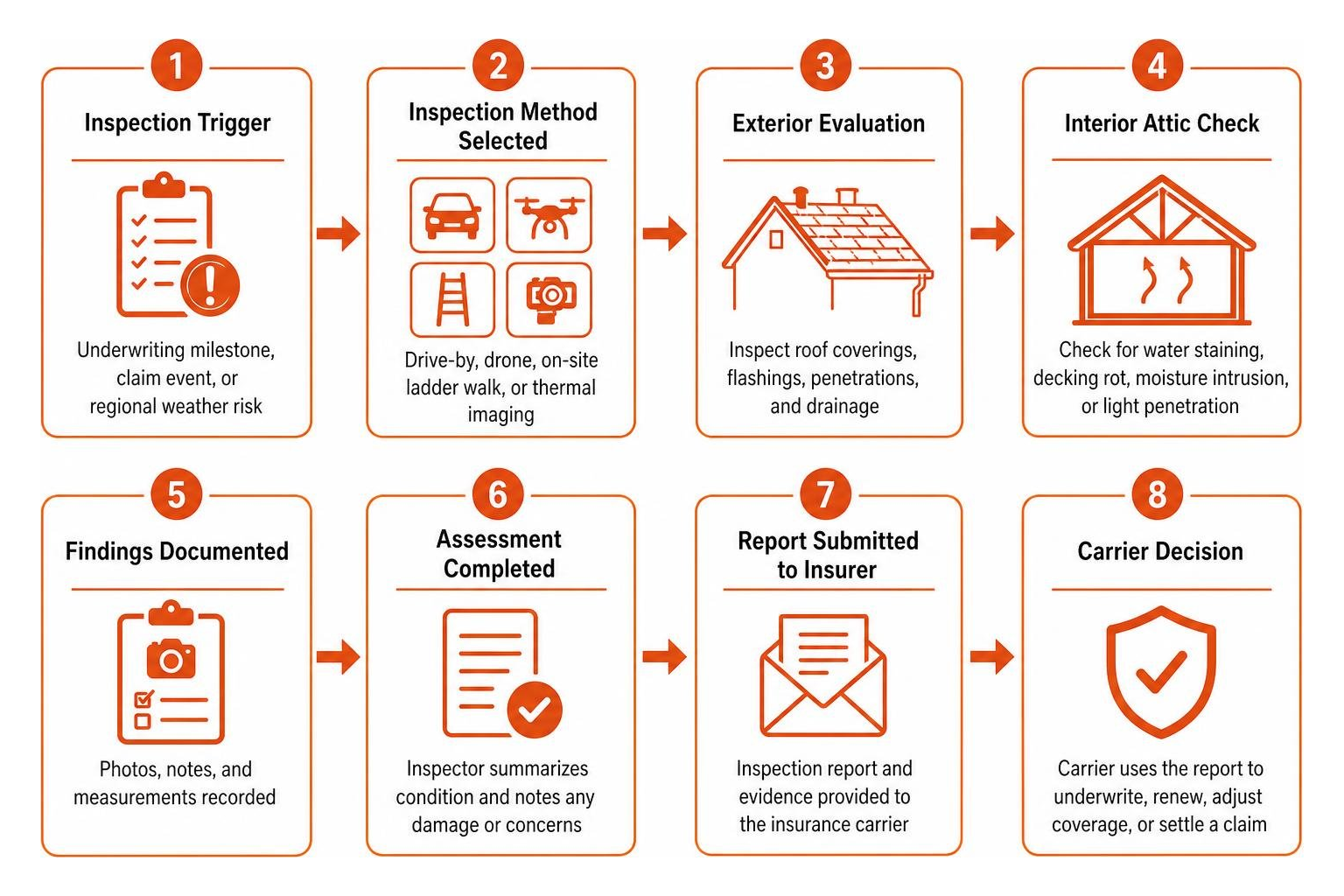
Common Triggers for Carrier-Ordered Roof Assessments
Carriers commonly schedule an inspection due to several key events:
- Roof Age Thresholds: Reaching age benchmarks—typically 15 years for architectural shingles or 20 to 25 years for tile and metal systems—frequently triggers a mandatory condition check.
- New Policy Applications and Transfers: Purchasing a home or switching carriers almost always requires a comprehensive inspection to establish the baseline condition of the roof covering.
- Filing a Property Damage Claim: Submitting a claim for interior water leaks, wind uplift, or storm impact automatically initiates a claim assessment by an adjuster.
- Carrier Portfolio Audits: Insurers periodically audit regional markets to manage their total storm exposure.
- Policy Reinstatements: Allowing a policy to lapse may require a new inspection before the carrier agrees to reinstate coverage.
The Comprehensive Checklist: What Roof Inspectors Evaluate
Inspectors look for structural soundness, water shedding integrity, and material deterioration across several main areas:
- Covering Material Condition: Excessive shingle granule loss, thermal cracking, curling edges, unbonded adhesive strips, or fractured concrete and clay tiles.
- Flashing and Penetrations: Rusted, lifted, or missing step and counter flashing around chimneys, sidewalls, dormers, and plumbing vent boots.
- Drainage Systems: Compromised fascia boards, improper water runoff paths, or ponding water along low-slope roof transitions.
- Structural Alignment: Sagging rafters, uneven ridge lines, or spongy decking discovered underfoot.
- Attic and Underlayment: Moisture staining, damp insulation, daylight shining through boards, or active mold growth.
- Biological Growth and Debris: Heavy moss accumulation, lichen colonies, or leaf buildup that traps moisture against roofing granules.

Navigating Inspection Outcomes, Underwriting Rules, and Policy Rights
Once an inspection report is submitted, the insurance underwriting department reviews the findings against its property guidelines. If the roof is in good condition, coverage continues without change. If defects, unpermitted repairs, or significant wear are noted, the carrier issues a formal underwriting decision outlining required actions.
What Happens When a Roof Fails an Underwriting Review
Receiving an unsatisfactory inspection result does not automatically mean your policy is canceled immediately. Carriers typically provide a conditional notice outlining specific remedies:
- Mandatory Repair Windows: Carriers commonly give homeowners 30 to 90 days to hire a licensed contractor, complete specified repairs, and submit photographic proof along with signed repair receipts.
- Policy Endorsement Changes: The carrier may switch the roof’s settlement term from Replacement Cost Value (RCV) to Actual Cash Value (ACV), accounting for depreciation in future claim payouts.
- Coverage Exclusion Endorsements: Windstorm or cosmetic damage endorsements may be attached, limiting liability for pre-existing conditions.
- Notice of Non-Renewal: If the roof is deemed beyond its useful life and the owner does not replace it, the carrier may issue a non-renewal notice effective at the end of the policy term.
When major repairs or total reroofing become necessary to maintain coverage, consulting a Florida roof replacement program helps homeowners understand local criteria and regional assistance initiatives.
Wind Mitigation Inspections vs. Roof Certifications
Property owners often confuse wind mitigation inspections with roof condition certifications. While both evaluate the roof, their purposes and structural focus differ significantly.
| Inspection Feature | Wind Mitigation Inspection | Roof Condition Certification |
|---|---|---|
| Primary Purpose | Identify wind-resistant construction features for premium discounts | Confirm physical condition and remaining useful life for coverage |
| Focus Areas | Roof deck attachment, hurricane clips, roof geometry, secondary water barrier | Shingle/tile condition, missing materials, leaks, flashing integrity |
| Financial Impact | Can generate significant insurance premium discounts | Secures basic policy eligibility and prevents non-renewal |
| Standard Validity | Typically valid for up to 5 years | Typically required every 1 to 3 years on older roofs |
| Inspector Requirements | Florida-licensed home inspector, general contractor, or engineer | Licensed roofing contractor, building inspector, or home inspector |
Wind mitigation reports verify code-compliant structural tie-downs, roof deck nail spacing, and secondary water barriers that protect against hurricane uplift. Roof certifications, on the other hand, strictly address whether the current roof covering will remain watertight for an estimated duration without immediate replacement.
How Professional Roof Inspections Protect Coverage and Claims
Scheduling regular independent roof inspections creates an objective record of ongoing property maintenance. Most homeowners insurance policies explicitly exclude damage resulting from wear and tear, neglect, or deferred maintenance. Without documented inspections, carriers may attribute sudden storm leaks to pre-existing deterioration.
An inspection report from a licensed local contractor establishes the pre-storm condition of the home. If high winds later compromise the roof covering, this documented history makes it clear that the damage was sudden and accidental. When managing claim discussions, learning how to negotiate roof replacement with insurance ensures property owners receive fair consideration for necessary scope items.
How Insurance Roof Inspections Impact Storm Damage Claims
When filing a property claim after severe weather, the carrier assigns a staff adjuster or independent claims evaluator to inspect the damage. Having your own independent contractor inspection report gives you an objective baseline to compare against the adjuster’s findings.
Contractors utilize recognized diagnostic practices—such as standardized test squares, drone photogrammetry, or specialized claim assessments—to document all damaged components. This detailed scope helps ensure that items like damaged valley metal, stretched underlayment, and compromised drip edges are not overlooked. Property owners can also learn how to file an insurance roof repair claim to understand each step of the claims workflow.
Documenting Maintenance to Prevent Coverage Denials
Homeowners can maintain comprehensive records to protect their policy standing by adopting a straightforward documentation routine:
- Maintain an Annual Inspection Binder: Keep dated digital and physical copies of every roof check, including full-slope photos.
- Document Minor Repairs Promptly: Save itemized invoices and contractor sign-offs for replaced shingles, resealed vent flashings, or cleared roof valleys.
- Log Post-Storm Checks: Take dated perimeter photos of the roofline immediately following major named storms.
- Address Flashing Maintenance: Seal minor masonry counter-flashing cracks before moisture enters the interior wall assemblies.
Regular maintenance and timely repairs protect your roof’s underlying structure while providing clear proof that the property has been properly cared for over time.
Frequently Asked Questions About Insurance Roof Inspections
Can I refuse an insurance roof inspection on my home?
Technically, a homeowner can refuse an inspector entry to their property. However, standard property insurance policies include a cooperation clause requiring the policyholder to allow reasonable property assessments. Refusing an underwriting or claims inspection will almost certainly result in policy cancellation, a notice of non-renewal, or the immediate denial of an open storm claim.
How often should I get a roof inspection to satisfy my insurer?
While insurance carriers typically request formal inspections only every few years—or when a roof crosses age thresholds like 15 or 20 years—homeowners in coastal Central Florida benefit from an annual professional check. Scheduling an inspection ahead of the Atlantic hurricane season and immediately following any major storm event ensures minor damage is caught early and documented for coverage purposes.
What is the difference between an adjuster’s inspection and an independent contractor’s inspection?
An insurance adjuster works on behalf of the carrier to evaluate policy liability, determine whether damage falls under covered perils, and calculate claim payouts according to policy limits. An independent roofing contractor inspects the roof from a construction and building code perspective. The contractor identifies all physical damage, outlines the necessary labor and materials required for a complete, watertight restoration, and helps ensure the proposed repairs meet current local building standards.
Conclusion
Proactive roof management is the most effective way for homeowners in Brevard County, FL, to maintain reliable property insurance coverage and avoid unexpected claim disputes. Whether you live in Melbourne, Palm Bay, Rockledge, or Cocoa Beach, coastal weather demands consistent roof upkeep and thorough documentation. By understanding what inspectors look for, addressing minor maintenance promptly, and keeping clear records, you can protect both your roof structure and your insurance policy standing.
For comprehensive inspections, storm damage assessments, or full roof replacements tailored to Space Coast conditions, turn to the experienced team at MLG Roofing. Explore our full range of professional roofing services to schedule your evaluation and keep your home storm-ready year-round.