
What Is Patch Roofing — and Do You Actually Need It?
Patch roofing is a targeted repair that fixes a specific damaged area of your roof without replacing the entire system. If you’re dealing with a leak, missing shingles, or storm damage on your Brevard County home, here’s a quick breakdown of what that means for you:
- Patch repair fixes an isolated area (a few shingles, a small leak, damaged flashing)
- Full replacement replaces the entire roofing system when damage is widespread or the roof is near the end of its life
- Best candidate for patching is a roof under 15 years old with localized, clearly defined damage
- Skip the patch if your roof has multiple leaks, soft or rotting decking, or widespread material failure
- Typical cost is highly variable; requires an in-person inspection to assess damage scope, materials, and labor
Living on Florida’s Space Coast means your roof takes a beating year-round. Salt air, intense UV, and hurricane-season wind uplift all wear down roofing materials faster than in most other parts of the country. Sometimes that wear shows up in one small spot — a cracked shingle after a storm, a flashing gap around a chimney, a minor leak confined to one corner of your attic. That’s exactly the kind of problem a patch repair is designed to solve.
But not every roof issue is a simple fix. Patching the wrong roof — one that’s too old or too far gone — can lead to repeat leaks, mold growth, and higher long-term costs than if you’d replaced it in the first place.
This guide walks you through everything you need to know: how patch repairs work, when they make sense, what materials and costs are involved, and how to find a contractor you can trust here in Brevard County.
Understanding Patch Roofing: What It Is and How It Works
At its core, patch roofing is a targeted, surgical approach to roof maintenance. Instead of tearing off every square foot of your roof down to the bare wood, a professional roofer isolates the specific zone causing trouble. This process is designed to address localized damage, sealing out water and restoring the structural integrity of that single section.

When a roofing crew performs a patch repair, they do not simply slap a new shingle over an old problem. A professional repair begins with a careful evaluation of the surrounding area. The crew carefully lifts or removes the damaged shingles, inspects the underlying components, and addresses the root cause of the issue.
A critical step in any patch repair is the underlayment inspection. The underlayment is the secondary water-resistant barrier installed directly on top of the wooden roof deck. If water has penetrated the outer shingles, the underlayment may be torn, rotted, or waterlogged. Professionals will cut away the damaged underlayment, inspect the wooden decking beneath for signs of rot or structural softening, and install a fresh layer of high-quality underlayment before fastening new shingles. This comprehensive approach ensures that the spot fix is fully integrated into the rest of the roofing system. For homeowners dealing with these localized issues, utilizing professional Services Roof Repair ensures the fix is durable and watertight.
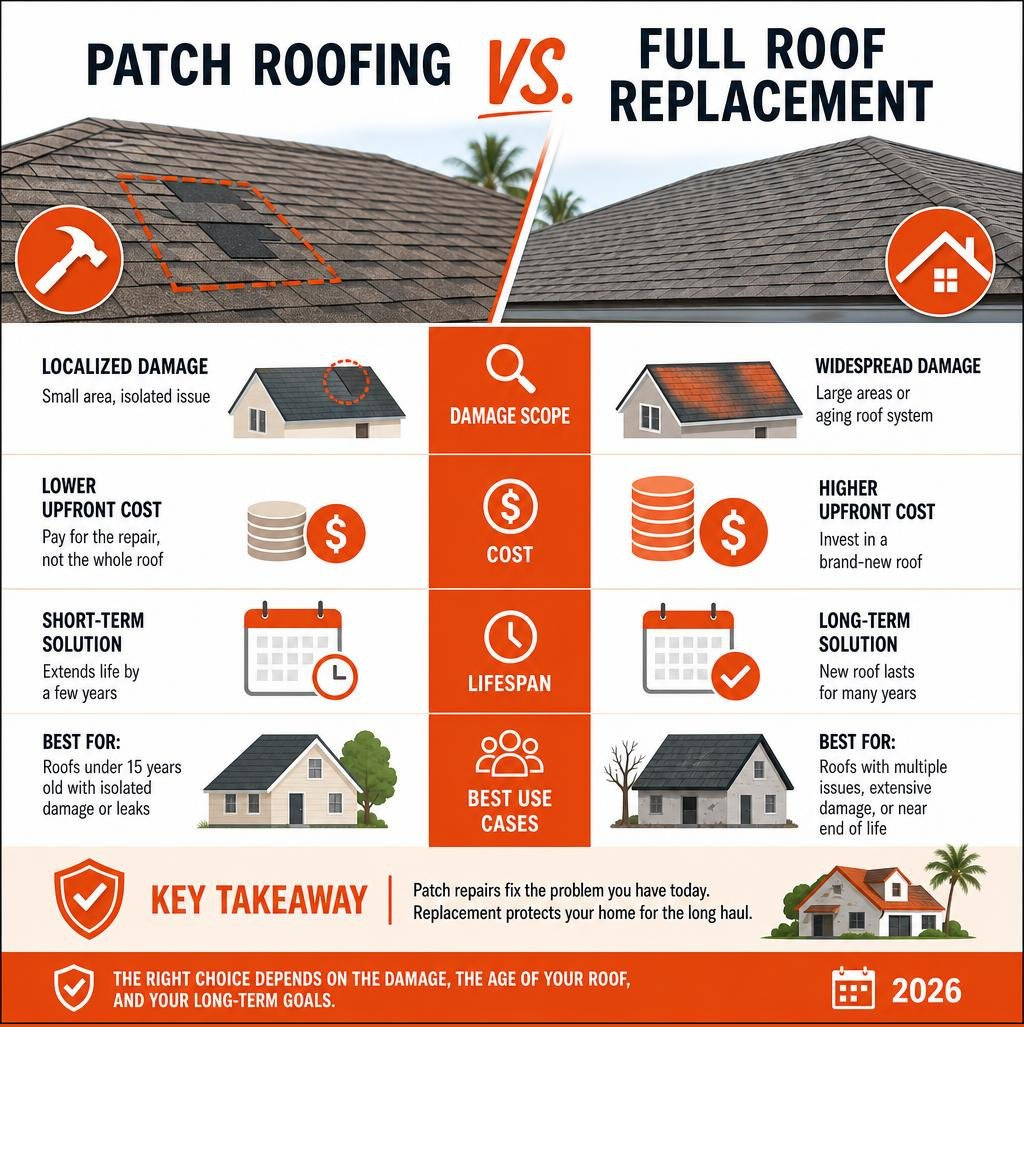
Key Differences Between Patching and Full Replacement
Understanding the differences between a localized patch and a complete replacement helps homeowners make informed financial and structural decisions.
- Structural Scope: A patch repair is localized. It deals strictly with the immediate area of failure. A full roof replacement, on the other hand, involves stripping the entire roof down to the wooden decking, replacing damaged wood across the entire surface, and installing completely new underlayment, flashing, starter strips, and shingles or metal panels.
- System Longevity: A patch is a highly effective, medium-term solution meant to extend the life of a roof that is otherwise in good condition. A complete roof replacement resets the clock entirely, providing a brand-new system designed to last anywhere from 20 to 50 years depending on the materials used.
- Cost Efficiency: Patching has a much lower upfront cost compared to a full replacement. However, if the roof is near the end of its life, patching multiple spots over a short period can quickly become a financial drain.
When planning for the future of a home, understanding the comprehensive nature of a complete tear-off can put these differences into perspective. Homeowners can read more about the full installation process in this Step-by-Step Guide to Home Roof Replacement.
When to Choose a Roof Patch vs. a Complete Replacement
Deciding between a targeted patch and a complete replacement is one of the most common dilemmas for property owners on the Space Coast. The right path depends heavily on the age of the roof, the extent of the damage, and whether the underlying structure has been compromised.
| Decision Factor | Patch Repair | Full Roof Replacement |
|---|---|---|
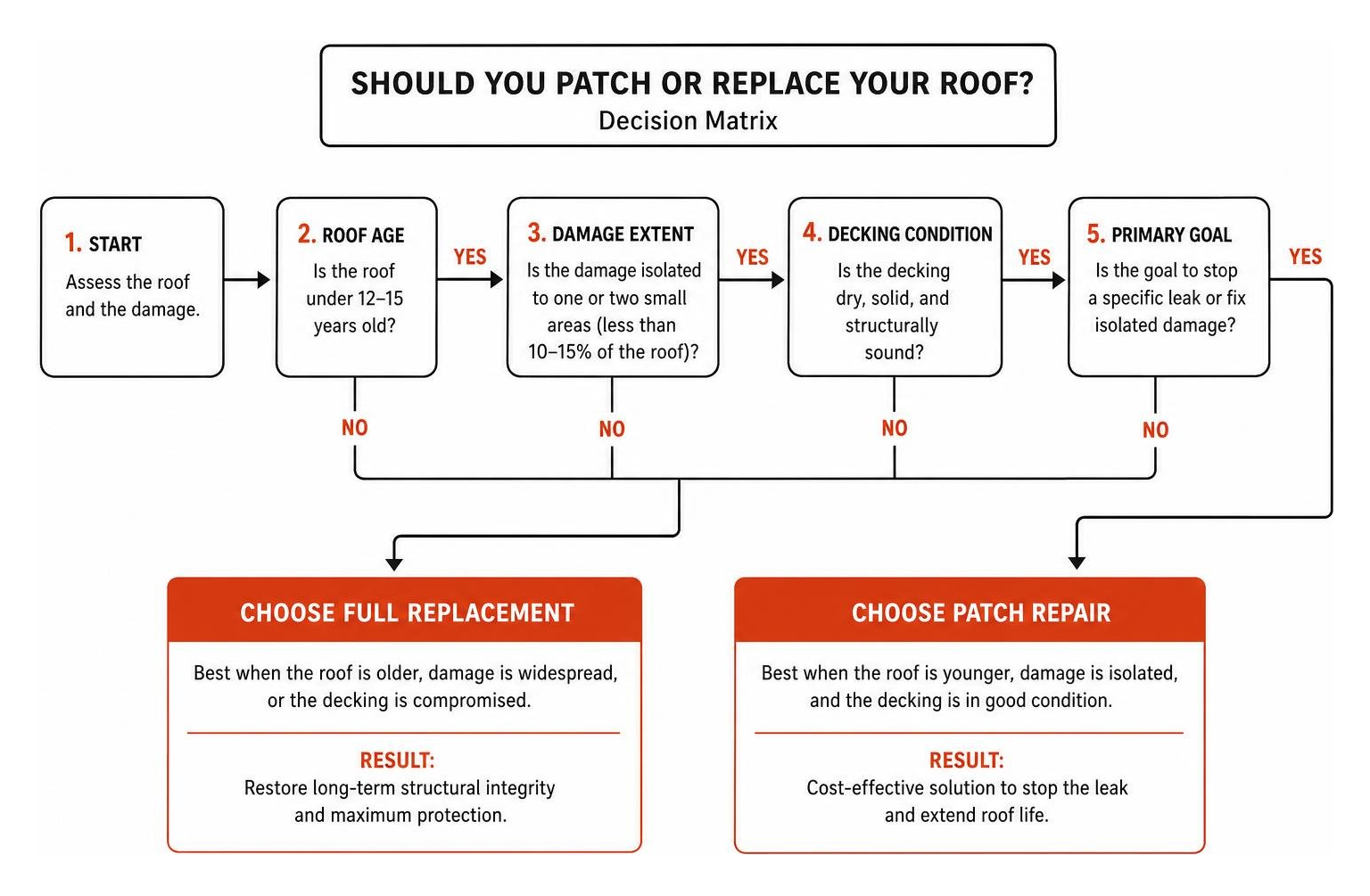
| Roof Age | Typically under 12–15 years old | Over 15–20 years old (or approaching end of life) |
| Damage Extent | Isolated to one or two small areas (less than 10-15%) | Widespread across multiple slopes or sections |
| Decking Condition | Dry, solid, and structurally sound | Soft, sagging, or showing widespread rot |
| Aesthetics | May have slight color differences due to shingle fading | Perfectly uniform color and modern curb appeal |
| Primary Goal | Stop a specific leak or fix isolated storm damage | Restore long-term structural integrity and storm protection |
To help visualize this decision-making process, the following diagram illustrates the typical path a professional roofing contractor takes when evaluating a roof:
For a deeper dive into evaluating these two options for a home, check out this comprehensive Roof Repair vs Roof Replacement: Making the Best Decision for Your Melbourne Home guide.
When Patch Roofing is the Ideal Solution
Patching is an excellent, cost-effective option when the damage is isolated and the rest of the roof is healthy. Common scenarios where a patch makes perfect sense include:
- Isolated Storm Damage: High winds from a passing storm might tear away a handful of shingles on a single slope. If the rest of the roof remains intact and secure, replacing those specific shingles is a quick and reliable fix.
- Minor Leaks: If a leak is traced back to a single source, such as a localized puncture from a fallen tree branch or a backed-up valley, a targeted patch can resolve the issue immediately.
- Flashing Failures: Water often finds its way in around roof penetrations, such as chimneys, plumbing vents, or dormer walls. Repairing or replacing the flashing in these specific spots stops the leak without requiring a new roof.
For homeowners in West Melbourne, addressing these minor issues quickly prevents them from escalating into major structural headaches. Localized wind damage can often be resolved with a quick, professional spot repair.
When You Should Avoid a Simple Patch Roofing Fix
There are times when a patch is simply a temporary band-aid on a problem that requires a permanent cure. Attempting to patch a roof under the following conditions can lead to repeated leaks, interior water damage, and wasted money:
- Systemic Failure: If shingles are curling, losing their protective granules, or cracking across multiple slopes, the material has reached the end of its lifespan. Patching one spot will not stop the next spot from failing.
- Widespread Deck Rot: If water has been leaking slowly over a long period, the wooden decking beneath the shingles may have rotted. Installing new shingles over soft, rotting wood is highly dangerous, as the fasteners will not hold, and the structural integrity of the roof is compromised.
- Multiple Active Leaks: When leaks are popping up in several different rooms, it usually indicates that the underlayment has failed systemically.
In these situations, choosing a complete replacement is the safest and most economical choice over time. Homeowners can learn more about identifying these severe issues by reading about Roof Repair Brevard County FL to understand when localized repairs are no longer viable.
Additionally, standard industry guidelines suggest that attempting to patch over pre-existing, poorly executed patches is highly discouraged. Professional contractors always recommend removing the old, failed patch entirely to inspect the underlying deck before applying a new, watertight repair.
Materials, Techniques, and Costs of Patch Repairs
A successful patch repair relies heavily on using the correct materials and application techniques. Because the coastal Florida climate is uniquely harsh, repairs must be executed with materials that can withstand high winds, intense heat, and salt-heavy air.

Proper flashing installation is one of the most critical aspects of any patch repair. Flashing acts as the primary defense mechanism at joints and transitions where water is most likely to pool or run. To understand how these metal transitions protect a home from severe water intrusion, read about Understanding the Importance of Flashing in Roofing: Protecting Your Home from Water Damage.
Common Materials for Coastal Florida Roof Patches
When performing patch repairs on the Space Coast, professional roofers select materials specifically designed to handle local environmental stressors. These materials include:
- Polymer-Modified Sealants: Standard roofing tars can dry out, crack, and fail quickly under the intense Florida sun. Professionals use advanced polymer-modified sealants that remain flexible, allowing the roof to expand and contract without breaking the watertight seal.
- Corrosion-Resistant Fasteners: Salt air from the Atlantic Ocean can rapidly corrode standard steel nails. High-quality repairs utilize hot-dipped galvanized or stainless-steel fasteners to prevent rust and nail-head failure.
- High-Wind Rated Shingles: When replacing missing shingles on homes in Merritt Island, Cocoa Beach, or Rockledge, matching the wind rating of the existing roof is essential. Installers use shingles with strong adhesive strips designed to resist wind uplift.
- Self-Adhering Underlayment: Often referred to as “ice and water shield,” this rubberized asphalt membrane adheres directly to the roof deck, sealing around nail penetrations to provide an extra layer of protection against wind-driven rain.
Local roofing professionals tailor their material choices to these specific coastal needs, ensuring that every component used in a patch repair can withstand the unique environmental challenges of the Space Coast.
Cost Factors and Insurance Considerations for Patch Repairs
The cost of a patch repair is highly variable and cannot be accurately determined without an in-person, professional evaluation. Several factors influence the final price of a patch repair:
- Scope of Damage: A repair involving two or three shingles will naturally require less labor and material than a repair covering a large valley or replacing several feet of damaged wood decking.
- Roof Pitch and Accessibility: Steeper roofs require specialized safety equipment, harnesses, and slower, more careful movement. Roofs that are difficult to access or stand on will increase labor times.
- Material Type: Patching a metal roof or a concrete tile roof requires different techniques, specialized tools, and more expensive materials than patching a standard architectural asphalt shingle roof.
When storm damage is the cause of the leak, homeowners often look to their insurance policies to help cover the costs. It is important to remember that insurance coverage is entirely dependent on the specific language of the policy, deductibles, and the cause of the damage. Most policies require clear documentation of the damage immediately following a storm.
Having a professional roofing contractor perform an inspection and provide a detailed write-up is incredibly valuable when navigating this process. For a step-by-step guide on how to handle urgent repairs and document damage for your records, check out The Ultimate Survival Guide for Urgent Roof Repairs and Maintenance.
Frequently Asked Questions About Patch Roofing
How long does a professional roof patch typically last?
A professionally installed roof patch can last anywhere from 5 to 10 years, depending on the condition of the surrounding roof, the materials used, and weather exposure. If the patch is applied to a relatively young roof (under 10 years old) and is maintained properly, it can easily last as long as the rest of the shingles.
However, if the patch is applied to an older, degrading roof, the patch may outlast the surrounding shingles, which will eventually fail in other areas. Regular maintenance, such as keeping drainage pathways clean and trimming overhanging tree branches, plays a massive role in extending the lifespan of any repair. Homeowners can read more about keeping their systems in top shape in The Expert Guide to Roof Repair and Maintenance.
Will a roof patch void my existing manufacturer warranty?
In most cases, a roof patch will not void your existing manufacturer warranty, provided the repair is performed by a licensed, certified roofing contractor using compatible materials. Shingle manufacturers design their warranties to cover material defects, but they require repairs to be completed according to their strict installation guidelines.
If a homeowner attempts a DIY patch or hires an unlicensed handyman who uses improper materials, the manufacturer may void the warranty for that entire section of the roof. Working with certified professionals in communities like Viera ensures that all manufacturer specifications are met, keeping your warranty intact.
How do I find a reputable contractor for patch repairs?
Finding a trustworthy contractor for a patch repair requires looking for specific credentials. Homeowners should always verify that the contractor is fully licensed and insured to operate in Florida. A reputable contractor will gladly provide proof of general liability insurance and workers’ compensation.
Additionally, look for local experience and positive customer reviews. Contractors who have spent years working in communities like Palm Bay understand the unique building codes and weather challenges of the Space Coast.
Conclusion
Patch roofing is an invaluable tool for homeowners on the Space Coast. When executed correctly, a professional patch can save you money, protect your home from severe water damage, and extend the life of your existing roof by several years.
Whether you are dealing with a minor leak in West Melbourne, storm damage in Merritt Island, or general wear and tear in Palm Bay, the key to a successful repair is acting quickly. Small roof issues never stay small, and addressing a damaged shingle today can prevent a major structural headache tomorrow.
If you suspect your roof has sustained damage or you have noticed a spot on your ceiling, do not wait for the next heavy rainstorm to test it. Contact MLG Roofing to schedule a professional roof repair consultation and ensure your home remains safe, dry, and secure.
Ready to protect your home? Schedule a professional roof repair consultation with the local experts at MLG Roofing today.