
What Is Felt Underlayment for Roofing?
Most homeowners never actually see their roof underlayment, but it is one of the most important parts of the entire roofing system. If shingles blow off during a hurricane or wind-driven rain gets beneath the roof covering, the underlayment often determines whether water reaches your home’s interior.
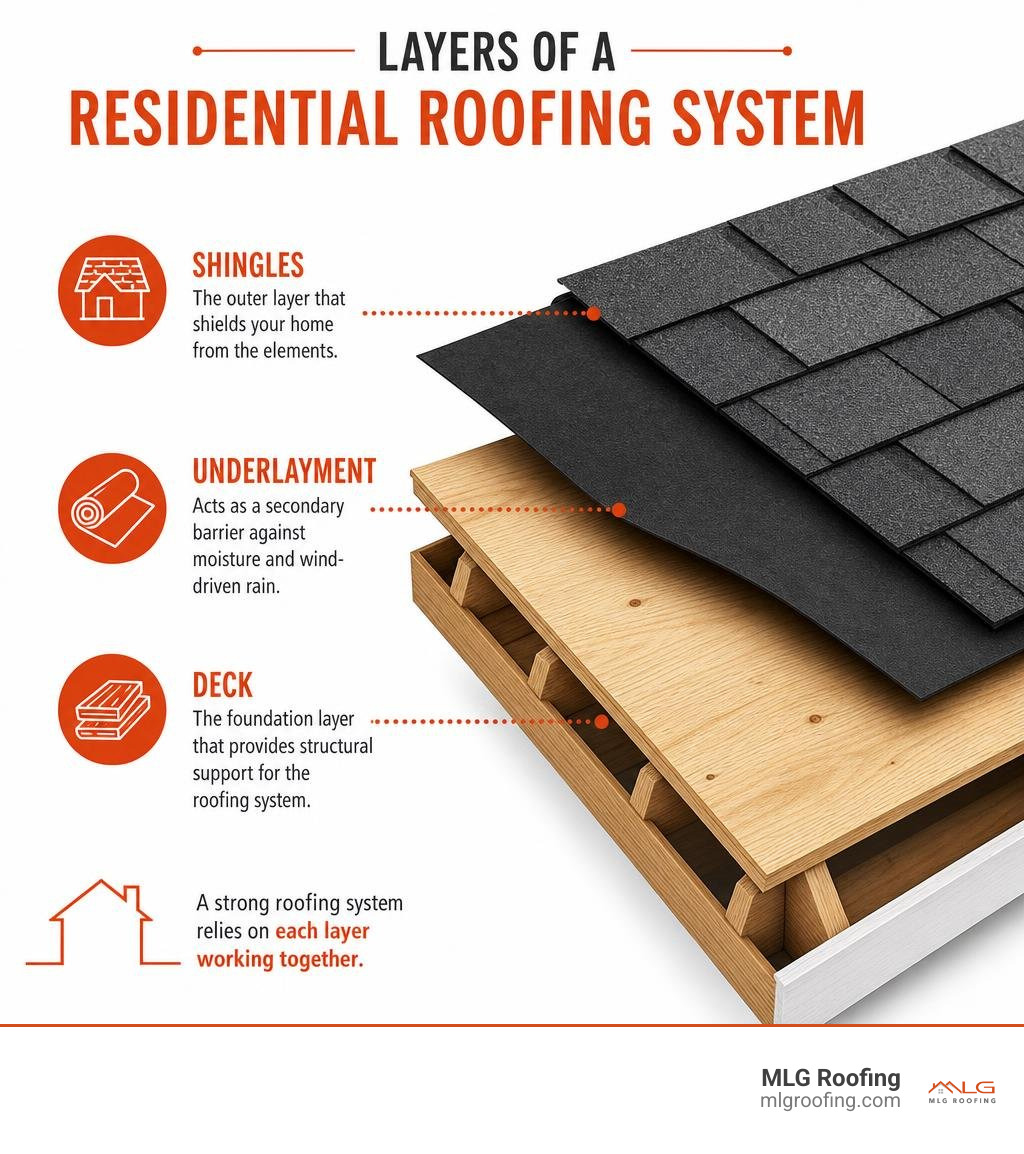
Felt underlayment for roofing is an asphalt-saturated sheet material installed directly over your roof deck, beneath shingles, tile, or metal panels. It acts as a secondary water barrier — a backup layer that helps protect your home if the outer roofing is ever damaged or compromised.
To understand how felt underlayment for roofing protects a home, it helps to look at the roof as a complete, multi-layered system. While the outer shingles or metal panels shed the vast majority of rain, they are not entirely vapor-tight or immune to wind-driven water. Underlayment serves as the critical middle layer between those outer materials and the wooden roof deck.
At its core, traditional felt underlayment serves as a secondary water-resistant barrier that helps protect the roof deck if moisture gets beneath the primary roofing material. It is manufactured by taking a base sheet and saturating it with protective asphalt. This asphalt saturation provides the water resistance needed to help keep wood decking dry, while still maintaining a semi-permeable rating under standard conditions. This allows small amounts of moisture vapor inside the attic to escape while still helping resist liquid water from above.
Beyond acting as a secondary water barrier, felt plays a vital chemical role. When asphalt shingles are installed directly onto raw wood sheathing, the dry wood can actually draw volatile oils and tar out of the shingles over time. This oil loss leads to premature shingle degradation, cracking, and adhesion issues. Felt underlayment acts as a protective buffer, preserving the shingles’ volatile compounds and preventing them from bonding directly to the plywood. To learn more about how this system keeps your home dry, you can read about understanding roof underlayment and why it is crucial for your home’s protection.
The Role of a Secondary Water Barrier in Coastal Florida
In coastal Central Florida communities like Melbourne, FL, a secondary water barrier is not just a luxury; it is a necessity. During hurricane season, severe tropical storms bring wind-driven rain that can easily blow upward beneath shingles or tile roof coverings. Salt air exposure along the coast also accelerates the weathering of materials, making a robust backup layer essential.
If a storm rips shingles off a roof in Melbourne, FL, the secondary water barrier is the only line of defense preventing water from soaking the plywood deck, leaking into the attic, and causing thousands of dollars in interior water damage.
Organic vs. Fiberglass Substrates in Saturated Felt
Traditional felt underlayment for roofing is manufactured using one of two base substrates:
- Organic Substrates: This is the most common variety. It features a cellulose-based mat made from recycled paper, wood fibers, or corrugated cardboard. This organic mat is highly absorbent, allowing it to take in a large volume of asphalt saturant, resulting in a flexible, heavy-duty sheet.
- Fiberglass Substrates: This variation replaces the cellulose base with a thin mat of glass fibers. Fiberglass substrates offer higher tensile strength and better tear resistance during the installation phase, though they are less common than traditional organic felts.
Professional roofing contractors select underlayment products that meet applicable ASTM standards and manufacturer requirements for the roofing system being installed.
Here’s a quick summary of what you need to know:
- What it is: An asphalt-saturated felt sheet (organic or fiberglass) rolled across the roof deck before the primary roofing material is installed
- Main types: #15 felt (lighter, standard use) and #30 felt (heavier, better for high-wind and steep-slope applications)
- What it does: Resists wind-driven rain, protects the wood deck from moisture and shingle oils, and provides temporary water resistance during installation
- Key limitation: Water-resistant, not waterproof — it typically features a semi-permeable rating that can rise in humid conditions
- Overlap requirements: Typically a minimum 2-inch overlap on steep slopes (4:12 and above); a minimum 19-inch overlap on low slopes (2:12 to 4:12) for double-layer coverage
- Alternatives: Synthetic underlayment and rubberized asphalt membranes offer longer UV exposure windows and greater tear resistance
For homeowners in Brevard County, FL, where hurricane-season storms and intense UV exposure put constant pressure on roofing systems, the underlayment choice matters more than most people realize. Traditional felt underlayment has protected Florida roofs for decades, but understanding where it excels—and where modern synthetic products offer advantages—helps homeowners make a more informed decision.
This guide walks you through everything: how felt underlayment works, how it compares to modern alternatives, what Florida’s building code requires, and how a licensed contractor installs it correctly.
At MLG Roofing, we install underlayment on every roof replacement throughout Brevard County. While traditional felt still has its place, many homeowners today choose synthetic underlayment because it offers better tear resistance and longer weather exposure during installation. The right choice depends on the roofing material, budget, and Florida’s demanding climate.
Comparing #15 vs. #30 Asphalt-Saturated Felt in Brevard County, FL
When selecting traditional felt underlayment for roofing in Palm Bay, FL or Rockledge, FL, homeowners and contractors must choose between two primary thicknesses: 15-pound (#15) and 30-pound (#30) felt. Historically, these numbers represented the actual weight of the material per 100 square feet (one square), though modern manufacturing techniques have made the actual weights slightly lighter while maintaining or improving physical performance.
Today, the #15 and #30 labels refer to product classes rather than the actual weight of modern felt rolls, although the traditional naming convention remains the industry standard.
| Performance Metric | #15 Felt Underlayment | #30 Felt Underlayment |
|---|---|---|
| Material Thickness | Thinner, more flexible | Much thicker and stiffer |
| Tear Resistance | Moderate; prone to tearing in high winds | High; excellent resistance to foot traffic |
| Standard Roll Coverage | 432 sq. ft. | 216 sq. ft. |
| Primary Use Cases | Standard slopes, budget-friendly shingle roofs | Steep-slope roofs, high-wind zones, tile/metal |
| UV Exposure Limit | Very short (typically 1 to 2 weeks) | Moderate (up to several weeks depending on product) |
Today, many contractors install synthetic underlayment instead of either felt option, but understanding #15 and #30 felt helps homeowners compare proposals and understand what they’re paying for.
When to Specify #15 Felt Underlayment for Roofing
Standard #15 felt is lightweight and highly flexible, making it easy to roll out and handle. It is typically specified for standard-slope residential roofs where budget is a primary constraint. Because a single roll covers a large area, it requires fewer seams and installs quickly.
However, because #15 felt is thinner, it has lower tear resistance. If workers walk heavily across it during installation, or if a sudden wind gust catches an unfastened section, it can rip. For projects utilizing standard weight materials, standard felt underlayment options provide a reliable, budget-conscious choice.
Why #30 Felt Underlayment for Roofing Offers Superior Hurricane Resistance
For homes in high-wind areas like Palm Bay, FL, #30 felt is almost always the preferred choice among traditional options. Its thicker, stiffer composition makes it highly resistant to tearing under foot traffic and wind uplift.
On steep-slope roofs, where installers require a stable, slip-resistant surface, #30 felt provides superior traction and durability. It also resists wrinkling when exposed to nighttime dew or light rain prior to shingle application. Technical specifications for these heavier grades demonstrate their ability to withstand tough coastal conditions.
Florida Building Code Requirements and Installation Standards in Melbourne, FL
The Florida Building Code has established strict guidelines to improve storm resilience. Homeowners in West Melbourne, FL and across coastal Central Florida must ensure their roofing systems comply with these updated standards to maintain insurance coverage and pass local building inspections.
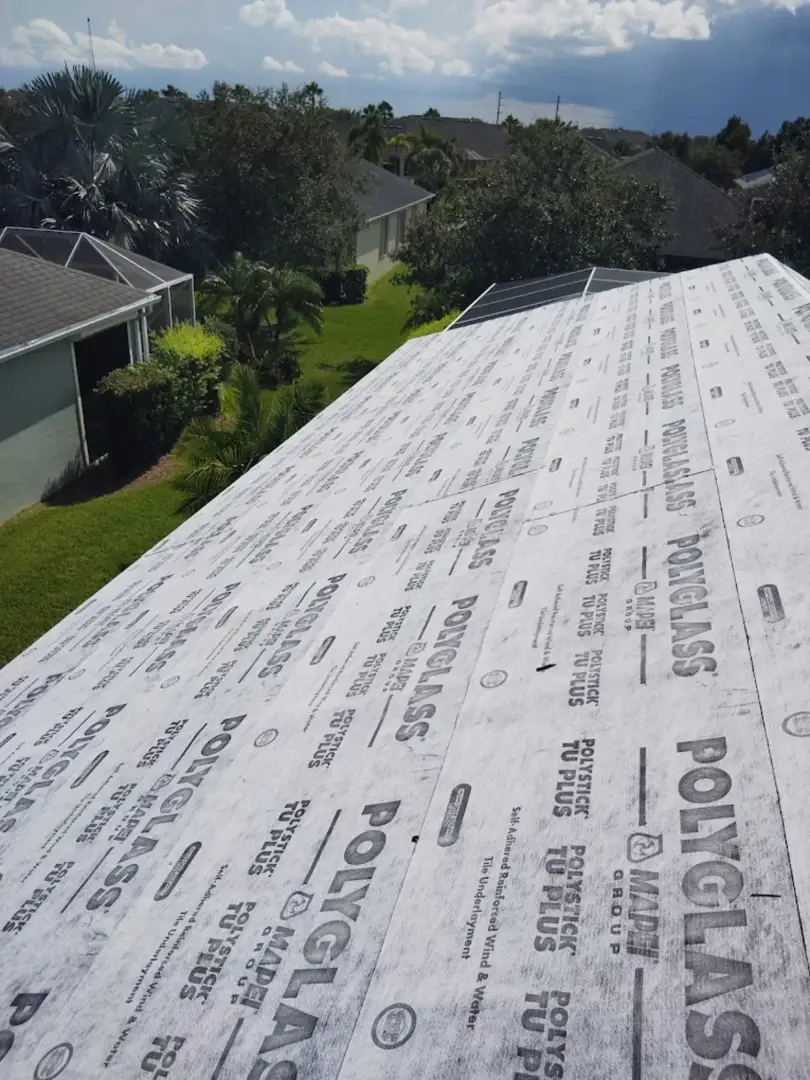
One of the most significant changes in recent code cycles is the two-layer underlayment requirement for many residential roofs. In high-wind areas, standard single-layer applications of thin felt are often insufficient. The code mandates stronger, more resilient materials or specific double-layer installation techniques to prevent wind uplift from exposing the wood deck.
Most municipalities in Brevard County require roofing permits for full roof replacements, and inspections verify proper underlayment installation before the roof covering is completed.
Proper Overlap and Fastening Methods for Wind Uplift Protection
To ensure the secondary water barrier holds tight during a tropical storm, precise overlap and fastening techniques are mandatory:
- Low-Slope Roofs (2:12 to 4:12): Felt courses must overlap by a minimum of 19 inches. This creates a continuous double layer of underlayment across the entire roof surface, providing excellent protection against slow-draining water and ice dams.
- Steep-Slope Roofs (4:12 and steeper): The upper courses of felt must overlap lower courses by at least 2 inches, ensuring water sheds downward over the seams. Vertical end laps must overlap by at least 6 inches.
- Fastening Requirements: In high-wind zones like Brevard County, FL, standard staples are not code-compliant. Installers must use plastic cap nails or plastic windstrips along the edges to prevent the felt from tearing away under high pressure.
For detailed diagrams and nailing patterns, contractors refer to standard manufacturer installation instructions.
Decking Inspections and Flashing Integration in Palm Bay, FL
Before any underlayment is rolled out, a professional roofing contractor must perform a thorough deck inspection. In Palm Bay, FL, older homes with plywood sheathing are susceptible to rot caused by minor, undetected leaks. Any damaged or soft wood must be replaced to provide a solid nailing surface.
Additionally, the underlayment must integrate seamlessly with metal drip edges and flashing. At the eaves (the bottom edges of the roof), the felt underlayment must overlap the drip edge metal. At the rakes (the sloping sides of the roof), the drip edge metal must be installed over the felt. This prevents wind-driven rain from blowing underneath the metal and rotting the edge of the wood deck. Proper flashing integration is critical; you can read more about this in understanding the importance of flashing in roofing and how it protects your home from water damage.
Pros, Cons, and Climate Performance of Traditional Felt Paper
Traditional asphalt-saturated felt has a long track record, but it is important to weigh its performance characteristics against modern materials, especially in the hot, humid climate of Rockledge, FL.
For a broader look at material selection, you can review our guide on choosing the right roofing material for your style and budget in Brevard County.
Felt vs. Synthetic and Rubberized Underlayments
In recent years, synthetic underlayments made from woven polymers (like polyethylene or polypropylene) and self-adhered rubberized asphalt membranes have gained significant market share. Although synthetic underlayments generally outperform felt in Florida, roof felt underlayment remains a code-compliant option for many residential roofing systems when installed correctly and matched to the roofing system.
- Tear Strength: High-quality synthetic underlayments offer vastly superior tear strength compared to felt. While a worker can easily tear felt by hand, high-quality synthetics are designed to resist ripping under normal installation conditions.
- Weight and Coverage: Synthetic rolls are incredibly lightweight and cover significantly more area per roll than #30 felt. For example, premium synthetic options weigh only a fraction of traditional asphalt felt while offering extended UV resistance of up to several months compared to felt’s limited exposure window of one to two weeks.
- Moisture Behavior: Felt is water-resistant but absorbs moisture, which can cause it to swell and wrinkle. Synthetic underlayments are completely inert and do not absorb water.
Roof felt underlayment is still most appropriate when the project budget, roof covering, slope, and local code requirements all support a traditional felt installation.
Common Failure Modes: UV Degradation and Wrinkling
Felt underlayment is susceptible to two main failure modes:
- UV Degradation and Volatile Loss: When exposed to intense Florida sunlight, the asphalt in felt begins to dry out. As the volatile compounds evaporate, the felt becomes brittle, loses its water resistance, and easily crumbles.
- Wrinkling and Telegraphing: If felt gets wet from dew or rain before the shingles are installed, it absorbs water and expands, creating prominent wrinkles. These wrinkles can show through thinner asphalt shingles, affecting the flat, uniform appearance of your new roof.
To prevent trapped moisture from damaging your underlayment and decking from the inside out, proper attic ventilation is crucial. You can read about the physics of airflow in the science behind roof ventilation and how it enhances airflow.
Frequently Asked Questions About Felt Underlayment for Roofing
Is felt underlayment waterproof or water-resistant?
Traditional felt underlayment is water-resistant, not waterproof. It is designed to shed water that gets past your shingles, but it features a semi-permeable rating. In the high humidity of Cocoa, FL, this breathability allows moisture vapor to escape from the attic, but if the felt is subjected to standing water or prolonged rain without a primary roof covering, it will eventually saturate and leak.
How long can traditional felt paper be left exposed to Florida weather?
While some heavy-duty #30 felts are designed for an extended period of several weeks of exposure, standard felt should ideally be covered with shingles or metal within one to two weeks. In Sebastian, FL, intense UV rays and frequent afternoon thunderstorms can quickly degrade the asphalt coating, leading to tearing and loss of water resistance.
Can felt underlayment be used under metal roofing in Brevard County, FL?
Felt underlayment can be used under metal roofing, but it is often not the best choice for the climate in Viera, FL. Metal roofs conduct heat rapidly, reaching extreme temperatures that can accelerate the drying out and volatile loss of asphalt-saturated felt. For metal installations, high-temperature synthetic underlayments or self-adhered membranes rated for high-temperature applications are generally recommended. For a deeper dive into compatible systems, read our comprehensive guide to roofing materials for Florida homes.
Conclusion
Traditional felt underlayment remains a reliable, time-tested option for many residential roofing projects. However, achieving code-compliant storm protection in coastal Central Florida requires proper installation, quality materials, and attention to every layer of the roofing system.
If you suspect your roof has storm damage or is simply reaching the end of its lifespan, explore our roofing services or contact MLG Roofing to schedule a professional inspection.
Need emergency roof repair? If your roof is actively leaking after a storm, visit our Emergency Roof Repair page for immediate assistance.