
Choosing the Best Roofing Material for Florida Weather

Choosing the best roofing material for Florida homes is a decision that goes well beyond curb appeal. On the Space Coast in Brevard County, FL, your roof faces a combination of challenges that most of the country simply doesn’t deal with — intense UV exposure, high humidity, salt air off the Atlantic, and the real threat of hurricane-force winds every season.
The right material can mean the difference between a roof that holds up for decades and one that needs replacing far sooner than expected.
Quick Answer: Best Roofing Materials for Florida Homes
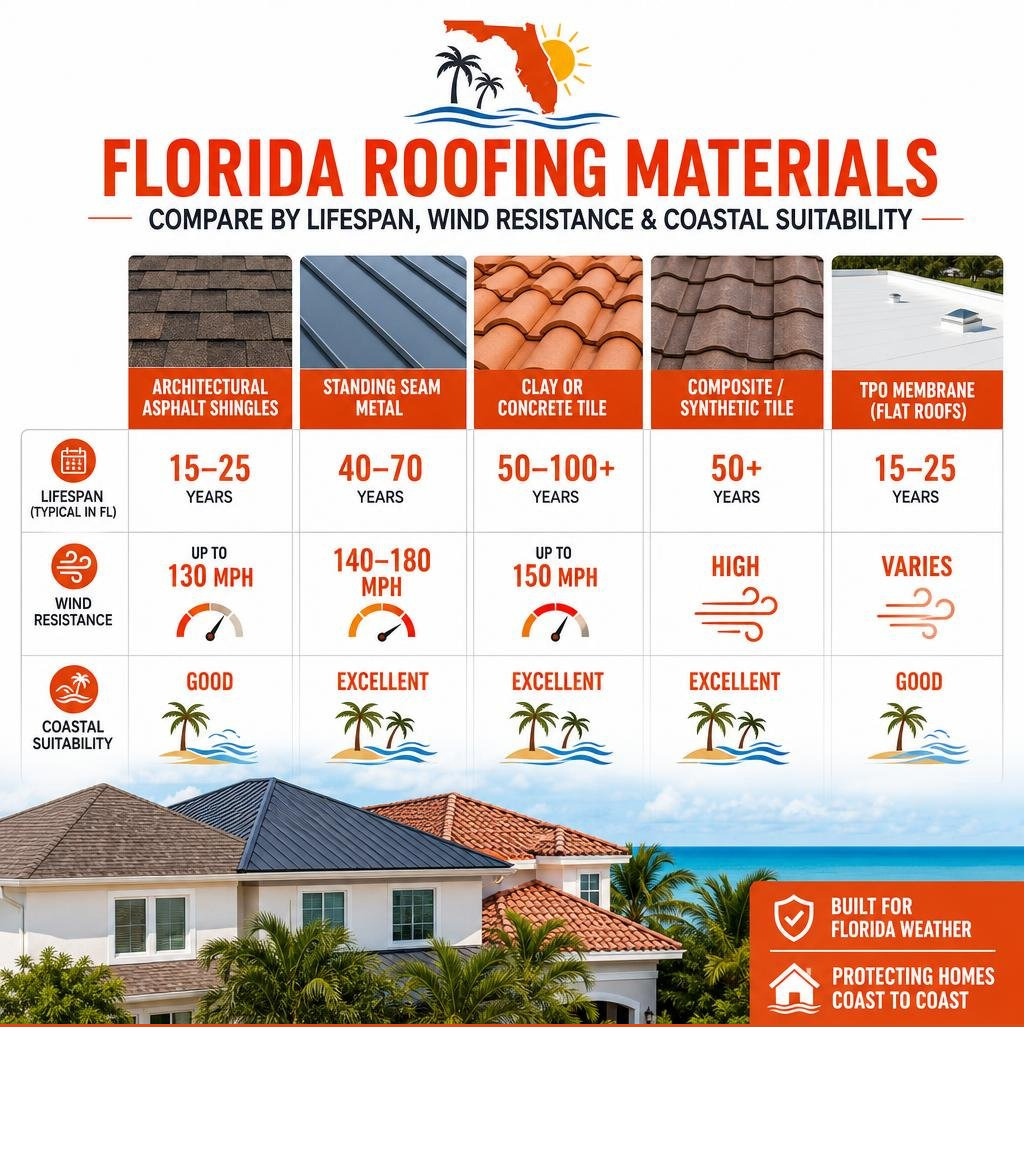
| Material | Typical Lifespan (FL) | Wind Resistance | Best For | Typical Cost |
|---|---|---|---|---|
| Architectural Asphalt Shingles | 15-25 years | Up to 130 mph | Budget-conscious homeowners | Low to moderate |
| Standing Seam Metal | 40-70 years | 140-180 mph | Long-term owners, coastal homes | Moderate to high |
| Clay or Concrete Tile | 50-100+ years | Up to 150 mph | Durability, Mediterranean style | High |
| Composite/Synthetic Tile | 50+ years | High | Low-maintenance, HOA communities | Moderate to high |
| TPO Membrane (flat roofs) | 15-25 years | Varies | Low-slope or flat roof designs | Moderate |
The material that makes the most sense for your home depends on your budget, how long you plan to stay, how close you are to the coast, and what your structure can support. This guide walks through each option so you can make a well-informed choice — or have a much better conversation with your roofing contractor when the time comes.
At MLG Roofing, one of the most common questions we hear from homeowners is which roofing material performs best in Florida’s demanding climate. The answer depends on your home’s location, budget, how long you plan to stay, and whether hurricane resistance, energy efficiency, or long-term durability is your top priority.
Why Florida’s Climate Matters When Choosing Roofing Materials
Brevard County is a beautiful place to live, but the local climate is incredibly harsh on building materials. From Titusville down to Sebastian, roofs on the Space Coast are subjected to a relentless combination of environmental stressors. Understanding these local weather patterns is the first step in selecting the best roofing material for florida homes.
First, there is the intense solar radiation. The Florida sun beats down on rooftops all year long, pushing surface temperatures on dark roofs well past 160 degrees Fahrenheit. This extreme heat, combined with constant ultraviolet (UV) radiation, accelerates the breakdown of roofing materials. Over time, UV rays cause asphalt shingles to lose their protective granules, warp, and curl, while weaker materials can become brittle and crack.
Humidity is another silent threat. With an average annual humidity level hovering around 74% in coastal areas like Cocoa Beach and Cape Canaveral, moisture is always in the air. This damp environment is the perfect breeding ground for mold, mildew, and blue-green algae. The black streaks commonly seen on local rooftops are not dirt; they are algae colonies feeding on the limestone filler used in modern shingles.
For properties located closer to the water in places like Indian Harbour Beach, Satellite Beach, and Merritt Island, salt air corrosion is a major factor. Salt spray carried by coastal winds can quickly corrode standard metal fasteners, flashing, and unprotected steel roofing systems. Any metal components used near the coast must be specifically rated for saltwater exposure, such as aluminum or high-grade coated steel.
Finally, there is the threat of tropical storms and hurricanes. High-velocity winds can easily peel back poorly secured roofing, while wind-driven rain can find even the smallest gap in a roof’s defense. Homeowners who want a deeper look at local weather patterns can read MLG Roofing’s guide to how Florida’s climate affects roofing material choices.
Evaluating the Best Roofing Material for Florida Homes
When evaluating a new roof, homeowners often find themselves balancing the upfront installation costs against the long-term value and expected lifespan of the material. A cheaper roof that needs to be replaced in fifteen years may end up costing significantly more over a thirty-year period than a premium system that lasts for half a century.
There isn’t a single “best” roofing material for every Florida home. The right choice depends on roof design, proximity to the coast, budget, maintenance expectations, and long-term ownership plans.

To help visualize how the most common materials stack up against each other in our coastal Central Florida climate, consider this comparison of durability, wind resistance, and relative cost:
| Material Type | Coastal Salt Resistance | Relative Upfront Cost | Maintenance Needs |
|---|---|---|---|
| Architectural Shingles | Moderate | Low to Moderate | Low (Requires periodic inspections) |
| Standing Seam Metal | Excellent (Aluminum/Kynar) | Moderate to High | Very Low |
| Clay & Concrete Tile | Excellent | High | Moderate (Underlayment care required) |
| TPO Membrane | Good | Moderate | Low (Best for flat/low-slope areas) |
Every home has different structural capabilities, aesthetic goals, and budget constraints. For a broader comparison by home style, materials, and performance factors, see MLG Roofing’s guide to roofing materials for Florida homes.
Asphalt Shingles: A Reliable and Budget-Friendly Option
Asphalt shingles remain the most popular residential roofing option across the Space Coast, including Palm Bay, West Melbourne, and Rockledge. They offer an excellent balance of affordability and performance, making them a practical choice for many families.
However, not all shingles are created equal. Traditional three-tab shingles are generally not recommended for coastal Florida homes because they carry lower wind ratings and tend to lift or tear easily during storms. Instead, modern installations rely almost exclusively on architectural shingles. These dimensional shingles are thicker, heavier, and constructed with multiple layers of fiberglass and asphalt laminated together.
Quality architectural shingles are engineered to withstand winds of 110 to 130 mph when installed with a proper six-nail fastening pattern. Many manufacturers also incorporate advanced algae-resistant granules containing copper or zinc, which help prevent those unsightly black streaks from forming in our humid climate. Impact-rated architectural shingles are also worth considering in areas prone to wind-driven debris during hurricanes.
While shingles are cost-effective and relatively quick to install, they do have a shorter lifespan in Florida compared to northern states. The intense heat and UV exposure mean a shingle roof in Melbourne or Sebastian typically lasts fifteen to twenty-five years, compared to thirty years in cooler climates. Homeowners comparing affordability, durability, and maintenance can review the pros and cons of shingle roofs in Brevard County.
Metal Roofing: Exceptional Strength and Longevity
For homeowners looking for a long-term investment that offers superior storm protection, metal roofing is often considered the gold standard. Once reserved primarily for commercial buildings or agricultural structures, metal has become incredibly popular for residential properties throughout Brevard County.
The primary benefit of metal roofing is its incredible wind resistance. Standing seam metal roofs, which feature interlocking panels with concealed fasteners, can easily withstand wind speeds of 140 to 180 mph. Because the fasteners are hidden beneath the metal panels, they are protected from the elements, drastically reducing the risk of leaks and wind uplift.
Standing seam is the premium choice for many Florida homes, but exposed-fastener metal roofing systems can also be practical for some residential applications when properly installed and maintained. Homeowners comparing options can use MLG Roofing’s metal roofing guide for Melbourne-area homes to better understand how different metal systems perform locally.
For waterfront properties in places like Cocoa Beach or Merritt Island, material selection is critical. Traditional galvanized steel can rust when exposed to salt spray. Instead, coastal homeowners should choose aluminum standing seam systems or Galvalume steel coated with a premium Kynar 500 finish. Aluminum naturally resists rust and corrosion, making it the ideal choice for oceanfront living.
While a metal roof requires a higher upfront investment than asphalt shingles, it can easily last forty to seventy years with minimal maintenance. It is often a “once-in-a-lifetime” purchase that also provides excellent energy savings. Homeowners considering this upgrade can learn more about the benefits of choosing metal roofing in Melbourne, FL.
Clay and Concrete Tile: Classic Durability
Tile roofing is synonymous with classic Florida elegance. From the historic homes of Rockledge to the newer developments in Viera, clay and concrete tiles offer an unmistakable Mediterranean aesthetic that can elevate any property’s curb appeal.
Beyond their looks, tile roofs are incredibly durable. Real clay tiles can last fifty to one hundred years or more, as they are completely impervious to rot, insect damage, and fire. They also handle wind exceptionally well due to their weight and interlocking designs, which can be further reinforced with heavy-duty hurricane clips.
However, tile systems come with unique structural requirements. Clay and concrete tiles are heavy. Homes originally built with asphalt shingles may require structural evaluation before switching to concrete or clay tile because of the additional weight.
Additionally, while the tiles themselves may last for a century, the water-resistant underlayment beneath them does not. In Florida’s hot climate, tile underlayment typically needs to be replaced every twenty to twenty-five years. This means a tile roof will eventually require a “lift and lay” service, where the tiles are carefully removed, a new underlayment is installed, and the original tiles are re-secured. To understand local installation standards and long-term maintenance expectations, read MLG Roofing’s overview of tile roofing in Brevard County.
Wind Resistance and Florida Building Code Compliance
In Florida, building codes are not just bureaucratic hurdles; they are safety standards designed to protect lives and property during major weather events. The Florida Building Code (FBC) contains some of the strictest wind uplift and structural requirements in the United States, especially for coastal regions.

When replacing a roof, the entire assembly must comply with Florida Building Code roofing requirements. This includes using approved underlayments, proper drip edges, approved roof assemblies, and specific fastening patterns.
One of the most effective ways to protect a home from water damage during a storm is by installing a sealed roof deck. During a typical re-roofing project, installing a self-adhering peel-and-stick underlayment directly to the plywood deck creates a secondary water barrier. Research shows that a sealed roof deck can reduce water infiltration into the attic by up to 95% if the primary roof covering (like shingles or metal) is blown off during a storm, compared to just 60% protection with traditional unsealed decks.
Investing in these high-wind upgrades does more than just protect your home; it can also save you money. Florida law requires insurance companies to offer premium discounts, known as wind mitigation credits, to homeowners who have certified wind-resistant features. Installing a secondary water barrier, upgrading to hurricane straps, or choosing impact-rated materials can earn homeowners hundreds of dollars in annual insurance premium reductions.
Energy Efficiency and Long-Term Cost Considerations
With air conditioning units running almost constantly throughout the year on the Space Coast, energy efficiency is a major priority for local homeowners. Your choice of roofing material has a direct impact on how hard your cooling system has to work to keep your home comfortable.
Traditional dark asphalt shingles absorb a massive amount of solar heat, transferring it directly into your attic space. This creates a “heat oven” effect right above your living areas. To combat this, many manufacturers now offer cool-roof shingles designed with highly reflective granules that bounce solar radiation back into the atmosphere.
Metal roofing is inherently one of the most energy-efficient options available. Because metal has a low thermal mass, it does not store heat the way asphalt or concrete does. Instead, it reflects solar radiation and quickly dissipates any heat it does absorb. Studies show that a highly reflective metal roof can reduce cooling costs by 10% to 25% compared to dark shingles, while also lowering attic temperatures by as much as twenty to thirty degrees.
Clay and concrete tiles also perform exceptionally well in the heat. Because of their curved shapes, tile installations create a natural air gap between the underside of the tile and the roof deck. This air space acts as an extra layer of insulation, preventing heat transfer and allowing hot air to escape before it enters the home. Homeowners weighing long-term comfort and utility costs can read more about why energy-efficient roofing is a smart investment in Florida.
Frequently Asked Questions About Florida Roofing
Which roofing material is best for hurricanes in Florida?
Standing seam metal roofing is widely considered the best overall option for hurricane protection. Its interlocking panels and concealed fasteners prevent wind from getting underneath the roof, allowing it to withstand winds up to 180 mph. Heavy clay or concrete tile systems installed with hurricane clips also offer exceptional wind resistance, though they require a strong structural support system.
How long does a roof typically last on the Space Coast?
The lifespan of a roof in coastal Central Florida is heavily influenced by UV exposure, salt air, and storm activity. On average, architectural asphalt shingles last fifteen to twenty-five years. Metal roofing typically lasts forty to seventy years, while clay or concrete tiles can last fifty to one hundred years, though the underlying water-resistant barrier will need to be replaced every twenty to twenty-five years.
How do roofing materials affect homeowners insurance premiums?
In Florida, insurance companies heavily favor wind-resistant and impact-rated roofs. Installing a metal roof or a certified impact-rated shingle system can qualify your home for significant wind mitigation credits. Additionally, having a secondary water barrier (sealed roof deck) installed during a roof replacement is one of the most effective ways to lower your property insurance premiums.
Which roofing material adds the most value to a Florida home?
Metal roofing and high-quality tile roofs often provide the greatest long-term value because of their durability, energy efficiency, and appeal to buyers. However, architectural shingles remain an excellent value for many homeowners due to their lower initial cost and reliable performance.
Conclusion: Choosing the Best Roofing Material for Florida Homes
Selecting the best roofing material for your Florida home requires balancing your immediate budget, your long-term plans for the property, and the specific wind and salt exposure of your neighborhood. While architectural shingles offer an affordable and reliable option for many families, standing seam metal and classic tile systems provide unmatched durability and energy efficiency for those looking to make a long-term investment in their home.
Because every property on the Space Coast has unique structural needs and local building requirements, the best way to make a decision is to work with an experienced, licensed contractor who understands the realities of coastal Florida weather.
MLG Roofing is a trusted, licensed, and insured residential roofing contractor based in Melbourne, FL. Serving communities throughout Brevard County — including Palm Bay, West Melbourne, Rockledge, Viera, Merritt Island, Cocoa, Cocoa Beach, Satellite Beach, Indian Harbour Beach, Sebastian, and Titusville — the MLG team specializes in high-quality roof repairs, full replacements, leak detection, and storm damage restoration.
Whether your home needs a minor leak repair, emergency storm tarping, or a complete high-wind shingle or metal roof replacement, the professionals at MLG Roofing are ready to provide honest guidance and exceptional craftsmanship. Learn more about MLG Roofing’s residential roofing services.