
Start Your Insurance Roof Repair Claim With Clear Documentation
An insurance roof repair claim can help pay for sudden storm damage in Brevard County, FL, but coverage depends on policy language, exclusions, deductibles, roof age, and carrier decisions.
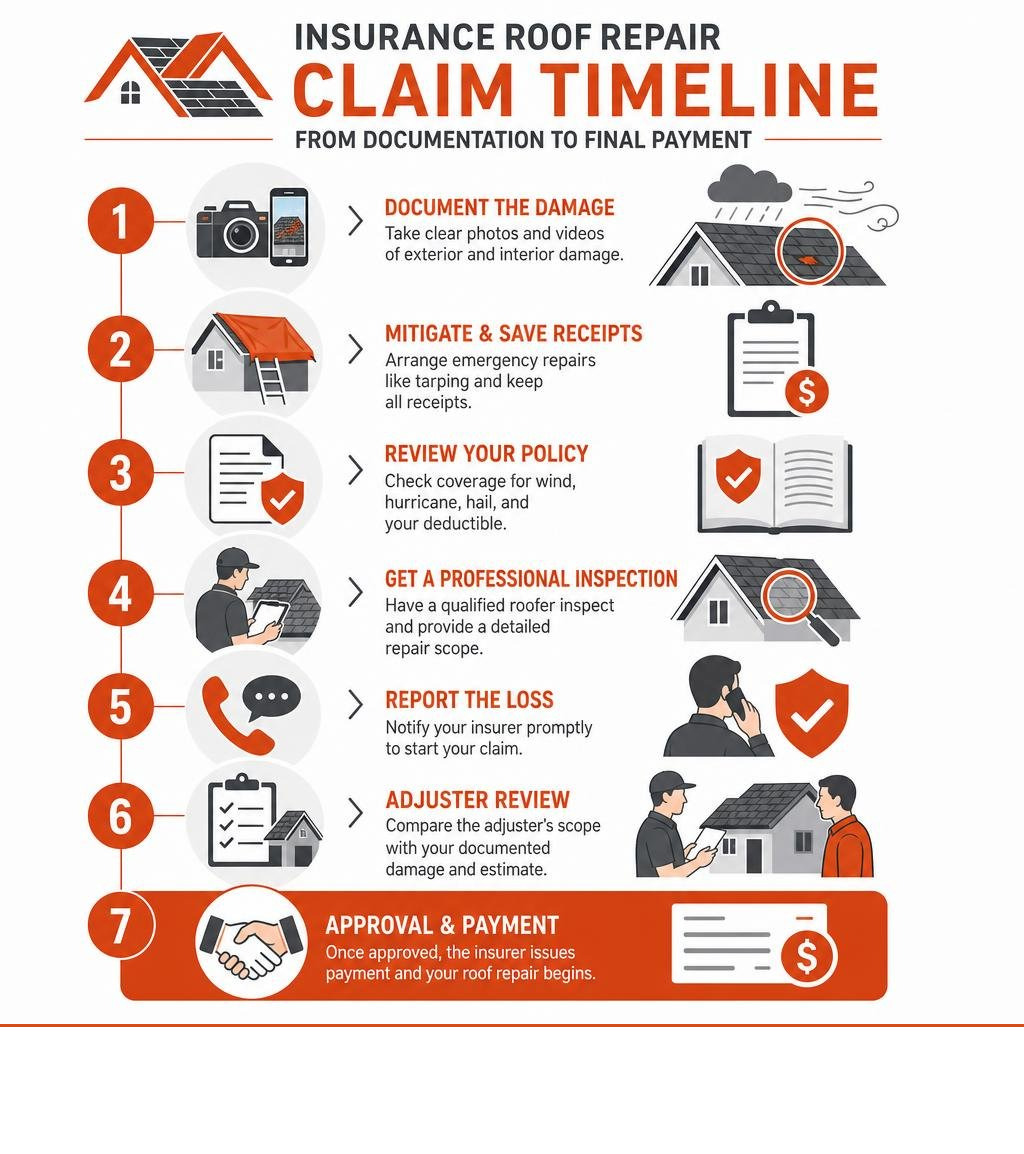
- Document visible damage and interior leaks with photos and video from a safe location.
- Arrange professional emergency mitigation, such as tarping, if water is entering the home. Keep every receipt.
- Review your policy for wind, hurricane, hail, and deductible details.
- Have a qualified local roofing contractor provide a comprehensive inspection and repair scope.
- Report the loss to your insurer promptly, then compare the adjuster’s scope with the documented damage.
Homeowners insurance commonly covers sudden damage from wind, fallen trees, fire, or other covered events. It usually does not pay for an old roof, poor maintenance, or a leak caused by long-term wear. In Florida, hurricane winds, intense sun, and salt air can make the difference between storm damage and existing deterioration especially important.
MLG Roofing helps Space Coast homeowners document roof conditions, identify wind damage to roof systems, arrange urgent roof repairs, and navigate hurricane roof repair Melbourne to complete covered repairs once the insurer approves the scope. An insurance claim is not a guarantee of payment, but complete evidence and a clear repair estimate can make the process easier to evaluate.
Understanding Roof Coverage: Covered Perils, Exclusions, and Policy Types
Navigating property insurance begins with a clear understanding of what your policy actually protects. Homeowners policies are written to shield structures from sudden, accidental physical losses rather than standard wear and tear over time. Understanding the role of roofing in home insurance what Florida homeowners should know can help set practical expectations before initiating any paperwork.
Insurance carriers categorize property damage based on the event that caused it. Sudden weather events, such as hurricane-force winds, hail impacts, or falling tree limbs, typically fall under covered perils. Conversely, issues stemming from deferred maintenance, age-related shingle decay, rot, mold, or insect activity are excluded from standard coverage. When assessing a home on the Space Coast, insurance adjusters look closely to determine whether water intrusion was caused by wind-driven rain creating a fresh structural opening or simply by deteriorated sealant around an aging flashing.
Open Perils vs Named Perils
Policy forms dictate how damage must occur to qualify for compensation. Standard residential policies, often structured under HO-3 forms, generally cover the main building structure on an open perils basis. This means all causes of direct physical loss are covered unless specifically listed in the exclusions section.
Named perils policies, by contrast, only provide coverage for events explicitly listed in the policy document, such as fire, lightning, windstorm, or hail. In high-risk coastal environments like Melbourne and Palm Bay, policies often feature specific endorsements or separate deductibles for windstorms and hurricanes. Reading your policy declaration page carefully clarifies which perils apply to your roof and whether named storm endorsements impose different financial conditions.
RCV vs ACV Payout Calculations
The financial calculation of your claim payout depends heavily on whether your policy uses Replacement Cost Value (RCV) or Actual Cash Value (ACV). This fundamental distinction governs how much money your insurance carrier will pay upfront and what portion you must pay out of pocket. To review standard valuation models across the industry, homeowners often reference an independent Roof Insurance Claim Guide.
Under an RCV policy, the insurer agrees to pay the actual cost required to repair or replace the damaged roofing system at current market prices, subject to your deductible. However, the initial payment is calculated by subtracting depreciation based on the age and condition of the existing roof. Once work is completed by a licensed contractor and verified, the held-back depreciation is released.
Under an ACV policy, the carrier only pays the depreciated value of the roof at the time of loss. The accumulated depreciation is non-recoverable, meaning the homeowner remains responsible for paying the difference out of pocket in addition to the standard policy deductible.
| Coverage Feature | Replacement Cost Value (RCV) | Actual Cash Value (ACV) |
|---|---|---|
| Primary Valuation | Current market replacement cost | Current cost minus age depreciation |
| Initial Payout | ACV amount (less deductible) | ACV amount (less deductible) |
| Depreciation Funds | Recoverable after job completion | Non-recoverable (lost value) |
| Out-of-Pocket Expense | Deductible plus unapproved upgrades | Deductible plus all accumulated depreciation |
| Impact of Roof Age | Higher initial holdback, full recovery later | Permanent payout reduction on older roofs |
The 7-Step Process for an Insurance Roof Repair Claim
When storm activity impacts residential roofing systems across West Melbourne and Rockledge, taking systematic action helps preserve policy rights and ensures clear records for claim evaluation. Following a structured approach simplifies communications with adjusters and contractors alike. For a complete tactical breakdown, review navigating insurance claims a step-by-step guide for roofing damages.
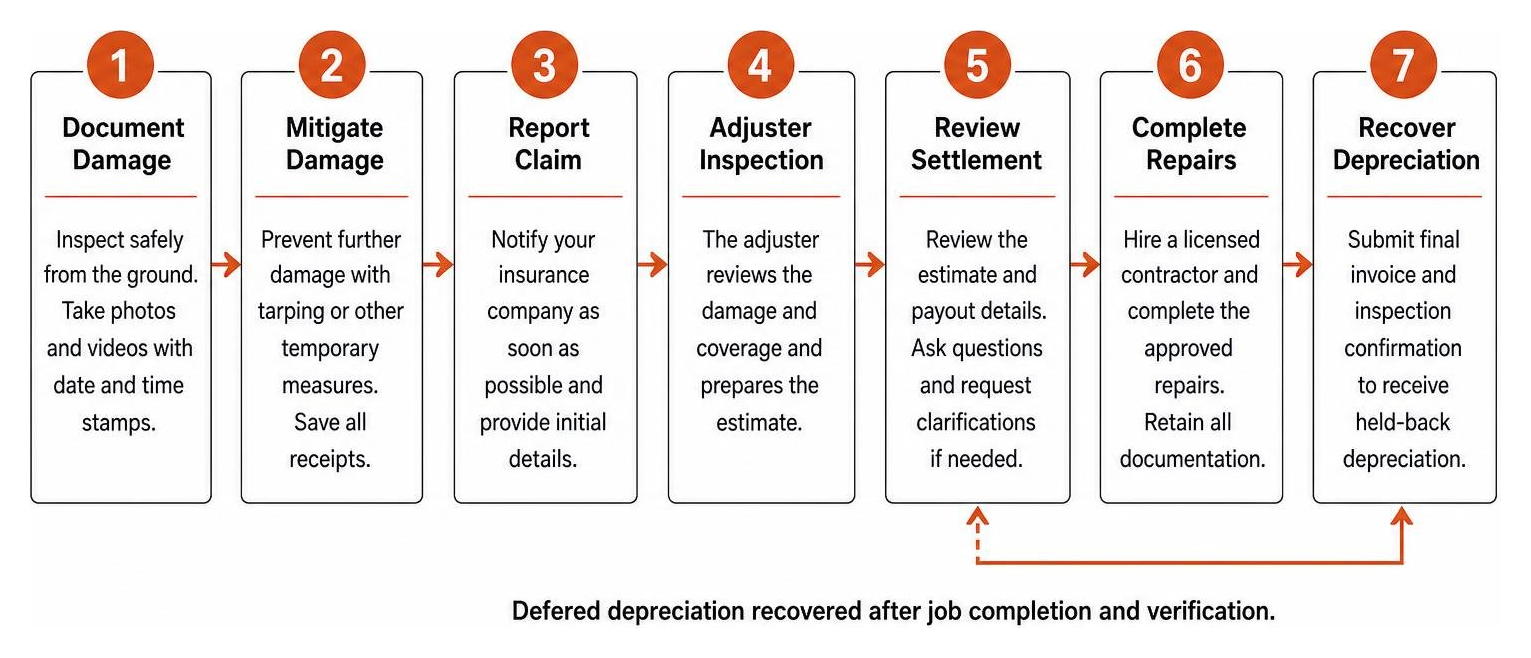
Step 1: Immediate Damage Documentation and Emergency Mitigation
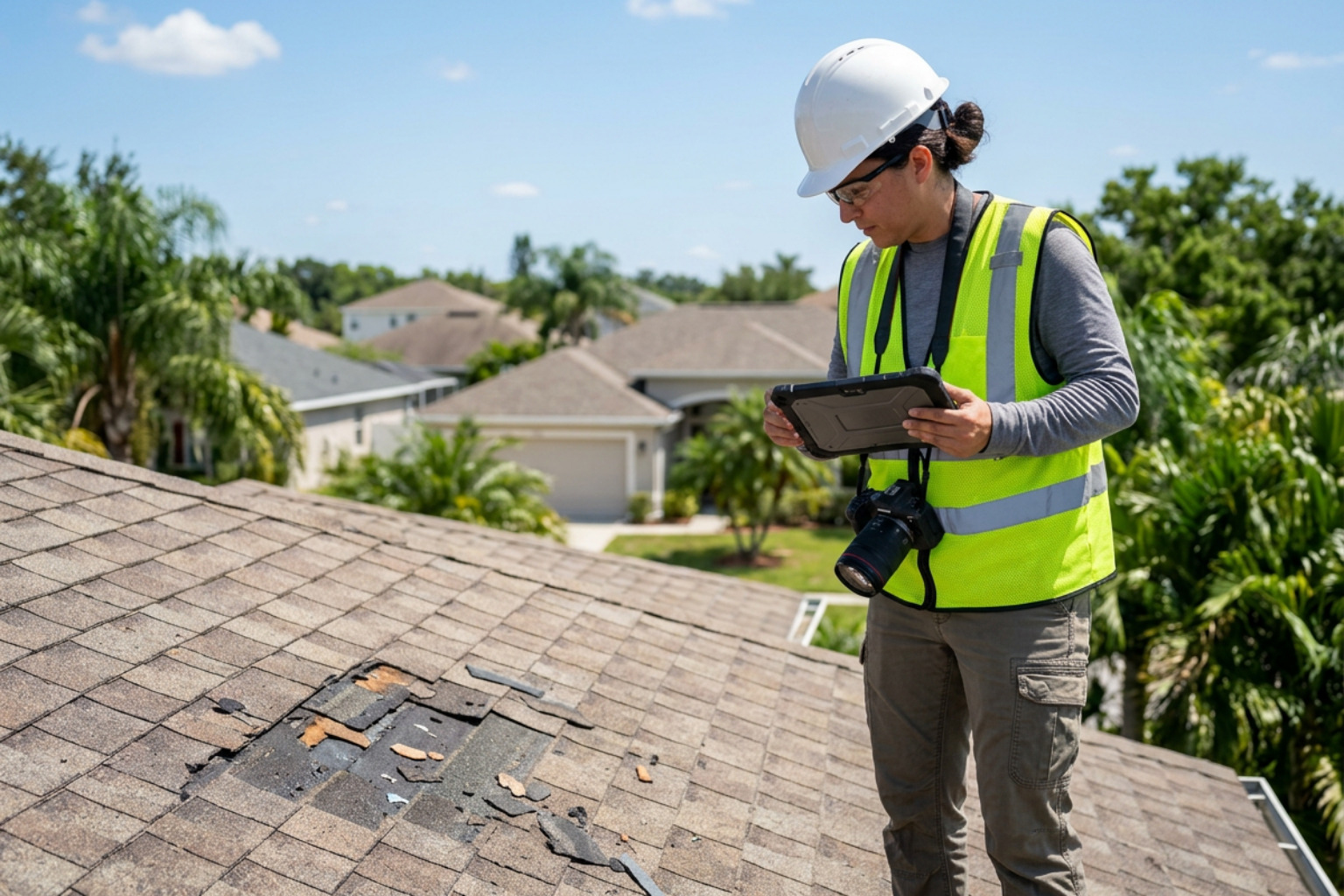
Safety is the absolute priority following a severe weather event. Homeowners should perform an initial visual check from ground level, noting missing shingles, lifted metal panels, dented metal trim, or cracked ridge caps. Taking high-resolution photographs and ground-level video with time and date stamps establishes immediate evidence of storm damage.
If water is actively entering the living space, homeowners have a policy duty to mitigate further damage. Professional emergency roof repair services options, such as temporary tarping, prevent secondary interior loss. Every invoice, receipt, and photo from emergency mitigation efforts should be retained, as reasonable mitigation costs are typically submitted directly into the overall claim.
Step 2: Contacting a Roofing Contractor Before Your Insurance Roof Repair Claim
Engaging a reputable local contractor prior to calling your carrier offers significant advantages. An experienced contractor can perform a thorough walkthrough, conducting a test square inspection to identify crease marks on shingles, missing fasteners, or subtle impact points that might be overlooked from the ground.
A detailed inspection report provided by a professional roofing contractor establishes an independent baseline scope of work. Homeowners can consult a detailed guide to storm damage roof assessment to better understand what technicians evaluate during a physical inspection on metal and shingle roofs.
Step 3: Filing the Formal Notice of Loss
Once physical evidence of storm damage is documented, contact your insurance company’s claims department to file a formal Notice of Loss. Provide exact dates and times of the weather event along with preliminary photo evidence.
When filing, stick strictly to facts regarding observable condition changes. Avoid speculating on the exact age of components, pre-existing conditions, or structural details. The intake specialist will issue a unique claim number and assign an adjuster to oversee the property evaluation.
Step 4: The Adjuster On-Site Inspection
The assigned insurance adjuster will schedule an on-site visit to inspect the roof, measure dimensions, and calculate an initial repair or replacement estimate. Having your selected roofing contractor present during this walkthrough ensures all structural damage identified during initial evaluations is pointed out directly.
Contractors and adjusters can walk the slope together, discussing missing components, flashing damage, drip edge requirements, and potential code compliance mandates. This collaborative walkthrough reduces initial scope omissions.
Step 5: Reviewing the Scope of Loss and Filing Supplements
After the inspection, the insurance company issues an official Explanation of Benefits (EOB) along with an itemized scope of loss. This estimate outlines approved line items, labor rates, material quantities, and calculated depreciation.
It is common for initial estimates to miss critical items, such as code-required underlayment, starter strips, ridge cap shingles, or local waste factors. If omissions exist, your contractor prepares a detailed supplement—a revised estimate complete with photo evidence and code references—requesting necessary adjustments from the insurance carrier.
Step 6: Completing Repairs with a Qualified Local Roofer
Once the scope of work and pricing adjustments are aligned, formal repair or replacement work begins. Your chosen contractor handles necessary local municipal permits in jurisdictions such as Viera, Cocoa, or Merritt Island.
A licensed and insured roofing contractor completes the structural restoration using weather-appropriate installation techniques, ensuring modern wind-uplift standards and building code guidelines are fully respected throughout the build.
Step 7: Collecting Recoverable Depreciation Holdback
Upon completion of the roofing project, the contractor provides a final invoice along with photo documentation confirming the work matches the approved scope. The homeowner submits these records to the insurance carrier to request the release of withheld depreciation. To better manage this final financial transaction, homeowners can review guidelines on How to Collect Recoverable Depreciation.
The insurance company verifies the proof of completion, calculates final deductible offsets, and releases the remaining check to cover the final balance owed on the project.
Negotiating Low Adjuster Estimates, Supplements, and Claim Disputes
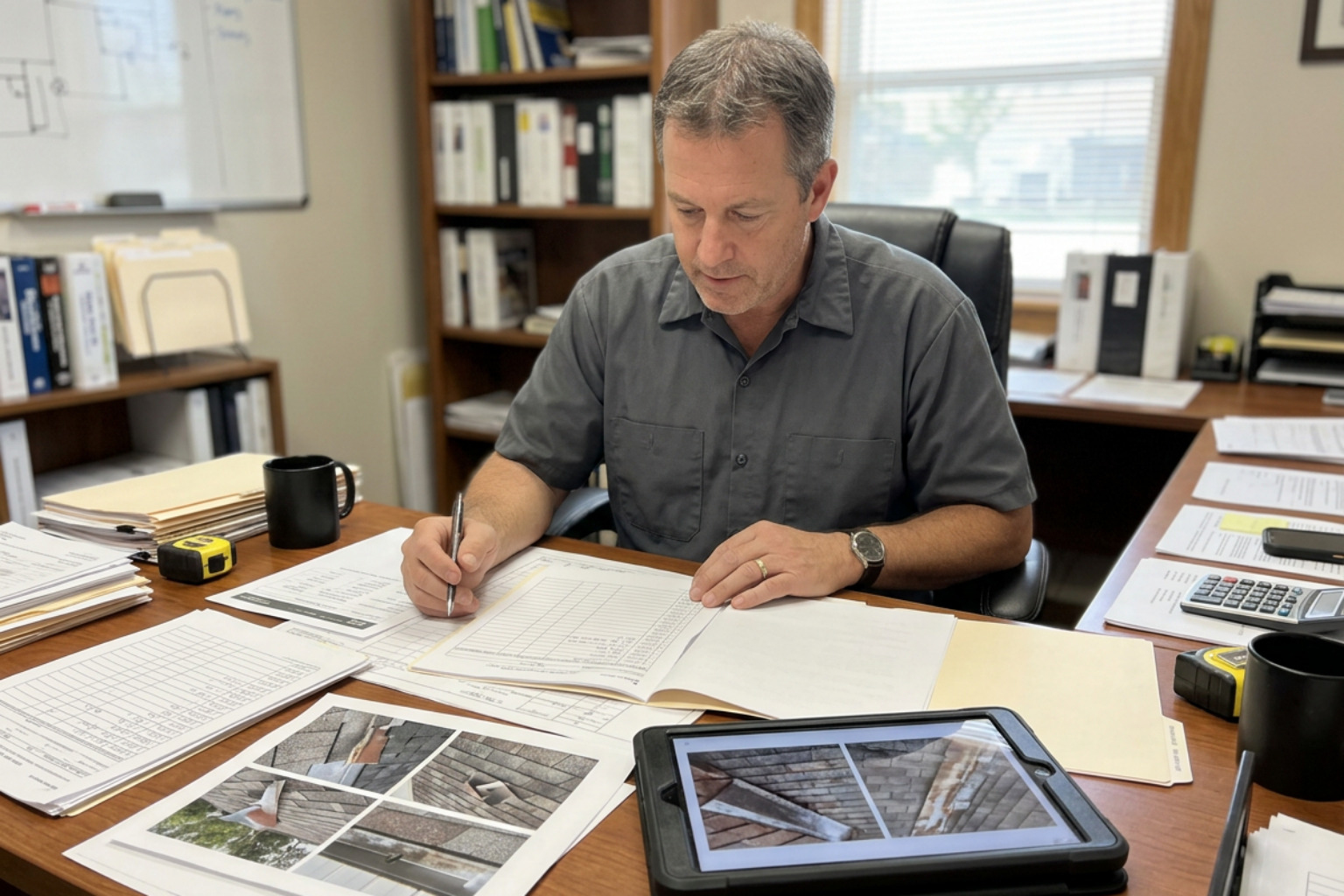
It is common for an initial insurance adjuster estimate to come in below actual market costs required to perform proper structural repairs. Insurance carriers rely heavily on standardized software programs to estimate regional pricing, but database figures often lag behind real-time material costs, specialized local labor rates, and local municipal permit requirements.
When an estimate falls short, policyholders are not required to accept an inadequate payout. Understanding how to present evidence and leverage contract documentation allows homeowners to seek necessary scope adjustments. For further insights into practical negotiation steps, review how to negotiate roof replacement with insurance.
What to Do If Your Insurance Roof Repair Claim Estimate Is Low
If the adjuster’s initial statement fails to cover complete repairs, start by requesting an itemized breakdown comparison from your roofing contractor. The contractor can highlight missing line items, inaccurate square footage measurements, or incorrect material specifications.
Homeowners can submit a formal request for re-inspection, inviting the carrier to send a senior adjuster to evaluate the roof alongside detailed contractor photo evidence. If disputes remain unresolved regarding scope or valuation, policies often include an appraisal clause-a formal dispute resolution mechanism where independent appraisers evaluate the loss-or policyholders may elect to consult a licensed public adjuster.
Understanding Insurance Supplements and Pricing Gaps
An insurance supplement is a formal request submitted to an insurance carrier for additional funds, labor, or materials not included in the original insurance claim estimate. Supplements bridge the gap between initial computerized loss reports and actual field conditions.
Supplements are routinely approved when supported by clear evidence. Common supplemented line items include:
- Code-required building components, such as self-adhering ice and water shield or drip edge flashing.
- Removal and replacement of damaged underlying plywood or oriented strand board (OSB) sheathing discovered during tear-off.
- Steep slope charges, high-eave equipment access, or specialized scaffolding setups.
- Adequate waste factors for complex roof geometry featuring valleys, dormers, and hips.
Avoiding Roofing Scams, Premium Increases, and Regional Regulations
Severe weather events often attract out-of-area contractors or unethical door-to-door operators hoping to capitalize on urgent homeowner repair needs. Protecting your investment requires vetting contractors carefully and understanding state-specific contracting laws across Florida.
Homeowners should exercise caution when approached by solicitors promising free roofs or offering suspicious financial arrangements. Learning how to identify reputable inspections helps safeguard property owners; review guidance on how to don’t get scammed finding real free roof inspections.
Vetting Roofing Contractors and Avoiding Scams
One of the most important legal rules regarding insurance restoration work in Florida involves policy deductibles. It is illegal for a contractor to offer to absorb, rebate, waive, or offset a homeowner’s insurance deductible. Any proposal suggesting a contractor can cover your deductible represents illegal activity and should be rejected immediately.
When selecting a roofing professional, insist on verifying key business credentials:
- Valid state certified roofing contractor license verification.
- Comprehensive general liability coverage and active workers’ compensation insurance certificates.
- Physical local office presence and established community reputation across Brevard County.
- Written contracts detailing specific scope of work, material manufacturer warranties, and explicit project payment schedules.
Premium Hike Risks and Regional Claims Regulations
A common concern among homeowners is whether filing a roof repair claim will trigger an immediate, individual premium rate hike. Generally, property insurance premiums are calculated based on broad risk pools across geographical zip codes rather than individual weather claims. When a major storm impacts a municipality like Sebastian or Titusville, insurance rates across the entire district may adjust upon renewal due to total regional storm loss frequency.
Regional weather factors on the Space Coast require specialized attention. High-wind zones, salt spray exposure, and severe UV rays wear down materials faster than inland climates. Establishing a proactive maintenance schedule preserves structural health; consider reading about the importance of regular roof inspections for Melbourne residents to maintain long-term protection.
Homeowners should also understand Ordinance or Law coverage. This optional policy endorsement assists with additional expenses if local building officials require structural upgrades to un-damaged roof sections to meet current Florida Building Code standards during a major repair.
Frequently Asked Questions About Roof Insurance Claims
Should I call my insurance company or a roofing contractor first after a storm?
Contacting a licensed local roofing contractor first is generally advisable unless active water leakage requires immediate emergency carrier response. A pre-inspection by a qualified roofer determines whether storm-related physical loss actually exists and exceeds your deductible. This prevents opening unnecessary claim files for minor repairs that fall below deductible thresholds.
Will filing an insurance roof repair claim cause my premium to increase?
A single weather-related claim caused by an Act of God is unlikely to cause a direct, targeted cancellation or individual rate penalty. However, insurance carriers periodically adjust overall regional premiums across entire zip codes following widespread severe weather events based on comprehensive risk assessment models.
What happens if my roof claim is denied by the insurance company?
If an initial claim is denied, request a formal written denial letter outlining specific policy exclusions cited by the carrier. Homeowners can review the denial alongside their contractor, gather additional photographic evidence or weather report data, and submit a written appeal requesting an official re-inspection.
Navigating Financing and Assistance Options
When property owners face roof repairs, understanding financial structure helps align project budgets. Repair costs depend on Florida-specific variables, including roof square footage, pitch steepness, accessibility, material choices (such as dimensional asphalt shingles versus standing seam metal), underlying structural deck damage, and local municipal permit requirements. All cost evaluations require an in-person physical inspection to assess actual site conditions.
For funding out-of-pocket costs, such as policy deductibles or unapproved structural enhancements, homeowners often compare grants, loans, and financing options.
| Funding Category | Program Example | Repayment Required? | Primary Characteristics |
|---|---|---|---|
| Government Grants | My Safe Florida Home Program | No | State-funded matching grant awards for specific wind mitigation upgrades; subject to legislative funding availability and strict eligibility criteria. |
| Home Equity Loans | HELOC / Bank Line of Credit | Yes | Secured loan structured against existing property equity; fixed or variable interest rates with scheduled monthly payback schedules. |
| Contractor Financing | Third-Party Payment Plans | Yes | Unsecured personal loans offered through lender partnerships; feature flexible terms, promotional interest windows, and monthly repayment schedules. |
Unlike grants which provide non-repayable assistance when funds are available, loans and financing agreements represent binding financial commitments requiring regular principal and interest repayments over time.
Conclusion
Successfully managing an insurance roof repair claim requires prompt action, clear photographic evidence, professional inspections, and open communication with adjusters. By systematically documenting damage, selecting a qualified local contractor, and reviewing your policy’s RCV or ACV structures, Space Coast homeowners can navigate the process with confidence.
MLG Roofing provides expert residential roof repair, roof replacement, leak detection, and storm restoration services across Melbourne, Palm Bay, West Melbourne, Rockledge, Viera, Merritt Island, Cocoa, and Sebastian. Contact MLG Roofing today to schedule a comprehensive roof assessment with a licensed Space Coast contractor or visit our Professional Roof Repair Services page to explore long-term structural protection options.