
Five Steps to Take When Your Flat Roof Leaks on the Space Coast
If you’re searching for flat roof repair near me in Brevard County, FL, the short answer is this: you need a licensed, locally experienced contractor who understands Florida’s coastal climate — UV exposure, heavy rain, salt air, and hurricane-season stress included.
Here is what to do first:
- Stop active leaking — move belongings, document damage with photos, and if safe, place buckets to catch drips.
- Call a licensed local roofer — look for a Florida-licensed contractor with flat roof experience in the Space Coast area.
- Request a free roof repair estimate — most reputable roofers offer a no-cost assessment before quoting any work.
- Ask about emergency service — if you have an active leak or recent storm damage, many contractors prioritize urgent calls, especially for emergency industrial roof repair.
- Get a written estimate — before any work begins, get the scope and cost in writing.
Flat roofs are common across Brevard County — on homes with garage additions, commercial buildings, apartment complexes, and retail spaces. They’re practical and cost-effective, but they work differently than pitched roofs. Water doesn’t run off as easily, which means small problems like a cracked seam or clogged drain can turn into real interior damage faster than you’d expect.
The good news: most flat roof issues can be repaired without a full replacement, as long as the underlying structure is still sound and the damage is caught early. Prompt repairs can help extend a flat roof’s useful life, and putting them off can push costs significantly higher over time.
This guide walks you through everything — from spotting the warning signs, to choosing the right contractor, to understanding what a repair actually involves on the Space Coast.
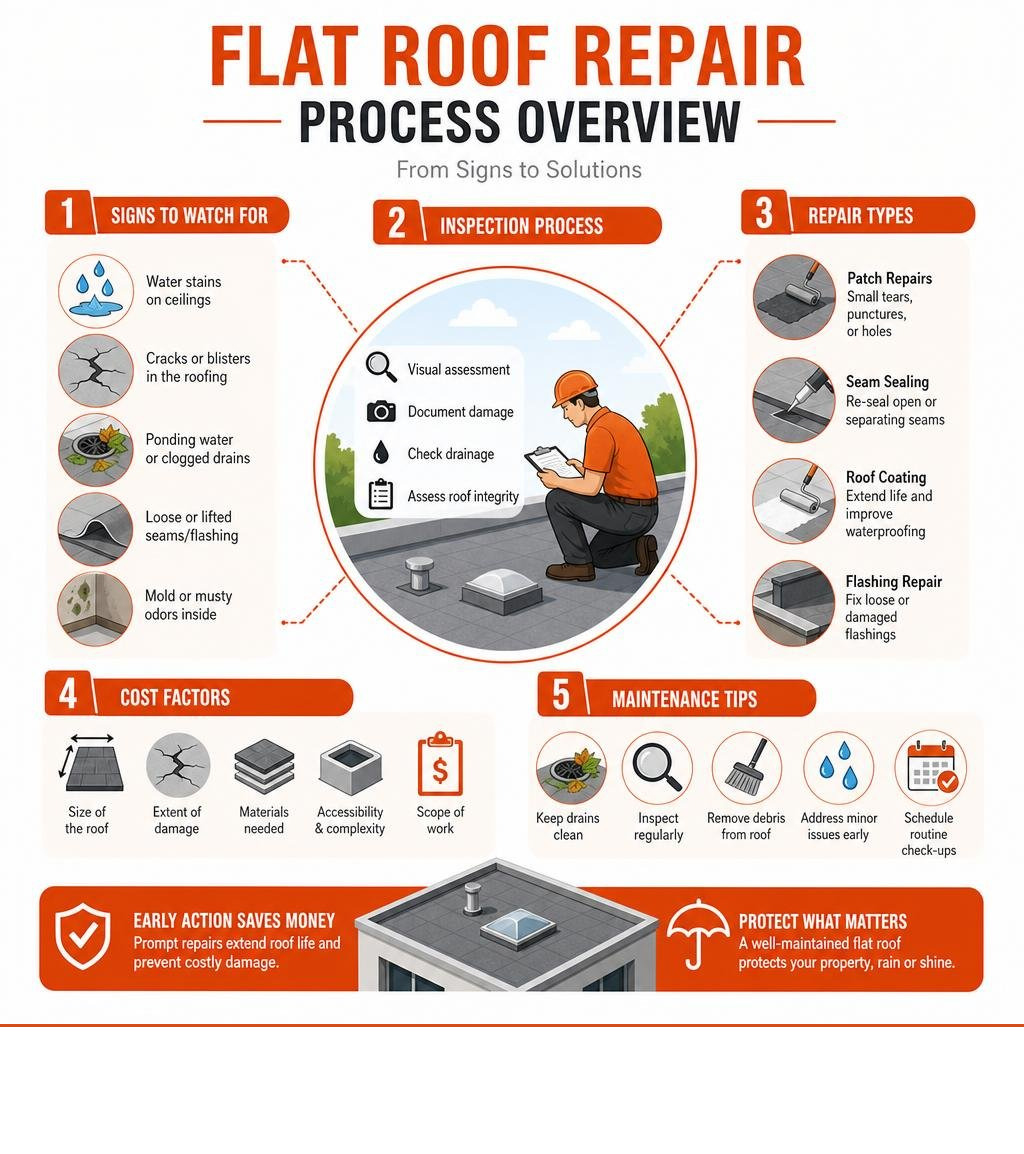
Five Common Signs Your Space Coast Flat Roof Needs Attention
Unlike sloped roofs where missing shingles are easy to spot from the driveway, flat roofs require a closer look to identify developing issues. In coastal Central Florida, the combination of intense heat, sudden afternoon thunderstorms, and salty air can accelerate wear on low-slope systems.
Property owners should watch for several key indicators that it is time to call a professional:
- Ponding Water: If water remains standing on the roof surface for more than 48 hours after a heavy downpour, it is considered ponding. This standing water places continuous physical weight on the structure and accelerates the breakdown of the protective membrane or coating.
- Membrane Blistering and Bubbling: Trapped moisture beneath the roofing membrane expands as temperatures rise. Under the hot Florida sun, this expansion creates visible bubbles or blisters. If left unaddressed, these blisters can stretch the material until it cracks or punctures.
- Seam Separation: Flat roofs are sealed at the seams. Over time, the natural expansion and contraction of the building (thermal cycling) can pull these seams apart, leaving open gaps where rainwater can easily enter.
- Flashing Damage: Metal flashing lines the edges, parapet walls, and penetrations like vents or skylights. If the flashing becomes loose, rusted, or separated from the membrane, water will quickly find a path underneath.
- Interior Water Stains or Musty Smells: Water dripping from a ceiling is an obvious sign, but subtle yellow or brown stains on drywall, peeling paint near the ceiling, or a persistent musty odor in the attic space often point to a slow, hidden flat roof leak.
Catching these signs early is essential to protecting the building’s interior and keeping repair costs manageable. For more detailed advice on protecting low-slope systems from regional weather patterns, review our tips for maintaining a flat roof in Florida’s unique climate.

Four Key Credentials When Choosing a Flat Roof Repair Contractor
Repairing a flat roof is a highly specialized trade. Low-slope systems rely on continuous waterproofing barriers rather than the gravity-assisted shedding of traditional shingles. Hiring a general contractor who lacks specific flat roof training often results in temporary patches that fail during the next major storm.
When searching for a qualified local professional in Palm Bay, Melbourne, Rockledge, or Merritt Island, keep the following credentials in mind:
- Active Florida Licensing: Verify the contractor holds an active license with the Florida Department of Business and Professional Regulation (DBPR). This is intended to help confirm they meet state standards and understand regional building codes.
- Comprehensive Insurance Coverage: The roofer should carry general liability insurance and workers’ compensation. This helps protect your property and ensures you are not held liable for on-site injuries.
- Specific Low-Slope Expertise: Ask the contractor about their experience with flat roof membranes such as TPO, PVC, and modified bitumen. They should be able to explain how they handle drainage correction and seam welding.
- Local Reputation: Check local reviews and testimonials to see how the contractor resolves issues and communicates with local clients.
Working with a local team that understands the unique wind-uplift requirements and moisture challenges of the Space Coast helps ensure your repairs are built to last. You can consult the ultimate survival guide for urgent roof repairs and maintenance to help you select a reputable contractor and handle urgent situations effectively. Taking these steps helps protect your investment and ensures a smoother repair process.
Flat Roof Systems and Repair vs. Replacement Decisions
Deciding whether to repair a localized leak or invest in a full flat roof replacement depends on several key variables. A professional evaluation will typically look at the overall age of the system, the physical condition of the underlying roof deck, and the extent of the roof surface that has been compromised.
If the membrane is generally in good shape and the leak is isolated to a single seam or penetration, a targeted repair is highly cost-effective. However, if a significant portion of the roof surface is showing signs of widespread degradation, or if the underlying insulation and wood decking are saturated with water, a full replacement is often the more secure long-term investment.
To understand how to weigh these options for your property, read our guide on roof repair vs roof replacement for your Melbourne home.
TPO and PVC Flat Roof Repair Near Me Solutions
Thermoplastic Polyolefin (TPO) and Polyvinyl Chloride (PVC) are highly popular single-ply roofing membranes. They are favored for their bright white, reflective surfaces, which bounce UV rays away from the building and help lower cooling costs during hot Florida summers.
These systems are known for their heat-welded seams, which fuse the sheets together to form a single, continuous waterproof barrier. When repairing TPO or PVC, technicians must thoroughly clean the aged membrane to remove dirt, oxidation, and salt residue before heat-welding a matching patch over the damaged area. If the membrane has become too thin or brittle from years of intense sun exposure, specialized adhesive primers and pressure-sensitive tape may be used to secure the repair.
Two Flat Roof Repair Options for Modified Bitumen and EPDM
Modified bitumen is an asphalt-based roofing system that is typically installed in multiple layers. It offers excellent puncture resistance and durability, making it a common choice for flat roofs with high foot traffic or nearby overhanging trees. EPDM, or synthetic rubber, is another durable single-ply option that stands up well to ozone and UV exposure.
- Modified Bitumen Repairs: Technicians often resolve cracks or punctures in modified bitumen by applying a compatible asphalt primer, followed by a torch-applied or self-adhered membrane patch. The edges are then sealed with specialized roofing cement to prevent water from lifting the patch.
- EPDM Repairs: Because EPDM is rubber, it cannot be heat-welded. Repairs are performed using specialized adhesive primers and heavy-duty, self-adhesive EPDM rubber patches. Ensuring the repair area is completely dry and clean is critical, as any residual moisture will prevent the adhesive from bonding.
Identifying the exact source of a leak in these multi-layered or dark-colored systems can be challenging. Learn more about how modern technology helps locate hidden water paths in our overview of roof leak detection and repair in Melbourne, FL. A professional inspection is the most reliable way to pinpoint these issues before they escalate.
Five Steps in the Flat Roof Repair Process
When you schedule a flat roof repair, the process should be structured, transparent, and designed to minimize disruption to your daily routine or business operations. Here is what a professional repair sequence typically looks like:
- Comprehensive Inspection: The roofing team begins by walking the roof to locate visible damage, checking seams, flashings, drains, and scuppers. In many cases, they will use infrared moisture mapping to detect water trapped beneath the surface membrane that isn’t visible to the naked eye.
- Detailed Repair Plan: The contractor provides a written estimate detailing the scope of work, materials to be used, and the projected timeline.
- Surface Preparation: The repair area is cleared of debris, washed to remove dirt and algae, and thoroughly dried. Proper preparation is the most critical step for ensuring patches and sealants adhere permanently.
- Execution of Repairs: Technicians apply matching membrane patches, reinforce weak flashings, clear blocked drainage systems, and apply UV-stable sealants as outlined in the plan.
- Final Quality Check and Walkthrough: Once the work is complete, the supervisor conducts a final inspection to verify that all patches are watertight, drains flow freely, and the job site is completely clean.
For commercial properties and industrial facilities, keeping operations running smoothly during a repair is a top priority. For practical tips on managing active leaks and coordinating repairs without disrupting your business, refer to how to handle an emergency industrial roof leak without panicking.
Understanding Flat Roof Repair Costs and Financing
The cost of flat roof repair on the Space Coast is highly variable and depends on several factors, including the type of roofing material, the physical size of the damaged area, accessibility, and whether the underlying wood deck or insulation has suffered water damage. Local building code requirements and the complexity of repairing transitions near parapet walls or HVAC equipment also influence the final price. Because of these unique variables, an in-person professional evaluation is always required to provide an accurate estimate.
To help homeowners manage these expenses, various financing products, disaster recovery programs, and local assistance options may be available.
| Program/Option Type | General Purpose | Repayment Required? |
|---|---|---|
| Homeowner Grants | Assistance for low-income households or disaster recovery | No (Typically does not require repayment if program terms are met) |
| Property Assessed Clean Energy (PACE) | Financing for energy-efficient upgrades secured via property taxes | Yes (Repaid over time through regular property tax assessments) |
| Home Equity Loans / HELOCs | Low-interest borrowing secured by home equity | Yes (Requires monthly principal and interest payments) |
| Contractor Financing Plans | Short-term or promotional financing offered directly through roofers | Yes (Subject to credit approval and agreed-upon monthly payment terms) |
Note: Grants typically do not require repayment while loans and financing products do require repayment, so homeowners must compare short-term affordability with long-term cost.
Three Frequently Asked Questions About Flat Roof Repair
How long does a typical flat roof repair take?
Most minor to moderate flat roof repairs are completed in a single day. If the project involves extensive drainage correction, multiple roof penetrations, or replacing large sections of saturated insulation, the process may take two to three days. Your contractor should provide a clear timeline before work begins, taking local weather forecasts into account.
Do flat roof repair companies offer warranties on their work?
Yes, reputable roofing contractors typically stand behind their repairs. Workmanship warranties on flat roof repairs often cover the specific area repaired for a designated period, while full replacements may feature longer workmanship guarantees alongside manufacturer material warranties. Be sure to request written warranty documentation and clarify what is covered before signing an agreement.
How can I prevent future flat roof leaks after a repair?
The most effective way to prevent future leaks is to establish a preventative maintenance routine. This includes clearing leaves and debris from scuppers and drains at least twice a year, scheduling professional inspections after major windstorms, and checking sealants around vents and flashing regularly to address minor wear before it turns into a leak.
Conclusion
A leaking or damaged flat roof does not have to be a source of constant stress. By identifying warning signs early, understanding your roofing material, and partnering with a licensed, local specialist, you can protect your property and help extend the lifespan of your roof.
Whether you are a homeowner in Viera looking to patch a garage addition or a commercial property manager in Melbourne needing immediate assistance, MLG Roofing is here to help with experienced, weather-tested solutions tailored to the Space Coast.
Don’t wait for the next heavy storm to turn a minor drip into a major headache. Schedule your flat roof repair service today with the local experts at MLG Roofing.