
Roof Granule Loss Repair: Causes and Stages of Shingle Granule Loss
Understanding why shingles shed their mineral surface helps property owners across Brevard County, FL make informed decisions regarding roof maintenance and structural restoration. On the Space Coast, residential roofs face intense ultraviolet radiation, extreme surface heat, and frequent tropical windstorms, making timely roof granule loss repair essential for long-term weather protection. Some initial granule shedding is a normal part of the asphalt shingle manufacturing and installation process. During production, manufacturers apply extra loose surface granules-known in the industry as riders, hitchhikers, or sleepers-to guarantee complete asphalt coverage. As detailed in the industry technical bulletin on new shingle granule loss, these excess granules slough off during initial transit, roof installation, and early rainstorms without reducing the roof system’s structural integrity or life expectancy.
Homeowners often first notice this shedding when cleaning downspouts or clearing out drainage channels after heavy coastal rainstorms. While minor accumulation during the initial months following installation is standard, persistent or severe loss indicates advancing physical deterioration that progresses through three distinct stages:
- Stage 1: Normal Surface Wear – Minor, gradual shedding occurs across the surface as the shingle ages. Color remains uniform, and no dark underlying asphalt shows through.
- Stage 2: Exposed Asphalt Layer – The primary granule coating wears thin, revealing the dark or shiny asphalt layer beneath. The asphalt becomes vulnerable to direct UV exposure, thermal cycling, and coastal salt air.
- Stage 3: Exposed Fiberglass Matting – The protective asphalt dries out and erodes away, exposing the woven fiberglass substrate. Without immediate professional intervention, exposed shingles become brittle, crack, and fail completely over subsequent seasons.
Extreme sun exposure, high surface temperatures, and daily thermal expansion cause shingles to expand and contract repeatedly, weakening the chemical bonds holding the granules in place. Poor attic ventilation accelerates this structural failure by trapping extreme heat beneath the roof deck, effectively baking the asphalt layer from below. Additionally, severe weather events, such as hail impacts and high wind uplift, can scour granules off the surface in concentrated spots. Reviewing the guide to roof inspections in Brevard County helps homeowners understand how experienced professionals evaluate these underlying causes accurately and determine whether localized restoration or full system work is required.
4 Professional Methods for Roof Granule Loss Repair
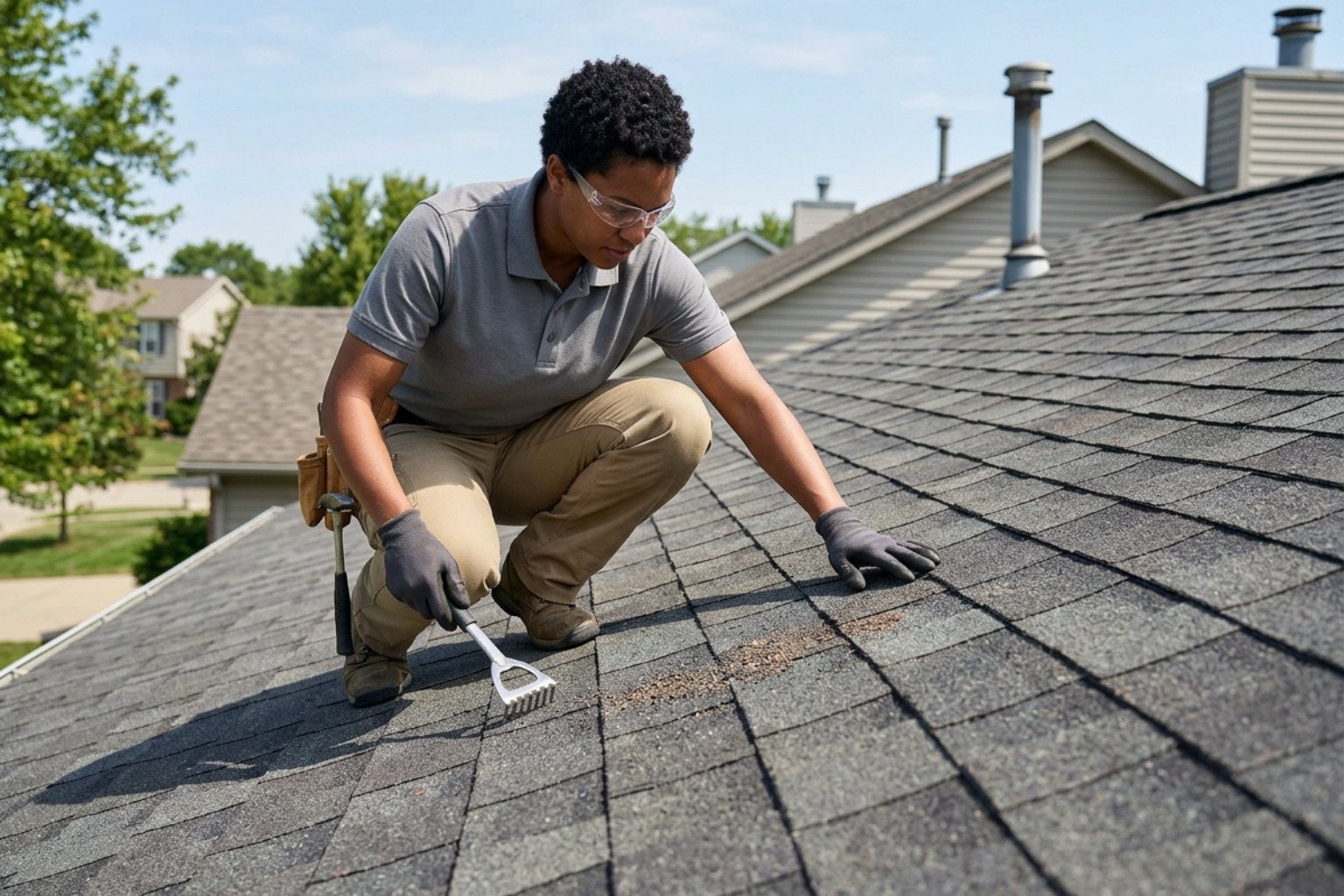
When addressing mineral erosion on an asphalt shingle system, professional contractors utilize specialized techniques tailored to the exact extent of the damage. Selecting the appropriate roof granule loss repair method ensures strict safety compliance, proper chemical adhesion, and strong protection against hurricane-force wind uplift without compromising existing manufacturer warranties.
Method 1: Targeted Shingle Replacement for Isolated Wear
For localized wear caused by overhanging tree branches, mechanical abrasion, or isolated hail impacts, targeted shingle replacement is the standard professional approach. A licensed contractor carefully breaks the self-sealing strip on surrounding shingles using flat pry bars, removes the damaged fasteners, slides out the depleted shingle, and installs a new matching shingle. Utilizing professional roof repair services in Brevard County, FL ensures that adjacent shingles remain unblemished, preserving the home’s primary weather barrier and water-shedding performance.
Method 2: Professional Re-Granulation for Roof Granule Loss Repair
For shingles experiencing Stage 2 wear with exposed asphalt but intact fiberglass matting, professional re-granulation offers a practical surface restoration option. Contractors clean the target area with low-pressure equipment to clear loose debris and surface oxidation without disturbing sound granules. A polymer-modified asphalt emulsion primer is applied directly to the bare asphalt spots. Specialized pneumatic granule applicators broadcast custom color-matched ceramic granules into the wet primer, embedding them firmly into the adhesive base. A top coat of UV-resistant elastomeric sealant is then applied to cure, which can extend shingle service life for several additional years.
Method 3: Liquid-Applied Elastomeric Membrane Systems for Roof Granule Loss Repair
For low-slope sections or modified bitumen roofing membranes, liquid-applied elastomeric coating systems deliver complete surface protection. Professionals coat the prepared substrate with a heavy rubberized asphalt emulsion base coat before broadcasting reflective ceramic granules into the wet surface. Reflective granules help reduce peak surface temperatures, lowering attic heat transfer and helping reduce household cooling costs. Contractors follow industrial guidelines such as the Guide Specifications for Ceramic Granules Systems to maintain exact application weights and curing intervals.
Method 4: Professional Asphalt Primer Patching and Sealing
For small isolated surface cracks, thermal splits, or edge scours, technicians employ rubberized asphalt sealants and cold-applied patching compounds. The contractor cleans the substrate thoroughly, removes oxidized oils, and uses a precision trowel to work rubberized asphalt compound into surface micro-cracks. Fresh ceramic granules are pressed directly into the wet sealant to restore uniform appearance and provide immediate UV shielding. This localized patching prevents water intrusion while retaining surrounding shingle integrity.
Repair vs. Replacement and Insurance Coverage
Determining whether to perform targeted repairs, apply a surface restoration coating, or invest in a full roof system replacement depends on the overall condition and age of the existing system.
| Option | Best Suited For | Service Life Extension | Cost Variables | Repayment Required? | Thermal Benefit |
|---|---|---|---|---|---|
| Spot Shingle Replacement | Isolated branch abrasion, minor storm impact | Matches surrounding roof life | Localized labor, matching unit materials | No (Standard out-of-pocket payment) | Restores original shingle profile |
| Professional Surface Restoration | Stage 2 asphalt exposure across sound shingles | Multiple additional years | Surface area, elastomeric compounds, prep labor | Yes (If using financing options) or No (Cash/Out-of-pocket) | Restores reflectivity, reduces cooling load |
| Full Roof System Replacement | Stage 3 fiberglass exposure, widespread aging | Long-term extended service life | Square footage, code upgrades, underlayment type, disposal fees | Yes (If financed through roof loans/PACE) or No (Paid in full) | Maximum thermal efficiency with modern underlayment |
When evaluating roof costs in Florida, exact investment amounts depend on several regional pricing variables. These factors include local municipality permitting fees, Florida Building Code requirements for wind resistance and secondary water barriers, specialized underlayment choices, waste disposal fees, and local skilled labor rates. While government grants or local assistance programs typically do not require repayment, standard home improvement loans and contractor financing options require regular scheduled repayment terms, making financial planning an essential part of evaluating overall affordability.
Deciding between roof repair versus replacement does not rely on rigid rules. Instead, the decision depends on the extent of physical damage, overall roof age, permitting history, current local building guidance, updated energy codes, and a comprehensive professional evaluation. Homeowners can evaluate their options in detail by reviewing the guide on roof repair versus roof replacement in Melbourne, FL.
Regarding insurance coverage, standard homeowners policies typically exclude gradual age-related wear, thermal deterioration, or lack of routine maintenance. However, acute storm damage, such as hail impact or wind-driven debris that scours granules away, is commonly eligible for claims. Coverage decisions depend on specific policy language, applicable deductibles, policy exclusions, roof age, and individual insurance carrier decisions. Property owners should also note that Ordinance or Law coverage may assist with funding required building code updates during a major restoration or replacement. Documenting storm damage promptly with photos and inspection reports is critical for claims processing, as outlined in the industry technical bulletin on hail damage repair.
Frequently Asked Questions About Roof Granule Loss
Can granule loss be repaired without replacing the entire roof?
Yes. If granule loss is localized or caught early in Stage 2 wear, a professional contractor can perform spot shingle replacements, asphalt sealant patching, or re-granulation restoration without replacing the entire roof system. However, if the underlying fiberglass matting is exposed across broad areas or structural decay is present, replacing the roof is necessary to maintain complete weatherproofing and satisfy local building requirements.
How long does a professional roof granule loss repair last?
A properly executed re-granulation repair or professional coating restoration can extend the service life of an asphalt shingle roof for several additional years, depending on regional weather patterns, attic ventilation efficiency, and ongoing maintenance. Individual shingle replacements typically last for the remaining lifespan of the surrounding roof section.
Is shingle granule loss covered by homeowners insurance?
Insurance coverage depends on the underlying cause of the damage, individual policy language, deductibles, roof age, and carrier determinations. Policy claims are generally evaluated for approval when granule loss results from acute, documented storm events such as hail storms or wind-driven debris. Claims for gradual granule shedding caused by normal aging, solar exposure, or lack of routine maintenance are typically excluded by carriers.
Conclusion
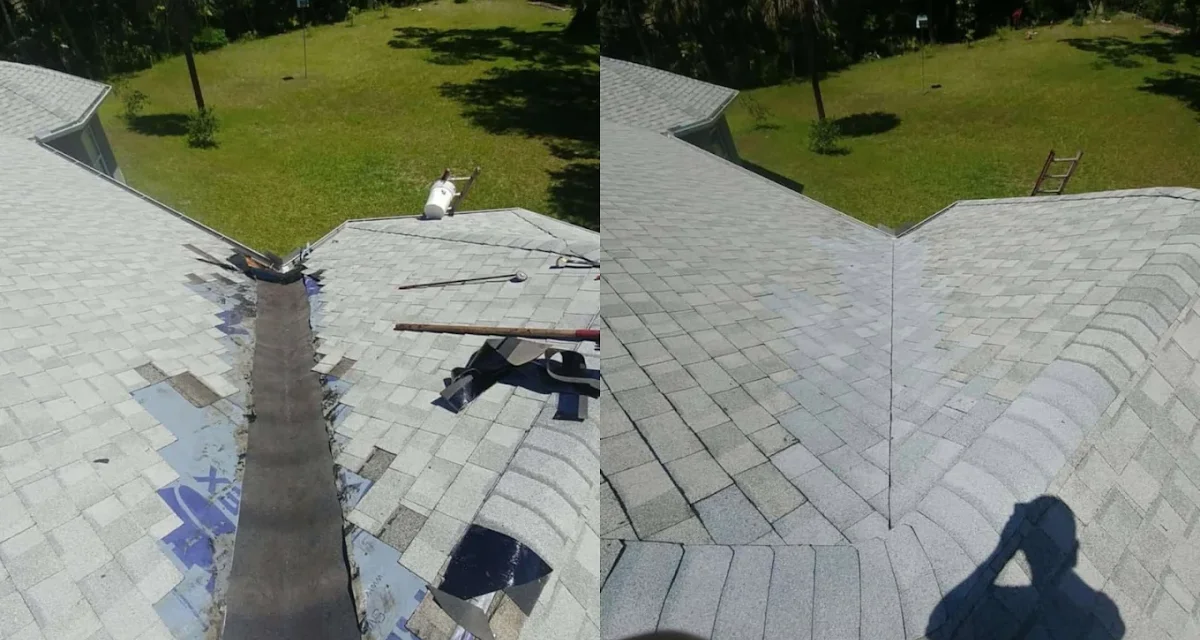
Prompt attention to mineral erosion keeps minor surface wear from evolving into costly structural interior leaks. Whether your home requires targeted spot repairs after a high-wind weather event or a comprehensive evaluation to decide between surface restoration and system replacement, effective roof granule loss repair preserves your property’s value and structural health. Working with a licensed contractor ensures your investment is fully protected against Florida’s intense sunshine, wind uplift, and heavy summer rainfall. MLG Roofing provides expert inspections and reliable solutions tailored specifically to residential properties in Melbourne, Palm Bay, West Melbourne, Rockledge, Viera, Merritt Island, Cocoa, and Sebastian.
Ready to protect your property and extend the life of your shingle system? Contact MLG Roofing today to schedule a professional evaluation and explore our full range of professional roof repair services.