
When Your Industrial Roof Leaks: What to Do Right Now

If you are dealing with an emergency industrial roof repair in Brevard County, FL, taking immediate action is essential. Finding a reliable roof repair near me in Brevard County, FL can help secure your building quickly. To ensure you receive honest pricing, always request a free roof repair estimate from a licensed professional.
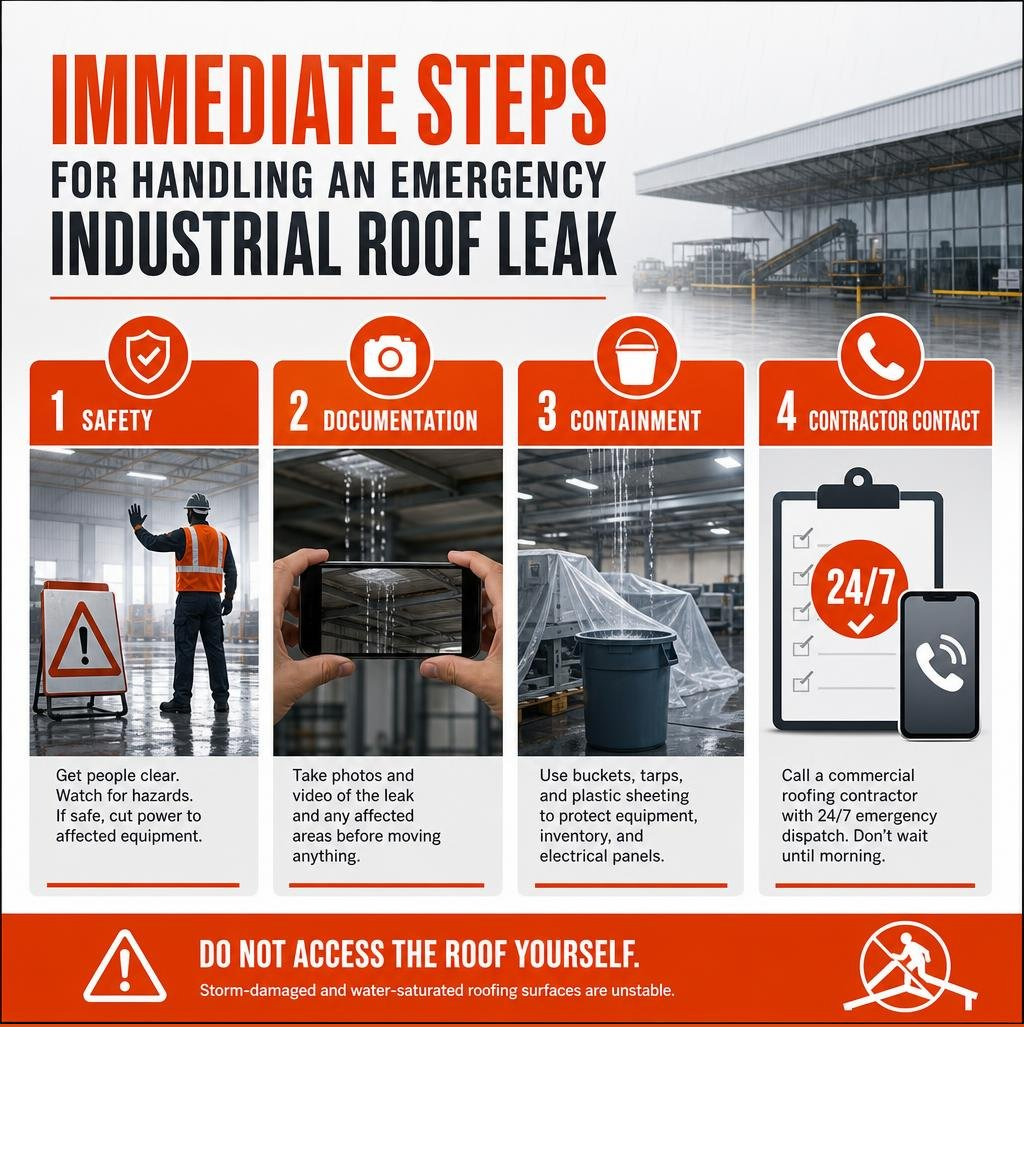
Here is what to do immediately:
- Get people clear of the affected area — wet floors and ceiling materials create slip and fall hazards.
- Cut power to any equipment directly under the leak if it is safe to do so.
- Place containment buckets and plastic sheeting over machinery, inventory, and electrical panels.
- Document everything — take photos and video before moving anything.
- Call a commercial roofing contractor with 24/7 emergency dispatch — do not wait until morning.
- Do not access the roof yourself — storm-damaged and water-saturated roofing surfaces are unstable.
A single roof leak in an industrial facility is rarely a small problem. Brevard County’s coastal weather — tropical storms, high-humidity cycles, and sustained coastal winds — puts commercial roofing systems under stress that most inland facilities never experience. When a membrane fails or a metal panel lifts during a storm, water can move across thousands of square feet of roofing in minutes.
The stakes are real. Water intrusion can damage expensive equipment, disrupt production, trigger mold growth within 48 to 72 hours, and create serious liability exposure for facility managers. Business interruption costs for manufacturing facilities can reach significant daily losses if the situation is not contained quickly.
The good news: a fast, organized response limits the damage far more than most facility managers expect. This guide walks you through exactly what to do — step by step — so you can stay calm, protect your operation, and get the right help on-site without making the situation worse.
What Qualifies as an Emergency Industrial Roof Repair Situation?

Not every roof issue requires a dispatch team in the middle of the night. However, waiting for standard business hours during an active crisis can result in catastrophic structural damage, ruined inventory, and safety liabilities. Understanding when to request immediate assistance is the first step in minimizing long-term property damage.
An actual industrial roofing emergency involves active water intrusion that threatens the structural integrity of the facility, risks safety hazards for occupants, or disrupts critical business operations. If a storm tears away a portion of the roof membrane or high winds compromise structural flashing, the building envelope is open to the elements. Under these conditions, water damage can rapidly expand in scope, making immediate action essential. For localized issues, a Leaking roof emergency repair in Brevard County provides the fast containment needed to protect your investments.
Weather-Related Failures and Coastal Storm Damage
Industrial facilities along the Space Coast face severe weather exposure year-round. High-wind events, tropical depressions, and hurricanes subject flat and low-slope roofs to extreme wind uplift pressures. When wind gets beneath a compromised roof edge or loose flashing, it can peel back large sections of TPO, EPDM, or modified bitumen membranes in seconds.
Additionally, salt-air exposure accelerates the corrosion of metal fasteners, panels, and structural decking. In areas like Palm Bay, a sudden summer storm can easily dislodge weakened metal panels or compromise aging seams. Once the outer protective layer is breached, heavy rainfall directly saturates the underlying insulation, leading to widespread ceiling leaks and structural load stress.
Structural Risks and Equipment Hazards
Heavy commercial rooftop equipment, such as large industrial HVAC units, places continuous localized stress on roofing systems. When structural movement, vibration fatigue, or poor drainage systems cause water to pond around these units, the membrane can degrade and split.
If a primary roof drain becomes clogged during a severe storm in Rockledge, thousands of gallons of water can accumulate on a flat roof. This ponding water creates immense structural load stress, raising the risk of sudden structural failure. For warehouses and manufacturing plants, this structural risk is compounded by the threat of water dumping directly onto sensitive inventory, high-voltage electrical panels, and heavy machinery, which can halt production and lead to massive financial losses.
Immediate Action Steps for Facility Managers During a Roof Crisis

When water starts pouring into an active industrial facility, panicking is the easiest way to make costly mistakes. Having a clear, structured response plan allows facility managers to protect their people, secure their assets, and streamline the restoration process. Following a reliable Urgent roof repairs and maintenance guide can help keep your operations on track during a crisis.
Step 1: Ensure Occupant Safety and Isolate the Area
Safety is always the primary concern. Water leaking through a ceiling can quickly pool on concrete warehouse floors, creating severe slip and fall hazards. Furthermore, water dripping near electrical conduits, light fixtures, or manufacturing machinery presents an immediate risk of electrical shock or fire.
Immediately isolate the affected area by setting up safety cones, warning tape, or temporary barriers to keep employees and visitors clear. If the leak is occurring in a high-traffic production zone in Viera, coordinate with shift supervisors to safely reroute operations or temporarily shut down nearby electrical circuits. Ensure all tenants or staff in the immediate vicinity are notified of the hazard.
Step 2: Document the Damage for Insurance Claims
Before attempting to contain the water or move items out of harm’s way, document the active leak. Comprehensive documentation is crucial for supporting commercial property insurance claims and business interruption coverage.
Take clear, date-stamped photographs and videos of the following:
- The exact point of water entry in the ceiling.
- Water dripping onto equipment, structural columns, or inventory.
- Any visible damage to interior drywall, ceiling tiles, or flooring.
- The serial numbers or asset tags of any affected machinery.
Keep a detailed log of the timeline, noting when the leak was first discovered, the weather conditions at the time, and any immediate operational delays or production halts. This organized record-keeping makes it much easier to coordinate with insurance adjusters later.
Step 3: Contact a Professional for Emergency Industrial Roof Repair
Once the interior is as stable as possible, contact a professional commercial roofing contractor immediately. Do not attempt to send in-house maintenance staff onto a wet, storm-damaged roof to locate the leak. Walking on a compromised roof deck or near saturated insulation is highly dangerous and can lead to falls or further roof damage.
A professional team will dispatch a rapid-response crew equipped with specialized safety gear and commercial-grade materials. In cities like Cocoa, having a local, licensed contractor on the way within hours is the most effective way to stop active water entry and limit secondary damage like mold growth and structural decay.
How Professional Crews Assess and Mitigate Industrial Roof Damage
Upon arrival, an emergency roofing crew’s primary objective is to stabilize the building envelope. This means stopping the active leak immediately, even if permanent repairs must wait for drier weather or material shipments.
Temporary Stabilization vs. Permanent Restoration
Emergency roof mitigation is focused on rapid, reliable protection. For commercial flat roofs, crews rarely rely on simple blue tarps, which can easily blow away in coastal winds. Instead, they typically use durable, heavy-duty EPDM or TPO membrane patches secured with mechanical fasteners or specialized commercial sealants. This provides a watertight seal capable of withstanding subsequent storms while a permanent restoration plan is put together.
| Mitigation Method | Description | Best Suited For | Expected Durability |
|---|---|---|---|
| Temporary Tarping | Sandbagged or weighted tarps secured over the damaged area. | Short-term emergency use during active storms. | A few days to a week; vulnerable to high winds. |
| Mechanical EPDM/TPO Patching | Commercial-grade membrane mechanically fastened and sealed over the breach. | Flat and low-slope roofs with membrane tears or wind uplift damage. | Several weeks to months; highly wind-resistant. |
| Silicone Sealants (for Flat Roofs) | High-solids silicone applied directly to compromised seams, flashes, or fasteners. | Metal roof seams, penetrations, and localized flat roof punctures. | Temporary to semi-permanent depending on application. |
Tailoring Emergency Industrial Roof Repair to Common Industrial Roof Systems
Different industrial roofs require distinct repair strategies:
- Metal Roofing: Common in warehouses across Sebastian, metal roofs often fail at the seams or fastener heads due to thermal expansion, contraction, and coastal wind vibration. Emergency crews address this by tightening or replacing fasteners and applying industrial-grade silicone sealants or metal patch kits.
- Built-Up Roofing (BUR): Saturated multi-ply asphalt roofs can develop splits, blisters, or cracks. Crews clean the affected area, remove standing water, and apply cold-applied mastic and reinforcing fabric to seal the breach.
- TPO and EPDM Single-Ply Membranes: These systems are highly vulnerable to puncture from flying debris or wind uplift. Crews use heat-welded TPO patches or self-adhering EPDM patches to restore the continuous watertight barrier.
Frequently Asked Questions About Industrial Roof Emergencies
How much does an emergency industrial roof repair typically cost in Florida?
The cost of emergency repairs is highly variable and depends entirely on an in-person professional evaluation. Because emergency calls often require rapid mobilization, after-hours or weekend labor, and specialized safety equipment, they typically carry a premium compared to scheduled maintenance.
Several factors influence the final cost, including:
- The size and accessibility of the damaged area.
- The type of roofing system (e.g., metal, TPO, or built-up roofing).
- The extent of insulation damage (saturated insulation must often be removed and replaced).
- Current weather conditions and the safety measures required to perform the work.
- Local building code upgrade requirements if structural components are compromised.
Will emergency roof repairs force a complete production shutdown?
Not necessarily. Professional commercial roofing crews understand that operational downtime is incredibly expensive for industrial facilities. Whenever possible, contractors implement strategic isolation measures, setting up interior water diversion systems and working in phases to keep your production lines running. Crews can also coordinate to perform the most disruptive work during off-peak hours, nights, or weekends to minimize the impact on your business.
When should a facility manager choose replacement over emergency repairs?
While emergency repairs are excellent for resolving immediate crises, they are not always the most cost-effective long-term solution. A facility manager should consider a full roof replacement under the following conditions:
- Widespread Moisture Saturation: If an infrared moisture survey reveals that a significant portion of the roof’s insulation is saturated, patching will not prevent ongoing structural decay or mold.
- Severe Structural Deck Corrosion: If salt air and chronic leaks have rusted or compromised the underlying steel or wood decking, the roof is no longer structurally sound.
- Repeated Failures: If the same areas continue to leak despite multiple professional repairs, the roofing system has likely reached the end of its useful lifespan.
Conclusion
When a roofing emergency strikes your industrial facility, swift and organized action is the key to protecting your building, equipment, and bottom line. By isolating the hazard, documenting the damage, and contacting a trusted commercial specialist, you can mitigate the crisis before it impacts your daily production.
At MLG Roofing, we provide reliable, professional storm response and roof repair services across the Space Coast. Whether you are dealing with a wind-damaged metal roof or an active membrane leak, our team is equipped to stabilize your facility and restore your peace of mind. To secure your building against the elements, Schedule an emergency roof repair evaluation with our local specialists today.