
What to Do About Algae Stained Roof Shingles
Algae stained roof shingles are usually safe to address with a professional low-pressure chemical soft wash, not a pressure washer. Start by having the roof inspected from the ground and at close range to confirm the dark streaks are algae rather than moss, lichen, storm damage, or worn shingles. Then, use a roofing contractor to clean the growth with a manufacturer-approved solution, protect nearby plants and metal surfaces, and improve the shade and moisture conditions that let it return.
In Brevard County, FL, black or green roof streaks are common because humidity, frequent rain, salt air, and tree shade can keep roof slopes damp. The usual cause is Gloeocapsa magma, a blue-green cyanobacteria often called roof algae. Its dark outer coating works like sunscreen, which is why it creates the familiar black streaking down asphalt shingles.
Algae is often a curb-appeal and maintenance concern rather than proof that a roof needs replacement. Still, thick growth, lifted shingles, visible granule loss, leaks, or moss patches call for a comprehensive inspection. MLG Roofing can help homeowners separate cosmetic staining from conditions that may need repair or replacement.
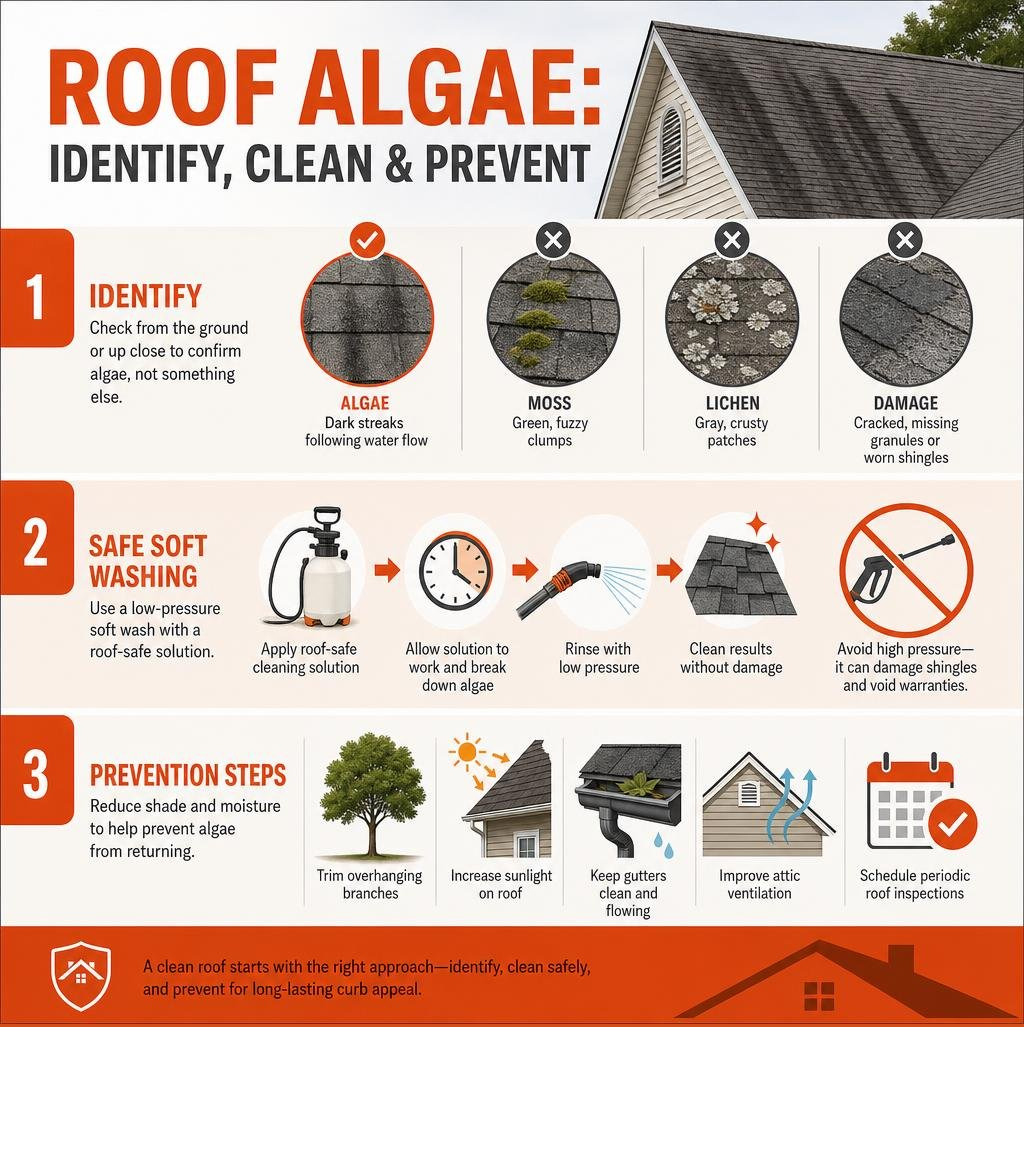
Discover more about algae stained roof shingles:
Understanding the Real Causes of Algae Stained Roof Shingles
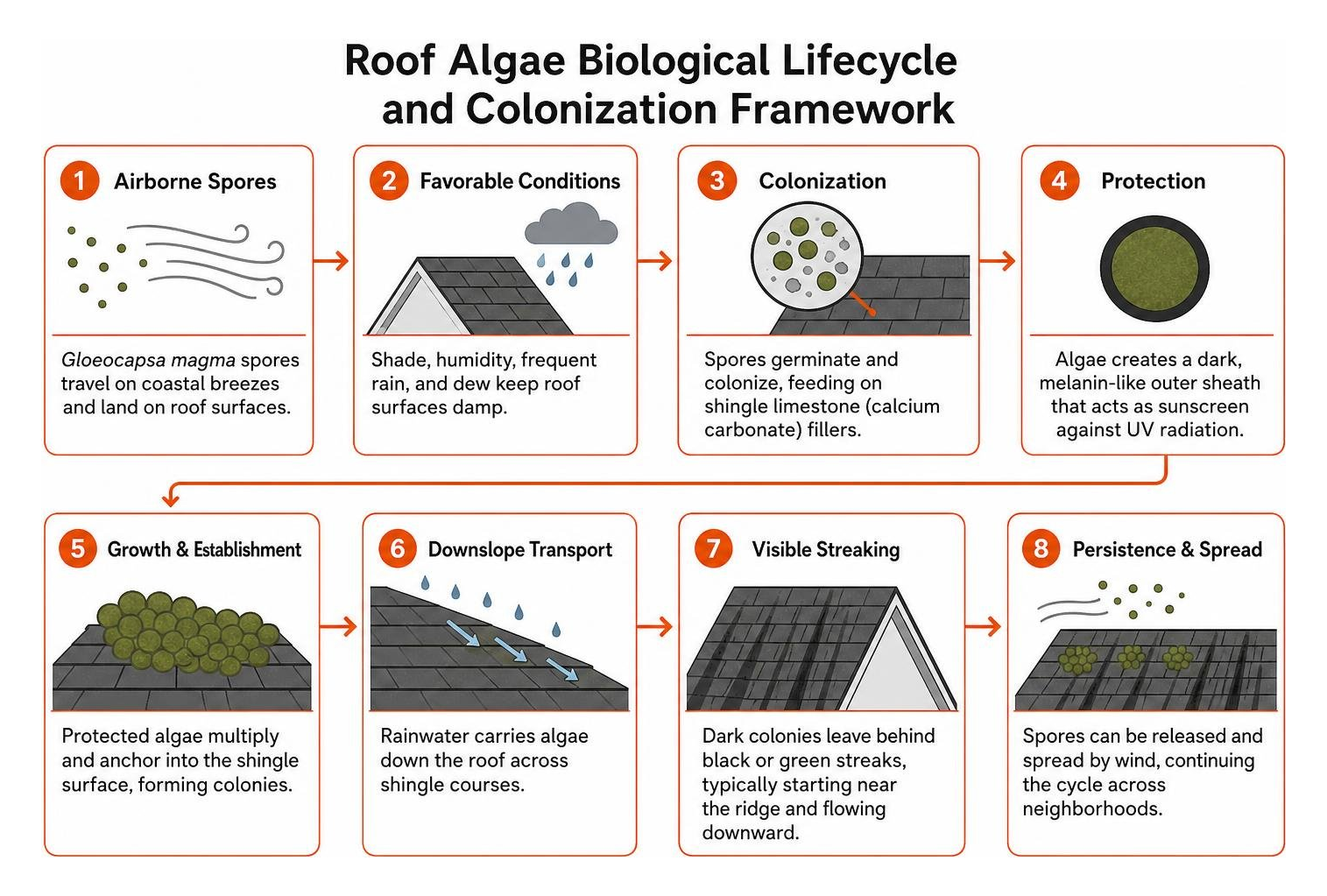
Dark streaks spreading across asphalt shingles are an airborne biological growth rather than dirt or soot. The primary culprit behind rooftop staining throughout the Space Coast is Gloeocapsa magma, a resilient photosynthesizing cyanobacterium. These microscopic organisms drift on coastal breezes and land on rooftops across neighborhoods in Melbourne, Rockledge, and Palm Bay, establishing colonies wherever moisture lingers.
Roof surfaces that receive limited direct sunlight, particularly north-facing slopes or sections shaded by mature oaks and palms, retain moisture long after rainstorms or morning dew. This dampness provides an ideal microclimate for cyanobacterial spores to colonize. Once established near the ridge, rainwater carries the organism downward across courses of shingles, creating the characteristic vertical dark streaks. Homeowners can review scientific research on cyanobacteria roof colonization to see how widely these organisms spread across humid coastal environments.
The Science of Gloeocapsa Magma and Limestone Fillers
Modern fiberglass asphalt shingles contain crushed limestone (calcium carbonate) added to the asphalt coating to provide structural weight, density, and fire resistance. Gloeocapsa magma utilizes this limestone as an active nutrient source. As the cyanobacteria consume trace minerals within the filler, they anchor into the shingle surface.
To shield its cellular structure from intense ultraviolet radiation, Gloeocapsa magma secretes a dark, melanin-like outer sheath. This dark compound functions as a natural sunscreen, allowing the bacteria to thrive under direct sunlight while leaving behind unsightly black stains. Homeowners interested in proactive care can explore strategies for preventing common roofing problems to minimize biological accumulation.
Diagnosing Algae Stained Roof Shingles vs. Moss, Mold, and Lichen
Understanding what is growing on a roof is essential for determining the right maintenance approach. While algae produces flat, dark discoloration, other biological organisms present distinct physical characteristics:
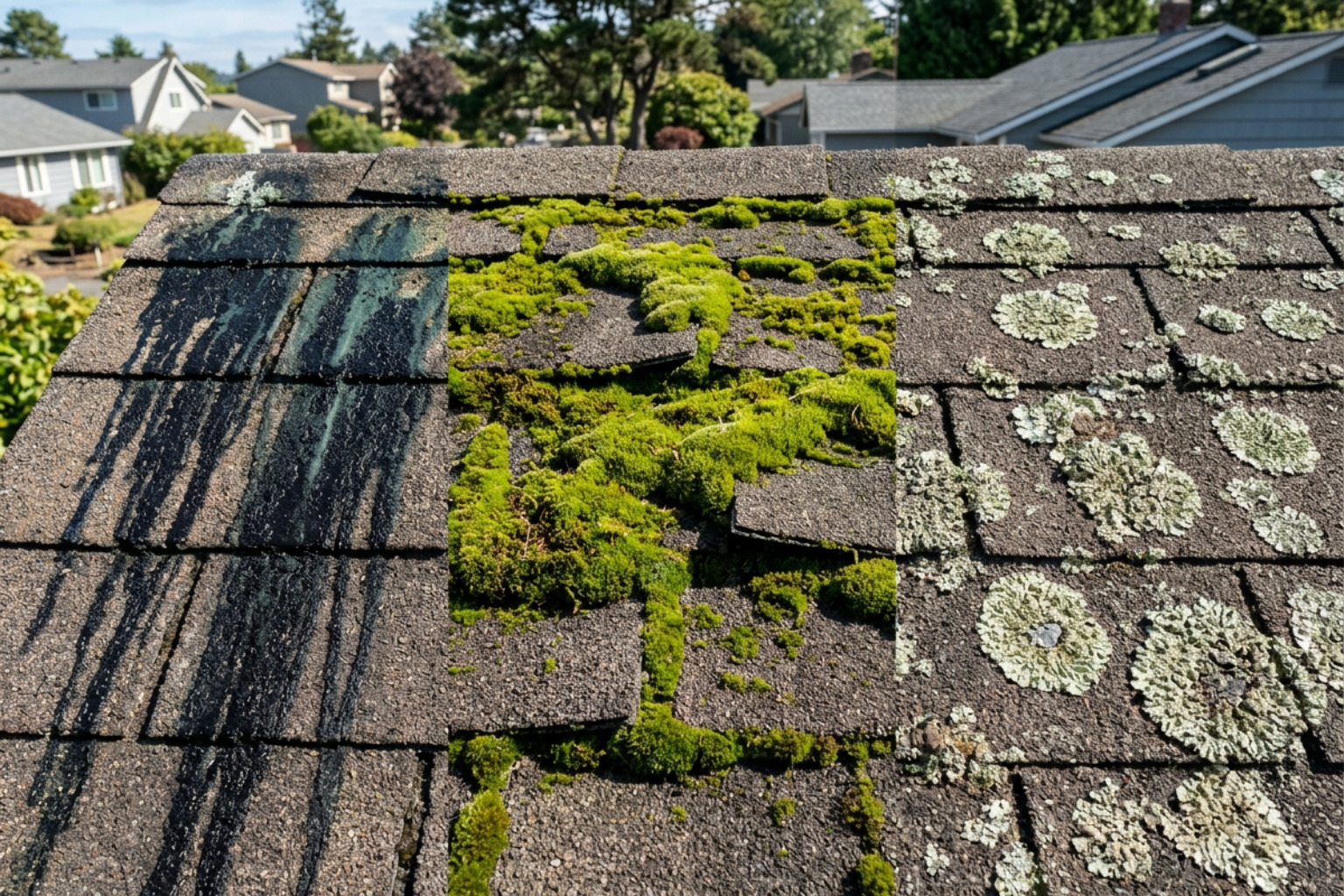
- Algae (Gloeocapsa magma): Appears as flat, dark brown or black vertical streaks. It lives on the surface and feeds on limestone filler without penetrating deeply into the fiberglass base mat.
- Moss: Non-vascular green plants that form thick, spongy pads. Moss develops root-like structures called rhizoids that work underneath shingle tabs, lifting edges and dramatically increasing the risk of wind uplift during severe coastal storms.
- Lichen: A symbiotic organism combining fungi and algae. Lichen forms crusty, light green or gray circular patches that bond tenaciously to the mineral granules. Attempting to scrape lichen off often tears the protective granules directly from the asphalt mat.
- Mold and Mildew: Typically powdery or slimy patches that flourish in permanently damp, decaying organic debris along blocked gutters or valleys. Mold thrives on organic matter rather than the mineral granules of the shingle itself.
Does Roof Algae Cause Structural Shingle Damage?
While algae growth begins as an aesthetic blemish, unaddressed colonies can gradually influence roofing material performance over time. Industry guidelines on managing biological roof growth emphasize that continuous biological buildup alters the protective characteristics of asphalt roofing materials.
Cyanobacterial colonies hold moisture against the surface of the shingles, delaying natural drying cycles after rain events. Over multiple seasons, this constant moisture retention can cause shingles to cup slightly along the edges, weakening the factory sealant bonds that keep tabs secure against heavy wind.
Heat Retention and Accelerated Shingle Aging
Asphalt shingles are engineered to reflect a portion of solar radiation. When dark algae streaks cover light-colored or reflective shingles, the surface absorbs significantly more heat.
Studies indicate that surface temperatures on algae-stained shingle sections can be noticeably higher than unstained areas on the same roof plane. This additional thermal load radiates into the attic space, forcing air conditioning systems in Viera and West Melbourne to run longer during hot summer afternoons. Furthermore, elevated surface temperatures accelerate the drying and hardening of the underlying asphalt binder.
Premature Granule Loss and Warranty Implications
The ceramic-coated mineral granules embedded in asphalt shingles serve as the primary barrier against ultraviolet degradation. When algae colonies feed on limestone fillers and trap moisture, the adhesive bond holding these granules can begin to loosen. Over time, natural rainfall washes displaced granules into gutters, exposing the asphalt substrate beneath.
During real estate transactions, home inspectors frequently flag heavy staining. While surface algae is a maintenance consideration, severe biological buildup can sometimes mask underlying hail bruising, storm damage, or advanced material wear. Maintaining a clean roof through coastal roofing maintenance helps homeowners uphold standard manufacturer guidelines and maintain clear visual documentation of the roof covering.
5 Steps to Safely Fix Algae Stained Roof Shingles
Addressing biological growth requires a structured, gentle approach that eliminates the organisms without abrading the asphalt granules. Professional contractors rely on low-pressure soft washing methods rather than mechanical scrubbing or high-pressure water blasting. Homeowners can read an industry analysis on soft wash methods to understand why soft washing remains the industry standard.
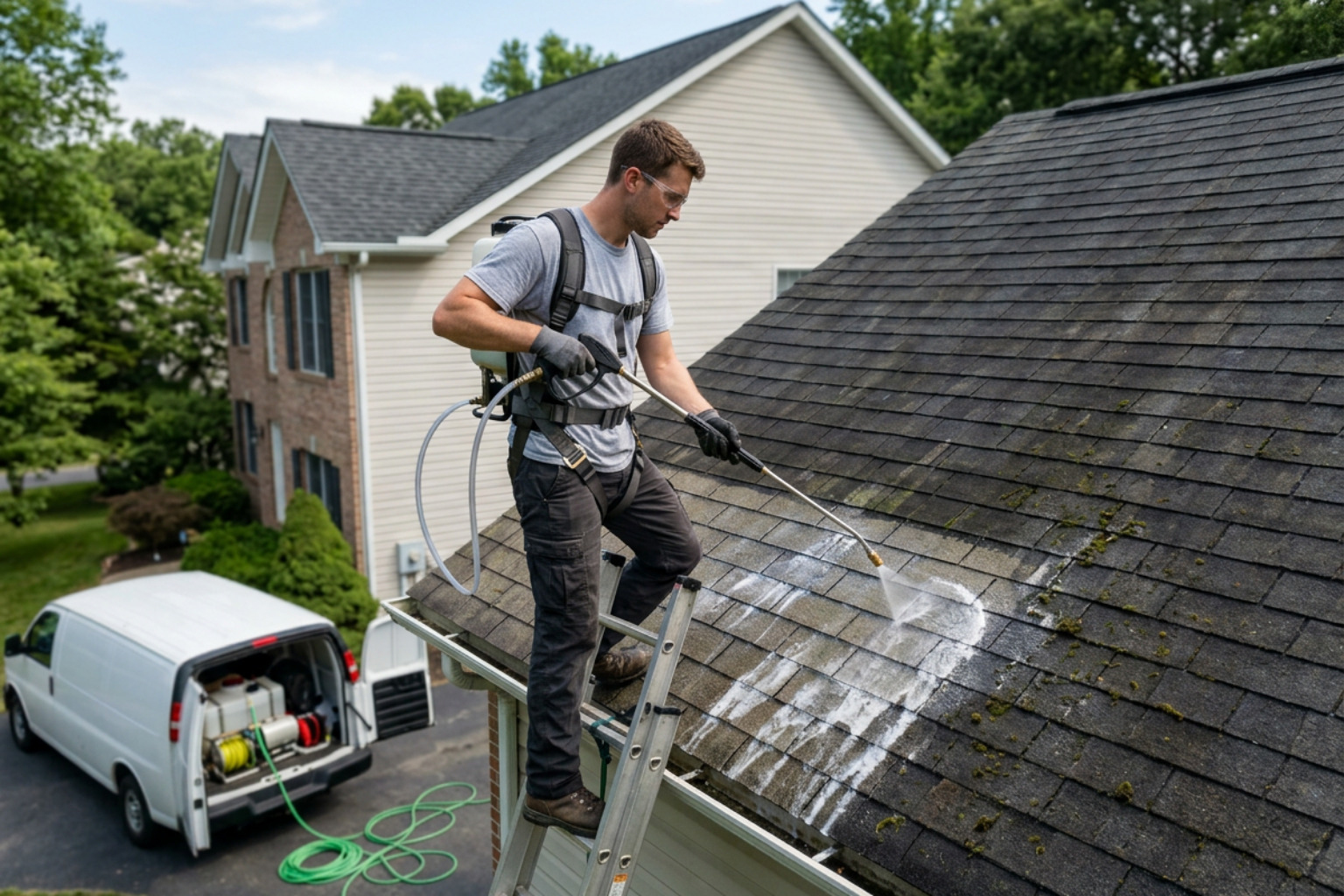
Step 1: Evaluating Algae Stained Roof Shingles Safely from the Ground
A thorough assessment begins at ground level. Roofing professionals use high-powered binoculars to inspect the roof plane, identifying whether discoloration is localized to shaded dormers, north-facing slopes, or valleys beneath heavy tree canopies.
During this stage, the technician checks for telltale patterns, such as clean shingle areas beneath metal chimney flashing or galvanized plumbing vents, which confirm that the dark markings are biological organisms sensitive to metallic ions. The contractor also assesses gutter drainage paths to ensure chemical runoff can be collected and managed safely.
Step 2: Shielding Surrounding Property and Landscaping
Before any cleaning agents are applied to the roof, surrounding vegetation and exterior finishes must be protected. Tropical landscaping common to Space Coast properties—including hibiscus, palms, and delicate turfgrass—can suffer chemical stress if exposed to concentrated cleaning solutions.
Contractors thoroughly pre-saturate all nearby shrubs, flower beds, and grass with fresh water. Saturated soil prevents roots from absorbing chemical runoff. Ground crew members place protective tarps over sensitive plantings, divert downspout discharge away from landscaped beds, and maintain a continuous freshwater mist on siding and windows throughout the application.
Step 3: Applying ARMA-Approved Chemical Soft Washing
The Asphalt Roofing Manufacturers Association (ARMA) outlines clear cleaning standards for asphalt shingles. Professionals apply a manufacturer-approved solution consisting of diluted sodium hypochlorite, water, and specialized roof-safe surfactants using dedicated low-pressure equipment operating at under 100 to 150 PSI. Reviewing safe and effective roof cleaning tips illustrates the critical difference between gentle chemical application and mechanical washing.
The surfactant helps the solution cling to the slope rather than running off immediately, allowing a dwell time of 15 to 20 minutes. During this period, the cleaning agent breaks down the cellular structure and dark protective sheaths of Gloeocapsa magma, neutralizing the colony completely without requiring abrasive brushing.
Step 4: Gentle Low-Pressure Rinsing Protocols
After the dwell time has elapsed and the organic staining visibly dissipates, the roof is rinsed using gentle, low-pressure water. Technicians direct the water stream downward from the ridge toward the eaves, aligning with the natural flow of rainfall.
Rinsing at low pressure ensures that shingle tabs are not lifted and ceramic granules remain locked in their asphalt bed. Technicians conclude this stage by flushing gutters and downspouts with fresh water to clear remaining organic residue and neutralize any solution resting in the drainage system.
Step 5: Implementing Long-Term Preventative Measures
Once the shingles are clean, implementing proactive preventative maintenance minimizes future microbial growth:
- Trimming Overhanging Foliage: Prune tree branches back at least six feet from the roof edge to eliminate heavy shade, promote rapid morning dew evaporation, and reduce falling organic debris.
- Clearing Valleys and Gutters: Routinely clear leaves, pine needles, and moss from roof valleys and gutter troughs to prevent moisture accumulation.
- Improving Attic Ventilation: Ensure ridge vents, soffits, and static vents are unobstructed to regulate attic temperatures and minimize condensation beneath the roof deck.
- Scheduling Routine Inspections: Arrange periodic professional evaluations to detect early biological colonies before extensive dark streaking develops.
Long-Term Prevention: Algae-Resistant Shingles vs. Metallic Strips
Homeowners seeking long-term relief from recurring roof stains have two primary avenues: installing sacrificial metal strips or selecting algae-resistant shingles during a roof replacement.
Metallic prevention relies on natural chemistry. When rainwater washes across copper or zinc, it releases trace metallic ions down the roof slope. These ions create an environment where Gloeocapsa magma spores cannot survive.
When planning a re-roofing project, exploring guidance on choosing resilient roofing materials helps homeowners identify products engineered specifically for hot, humid coastal climates.
Comparative Performance and Costs
When evaluating preventative upgrades, financing programs, or replacement options, property owners should consider performance longevity, maintenance needs, and whether repayment terms apply.
| Solution Type | Mechanism | Expected Longevity | Repayment Required? | Best Application |
|---|---|---|---|---|
| Algae-Resistant (AR) Shingles | Copper-infused ceramic granules embedded across shingles | 10 to 25+ years (manufacturer dependent) | Yes (when funded via home improvement loan or financing) | Complete roof replacement projects in humid coastal zones |
| Solid Copper Ridge Strips | Continuous release of copper ions during rain events | 30 to 50+ years | No (typically paid as a one-time maintenance service) | Existing roofs with substantial remaining service life |
| Solid Zinc Ridge Strips | Continuous release of zinc ions during rain events | 15 to 20 years | No (typically paid as a one-time maintenance service) | Cost-effective retrofit on existing moderate-slope roofs |
| Government Assistance / Grants | Public resilience or hardening assistance programs | Varies by program terms | No (grants generally do not require repayment) | Qualifying property owners seeking structural storm hardening |
While government assistance grants generally do not require repayment, standard home improvement loans and financing options require scheduled repayment terms, making it important to evaluate overall project budgeting carefully.
All roof maintenance, repair, and replacement costs in Brevard County, FL are variable and depend on roof pitch, square footage, material selection, accessibility, and the underlying condition of the decking. An in-person professional evaluation is necessary to determine accurate project pricing.
Frequently Asked Questions About Roof Algae
Why should you never use a pressure washer on asphalt shingles?
High-pressure water blasting operating at several thousand PSI can dislodge the protective ceramic mineral granules from asphalt shingles. Stripping this granule layer exposes the underlying asphalt and fiberglass mat to direct solar radiation, which can accelerate weathering and significantly shorten the roof’s useful service life.
Furthermore, high-pressure washing forces water upward under shingle tabs, breaking the factory adhesive seal and potentially driving moisture into the underlayment. Major asphalt shingle manufacturers explicitly state in their warranty documentation that damage resulting from high-pressure washing is not covered.
Will chlorine bleach damage asphalt shingles or roof flashing?
When properly diluted and applied in accordance with ARMA guidelines, a sodium hypochlorite solution does not damage the structural integrity of asphalt shingles. The solution works on the surface to neutralize cyanobacteria and organic staining.
However, undiluted or improperly mixed chemicals allowed to dry on hot shingles or unpainted metal flashing can cause surface spotting or accelerated oxidation. Professional contractors maintain proper chemical ratios, add specialized surfactants, monitor dwell times, and thoroughly rinse all metallic surfaces, gutters, and fasteners to avoid corrosion.
How quickly will algae return after professional cleaning?
In warm, humid coastal climates like the Space Coast, untreated roofs that have been soft-washed typically remain free of visible dark streaks for two to four years. The precise timeline depends on tree cover, annual rainfall, roof pitch, and local humidity levels.
Homeowners can significantly extend this clean window by trimming back overhanging shade trees, keeping roof valleys clear of debris, and installing zinc or copper preventative strips along the ridge line.
Conclusion
Dark streaks on asphalt shingles are an exceedingly common occurrence across coastal Florida communities, driven by airborne Gloeocapsa magma cyanobacteria feeding on limestone fillers. While these stains begin as a cosmetic nuisance that diminishes curb appeal, prolonged biological buildup can trap moisture, elevate attic temperatures, and contribute to premature granule wear.
Homeowners in Merritt Island, Cocoa, and Sebastian should avoid dangerous pressure washing methods that strip protective mineral coatings. Engaging a qualified contractor for low-pressure soft washing restores the roof’s appearance while safeguarding the shingle matrix. For comprehensive roof evaluations, leak diagnostics, or preventative maintenance, connect with MLG Roofing for professional roof repair services tailored to Florida’s coastal climate.