
How to Negotiate Roof Replacement with Insurance in Melbourne, FL

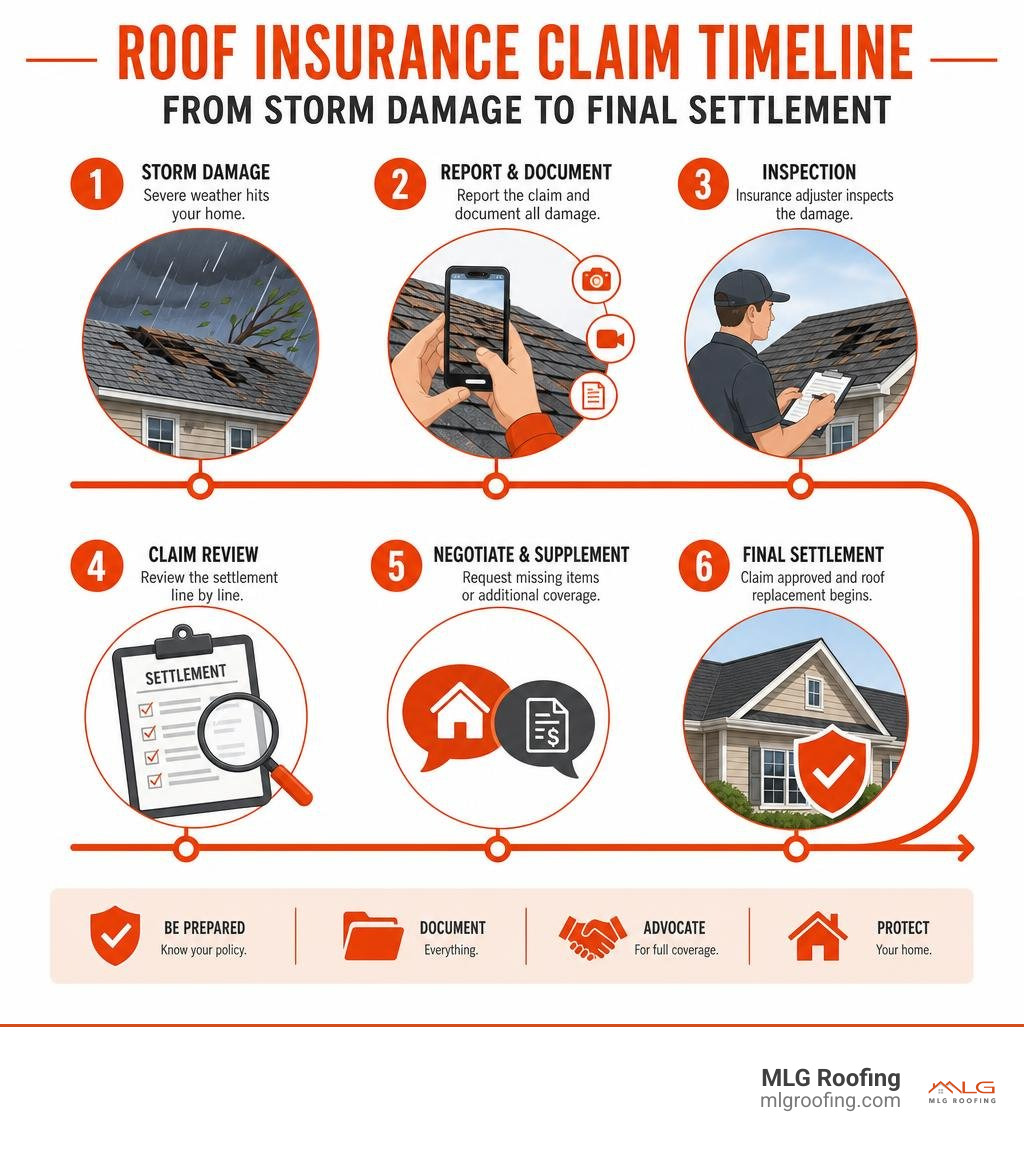
Knowing how to negotiate roof replacement with insurance can be the difference between a fair settlement and paying thousands out of pocket after a storm. Here is a quick overview of the process:
- Review your policy — confirm whether you have Replacement Cost Value (RCV) or Actual Cash Value (ACV) coverage, and check your hurricane deductible.
- Document damage immediately — take date-stamped photos and videos before any repairs are made.
- Get a professional inspection — have a licensed roofing contractor assess the damage before the insurance adjuster arrives.
- Be present during the adjuster’s visit — bring your contractor’s report and point out all damage.
- Review the settlement line by line — compare it against your contractor’s estimate and request a supplement if items are missing.
- Appeal if needed — submit additional documentation, request a reinspection, or invoke the appraisal clause if the offer is too low.
Roof damage is already stressful. In Brevard County, FL, where wind uplift, salt air exposure, and hurricane season are facts of life, dealing with an insurance claim on top of that can feel overwhelming. Many homeowners accept the first settlement offer without realizing it may not cover the full cost of replacement — which in Brevard County, FL typically runs anywhere from $12,000 to $30,000 or more depending on roof size, materials, and structural conditions. Understanding how the claims process works, and what documentation actually moves the needle, puts you in a much stronger position before you ever pick up the phone to call your insurer.
To help plan your budget, you can review the average price of roof replacement in the local area, explore detailed roof replacement costs for different materials, or learn more about what is involved in a complete roof replacement for your home.
Understanding Your Florida Policy: RCV vs. ACV and Hurricane Deductibles
Before speaking with an adjuster, it is vital to understand the language written into your homeowners insurance policy. In Florida’s complex insurance market, policy details dictate how much of your roof replacement will actually be covered.
The most critical distinction is between Replacement Cost Value (RCV) and Actual Cash Value (ACV) policies. An RCV policy is designed to cover the full cost of replacing your damaged roof with a brand-new system of similar quality, minus your deductible. This usually involves a two-check process: the insurer sends an initial check for the depreciated value, and then releases the remaining “recoverable depreciation” once the contractor completes the work and submits the final invoice.
Conversely, an ACV policy only pays the depreciated value of your roof based on its age and condition. If a twenty-year-old shingle roof in Palm Bay, FL is destroyed by a storm, an ACV policy might only pay out a fraction of the cost, leaving the homeowner to cover the remaining balance out of pocket. Many carriers in coastal Florida have shifted older roofs over to ACV schedules to limit their risk, which is why reviewing the role of roofing in home insurance for Florida homeowners is a crucial first step for anyone living on the Space Coast.
| Policy Type | Coverage Basis | Out-of-Pocket Impact | Depreciation Recovery |
|---|---|---|---|
| Replacement Cost Value (RCV) | Cost of a brand-new roof today | Minimal (only your deductible) | Yes, released after project completion |
| Actual Cash Value (ACV) | Depreciated value based on roof age | High (must pay the depreciated difference) | No, depreciation is non-recoverable |
Another unique aspect of Florida property insurance is the hurricane deductible. Unlike a standard flat-rate deductible (such as $1,000 or $2,500), hurricane deductibles are typically calculated as a percentage of your home’s total insured dwelling value—usually 2%, 5%, or even 10%. If a home in West Melbourne, FL is insured for $400,000 with a 5% hurricane deductible, the homeowner must pay $20,000 before the insurance coverage begins. This deductible applies specifically to damage caused by named storms, while standard windstorm and hail damage fall under your regular deductible.
Additionally, the Florida Building Code mandates strict requirements for roof installations, such as installing a secondary water barrier (a self-adhering polymer-modified bitumen sheet or strip applied directly over the roof decking joints). When negotiating a claim, verifying that your policy includes “Law and Ordinance” coverage is essential, as this coverage pays for the additional costs required to bring an older roof up to these modern building codes during a full replacement.
How to Negotiate Roof Replacement with Insurance: Step-by-Step Evidence Gathering

When dealing with property insurers, physical evidence is your strongest asset. Property claims are approved or denied based on documented facts rather than verbal descriptions. To build a strong case, homeowners should follow a structured approach to gathering and organizing proof of storm damage.
First, document the immediate aftermath of the storm. Take high-resolution, date-stamped photos and videos of the entire property from the ground, focusing on any visible damage such as missing shingles, damaged flashing, or dented metal panels. Inside the home, look for water stains on ceilings, damp drywall, or active leaks in the attic. Be sure to capture these interior issues immediately, as they directly link the external roof damage to active water intrusion. For a detailed roadmap of this entire cycle, refer to this step-by-step guide for navigating roofing damage insurance claims.
Next, cross-reference your documentation with official weather data. Insurance carriers look for proof that a specific, qualifying weather event occurred on a particular date. Homeowners can access local storm reports from the National Weather Service or NOAA to confirm when high winds, hail, or severe thunderstorms impacted their specific neighborhood in Rockledge, FL or Cocoa Beach, FL. Filing your claim promptly after the storm event is critical; delays allow insurance companies to argue that the damage was pre-existing or exacerbated by neglect, which can lead to a flat denial.
Preparing Your Documentation to Support Your Claim
Before submitting your claim, gather all historical records related to your roof. This includes the original installation invoice, building permits, and receipts for any past maintenance or minor repairs. If you have active warranties on your shingles or metal panels, keep those documents handy as well. Consulting a guide to different types of roofing warranties for Florida homeowners can help you understand whether material defects or weather-related failures are covered by the manufacturer or your insurance policy.
If your roof is actively leaking, you have a policy obligation to mitigate further damage. This means arranging for temporary emergency tarping to protect your home’s interior. Keep detailed receipts for all emergency mitigation services, as these costs are typically reimbursable under your insurance claim once coverage is approved.
Why Professional Inspections Matter When Learning How to Negotiate Roof Replacement with Insurance
While taking photos from the ground is a good start, homeowners should never attempt to climb onto a damaged roof themselves. Instead, hire a licensed local roofing contractor to perform a professional, comprehensive inspection. An experienced contractor can identify subtle issues that are easily missed by an untrained eye, such as micro-cracks in shingles, wind uplift that has broken the adhesive seal strips, or localized hail bruising.
Reviewing the signs you need a new roof replacement with an expert ensures that structural issues, rot, and coastal degradation are fully documented. Many modern contractors utilize drone photography and thermal imaging to capture clear, hard-to-dispute evidence of water entrapment and structural compromise, providing a solid foundation for your upcoming insurance negotiation.
Navigating the Adjuster Inspection and the Supplement Process

Once a claim is filed, the insurance company will assign an adjuster to inspect your property and estimate the scope of loss. While the adjuster’s job is to evaluate the damage objectively, they are also working to keep the settlement within the insurance carrier’s guidelines. This is why having your own independent contractor present during the adjuster’s inspection is highly beneficial.
Before the inspection takes place, it helps to understand what to expect from roof replacement quotes in Melbourne, FL. Having a detailed, itemized estimate from your contractor allows you to compare line items directly against the insurance adjuster’s initial assessment.
Working with Your Contractor During the Adjuster’s Visit
When the insurance adjuster arrives at your home in Viera, FL or Merritt Island, FL, your roofing contractor should be there to walk the roof alongside them. This joint inspection allows both professionals to discuss the damage in real-time. Your contractor can point out hard-to-see flashing failures, salt air corrosion on fasteners, and hidden deck rot that the adjuster might otherwise overlook.
This collaborative approach ensures that the initial scope of loss is as accurate as possible, helping you make the best decision between roof repair and roof replacement in Melbourne, FL based on the actual physical condition of the roof deck and structural components.
How to Negotiate Roof Replacement with Insurance Using Claim Supplements
It is very common for an insurance company’s initial settlement offer to fall short of the actual cost of a full replacement. This gap often occurs because the adjuster’s estimating software uses national average pricing that does not reflect local labor and material costs in Brevard County, FL, or because vital code-required items were left off the initial estimate. This is where the supplement process comes into play.
A claim supplement is a request for additional funds submitted to the insurance company to cover items that were missing from the initial estimate or discovered after the old roof was torn off (such as hidden wood rot on the plywood decking). In Florida, the “25% Rule” historically dictated that if more than 25% of a roof was damaged, the entire roof had to be brought up to current building codes. While recent legislative changes have adjusted how this rule is applied, code compliance remains a major factor in modern roof replacements.
Your contractor can submit a formal supplement request backed by photo evidence and references to the Florida Building Code to cover necessary upgrades, such as new drip edge flashing, proper ventilation, and secondary water barriers. For a clearer picture of these potential project variables, consult an in-depth guide to roof replacement costs.
Appealing a Denied or Underpaid Claim in Brevard County, FL
If your insurance company denies your claim or offers a settlement that is far too low to cover a proper replacement, do not panic. An initial denial or lowball offer is not the final word; it is simply the beginning of the formal appeal process.
To appeal an underpaid claim, start by requesting a detailed, written explanation of the denial or settlement calculation from your adjuster, citing the specific policy language they used to reach their decision. Once you have this explanation, you can work with your contractor to build a formal written appeal. This appeal should include your contractor’s detailed estimate, additional photo evidence, local weather data, and scientific analysis if necessary (such as ITEL laboratory testing to prove that matching shingles are no longer manufactured, which can justify a full replacement under Florida’s matching laws). To learn more about what goes into a complete system installation on the Space Coast, read about full roof replacement in Brevard County, FL.
If the insurance carrier remains uncooperative, homeowners have several escalation paths:
- Hire a Public Adjuster: A licensed public adjuster is an independent insurance professional whom you hire to represent your interests. They will evaluate the damage, review your policy, and negotiate directly with the insurance company on your behalf. Public adjusters typically charge a percentage of the final settlement (usually 10% to 20%).
- Invoke the Appraisal Clause: Most Florida homeowners policies contain an appraisal clause. If you and your insurer cannot agree on the value of the loss, either party can demand an appraisal. In this process, you and the insurance company each hire an independent appraiser. These two appraisers then select a neutral umpire. A decision agreed upon by any two of these three individuals is binding.
- File a Department of Financial Services (DFS) Complaint: Homeowners can file an official complaint with the Florida Department of Financial Services. The state will review the claim to ensure the insurance company is acting in good faith and handling the file with reasonable promptness.
Please note that when navigating an insurance claim, Florida law strictly prohibits roofing contractors from acting as public adjusters or negotiating claims on your behalf if they are also performing the repair work. Additionally, it is a third-degree felony in the state of Florida for a contractor to advertise that they will waive, rebate, or absorb your insurance deductible. Homeowners must always pay their legal deductible directly to the licensed contractor performing the work.
Frequently Asked Questions about Roof Insurance Claims
Does filing a roof claim automatically increase my insurance premiums?
Filing a single claim for sudden storm or hurricane damage does not automatically trigger an individual premium increase. Insurance companies assess risk across entire geographic regions. If a major hurricane impacts Brevard County, FL, rates will likely adjust across the board for all homeowners in the area, regardless of whether they filed an individual claim. However, filing multiple claims within a short period or neglecting routine maintenance can make you a higher risk to insurers, potentially leading to non-renewal. To better understand local roofing investments, analyze the average price of roof replacement in Brevard County, FL.
What is the 25% roof replacement rule in Florida?
The 25% rule is a provision within the Florida Building Code. Historically, it stated that if more than 25% of a roof section was repaired or replaced within a 12-month period, the entire roof had to be brought up to the current building code. While recent Florida legislative updates have created exemptions for roofs built under certain modern code cycles, the rule still plays a significant role in determining whether an insurer must pay for a localized repair or a full roof replacement. For more information on how structural standards and material choices interact with your property protection, see this guide to decoding roof warranties in Melbourne, FL.
Can a roofing contractor waive my insurance deductible in Florida?
No. Under Florida Statute 817.234, it is highly illegal for a roofing contractor to waive, absorb, or rebate any portion of a homeowner’s insurance deductible. Any contractor who offers to “cover your deductible” or build it into their pricing is committing insurance fraud, which compromises the validity of your entire claim. Homeowners are legally required to pay their designated deductible directly to the licensed contractor completing the repairs, and insurance companies frequently request proof of this payment before releasing final depreciation checks.
Conclusion
Successfully negotiating a roof replacement with your insurance company requires patience, clear documentation, and a thorough understanding of your policy’s terms. By taking prompt action, gathering detailed evidence, and working with a reputable professional, you can protect your home and ensure you receive the full financial coverage you are legally owed under your policy.
If your roof has suffered wind, rain, or hail damage, do not navigate the complex insurance claims process alone. MLG Roofing is a licensed and insured residential roofing contractor based in Melbourne, FL, serving homeowners across Brevard County, FL and the surrounding Space Coast communities, including Palm Bay, FL, West Melbourne, FL, Rockledge, FL, Viera, FL, and Sebastian, FL.
The team handles the entire process professionally—from providing detailed storm damage inspections and estimates to managing all municipal permitting. Contact us today to schedule an inspection, or explore our specialized roof replacement services in Melbourne, FL and our rapid emergency roof repair services in Melbourne, FL to keep your home safe and secure.