
Why Finding the Right Roofer for Salt Corrosion Matters on Florida’s Coast

Finding the best roofers for coastal homes salt corrosion florida starts with knowing what to look for. Homeowners along the Space Coast need a contractor who understands the unique challenges of marine environments.
Five Things to Look for in a Coastal Florida Roofer
- Licensed by Florida’s DBPR — verify the contractor’s license is active and in good standing
- Local coastal experience — look for contractors familiar with Space Coast conditions, wind codes, and salt exposure
- Corrosion-resistant material knowledge — they should recommend marine-grade metals, quality underlayments, and corrosion-resistant fasteners
- Wind mitigation expertise — ability to provide wind mitigation forms that may support insurance documentation
- Post-storm inspection capability — experience assessing salt and storm-related damage, not just routine wear
Living near the water in Brevard County, FL has real appeal — but it also puts your roof under constant stress. Salt particles carried on the ocean breeze settle into every seam, fastener, and surface of your roof. Over time, that invisible exposure quietly accelerates corrosion, degrades protective coatings, and can shorten the life of materials that would typically last longer in a less demanding environment. When evaluating local options, working with established Brevard County Roofing Companies ensures you get a team familiar with these exact conditions.
Homes within a mile or two of the Atlantic coastline may lose years off their roof’s expected lifespan if salt buildup goes unaddressed. The problem isn’t always visible until the damage is already significant — which is why choosing a roofer who understands coastal conditions from the start makes a real difference. If your roof has already suffered extensive wear, exploring a structured Roof Replacement Program can help you upgrade to more resilient, marine-grade materials.
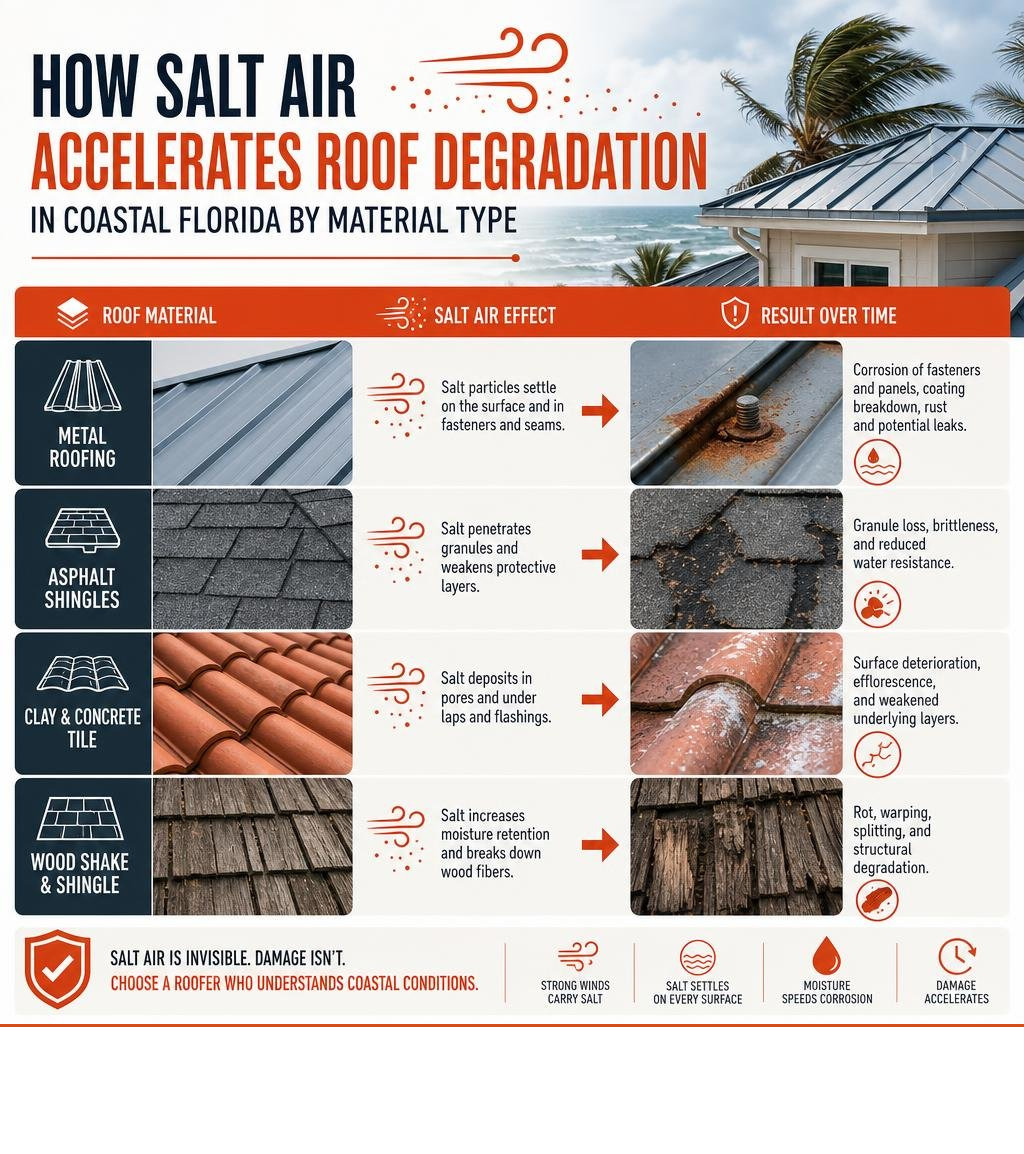
Why Coastal Florida Roofs Face Accelerated Degradation
The climate along the Space Coast is spectacular for beachgoers but notoriously brutal on buildings. When managing a property in beachside communities like Cocoa Beach, Satellite Beach, or Indian Harbour Beach, understanding the environmental forces at play is the first step toward protecting your investment. The unique combination of salt spray, chemical oxidation, high humidity, and intense UV radiation creates a highly corrosive microclimate that standard roofing systems may not withstand over the long term.
To understand how this happens, we must look at the science of salt air. Microscopic saltwater droplets are swept up by wind and carried inland. As these droplets land on your roof, the water evaporates, leaving behind highly concentrated crystalline salt. This salt is hygroscopic, meaning it continuously draws moisture out of the humid Florida air. This constant state of dampness, combined with the chemical properties of sodium chloride, accelerates the oxidation of metals. Unprotected steel, standard aluminum flashing, and standard zinc-coated fasteners can rust at an accelerated rate compared to those installed on inland properties.
When salt chemistry meets the intense, daily UV radiation of the Florida sun, the degradation of standard materials can accelerate further. UV rays dry out the asphalt binders in shingles, making them brittle. Once brittle, they can lose their protective granules, leaving the underlying fiberglass mat vulnerable to water intrusion. High humidity also creates a perfect breeding ground for mold, mildew, and blue-green algae, which trap moisture against the roofing material and prevent it from drying properly.
Proximity to the ocean plays a massive role in how quickly this deterioration occurs. Homes located within the first tier of oceanfront exposure — typically within 1,000 feet of the breaking surf — experience the most aggressive salt and sand blasting. However, salt-laden winds can carry corrosive particulates several miles inland. To explore how these regional weather patterns shape material performance, you can read about Understanding the Impact of Florida’s Climate on Your Roofing Material Choices.
Local microclimates also dictate specific risk levels. For instance, a home nestled behind a tall dune or protected by a dense maritime hammock in South Patrick Shores may experience less direct salt-spray impact than an elevated multi-story home directly facing the open ocean in Indialantic. These environmental factors commonly lead to issues that require specialized attention from experienced coastal contractors.
Evaluating the Best Roofing Materials for Salt and Wind Resistance
When it is time to replace a roof on a coastal home, selecting the right material is an important decision. Standard, builder-grade materials may experience a reduced lifespan when installed near the ocean.

To help you compare your options, here is a breakdown of how the most common residential roofing materials hold up against the harsh marine conditions of the Space Coast.
Four Coastal Roofing Materials Compared
| Material Type | Estimated Coastal Lifespan* | Wind Resistance Rating | Salt Corrosion Resistance | Primary Benefit |
|---|---|---|---|---|
| Marine-Grade Aluminum | Up to 40 to 50 Years | High | Outstanding | Highly resistant to rust and degradation |
| Clay / Concrete Tile | Up to 30 to 50 Years | High | High (Requires premium underlayment) | Classic coastal aesthetic and natural durability |
| Architectural Shingles | Up to 12 to 17 Years | Moderate | Moderate | Cost-effective upfront cost |
| Copper | Up to 50+ Years | High | Outstanding | Develops protective patina; highly durable |
*Note: Lifespan estimates are subject to local weather conditions, proper installation, and regular maintenance.
For a deeper dive into why metal systems are highly favored by coastal homeowners, you can read about the Top Benefits of Choosing Metal Roofing for Your Home in Melbourne, FL.
Metal Roofing Systems and Marine-Grade Alloys
Metal roofing has become popular along the Space Coast, and for good reason. However, not all metal roofs are created equal. If you install a standard galvanized steel roof near the ocean, the salt air can affect the zinc coating and cause rust within a few years. For coastal properties, marine-grade aluminum is often considered a top choice. Aluminum naturally forms its own protective oxide layer when exposed to air, making it highly resistant to salt corrosion.
For homeowners who prefer steel, aluminum-zinc alloy coated steel offers protection, but it should be paired with a high-quality paint finish. The industry standard for coastal applications is a PVDF (polyvinylidene fluoride) coating, which is a premium resin-based coating that resists fading, chalking, and salt-air chemical attacks.
Beyond the metal itself, the installation method is critical. Standing seam metal roofs are highly recommended for coastal homes because they use concealed fasteners. This means the clips holding the roof down are protected beneath the metal panels, shielding them from salt air and rain. Exposed fastener systems, on the other hand, rely on screws that penetrate the metal. Even with neoprene washers, these exposed screws can be targets for rust and leaks. To understand the differences between these two systems, take a look at our comparison of Hidden Fastener vs Exposed Fastener: Choosing the Right Metal Roof for You.
Clay and Concrete Tile Options for Coastal Homes
Clay and concrete tiles are staple features of Florida coastal architecture. Clay is naturally resistant to salt, moisture, and intense heat, making it a durable choice for beachfront properties. It is highly resistant to decay, rust, and loss of structural integrity when exposed to sea spray. Concrete tile offers a heavy-duty, highly stable alternative that provides excellent resistance against wind uplift due to its weight.
However, tile roofs have a vulnerability that coastal homeowners must understand: the underlayment. While the clay or concrete tiles themselves can have a long service life, the asphalt-saturated felt or synthetic underlayment beneath them typically degrades much faster. Water can slip between the tiles during wind-driven rainstorms, relying entirely on the underlayment to shed that moisture.
Furthermore, salt air can slowly corrode the metal flashing, fasteners, and valley metals that tie the tile system together. When a tile roof experiences issues, it is often because the underlayment or the fasteners underneath have degraded, even if the tiles themselves still look beautiful from the street.
High-Wind Architectural Shingles as a Budget-Friendly Alternative
If a metal or tile roof does not fit your current budget, high-definition architectural asphalt shingles are a widely used alternative. Unlike traditional three-tab shingles, architectural shingles are thicker, multi-layered, and engineered to withstand high wind speeds when installed with proper fastening patterns.
The downside is that asphalt shingles typically have a shorter lifespan in coastal zones. The combination of intense UV rays and salt-air exposure can cause the adhesive strips to dry out and lose their grip over time. This makes the shingles more susceptible to lifting during tropical storms. Additionally, the constant moisture encourages the growth of dark algae, though many modern shingles are treated with copper-infused granules to resist this staining. To learn how to protect and preserve a shingle roof under these conditions, read about How to Extend Your Roof’s Life in the Florida Sun.
How to Choose the Best Roofers for Coastal Homes Salt Corrosion Florida
Because the coastal environment is so unforgiving, it is important to hire a contractor with specific experience working on beachfront homes. A standard inland installation process may not perform as expected when subjected to the high winds and salt spray of the Space Coast.

Working with a specialized roofer who understands marine-grade materials, local building codes, and wind mitigation requirements is essential to protecting your property.
Key Criteria for the Best Roofers for Coastal Homes Salt Corrosion Florida
A qualified coastal roofing contractor should have a deep understanding of local building codes and wind-uplift requirements. In Brevard County, homes built along the barrier islands must meet strict wind-load standards. Experienced contractors will design a comprehensive system that includes enhanced deck nailing, heavy-duty underlayments, and corrosion-resistant flashing.
For example, a coastal-spec roof replacement should utilize 304-grade or 316-grade stainless steel fasteners rather than standard galvanized nails. Standard nails can corrode over time when exposed to salt air, which may cause shingles to loosen or metal panels to detach. Experienced coastal roofers also pay close attention to flashing at roof-to-wall transitions, chimneys, and valleys, using non-ferrous metals like aluminum or copper that are designed to withstand salt exposure. For professional guidance on avoiding common installation pitfalls, check out Preventing Common Roofing Problems: Expert Advice for Florida Homeowners.
How do I find the best roofers for coastal homes salt corrosion florida?
To find a contractor who understands coastal roofing, start by verifying their licensing status with the Florida Department of Business and Professional Regulation (DBPR). A reputable contractor should hold an active Certified Roofing Contractor (CCC) license.
Ask potential roofers about their specific experience with beachfront properties. Do they understand the wind-code requirements for your specific municipality, whether you are in Palm Bay, Cocoa Beach, or Titusville? Can they provide references for coastal projects they completed several years ago so you can see how those roofs are holding up?
What is the average lifespan of a coastal roof in Florida?
The lifespan of a roof on the Space Coast varies depending on the material chosen, the quality of the installation, and how close the home is to the ocean. While an asphalt shingle roof might last longer inland, that same roof may have a shorter lifespan on an oceanfront home in Satellite Beach.
A high-quality aluminum or standing seam metal roof can offer a longer service life near the coast, provided it was installed with stainless steel fasteners and marine-grade underlayments. Tile roofs may also offer long-term durability, though they commonly require a mid-life underlayment replacement to remain completely watertight.
When should I choose repair over replacement for salt damage?
Deciding whether to repair or replace a salt-damaged roof depends on the extent of the degradation and the age of the system. If your roof is relatively new and the salt damage is isolated to a few rusted flashings or a small section of wind-damaged shingles, a targeted repair is often a sensible and cost-effective choice.
However, if the fasteners holding your metal roof down have rusted through, or if the underlayment beneath your tile roof has degraded, localized repairs may only provide a temporary solution. A professional physical inspection is required to evaluate the structural integrity of the roof deck and underlayment. If you are dealing with active leaks or visible rust, a professional evaluation from an experienced local contractor is the best way to determine the most reliable path forward.
Essential Maintenance and Repair Decisions for Coastal Roofs
To get the maximum lifespan out of any coastal roof, proactive maintenance is highly recommended. Salt deposits are constantly accumulating on your roof, and without regular cleaning, they can slowly affect the protective finishes.
A simple, consistent maintenance routine can add years to the life of your roof. For metal roofs and flashing, gently rinsing the surface with a garden hose a few times a year can wash away accumulated salt crystals before they can initiate the corrosion process. Never use a high-pressure power washer, as this can force water under shingles or metal seams and damage the underlayment. Keep the roof edge clear of debris, as damp leaves and pine needles can trap salty moisture, leading to wood rot along the fascia and soffits.
For a complete checklist of preventative steps, read our Essential Roofing Maintenance Tips for Melbourne’s Coastal Homes.
Four Signs Salt Damage Requires Professional Intervention
While homeowner maintenance is helpful, there are certain signs of salt damage that require professional attention:
- Pitting or Orange Rust Spots: If you notice orange rust forming around fasteners or along the seams of a metal roof, the protective coating may have failed.
- Granule Loss: For shingle roofs, finding large amounts of sand-like granules shedding from the shingles indicates that the asphalt is drying out and breaking down.
- Loose or Lifting Flashing: Salt air can corrode the nails holding your flashing in place, allowing wind-driven rain to slip behind your siding or stucco.
- Persistent Water Stains: Water stains on your ceiling or interior walls indicate that water has bypassed your roofing material and compromised the underlayment.
Ignoring these early warning signs can lead to more extensive damage. To learn more about how routine professional inspections protect your property, read about The Benefits of Routine Roof Maintenance: Protecting Your Investment in Brevard County.
Conclusion
Protecting a beachfront property on the Space Coast from the effects of salt air corrosion requires a strategic, proactive approach. From choosing durable, marine-grade materials like aluminum standing seam metal to ensuring your contractor uses stainless steel fasteners, every detail matters. By partnering with a local roofing contractor who understands the unique wind-load and environmental challenges of coastal Brevard County, you can help protect your home against the elements.
Whether you need a minor leak repaired after a seasonal storm or are planning a complete roof replacement, the team at MLG Roofing is here to help. We specialize in providing high-quality, code-compliant roofing systems tailored specifically for the Florida climate.
If you are ready to secure your home against salt air and severe weather, Schedule a professional roof replacement with MLG Roofing today for a comprehensive, professional evaluation of your property’s roofing needs.
Five Frequently Asked Questions
How does salt air affect roof lifespan in coastal Florida?
Salt air carries microscopic sodium chloride particles that settle on roofing surfaces. This salt draws in moisture, creating a highly corrosive environment that accelerates the rusting of metal components, degrades protective paint coatings, and dries out the asphalt binders in shingles, which can reduce a roof’s expected lifespan compared to inland properties.
What is the best roofing material for a beachfront home?
Marine-grade aluminum is widely considered the best material for beachfront homes because it is naturally highly resistant to salt corrosion and rust. Clay tile is another excellent, highly durable option due to its natural resistance to salt and heat, though it requires a high-quality underlayment system to remain completely watertight.
How often should a coastal roof be inspected?
Coastal roofs should be professionally inspected at least once a year, as well as after any major tropical storm or hurricane. Regular inspections allow professionals to identify early signs of salt corrosion, loose fasteners, or degraded flashing before they develop into costly leaks.
Can I replace a tile roof with a metal roof in Florida?
Yes, in most cases, a tile roof can be replaced with a metal roof. However, this transition depends on your home’s structural design, local building codes, and any specific homeowner association (HOA) guidelines. A professional roofer can evaluate your roof structure to determine the best approach.
Are metal roofs noisy during Florida rainstorms?
When installed with solid wood decking and modern, high-quality underlayment insulation, metal roofs are not significantly louder than shingle or tile roofs during rainstorms. The underlying attic space and home insulation naturally absorb the vast majority of the sound.