
Understanding Metal Roofing Cost in Florida
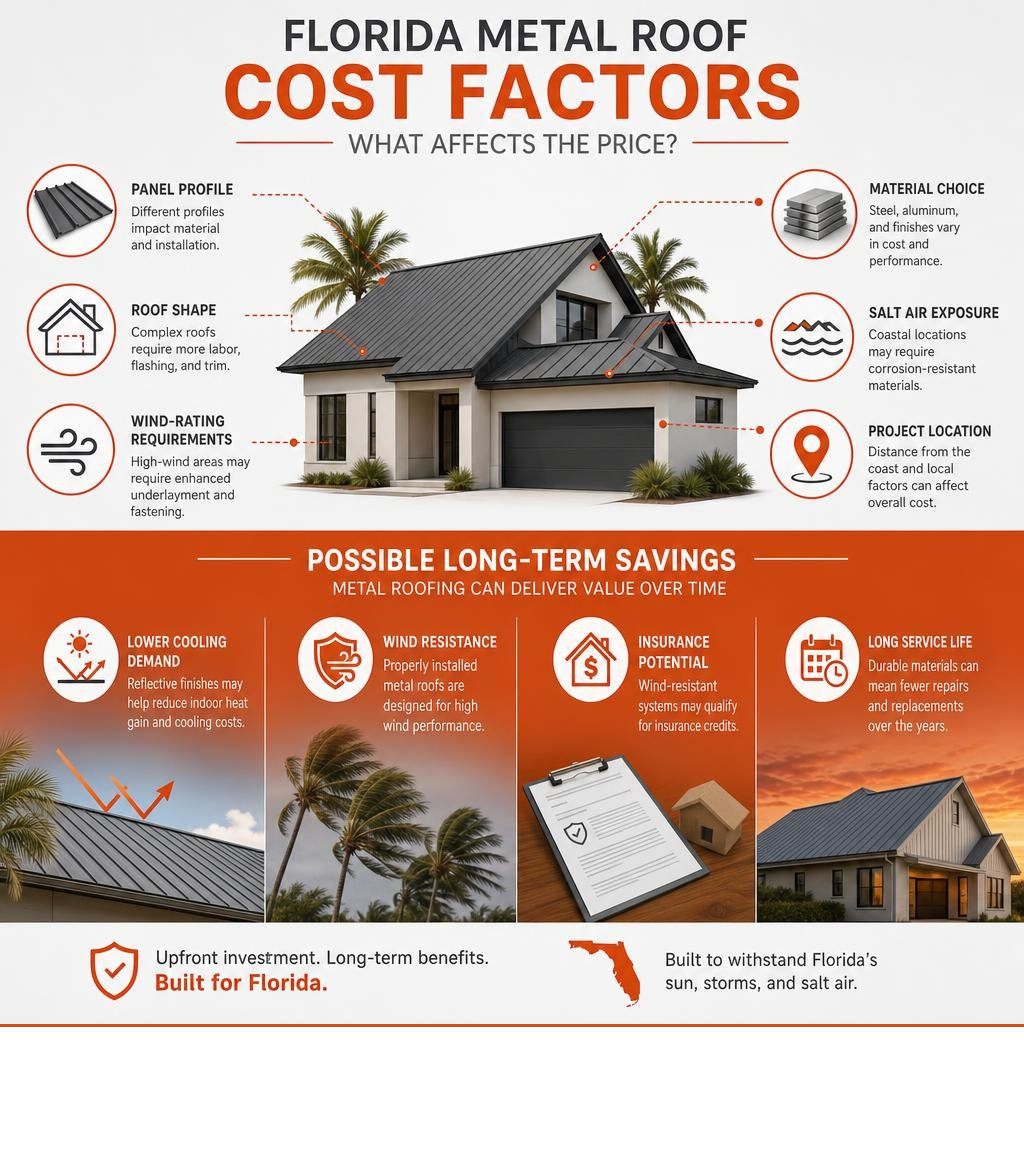
For homeowners in Brevard County, FL, a metal roof usually costs more upfront than asphalt shingles, but the final price depends heavily on the panel profile, roof shape, wind-rating requirements, material choice, and distance from salt air. A simple inland steel roof may be priced very differently from an aluminum standing-seam system on the Space Coast. Understanding the advantages of a modern metal roof helps property owners determine which profile fits their architectural style and budget.
All metal roofing costs are highly variable and require an in-person professional evaluation. When comparing estimates from a qualified standing seam roofing contractor, ask each contractor to separate the cost of panels, tear-off, underlayment, flashing, decking repairs, permits, and labor. This makes it easier to see whether two quotes cover the same roofing system.
Metal can offer long-term value in Florida because reflective finishes may lower cooling demand, and properly documented wind-resistant systems may qualify for insurance credits. Outcomes vary by home, insurer, roof design, and local requirements. Coastal homes may also need corrosion-resistant materials, which can increase the initial investment.
MLG Roofing can help homeowners evaluate roof condition, storm exposure, replacement options, and the details behind a metal-roof estimate before work begins.
Average Metal Roofing Cost Florida by Material and Profile
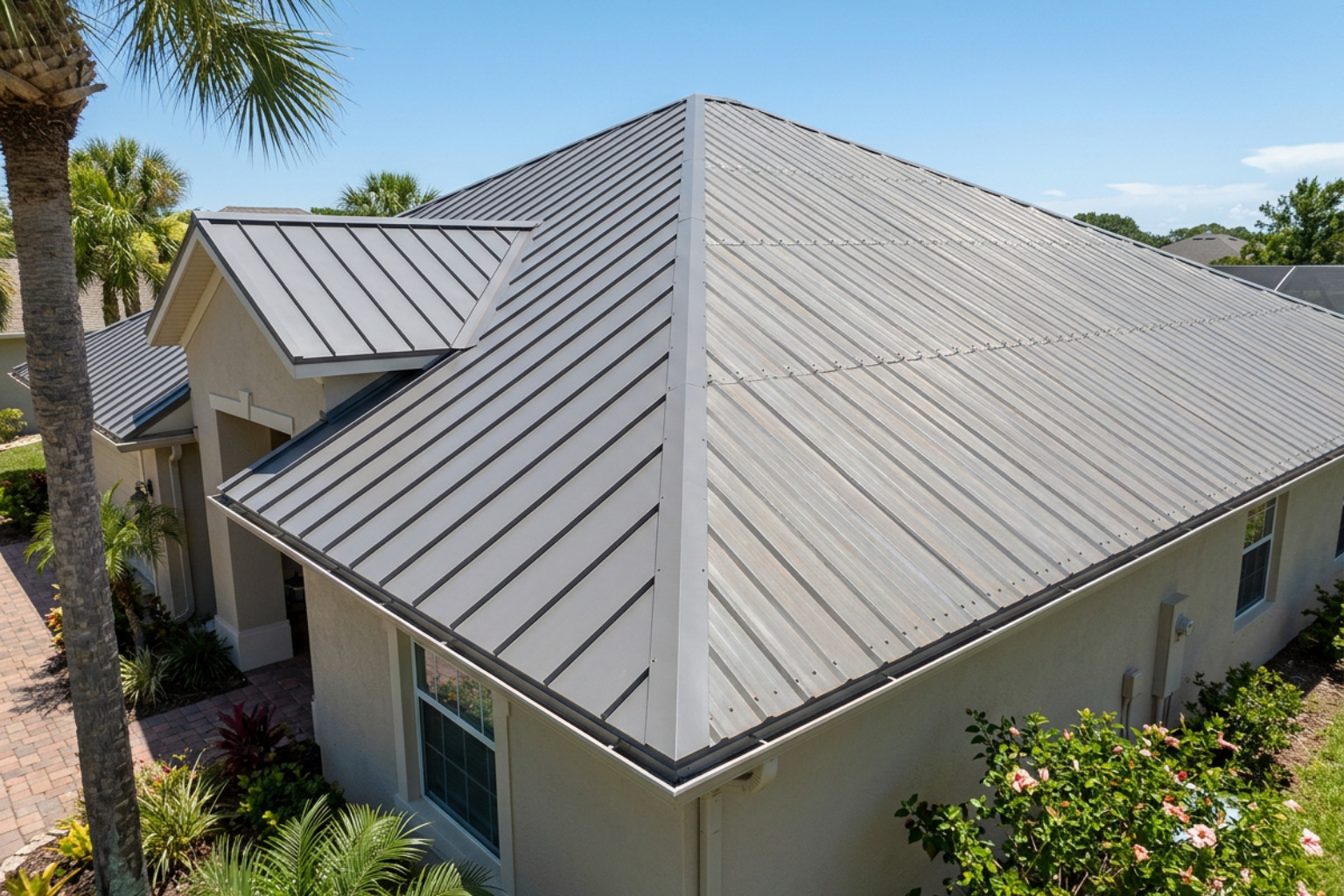
When assessing the overall investment for a residential metal roof, the profile design and substrate material represent the two largest pricing variables. Homeowners evaluating whether are metal roofs good in Florida will find that pricing spans a broad spectrum depending on whether the system uses exposed fasteners or concealed interlocking seams.
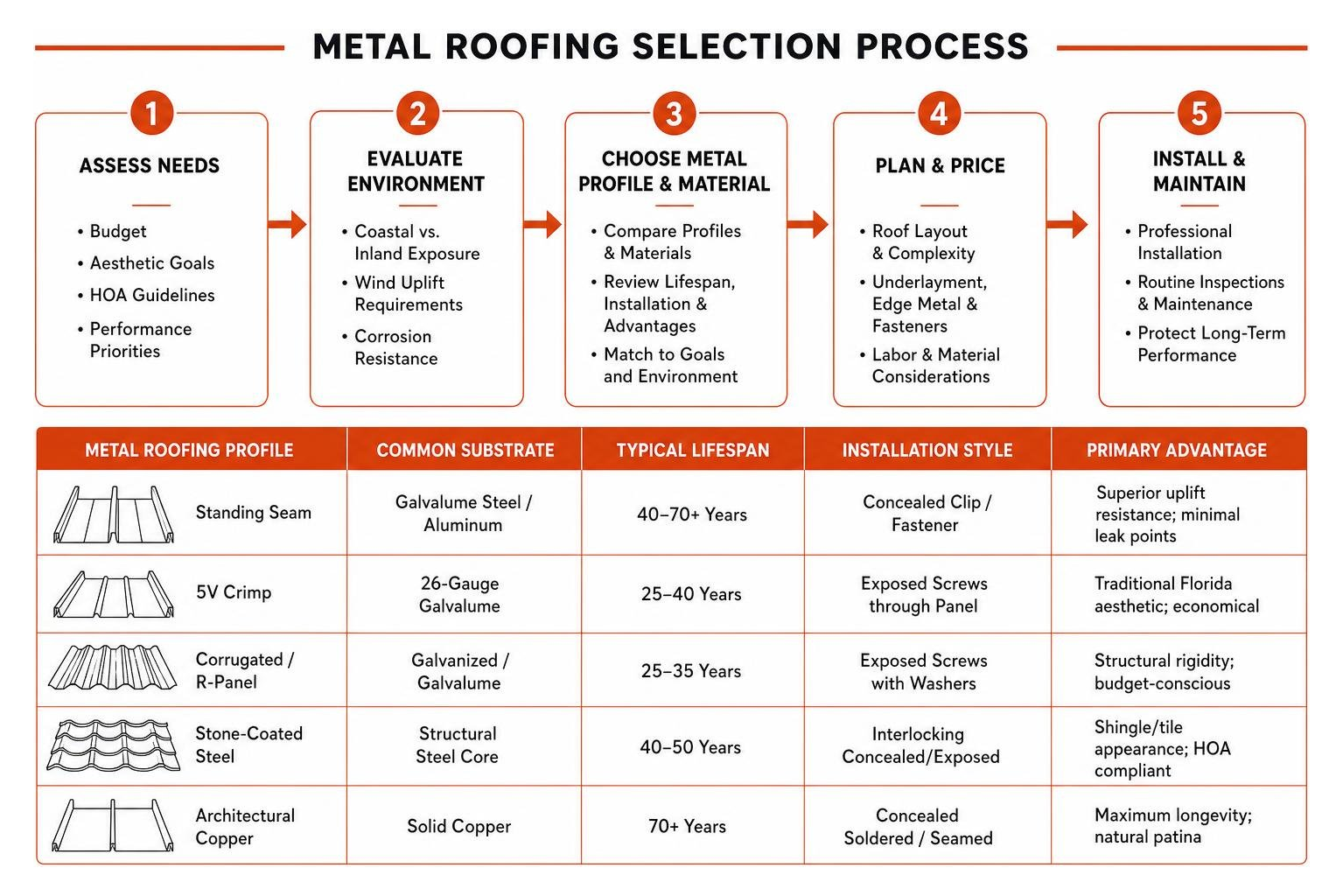
| Metal Roofing Profile | Common Substrate | Typical Lifespan | Installation Style | Primary Advantage |
|---|---|---|---|---|
| Standing Seam | Coated Steel / Aluminum | 40–70+ Years | Concealed Clip / Fastener | Superior uplift resistance; minimal leak points |
| 5V Crimp | 26-Gauge Coated Steel | 25–40 Years | Exposed Screws through Panel | Traditional Florida aesthetic; economical |
| Corrugated / R-Panel | Galvanized / Coated Steel | 25–35 Years | Exposed Screws with Washers | Structural rigidity; budget-conscious |
| Stone-Coated Steel | Structural Steel Core | 40–50 Years | Interlocking Concealed/Exposed | Shingle/tile appearance; HOA compliant |
| Architectural Copper | Solid Copper | 70+ Years | Concealed Soldered / Seamed | Maximum longevity; natural patina |
Labor and material costs fluctuate based on raw metal commodity markets, structural requirements, and roof layout. Industry data indicates that installed metal roofing systems generally range from economical exposed-panel installations up to premium architectural metals, with comprehensive quotes reflecting tear-off, high-temperature underlayment, custom edge metal, and regional wind-uplift fasteners.
Standing Seam Metal Roofing Cost Florida
Standing seam metal roofs feature vertical legs with a raised seam that conceals the mechanical fasteners beneath interlocking joints. By eliminating exposed screws penetrating the roof deck, standing seam systems offer exceptional defense against wind uplift and water intrusion during tropical systems.
For properties across the Space Coast, standing seam panels fabricated from coated steel or marine-grade aluminum provide robust protection. A reputable standing seam roofing contractor will configure clip spacing and seam heights according to local wind maps. The increased craftsmanship and specialized roll-forming equipment required for standing seam contribute to higher labor rates compared to basic screw-down roofs.
Exposed Fastener and 5V Crimp Profiles
Exposed fastener systems, including classic 5V crimp and corrugated R-panels, remain popular throughout Central Florida for agricultural structures, detached garages, and budget-conscious residential reroofs. These panels overlap at the edges and are anchored directly through the metal face into the roof decking using screws fitted with elastomeric sealing washers.
While exposed fastener profiles provide a lower initial price point, they require ongoing maintenance. Florida’s intense ultraviolet radiation and thermal expansion cycles gradually degrade the washer seals over time. Property owners must plan for periodic inspections, tightening, and eventual screw replacement to prevent leak pathways from developing.
Specialty Metal Materials: Aluminum, Copper, and Stone-Coated Steel
For homeowners seeking specific architectural aesthetics or advanced coastal protection, specialty metals deliver distinct performance advantages. Learning how to choose the best roof material for Florida weather requires balancing environmental exposure with community design guidelines:
- Aluminum Roofing: Naturally impervious to rust, aluminum forms its own protective oxide coating when exposed to air. It represents the industry benchmark for residences located near saltwater bodies, preventing the corrosion common to steel products.
- Copper Roofing: Offering multi-decade durability, solid copper develops a protective green verdigris patina. It is frequently selected for historic residences, accents, dormers, and coastal estate properties.
- Stone-Coated Steel: Combining an acrylic-bonded ceramic stone granule coating with a stamped steel core, these panels replicate traditional barrel tile, slate, or wood shake while providing the lightweight strength of metal, making them an excellent choice for neighborhoods governed by strict architectural covenants.
Key Factors Influencing Metal Roof Pricing Across Florida Regions

Metal roof replacement pricing is never one-size-fits-all. Every structure presents unique architectural geometries, exposure conditions, and structural demands that determine the labor and material allocation.
Regional Cost Variations and Building Code Requirements
Building code mandates vary significantly between inland and coastal jurisdictions. In designated high-wind coastal corridors located across South Florida and coastal sections of Brevard County, building codes enforce strict uplift testing standards and product approvals.
Contractors must follow enhanced fastening schedules, install thicker panel gauges (such as 24-gauge steel or .032-inch aluminum), and adhere to rigorous deck re-nailing standards. Local municipal permit fees, engineering documentation, and required mid-installation building inspections contribute to overall regional pricing differences. Exploring our average price roof replacement Brevard guide provides additional localized context on these regulatory factors.
Installation Complexity, Pitch, and Decking Preparation
A roof’s physical architecture significantly influences total installation labor. Steep slopes with a sharp pitch require specialized staging, fall-arrest equipment, and slower production rates to maintain safety standards. Complex configurations with intersecting valleys, hip ridges, dormers, and skylights require precise hand-bent flashing transitions.
Prior to panel placement, contractors must conduct a thorough tear-off of old materials to inspect the structural substrate for rot or water damage. Under the Florida Building Code, underlying decking must be brought into compliance with current nail patterns before installing a high-temperature, self-adhered secondary water barrier. Reviewing an in-depth guide to roof replacement costs outlines how rotted plywood replacement and underlayment upgrades are accounted for in a professional estimate.
Long-Term Financial Return: Metal vs. Asphalt Shingles
Evaluating a metal roof involves analyzing the total lifecycle cost rather than merely comparing upfront sticker prices. While traditional asphalt shingles carry a lower initial installation expense, metal roofs provide compounded operational savings and extended durability that frequently balance the initial investment over a multi-decade ownership period.
Calculating the Long-Term Metal Roofing Cost Florida Homeowners Save
Operating a home in Florida’s sub-tropical climate places continuous thermal demand on air conditioning systems. Metal roofs engineered with reflective paint finishes reflect solar radiant heat rather than absorbing it into the attic structure. This solar reflectance can lower attic temperatures, reducing cooling loads during peak summer months.
Furthermore, Florida property owners who replace an aging roof with an engineered, code-approved metal system can request a Wind Mitigation Inspection utilizing Uniform Mitigation Verification Inspection Form OIR-B1-1802. Insurers frequently provide premium discounts on the windstorm portion of a policy for homes with certified secondary water barriers, advanced roof-to-wall attachments, and impact-resistant metal roof coverings. Coverage and potential premium discounts depend on individual policy language, exclusions, deductibles, roof age, and carrier underwriting decisions. Homeowners should also note that Ordinance or Law coverage may assist with code-mandated upgrades during a reroof, without this information serving as legal or insurance advice.
When you combine lower electric bills, wind mitigation insurance credits, and the elimination of frequent shingle reroof cycles, metal roofing provides compelling long-term financial returns.
Durability and Hurricane Resiliency Over Time
Severe weather performance remains one of the primary catalysts for selecting metal roofing. Standard shingles remain susceptible to shingle blow-off, edge lifting, and granule loss from flying debris during major storms. In contrast, engineered standing seam metal roof systems achieve exceptional wind-uplift resistance capable of withstanding severe tropical storm and hurricane conditions.
Because metal does not absorb moisture, crack under UV degradation, or support mold and algae growth, ongoing maintenance demands are significantly lower than organic or aggregate roofing types. Homeowners can maintain their investment through straightforward annual perimeter checks, periodic debris removal, and professional inspections following severe weather events. For unexpected storm damage, scheduling free roof repair estimates ensures small concerns are resolved promptly.
Florida Financing Options and Mitigation Assistance Programs
Upgrading to a resilient metal roof requires capital planning. Fortunately, property owners can evaluate multiple financing pathways, loan structures, and state-backed assistance initiatives to manage project expenses responsibly.
| Financing Mechanism | Program Type | Repayment Required? | Primary Use Case | Consideration Factor |
|---|---|---|---|---|
| Home Equity Line (HELOC) | Secured Bank Loan | Yes (Monthly principal + interest) | Homeowners with substantial accrued property equity | Variable interest rates; property acts as collateral |
| PACE Financing | Property Tax Assessment | Yes (Added to annual property tax bill) | Energy-efficiency and hurricane-hardening improvements | Tied to property assessment; specific local availability |
| Unsecured Roofing Loan | Personal Installment Loan | Yes (Fixed monthly payments) | Rapid approval without equity requirements | Interest rates depend on credit score tiers |
| My Safe Florida Home | State Mitigation Grant | No (Matching grant funds up to limit) | Hurricane retrofits and impact-rated roof upgrades | Subject to state legislative appropriations and eligibility |
Grants typically do not require repayment while loans and financing products require ongoing amortization, helping homeowners accurately evaluate long-term affordability.
When exploring property-assessed clean energy (PACE) financing, property owners should verify local county participation, as PACE financing is repaid through a non-ad valorem assessment on your annual property tax bill. For government grant programs, such as the My Safe Florida Home initiative, homeowners must complete an initial wind mitigation inspection to identify approved hardening measures before submitting grant reimbursement requests. Working with a qualified metal roofing Brevard County specialist ensures that all manufacturer documentation, engineering permits, and installation invoices align with state assistance guidelines.
Frequently Asked Questions About Florida Metal Roofing
How much does a metal roof typically cost per square foot in Florida?
Installed metal roof pricing in Florida generally ranges from economical exposed-fastener profiles to premium concealed-fastener systems. The ultimate square-foot rate depends on the chosen panel gauge (such as 24-gauge vs. 26-gauge), base metal (steel vs. aluminum), roof slope, tear-off scope, and local hurricane zone engineering requirements. A complete in-person evaluation is necessary to provide an accurate, itemized proposal.
Does a metal roof qualify for insurance discounts in Florida?
Yes, many Florida insurance carriers offer wind mitigation discounts for roofs that feature certified impact resistance, secondary water barriers, and enhanced deck-fastening schedules. To claim these potential savings, homeowners must hire a licensed inspector to complete the official Form OIR-B1-1802 wind mitigation inspection report following roof completion. Policy coverage and premium adjustments depend on individual insurer guidelines, policy language, exclusions, deductibles, and roof age. Additionally, Ordinance or Law coverage within a property policy may assist with required building code upgrades, though homeowners should consult their insurance carrier or agent as this is not legal or insurance advice.
Which metal roofing material is recommended near Florida coastal waters?
For homes located along the Atlantic coast, the Indian River Lagoon, or within proximity of breaking surf, marine-grade aluminum panels with a high-performance protective finish are strongly recommended. Unlike carbon steel or standard galvanized metals, aluminum is naturally resistant to saltwater corrosion and will not develop red rust when exposed to salt-laden coastal spray.
Conclusion
Upgrading your home with a metal roofing system delivers long-term durability, structural storm resilience, and improved thermal performance across Florida’s challenging climate. While initial costs exceed those of standard shingles, the combination of extended material lifespans, potential windstorm insurance credits, and reduced summer cooling loads makes metal an exceptional investment for Space Coast property owners.
Selecting a fully licensed, experienced contractor is the most critical step in ensuring your roof complies with local wind-load engineering codes and manufacturer warranty requirements. Whether you reside in Melbourne, Palm Bay, Rockledge, Viera, Merritt Island, or Sebastian, the team at MLG Roofing is ready to guide you through panel selection, deck preparation, and flawless installation. Explore our professional metal roofing services today to schedule your comprehensive on-site consultation.