
Are There Roof Replacement Programs Available for Florida Homeowners?

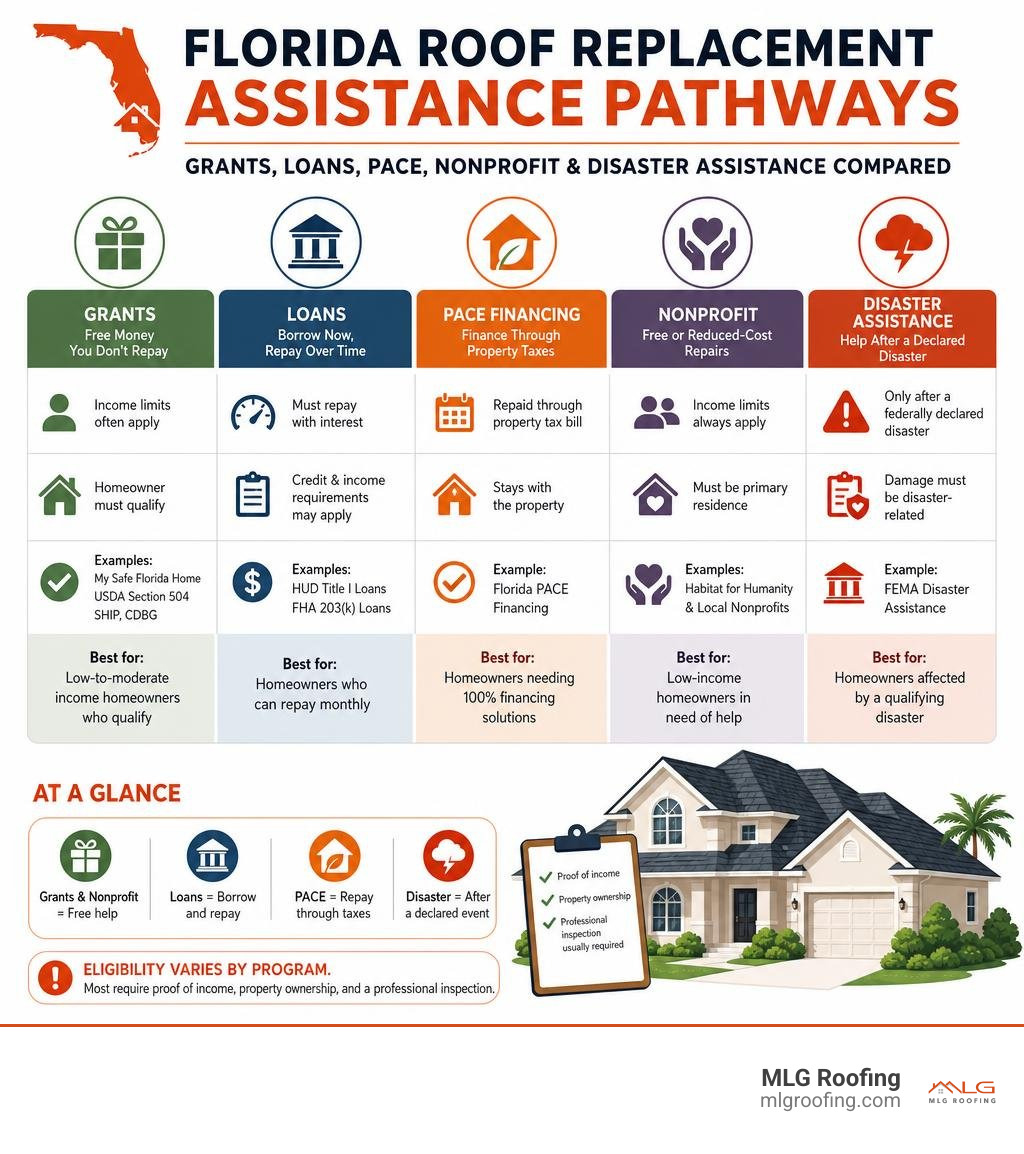
Yes. Several roof replacement program options exist for Florida homeowners, ranging from state grants to federal loans to nonprofit assistance. Here is a quick overview of what is available:
- My Safe Florida Home — Matching grants up to $10,000 for wind mitigation improvements, including roof upgrades
- USDA Section 504 — Loans up to $40,000 and grants up to $10,000 for rural, very-low-income homeowners (grants for seniors 62+)
- HUD Title I Loans — Federally backed home improvement loans up to $25,000, available nationwide
- FHA 203(k) Loans — Rehabilitation mortgages that can roll roof replacement costs into a home loan
- SHIP Programs — State Housing Initiatives Partnership funds administered at the county level for low-to-moderate income homeowners
- CDBG Programs — Community Development Block Grants that some Florida cities use to fund emergency housing repairs
- Florida PACE Financing — 100% financing repaid through your property tax bill, not a grant
- FEMA Disaster Assistance — Available after a federally declared disaster, not for normal wear or aging
- Habitat for Humanity and local nonprofits — Free or reduced-cost repairs for qualifying low-income homeowners
Eligibility varies by program. Most require proof of income, property ownership, and a professional inspection.
Replacing a roof in Brevard County, FL is one of the most significant home expenses a homeowner can face. Costs typically range from $12,000 to $30,000 or more depending on roof size, materials, and structural conditions. For many homeowners in Melbourne, Palm Bay, Titusville, Rockledge, and across the Space Coast, that number prompts an immediate question: is there any financial help available?
The answer is yes — but with important caveats. Florida has more roof assistance options than most states, partly because of the ongoing pressure hurricanes and wind-driven rain put on homes here. Programs like My Safe Florida Home were created specifically with Florida’s storm exposure in mind. Federal programs like USDA Section 504 and HUD loans extend to qualifying Florida residents just as they do elsewhere in the country.
That said, no single program covers every homeowner. Eligibility depends on income, location, age, property type, and the nature of the roof damage. Most homeowners who successfully reduce their out-of-pocket costs do so by combining more than one source of assistance rather than relying on a single program.
This guide reviews many of the most common roof replacement assistance options available to Florida homeowners, explains how each one works, and helps you figure out which ones are worth pursuing based on your situation.
Can You Really Get a Free Roof in Florida?
The promise of a free roof is one of the most common marketing hooks in the roofing industry, especially after a major storm hits the Space Coast. However, from a practical contractor perspective, truly free roofs do not exist without very specific, legally defined conditions.
When homeowners ask how can I get a new roof for free, they are usually looking for a way to avoid massive out-of-pocket expenses. There are legitimate pathways where a homeowner might pay close to $0 for a new roof, but these are highly structured programs, not magic loopholes.
The first legitimate pathway is a roof replacement grant designed for low-income families, seniors, or disabled individuals. These are funded by state, federal, or local government agencies to preserve housing stock. For example, a low-income senior in a rural part of Brevard County, FL might receive a grant that covers the entire cost of a new roof. In these cases, the funds are paid directly to the licensed contractor, and the homeowner has no repayment obligation, provided they remain in the home for a specified period.
The second pathway is through a local roof replacement relief service or a nonprofit roof rescue program. Organizations like Habitat for Humanity or local housing authorities sometimes coordinate volunteer labor and donated materials to replace failing roofs for families in extreme financial distress. While these programs provide a free roof to the recipient, they have incredibly strict eligibility requirements, limited funding, and long waiting lists.
Outside of government grants and nonprofit relief, any contractor offering a “free roof” by promising to waive your insurance deductible is engaging in illegal activity. Florida law strictly prohibits contractors from paying, waiving, or rebating a homeowner’s insurance deductible. If a roof has suffered legitimate storm damage, homeowner’s insurance may cover the replacement cost, but the homeowner is legally responsible for paying their deductible.
Understanding the realistic pathways to assistance starts with knowing the actual roof replacement costs in the local market. In Melbourne and surrounding areas, a standard shingle roof replacement can range from $12,000 to over $30,000 depending on the size of the home, the complexity of the roof pitch, and the materials selected. Knowing these real-world figures helps homeowners evaluate whether a specific grant or assistance program will cover their entire project or if they will need to secure secondary funding.
State and Federal Roof Replacement Program Options for Florida Homeowners
For homeowners who do not qualify for a completely free roof, several state and federal programs offer financial assistance. Each roof replacement program has its own set of eligibility criteria, income limits, property type requirements, and location restrictions.
The My Safe Florida Home Program
The My Safe Florida Home Program is one of the most popular state-level initiatives in Florida. It was created to help homeowners strengthen their properties against hurricane-force winds while simultaneously reducing their property insurance premiums.
The program works by first providing a free wind mitigation home inspection. This inspection identifies specific areas where the home is vulnerable to wind damage. Once the inspection is complete, homeowners can apply for a matching grant to perform recommended upgrades, which may include qualifying roof-related upgrades, secondary water barriers, and other wind mitigation improvements.
Under the program guidelines, the state provides a 2:1 matching grant of up to $10,000. This means for every dollar the homeowner spends on approved wind mitigation upgrades, the state contributes two dollars, up to the maximum grant amount. To receive the full $10,000 grant, a homeowner must spend at least $5,000 of their own money on a $15,000 roofing project. After the upgrades are complete and verified by a follow-up inspection, the homeowner receives the grant reimbursement and can submit the wind mitigation report to their insurance company for potential premium discounts.
USDA Section 504 Home Repair Program
The USDA Section 504 Home Repair Program helps very-low-income homeowners repair, improve, or modernize their homes. In Brevard County, this program may apply to residents in USDA-designated rural areas, including parts of communities such as Malabar and Grant-Valkaria. Eligibility areas can change over time, so homeowners should verify their address through current USDA resources before applying.
This program offers two distinct types of assistance:
- Low-Interest Loans: Homeowners can secure loans up to $40,000 to repair or replace a failing roof. These loans feature a 1% fixed interest rate with a repayment term of up to 20 years, making the monthly payments incredibly affordable.
- Grants for Seniors: Homeowners who are 62 years of age or older and cannot afford to repay a loan may qualify for a grant of up to $10,000. This grant must be used specifically to address health and safety hazards, which includes replacing a severely leaking or structurally compromised roof.
If a homeowner qualifies for both, the USDA can combine a loan and a grant for up to $50,000 in total assistance. If the property is located in a presidentially declared disaster area, the maximum grant limit increases to $15,000, bringing the combined assistance cap to $55,000. The primary limitation of the Section 504 program is that the home must be located in an eligible rural area, and the household income must fall below the “very low” limit established for the county.
HUD and Federal Housing Programs for Roof Upgrades
For homeowners who do not live in rural areas or do not meet the strict low-income requirements of the USDA, the Department of Housing and Urban Development (HUD) offers federally backed government loans for roof replacement that are available nationwide.
The first option is the HUD Title I Property Improvement Loan program. These loans are issued by private lenders but insured by the Federal Housing Administration (FHA). Homeowners can borrow up to $25,000 for a single-family home without needing substantial equity in the property. Because the loans are government-backed, they often feature lower interest rates and more flexible credit requirements than traditional personal loans.
The second option is the FHA 203(k) Rehabilitation Mortgage. This program is designed for buyers purchasing a home that needs significant repairs, or current homeowners looking to refinance their existing mortgage while rolling the cost of major renovations into the new loan. This is an excellent option for a homeowner who has recently purchased an older home in Melbourne or Palm Bay with an aging roof and wants to finance the entire replacement through a single, long-term mortgage.
State and Local Housing Rehabilitation Programs
In addition to federal programs, Florida utilizes State Housing Initiatives Partnership (SHIP) funding and Community Development Block Grants (CDBG) to assist homeowners at the local level. These funds are distributed to counties and municipalities, which then design their own housing repair programs.
In our local service area, there are several active initiatives:
- Brevard County: The Brevard County Replacement Rehab and Repair Program provides deferred payment loans or grants to income-eligible homeowners for critical repairs, including roof replacements.
- City of Cocoa: Homeowners living within Cocoa city limits can access the City of Cocoa Repair, Rehabilitation, and Reconstruction Program, which targets substandard housing conditions.
- City of Palm Bay: The city periodically opens application windows for housing repairs. Homeowners should monitor the City of Palm Bay Housing Repair Waitlist to apply when funding cycles renew.
Because local program funding is tied to annual government allocations, waitlists can be long, and programs may close temporarily once their budgets are exhausted. It is crucial to contact your local county or municipal housing office early to understand current funding availability.
Understanding the Florida PACE Program: Financing vs. Grants
When researching options to pay for a new roof, many property owners encounter the PACE program florida. It is incredibly important to understand that the florida pace program is a financing mechanism, not a government grant or a free program.
PACE stands for Property Assessed Clean Energy. The program was created to help homeowners fund energy-efficient upgrades, renewable energy installations, and wind-resistance improvements (such as hurricane-grade roofing) with no upfront cash. While traditional financing relies heavily on your credit score, florida pace qualification is based primarily on the equity in your home, your property tax payment history, and your mortgage standing.
If you utilize the program, a florida pace funding agency provides the capital to cover 100% of the material and labor costs for your new roof. Instead of making monthly payments to a traditional bank, the amount borrowed is added to your annual property tax bill as a non-ad valorem assessment. This assessment is repaid over a set term, typically ranging from 5 to 25 years.
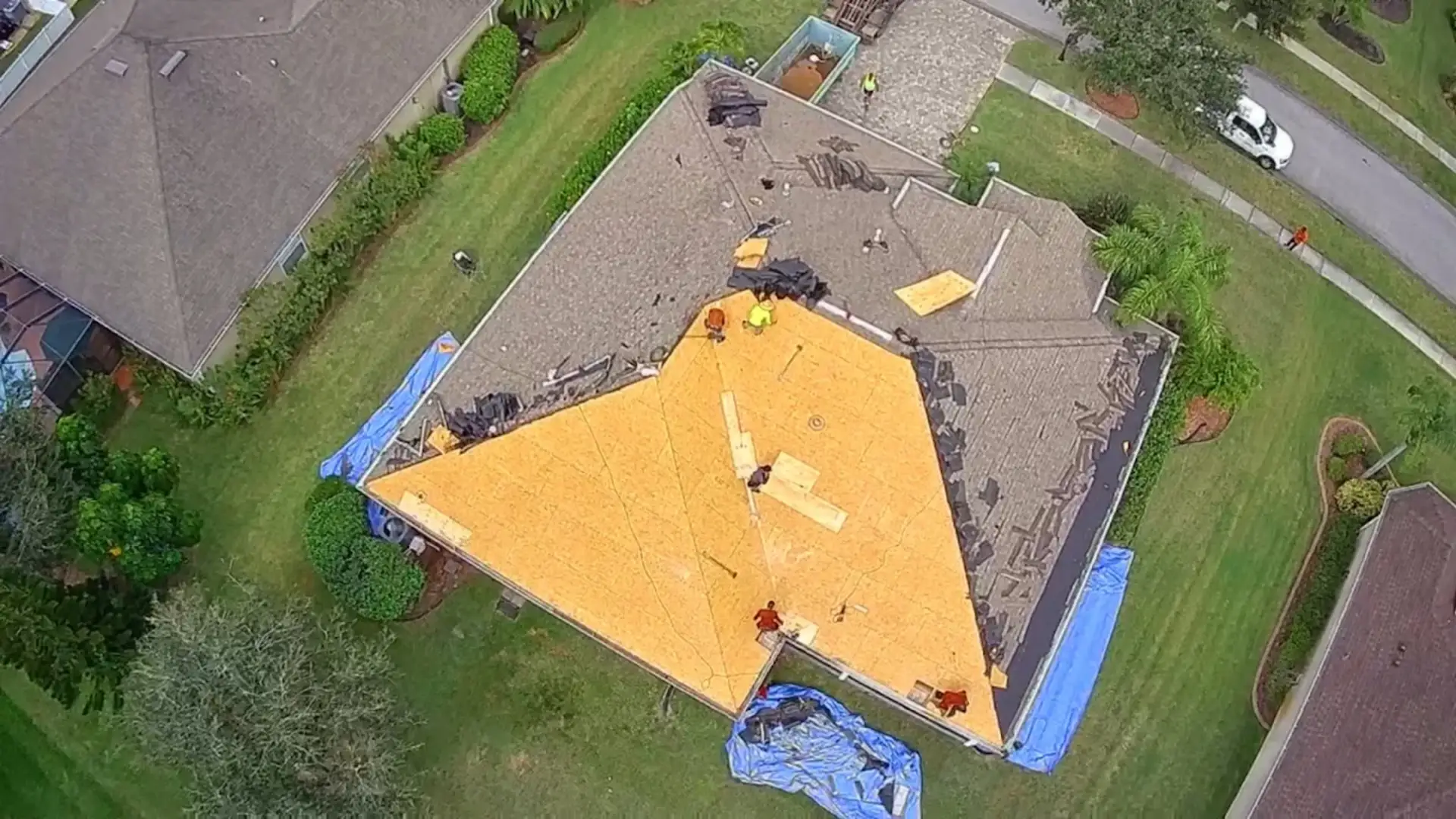
While a pace loan florida can be a lifesaver for homeowners who need an immediate roof replacement but cannot qualify for traditional bank loans, it is essential to weigh the pros and cons carefully:
The Pros:
- No upfront cash payment is required.
- Approval is not based on your credit score, making it highly accessible.
- The interest rate is fixed, and repayment terms can be stretched over two decades.
- The financing is tied to the property, meaning it can sometimes be transferred to the next owner if you sell the home (though many mortgage lenders require the balance to be paid off during a sale).
The Cons:
- When evaluating PACE loans, Florida homeowners should consider the total borrowing costs, which may be higher than some traditional financing options such as home equity loans or HELOCs, depending on the provider and financing terms.
- Because the payment is added to your property taxes, your monthly mortgage escrow payment will increase significantly.
- If you fail to pay your property taxes, you risk tax certificate sales and eventual foreclosure on your home.
- Selling or refinancing a home with an active PACE assessment can be complicated, as many traditional buyers and lenders refuse to assume the tax lien.
Before committing to the pace program in florida, homeowners should always compare the total cost of the PACE assessment against traditional financing options to ensure they are making the most financially sound decision for their household.
Should You Repair or Replace Your Roof?
As a licensed roofing contractor serving Melbourne, Palm Bay, and the wider Space Coast, we often find that homeowners begin researching a roof replacement program out of panic. They spot a water stain on the ceiling or find a few shingles in the yard after a summer storm and assume they need to spend tens of thousands of dollars on a brand-new roof.
However, a full replacement is not always immediately necessary. In many cases, a targeted professional repair can extend the life of your existing roof by several years, giving you time to save money or wait for a grant program window to open. The key is knowing how to evaluate the condition of your roof.
To help you decide on the best path forward, it is highly beneficial to read our detailed comparison on roof repair vs. roof replacement. This resource explains how we evaluate structural factors to determine if a targeted fix is a viable, safe option for your home.
Evaluating Your Roof’s Condition
In coastal Central Florida, roofs face an incredibly harsh environment. The combination of intense UV radiation, high humidity, salt-air exposure, and heavy wind-driven rain accelerates the aging process of roofing materials.
When evaluating a roof, we look for several critical signs of wear:
- Shingle Condition: Are the shingles curling, buckling, or losing their protective granule coating? Significant granule loss near the roof edge is a clear indicator that the asphalt is drying out and losing its water resistance.
- Recurring Leaks: Has the roof leaked in the same spot multiple times? A single leak near a chimney or valley can usually be fixed with a flashing repair. However, multiple active leaks across different sections of the home point to a widespread failure of the underlying materials.
- Underlayment and Decking: If moisture has penetrated the shingles, it can rot the wood decking underneath. Spongy spots when walking on the roof or sagging rooflines are serious structural concerns that require immediate attention.
If you are noticing these issues, take a moment to review our guide on the signs you need a new roof to better understand what is happening beneath your shingles.
When to Choose a Full Roof Replacement Program
While localized repairs are excellent for addressing isolated damage, there comes a point where continuing to patch an old roof becomes a waste of money. If your shingle roof is approaching 15 to 20 years of age, the materials have likely reached the end of their useful life in Florida’s climate.
At this stage, the shingles become brittle, making them highly susceptible to wind uplift during storm season. Investing in repeated repairs on a failing system only delays the inevitable and exposes your home’s interior to catastrophic water damage.
Choosing a full replacement not only secures your home but can also drastically lower your windstorm insurance premiums. If you are ready to explore this option, our comprehensive guide to full roof replacement in Brevard County outlines exactly what the process looks like from start to finish.
How to Apply for Roof Replacement Assistance in Florida
If you have decided that a full replacement is necessary and you want to apply for a grant, low-interest loan, or local housing program, you must be prepared for a structured application process. Government and nonprofit programs do not hand out funding without thorough verification.
To prepare a successful application for financial assistance, you should take the following steps:
- Gather Proof of Ownership and Residency: You must prove that you are the legal owner of the property and that it serves as your primary residence. Be prepared to provide a copy of your deed, recent utility bills, and your current homestead exemption filing.
- Document Your Household Income: Nearly all assistance programs are tied to income limits. You will need to provide your most recent federal tax returns, W-2s, consecutive pay stubs for the last three months, or benefit award letters (such as Social Security or disability statements) for every adult living in the household.
- Verify Property Taxes and Insurance: Most programs require that your property taxes are fully paid and up to date. You will also need to provide your current homeowner’s insurance declaration page to show the property is active and insured.
- Schedule a Professional Roof Inspection: Programs will not approve funding based on a homeowner’s word alone. You must have a licensed roofing contractor perform a comprehensive inspection. The contractor will document the roof’s age, material type, leak locations, and structural damage with high-resolution photos and a written assessment.
- Obtain Detailed Contractor Estimates: You will need to submit official, itemized estimates from a licensed and insured contractor. Some municipal programs require you to submit at least two or three competitive bids from approved contractors on their registry to ensure fair pricing.
Be aware that many of these programs operate on strict annual funding cycles and maintain lengthy waitlists. Gathering your documentation ahead of time ensures you can submit a complete application the moment a program window opens, significantly increasing your chances of approval.
Comparison of Florida Roof Assistance and Financing Options
To help you easily compare the various programs discussed in this guide, the table below outlines the funding types, eligibility requirements, and repayment terms for each option:
| Program Name | Funding Type | Key Eligibility Factors | Repayment Requirements | Maximum Funding Amount | Common Uses |
|---|---|---|---|---|---|
| My Safe Florida Home | Matching Grant (2:1) | Single-family home, active insurance, wind inspection completed | No repayment required | Up to $10,000 | Hurricane mitigation, roof replacement, secondary water barrier |
| USDA Section 504 | Grant / Low-Interest Loan | Very-low-income, rural area, age 62+ for grants | Loans: 1% interest over 20 years. Grants: Repayable if sold within 3 years | Loans: $40,000. Grants: $10,000 | Roof repairs, safety hazard removal, structural updates |
| HUD Title I | Government-Backed Loan | Property ownership, credit history, debt-to-income ratio | Monthly payments to private lender | Up to $25,000 | General home improvements, roof replacement |
| SHIP / Local Programs | Deferred Loan / Grant | Low-to-moderate income, county residency, primary home | Forgivable if owner remains in home for 5–10 years | Varies by county (typically $10,000–$30,000) | Housing rehabilitation, emergency roof replacement |
| Florida PACE | Tax Assessment Financing | Home equity, clean property tax history, mortgage current | Paid annually through property tax bill (5–25 years) | Based on home equity (up to 100% of project) | Energy efficiency, hurricane-resistant roofing |
| FEMA Assistance | Emergency Grant | Home located in federally declared disaster area, uninsured storm damage | No repayment required | Varies based on disaster assessment | Emergency repairs, temporary tarping, structural stabilization |
Frequently Asked Questions about Florida Roof Programs
How can I get a new roof for free in Florida?
Getting a completely free roof is only possible if you meet very specific criteria. Low-income seniors or disabled individuals may qualify for full funding through local housing rehabilitation grants (SHIP/CDBG) or USDA Section 504 grants in rural areas. Additionally, nonprofit organizations like Habitat for Humanity offer programs for families in extreme financial hardship. If your roof was damaged during a hurricane, FEMA disaster grants may cover the replacement cost if you are uninsured. Avoid any contractor who promises a “free roof” by offering to waive your insurance deductible, as this is illegal under Florida law.
Does My Safe Florida Home Pay for Roof Replacement?
The My Safe Florida Home Program may help pay for eligible roof-related improvements that strengthen a home against hurricane winds, but it is not a simple free roof replacement program. Homeowners typically begin with a wind mitigation inspection, which identifies qualifying improvements that may reduce a home’s vulnerability to storm damage. Depending on the home’s condition and the approved scope of work, eligible improvements may include roof-related upgrades such as roof deck improvements or a secondary water barrier. Funding is generally structured as a matching grant, so homeowners should expect some out-of-pocket costs depending on the project and current program requirements.
What is the best roof replacement program for seniors?
For seniors age 62 or older in rural parts of Brevard County, such as Malabar or Grant-Valkaria, the USDA Section 504 Home Repair program is often worth checking first. It can provide grants to very-low-income homeowners when repairs remove health or safety hazards, including a failing roof. In more urban areas like Melbourne or Palm Bay, local SHIP or housing rehabilitation programs may offer deferred or forgivable assistance, depending on funding, income limits, and waitlists.
Are there government loans for roof replacement available?
Yes. The federal government offers several loan programs specifically for home improvements. The HUD Title I Property Improvement Loan program allows you to borrow up to $25,000 through FHA-approved lenders with flexible credit requirements. If you are refinancing your home, an FHA 203(k) loan allows you to roll the cost of a new roof directly into your primary mortgage, spreading the cost over a standard 30-year term at a low interest rate.
Conclusion
Paying for a new roof is a major financial undertaking, but Florida homeowners have a unique variety of programs, grants, and financing options available to ease the burden. Whether you qualify for a matching grant through My Safe Florida Home, a low-interest federal loan, or localized county assistance, the key to success is careful preparation and realistic expectations.
Because every home and financial situation is different, the very first step you should take is to have your roof evaluated by a trusted, licensed professional. A comprehensive inspection will determine whether a targeted repair can safely buy you more time, or if a full replacement is the only viable path forward.
At MLG Roofing, we understand both the physical demands that Florida’s coastal climate puts on your home and the financial stress of managing major repairs. We serve homeowners across Brevard County, FL, providing detailed inspections, honest estimates, and high-quality installations designed to provide long-term protection against Florida’s demanding weather conditions. If you are ready to assess your roof’s condition and discuss your options, contact us today to learn more about our roof replacement services.