Understanding Sandstone Roof Tiles: Materials, Profiles, and Performance
For Brevard County homeowners comparing sandstone roof tiles with stone-coated metal, the practical difference often comes down to weight and structural fit. Natural and concrete sandstone tiles typically weigh about 9.5 to 10.5 pounds per square foot, while stone-coated steel panels weigh roughly 1.2 to 1.5 pounds per square foot. That lighter profile can make stone-coated metal a more practical choice for standard Space Coast homes, while sandstone tiles provide heavier masonry mass and a traditional quarried appearance for structures engineered to support them.
Natural sandstone is a classic sedimentary rock formed over millions of years through the intense compaction and mineral cementation of quartz and feldspar grains. When cut into dimension stone slabs, high-grade quartz arenite yields an exceptionally rich texture with earth-toned color banding ranging from soft tans to warm ochre and reddish-browns.
In traditional architecture, quarried stone slabs are produced with hand-dressed, calibrated edges to ensure consistent sizing during installation. For example, dimensional natural sandstone tile specifications frequently detail calibrated thicknesses around 22 mm with lengths up to 900 mm. These hand-cut masonry tiles are laid in parallel overlapping rows or random diminishing courses, delivering striking depth and genuine Old-World elegance.
Beyond aesthetic appeal, natural stone provides substantial thermal mass. The density of thick stone blocks helps absorb radiant solar heat during hot afternoons, slowing heat transfer into your attic space before gradually releasing it in the cooler evening hours. For homeowners who appreciate classic masonry profiles, exploring premium architectural roof tiles reveals how dense profiles create timeless visual character across coastal rooflines.
Natural vs Concrete Sandstone Roof Tiles: Weight and Durability
Because sourcing and shaping natural sedimentary stone for whole-roof installations involves specialized quarrying and significant structural mass, modern building practices often utilize concrete roof tiles manufactured with warm, sandstone-inspired pigments. These units provide the classic dimensional profile of masonry with consistent engineered performance.
Modern concrete roof tiles manufactured to simulate sandstone are produced in distinct styles, such as Flat and Venetian barrel profiles. These products are tested under ASTM C1492 standards and carry a Class A fire rating, which represents the highest level of fire resistance available for residential roofing.
According to technical data published in Florida Building Code ESR-2528 evaluation data, these systems carry an installed dead load of roughly 9.5 pounds per square foot (psf) for Venetian profiles and up to 10.5 psf for Flat configurations. This mass provides impressive wind ballast and dense projectile protection. Homeowners evaluating coastal hail and flying debris resistance often assess concrete tile impact strength to understand how dense masonry systems perform when severe tropical thunderstorms move through the Space Coast.
Key Drawbacks and Structural Limitations of Sandstone Roof Tiles
While both natural stone slabs and heavy concrete sandstone tiles provide beautiful architectural lines, their substantial weight represents a major engineering hurdle for many single-family homes:
- Structural Truss Engineering: A roof carrying 9.5 to 10.5 psf requires heavy-duty rafter sizing, specialized truss bracing, and load-bearing exterior wall reinforcement. Standard homes framed originally for lightweight asphalt shingles rarely support this weight without costly framing retrofits.
- Moisture Absorption & Porosity: Natural sandstone is naturally porous and permeable. In humid subtropical climates, moisture penetration can lead to algae growth, biological staining, or surface friability if the stone is not sealed and maintained periodically.
- Logistical Complexity: Transporting and hoisting tons of masonry tiles onto a roof requires specialized staging, safety rigging, and heavy equipment, which increases labor timelines and overall project complexity.
Stone-Coated Metal Roofing: The Modern Alternative for Space Coast Homes
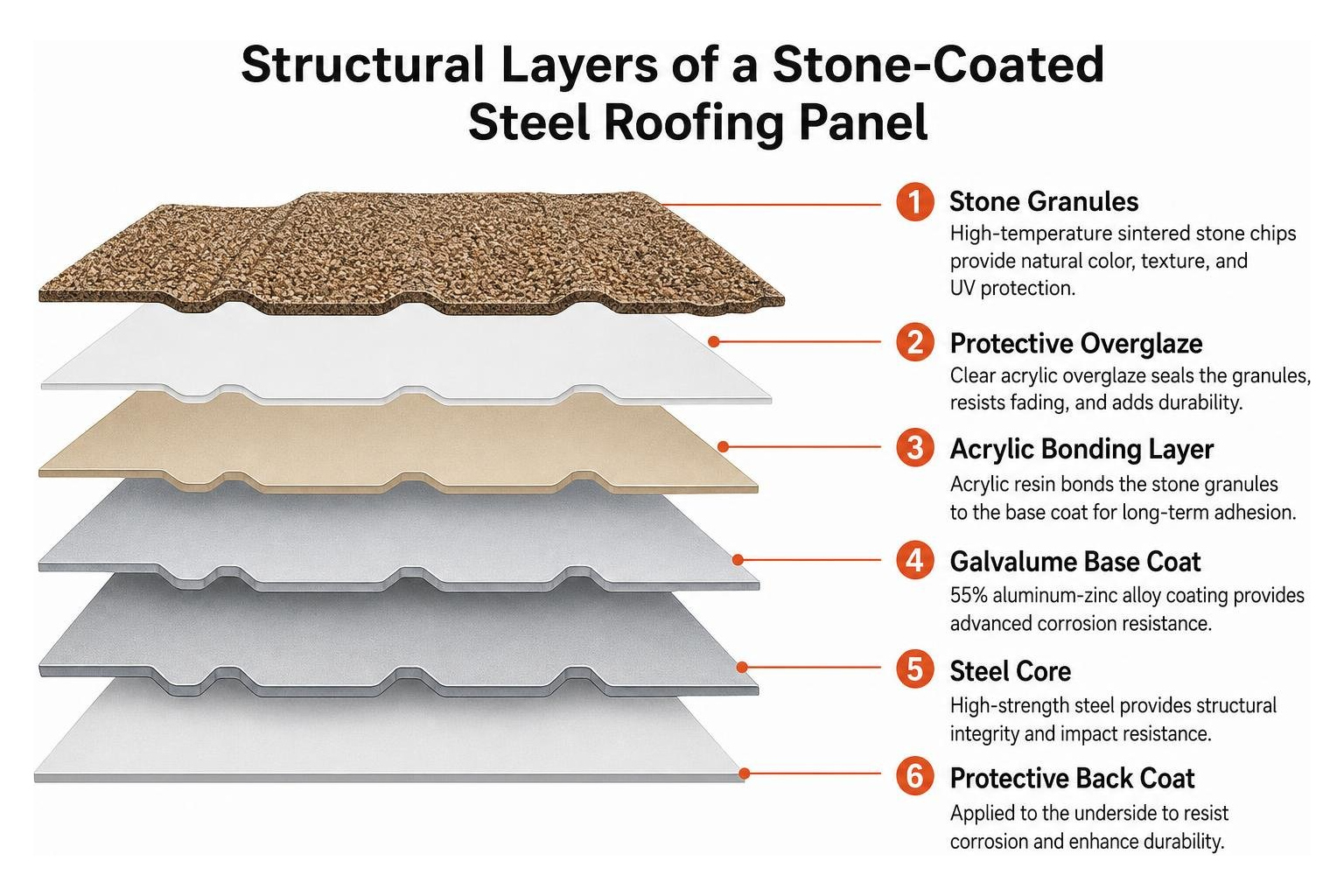
For homeowners who want the textured, multi-tonal look of Mediterranean sandstone without thousands of pounds of overhead weight, stone-coated metal roofing has become a leading alternative. These systems feature a high-grade structural Galvalume steel core protected by a 55% aluminum-zinc alloy base coat, covered with an acrylic resin bonding layer, natural stone chips, and a protective clear overglaze.
Unlike heavy masonry tiles that weigh roughly 46 to 51 kg per square meter (9.5 to 10.5 psf), stone-coated metal panels weigh approximately 5 to 7 kg per square meter (around 1.2 to 1.5 psf). This ultra-lightweight profile delivers the appearance of authentic barrel tile, shake, or flat slate while eliminating the need for structural framing retrofits. Understanding these material properties is essential when choosing the right roofing material for Florida weather, as lightweight metal systems place virtually zero unnecessary stress on aging structural timber.
High-Temperature Sintered Granules and Color Retention
The natural appearance of stone-coated steel comes from its ceramic-coated stone granule surface layer. High-quality systems use colored stone chips sintered in specialized kilns at 800°C (1,472°F). This high-heat ceramic baking process permanently fuses the pigment into the stone matrix, preventing UV fading, chalking, and color degradation over decades of intense sun exposure.
Available in diverse palettes—ranging from classic Terracotta, Sandstone Buff, and Spanish Clay blends to sleek Smoky Gray and Coffee Brown—these stone chips provide rich dimensional depth. The textured granules also serve a valuable acoustic purpose: they break up and scatter kinetic sound waves, naturally dampening the sound of heavy tropical downpours and hail so the interior remains quiet and comfortable.
Hurricane Resistance and Florida Building Code Compliance
Coastal homes in Melbourne, Palm Bay, and Merritt Island face severe tropical storm systems and sustained seasonal winds. Stone-coated metal systems are engineered specifically to resist extreme wind uplift through concealed, interlocking fastening designs.
Rather than relying purely on downward dead weight or top-down vertical nails, stone-coated metal panels lock together along their leading and trailing edges and fasten horizontally into battens or the roof deck. This horizontal fastening system distributes uplift forces evenly across the entire roof plane.
These assemblies hold strict Florida Building Code product approvals and are frequently tested to withstand design wind speeds of 130 mph or greater, meeting or exceeding performance criteria for coastal wind zones.
Direct Comparison: Sandstone Tile vs. Stone-Coated Steel Roofing
Choosing between traditional masonry sandstone tiles and modern stone-coated steel panels involves weighing structural capacity, upfront investment, wind resistance, and long-term maintenance expectations.
| Feature / Metric | Natural & Concrete Sandstone Tiles | Stone-Coated Steel Panels |
|---|---|---|
| Installed Weight | 9.5 to 10.5+ psf (Heavy) | 1.2 to 1.5 psf (Lightweight) |
| Framing Needs | Often requires engineered truss reinforcement | Installs on standard residential framing |
| Wind Uplift Design | Gravity ballast & mechanical tile clips | Interlocking horizontal fastener grid |
| Fire Rating | Class A | Class A |
| Expected Service Life | 30 to 50+ Years | 40 to 50+ Years |
| Typical Warranty | 20 to 30 Years (Tile Body) | Up to 50 Years (System Warranty) |
| Maintenance Needs | Routine inspection for cracked tiles & algae | Occasional rinse and valley clearing |
| Impact Resistance | High (Rigid / Can crack under point load) | Exceptional (UL 2218 Class 4 Impact Rated) |
For existing homes built with standard 2×4 roof trusses, opting for stone-coated metal avoids structural engineering fees and framing modifications. Furthermore, many Florida property insurance carriers offer wind mitigation premium discounts for roofs equipped with interlocking, high-wind-rated metal systems and Class 4 impact ratings, helping offset initial installation costs over time.
Installation Best Practices and Maintenance for Coastal Florida Roofs
Whether installing heavy concrete sandstone tiles or stone-coated steel, proper installation and waterproofing layers ensure long-term performance in coastal environments.
For concrete tile assemblies, tiles are placed with precise laps—typically a 3-inch head lap and a 1.27 to 1.35-inch side lap—to provide overlapping defense against wind-driven rain. High-performance installations rely on a continuous layer of self-adhering modified bitumen underlayment applied directly to the clean roof deck, creating a watertight secondary water barrier.

Key installation and maintenance practices include:
- Corrosion-Proof Fasteners: Salt spray from the Atlantic Ocean accelerates galvanic corrosion. All fasteners, tile clips, and flashing screws should be stainless steel or heavy-gauge galvanized steel coated for coastal exposure.
- Perimeter Flashing & Valley Trays: Valleys, wall side flashings, and drip edges must be properly integrated to ensure rapid water shedding during intense tropical downpours.
- Routine Professional Inspections: Debris buildup in valleys or shifting tiles can allow moisture to pond beneath the primary roof covering. Scheduling regular professional tile roof inspections ensures flashings remain sealed and any cracked units are caught early before moisture reaches the underlayment.
Frequently Asked Questions about Sandstone and Stone-Coated Roofs
How long do sandstone roof tiles and stone-coated steel roofs last in Florida?
Both roofing types offer long lifespans, typically lasting between 30 and 50 years when properly installed and maintained. Stone-coated metal systems are frequently backed by manufacturer warranties of up to 50 years. Their sintered stone granule coating resists UV degradation and salt spray corrosion, while dense concrete sandstone tiles provide long-lasting durability against coastal heat and sun exposure.
Can my existing home handle the weight of heavy sandstone tiles?
Standard homes originally built with asphalt shingle roofs are usually engineered for dead loads under 3 to 4 psf. Installing concrete sandstone tiles (which weigh 9.5 to 10.5 psf) or natural stone slabs requires a structural evaluation by a licensed engineer to determine if your rafters and load-bearing walls need reinforcement. In contrast, stone-coated steel weighs less than 1.5 psf and can be installed on standard residential framing without structural modifications.
Does a stone-coated metal roof sound noisy during heavy tropical storms?
No. Stone-coated metal roofs are noticeably quieter than bare standing-seam metal roofs. The thick, textured coating of ceramic-sintered stone granules absorbs and scatters rain impact energy. When combined with a solid plywood roof deck and an approved underlayment, the interior sound levels during heavy rain are comparable to traditional asphalt shingle or concrete tile roofs.
Conclusion
Both sandstone roof tiles and stone-coated metal systems deliver timeless architectural style, exceptional curb appeal, and robust protection against intense sun, wind, and rain. The right choice for your home depends on your building’s existing structural framing, your long-term maintenance goals, and your design preferences.
MLG Roofing provides expert residential roof inspections, replacements, and storm repair services for homeowners in Melbourne, Palm Bay, Rockledge, Viera, and surrounding Space Coast communities. If you are exploring architectural upgrades or need guidance on coastal roof systems, contact the local team today to schedule an in-person evaluation for your tile roofing in Brevard County, FL.