
Assessing Granule Loss on Asphalt Shingles in Brevard County, FL
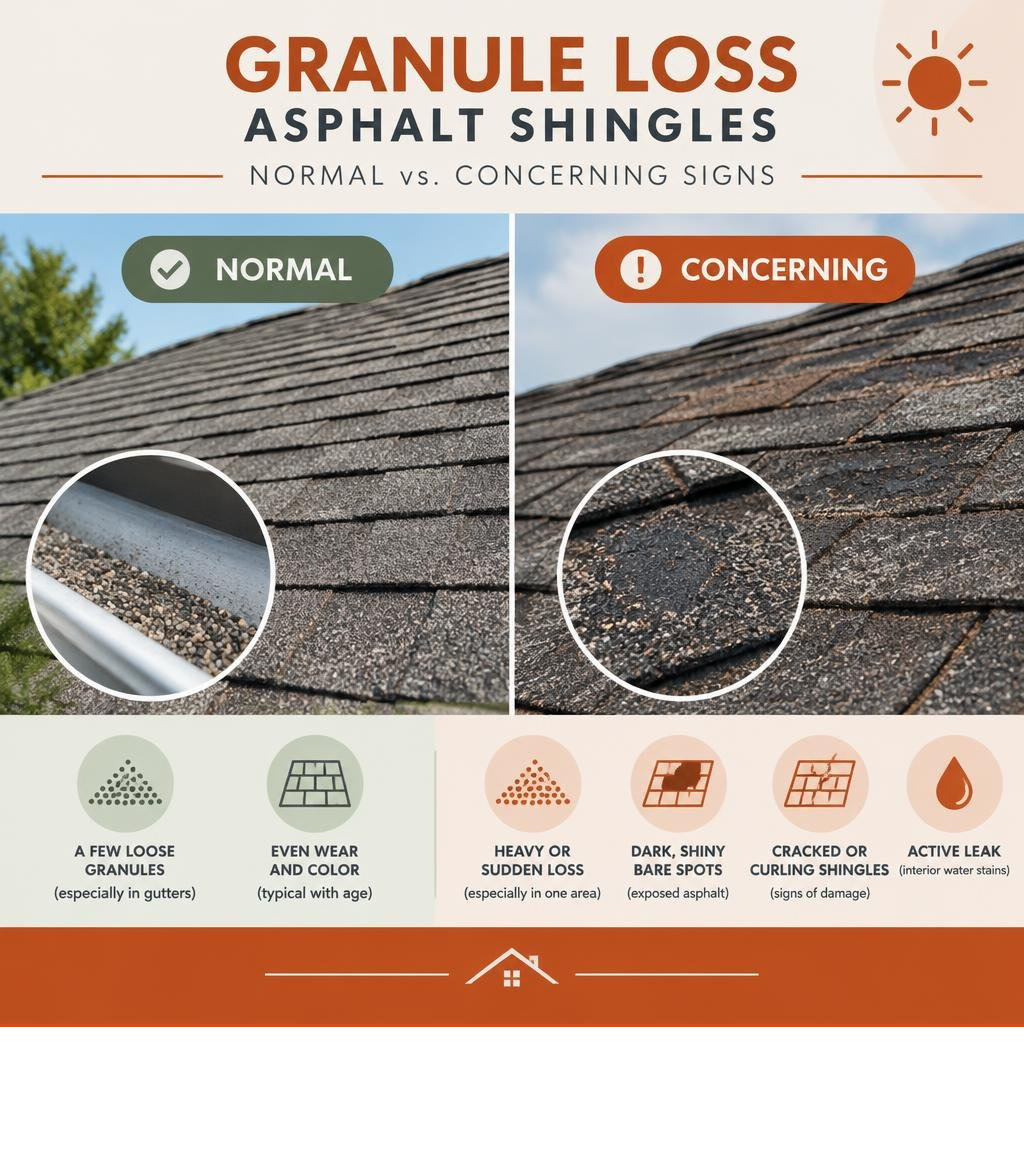
For homeowners in Brevard County, FL, a few loose granules in drainage troughs or downspout runoff are often normal, especially on a newer roof or after a storm. Granule loss on asphalt shingles needs closer attention when the loss is sudden, heavy, or uneven – particularly if you can see dark, shiny bare spots, cracked shingles, or an active leak.
Use this quick check from the ground:
- Look for sand-like grit concentrated near downspouts or in one drainage area.
- Compare roof slopes for patchy color, bald areas, curling, or missing shingles.
- Note recent hail, hurricane-force wind, falling branches, or roof traffic.
- Arrange a comprehensive inspection if exposed asphalt, interior water stains, or rapid new shedding appears.
Granules are the mineral coating on asphalt shingles. They help protect the asphalt beneath from Florida UV exposure, weather, and surface wear. On the Space Coast, strong sun, wind-driven rain, salt air, and storm debris can speed up normal aging or reveal damage that was not obvious from the ground.
Granules alone do not automatically mean a roof needs replacement. The key is the pattern: gradual, even shedding often reflects age, while concentrated loss after a storm or along a walking path may point to damage that needs professional review. Homeowners noticing exposed asphalt or heavy grit after severe weather can explore options for roof granule loss repair to ensure their roof remains properly protected.
What Causes Granule Loss Asphalt Shingles: From Normal Aging to Storm Damage
Asphalt shingles are engineered systems composed of a fiberglass mat backing, an asphalt waterproofing core, and an outer layer of ceramic-coated crushed mineral granules. These granules serve as essential armor. They reflect sunlight, provide crucial impact and fire resistance, and prevent the underlying asphalt coating from drying out and cracking under intense heat.
A significant portion of an asphalt shingle’s total weight comes from its mineral granules. Over time, physical stress, thermal movement, and environmental weathering loosen this protective layer.
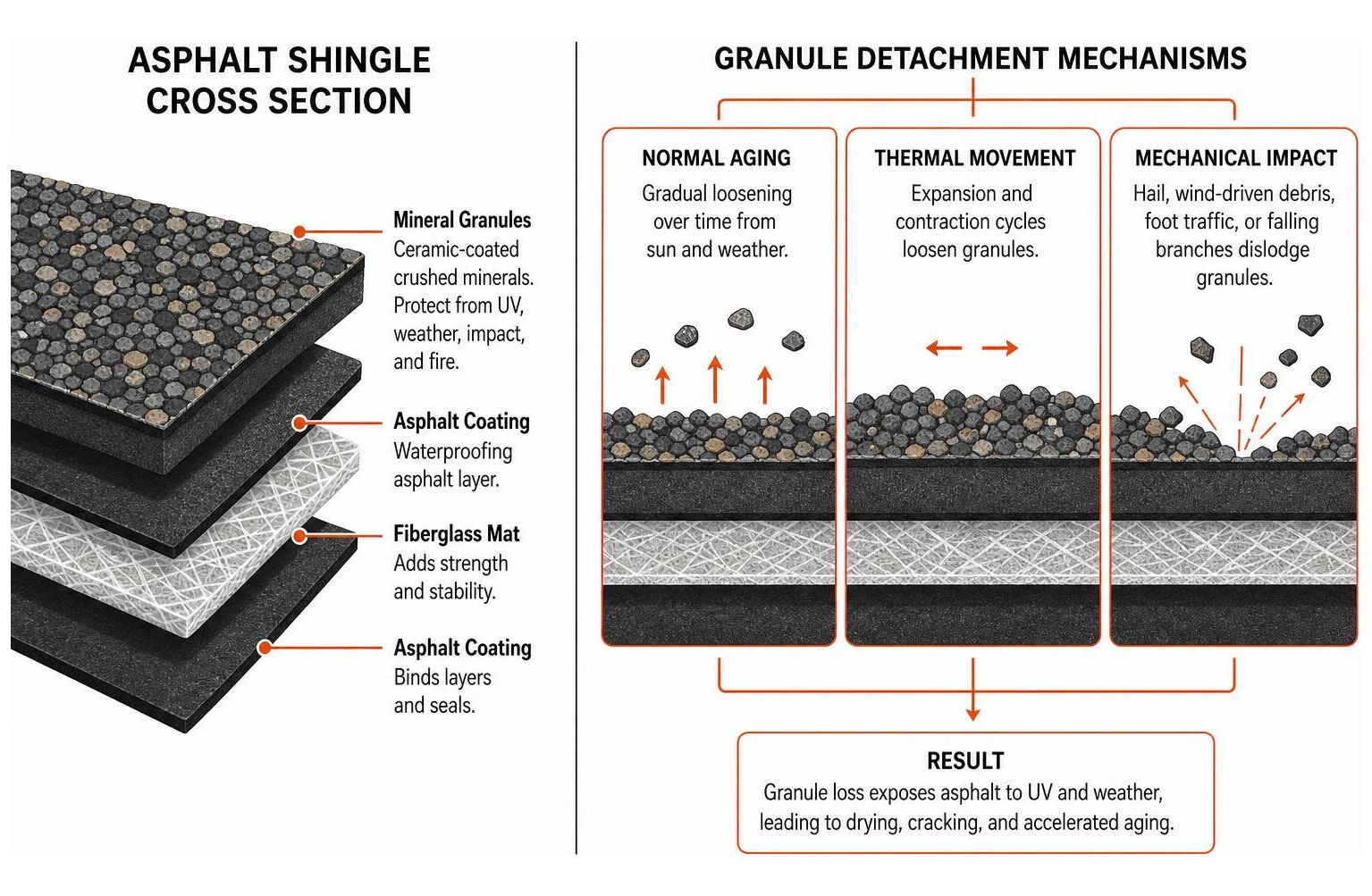
Distinguishing between routine shedding and active damage requires looking closely at how and where the granules are detaching:
| Factor | Normal Age-Related Shedding | Storm, Mechanical, or Impact Damage |
|---|---|---|
| Pattern of Loss | Uniform, consistent thinning across all roof slopes | Localized clusters, pits, sharp circular voids, or scuffed trails |
| Pace of Shedding | Slow, steady accumulation over years | Sudden surge of sediment around downspouts following a single weather event |
| Substrate Appearance | Gradual color fading with minimal base mat exposure | Exposed, shiny black asphalt core or visible fiberglass fibers |
| Drainage Sediment Volume | Trace amounts of fine, sand-like sediment | Heavy deposits of mineral sludge filling troughs and downspouts |
| Associated Symptoms | Minor edge curling, general brittle texture | Punctures, cracked shingle tabs, lifted seal strips, torn shingles |
According to scientific research on composition shingle granule loss, minor surface shedding is expected throughout a shingle’s operational life. However, when granule displacement becomes concentrated, the exposed asphalt quickly degrades, requiring prompt professional evaluation.
How Weather and Aging Cause Granule Loss Asphalt Shingles
Every roof experiences natural weathering, but coastal subtropical climates accelerate material breakdown. Solar radiation is a primary driver. Shingles exposed to direct sunlight endure continuous ultraviolet exposure, which gradually degrades the asphalt binder holding the ceramic granules in place.
Thermal cycling compounds this stress. As surface temperatures swing between daytime heat and evening cooling, shingles expand and contract. This continuous movement creates micro-fissures in the asphalt binder. Learning methods for extending roof life in hot climates requires managing heat buildup through balanced attic ventilation. Without adequate airflow, trapped attic heat bakes the shingles from underneath, causing the asphalt layer to blister and release granules prematurely.
Wind and rain also play an active role. Standard three-tab shingles generally experience faster surface wear than heavier architectural shingles. When high winds lift shingle tabs, rain washes across unprotected surfaces, eroding loose minerals and depositing them into perimeter drainage channels.
Hail Impacts, Foot Traffic, and Mechanical Abrasion
Beyond environmental aging, physical impacts cause acute, localized granule loss that compromises shingle integrity:
- Hail Impact: Hailstones strike shingles with substantial velocity, crushing the protective granules directly into the asphalt mat or dislodging them entirely. This leaves distinct, dark, soft indentations known as bruising.
- Mechanical Foot Traffic: Walking on shingles—especially during peak daytime heat when asphalt softens—shears granules away from shingle edges and creates worn walking paths.
- Overhanging Tree Limbs: Tree branches swaying against a roof act like abrasive brushes, scrubbing away granules across ridges and eaves.
- Improper Installation: Fastening errors significantly increase shingle flex. Using fewer than the recommended fasteners per shingle increases wind uplift, allowing shingles to flutter and shed significantly more granules.
When evaluating post-storm conditions, assessing storm-damaged roof shingles helps determine whether granule displacement stems from wind-driven debris or long-term mechanical wear.
How to Assess Severity: Granule Accumulation and Exposed Asphalt
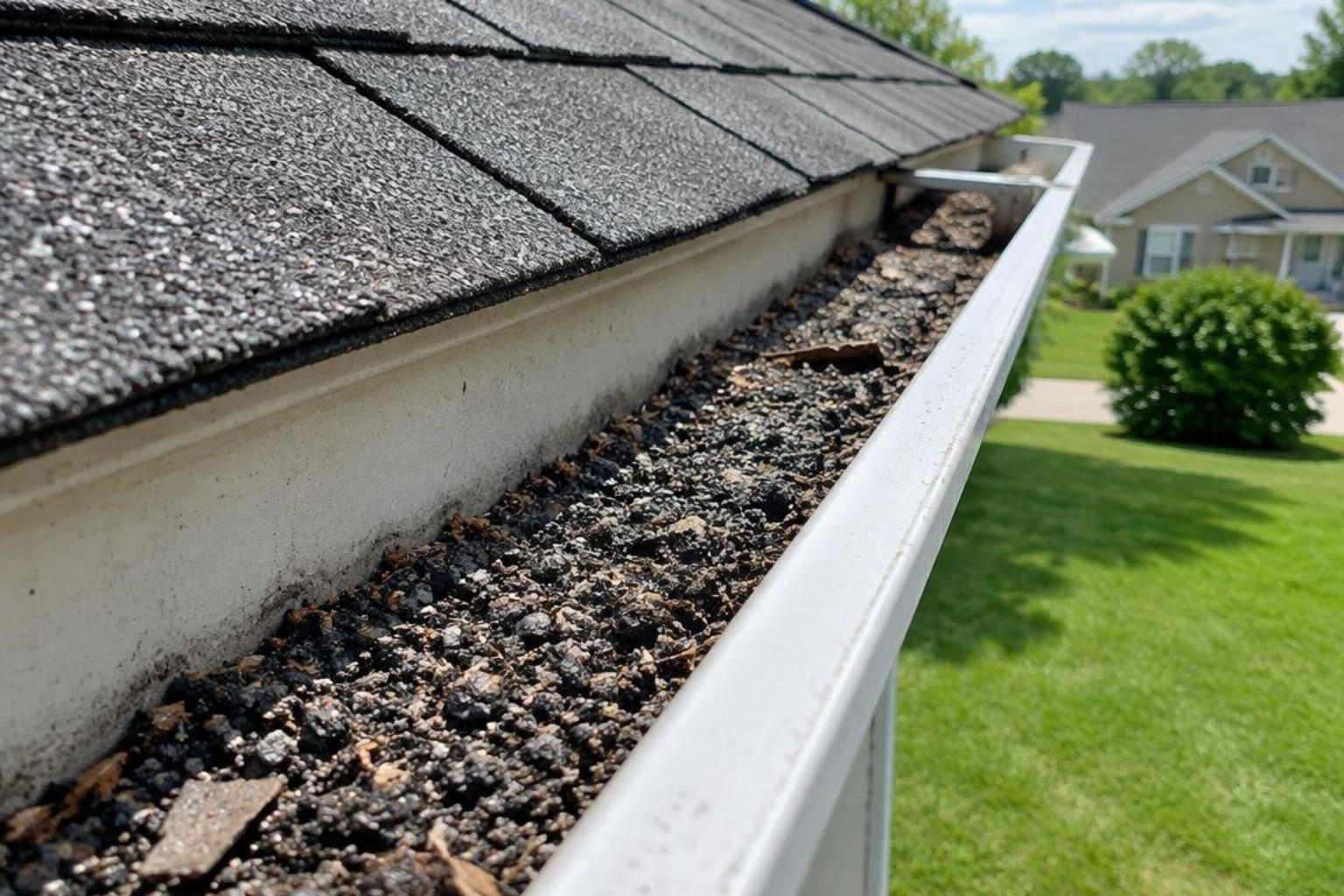
Finding loose sediment during seasonal maintenance often raises concerns, but not all grit indicates an emergency. During a safe ground-level visual inspection, look at your downspout runoff zones and check drainage channels for mineral buildup.
As long as the base mat remains protected, shingles continue shedding water effectively. However, once bare substrate or shiny black patches appear, the shingle’s primary water barrier is directly exposed to sunlight and rain.
Warning Signs of Severe Granule Loss Asphalt Shingles
Homeowners should monitor their roofs for distinct physical warning signs:
- Fiberglass Mat Exposure: A visible, fibrous yellow-white grid means the asphalt coating has eroded completely, leaving the roof vulnerable to leaks.
- Surface Blistering and Pitting: Small, crater-like pop-outs indicate trapped moisture or poor attic ventilation, leaving bare circular spots.
- Water Stagnation: Areas with poor drainage lose granules noticeably faster over time compared to well-drained slopes, accelerating surface wear.
- Dark Biological Staining: While mineral loss creates dark asphalt spots, widespread black streaks are often caused by airborne cyanobacteria. Distinguishing granule loss from algae stained roof shingles ensures you select the correct cleaning or repair approach rather than assuming the shingle has failed.
Normal Shedding vs Problematic Erosion
Understanding your roof’s age and material profile helps set realistic expectations for granule retention:
- New Roofs (0–2 Years): Brand-new shingles carry excess surface granules from manufacturing. A portion of these loose particles naturally rinse off during initial rainstorms without affecting shingle quality.
- Mid-Life Roofs (5–12 Years): Shedding should remain minimal. A sudden accumulation of drainage sludge during this period often indicates wind uplift, branch abrasion, or severe hail.
- Aging Roofs (15+ Years): The asphalt binder naturally hardens and dries out, leading to consistent, gradual mineral shedding.
Selecting durable types of shingles plays a critical role in long-term performance. Higher-rated impact-resistant shingles typically hold their granules substantially longer under harsh weather conditions. When surface degradation becomes widespread, proactive repair or replacement planning becomes necessary.
Repair vs Replacement: When to Act on Granule Deterioration
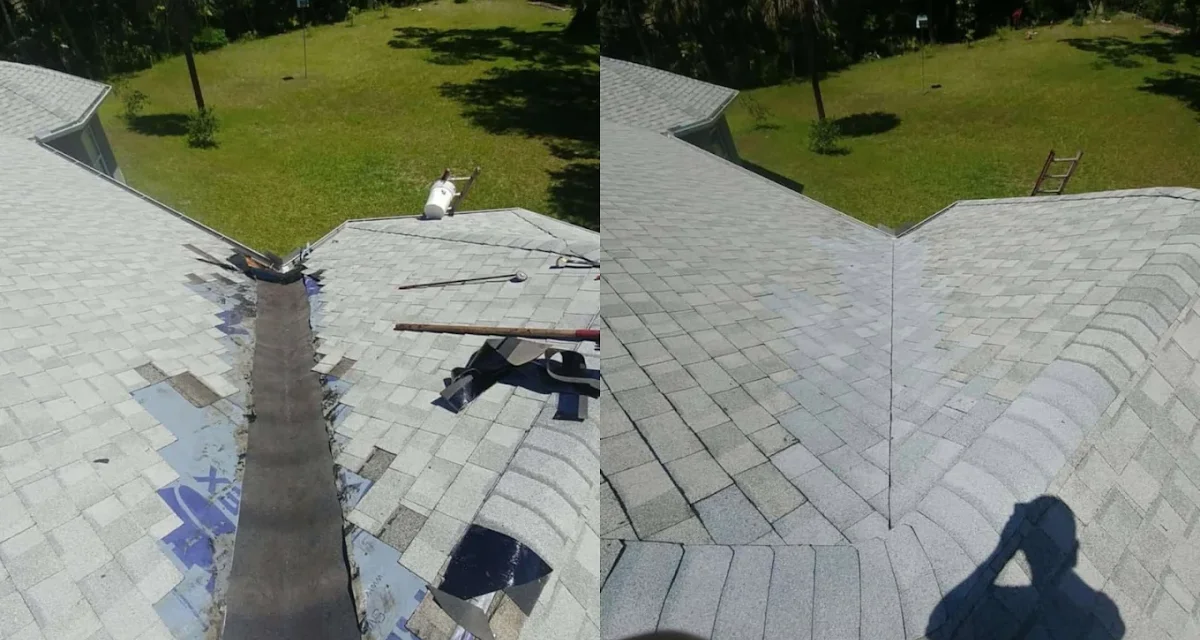
Deciding whether to spot-repair or fully replace an asphalt roof depends on the overall distribution of granule wear, the condition of the underlayment, and the age of the roofing system. Granules cannot simply be glued back onto an existing shingle in the field; instead, damaged sections must be physically replaced or properly sealed.
Reviewing standard methods to fix roof granule loss helps clarify practical restoration techniques. In-person professional evaluations in Melbourne, Palm Bay, and Rockledge provide the accurate documentation needed to make informed decisions.
Localized Repairs for Minor Shingle Wear
When granule loss is confined to isolated areas—such as scuff marks from foot traffic, wear beneath a satellite dish, or friction from a single tree branch—targeted repairs are the most practical solution.
A licensed contractor can remove damaged shingles, slide new matching shingles beneath the existing courses, and secure them using manufacturer-specified nailing patterns and asphalt adhesives. Timely shingle roof repair helps restore the water-shedding surface and reinforces perimeter flashing without disrupting the surrounding roof area.
Full Replacement Thresholds and Financial Planning
When granule loss becomes widespread across multiple slopes, the asphalt mat often turns brittle and prone to cracking under high winds. At this stage, spot repairs offer diminishing returns, as surrounding shingles lack the flexibility to hold new fasteners without tearing.
Evaluating repair versus replacement involves several variable factors:
- Total Roof Area and Slope: Multi-story structures or steep roof pitches require specialized staging and labor.
- Underlayment Condition: High-grade secondary water barriers protect roof decking even if surface granules thin out, whereas degraded underlayment requires complete tear-off.
- Permitting and Code Compliance: Local building departments evaluate replacement requirements based on overall system age, structural condition, and current wind-mitigation standards.
- Insurance and Assistance: Property owners researching financial planning options can consult guides on roof replacement costs as well as roofing assistance and grants to explore financing avenues.
| Assistance / Financing Type | Repayment Required? | Best Suited For | Key Considerations |
|---|---|---|---|
| Government / Weatherization Grants | No (Grants do not require repayment) | Low-to-moderate income households needing storm hardening | Strict income and geographic eligibility; competitive funding windows |
| PACE / Property Assessed Clean Energy | Yes (Repaid via annual property tax assessments) | Homeowners seeking wind-mitigation and energy upgrades | Financed via property tax bill; specific qualifying criteria apply |
| Home Equity Line / Bank Loans | Yes (Repaid monthly with interest) | Property owners with built-up home equity | Fixed or variable interest rates; requires credit underwriting |
| Contractor Financing Plans | Yes (Structured monthly installment payments) | Homeowners needing fast turnaround after storm events | Flexible terms; options vary based on credit approval |
Grants typically provide direct assistance without requiring repayment, while loans and financing products require ongoing repayment schedules, making it important to balance immediate budget needs against long-term costs.
Frequently Asked Questions About Granule Loss on Roofs
Is mineral sediment around downspouts a sign of immediate roof failure?
Not necessarily. Minor, fine sediment in runoff areas is common on newer roofs due to surplus manufacturing granules washing off, and on older roofs due to natural weathering. Granule accumulation becomes a serious concern when you find thick, heavy deposits accompanied by visible bare spots on the shingles or interior moisture stains in your attic.
Can you reapply loose granules to worn shingles?
No. Once ceramic granules detach from the shingle’s asphalt matrix, they cannot be successfully bonded back in place using DIY sprays or coatings. These topical fixes are purely cosmetic and do not restore the shingle’s factory-rated fire resistance, water-shedding ability, or UV protection. Shingles showing heavy granule loss should be individually replaced by a qualified roofer.
Does homeowners insurance cover shingle granule loss?
Insurance coverage depends on specific policy terms, deductibles, endorsements, roof age provisions, and the underlying cause of damage. Policies generally cover sudden, accidental physical damage resulting from named storm events, such as direct hail strikes or wind debris impact. Conversely, gradual granule shedding caused by normal age, sun wear, and lack of routine maintenance is classified as normal wear and tear and is typically excluded from coverage. If your policy includes Ordinance or Law coverage, it may help with code-required upgrades after a covered loss, but coverage decisions ultimately rest with your carrier and policy language.
Conclusion
Understanding granule loss allows homeowners across the Space Coast to address minor roofing wear before it develops into interior leaks. Whether your roof in Viera, Merritt Island, or Sebastian has weathered a recent storm or is showing signs of natural age, professional inspections ensure your home remains protected through every season.
MLG Roofing provides honest, practical roofing guidance throughout Brevard County, FL. If you notice bare patches on your shingles or heavy grit in your runoff drainage, reach out to schedule an inspection with our professional roof repair services team today.