
Why Low Maintenance Metal Roofing Outperforms Traditional Materials
Installing low maintenance metal roofing provides homeowners across Brevard County, FL and the Space Coast with long-term durability, non-porous moisture resistance, Class A fire protection, and high-wind resilience against severe tropical weather. Unlike traditional roofing materials that require frequent upkeep, engineered metal panels do not absorb moisture, harbor mold, or suffer from organic rot. Understanding how to choose the best roofing material for Florida weather allows property owners to avoid recurring repair cycles and learn how to extend your roof’s life in the Florida sun.
Traditional roofing choices like asphalt shingles often struggle under intense weather conditions. Asphalt is naturally porous, and as UV radiation beats down on the surface, the essential oils within the shingles dry out. This leads to curling, cracking, and inevitable granule loss. Once those protective granules wash off the roof surface, the underlying fiberglass mat sits exposed to rain and sun, accelerating roof failure. Wood shakes face moisture absorption and rot, while clay or concrete tiles are notoriously heavy and prone to cracking under mechanical pressure or debris impact.
In contrast, engineered metal panels carry a Class A fire rating—the highest available in building construction—and achieve a UL 2218 Class 4 impact rating for exceptional hail resistance. When severe tropical weather strikes the coast, properly engineered interlocking panels provide strong resistance to wind uplift. While asphalt shingles typically require replacement far sooner, a high-quality metal roof regularly delivers decades of service life with minimal upkeep.
| Roofing Material | Expected Lifespan | Core Upkeep Tasks | Decade Maintenance Needs | Impact & Fire Ratings |
|---|---|---|---|---|
| Standing Seam Metal | 50+ Years | Annual visual checks, clearing valley debris | Extremely Low | Class 4 Impact / Class A Fire |
| Exposed Fastener Metal | 30–40 Years | Checking fastener gaskets, clearing drainage | Low to Moderate | Class 4 Impact / Class A Fire |
| Asphalt Shingles | 15–20 Years | Replacing blown shingles, addressing granule loss | Moderate to High | Class 1–3 Impact / Class A Fire |
| Concrete / Clay Tile | 30–50 Years | Replacing cracked tiles, cleaning moss/algae | Moderate | Class 3–4 Impact / Class A Fire |
Standing Seam Systems for Low Maintenance Metal Roofing
Standing seam represents an exceptional choice for property owners seeking minimal maintenance. These systems utilize raised vertical ribs that interlock over concealed clips and fasteners. Because the fastening hardware sits securely beneath the panel surface, it remains completely protected from rain, UV radiation, and corrosive coastal air.
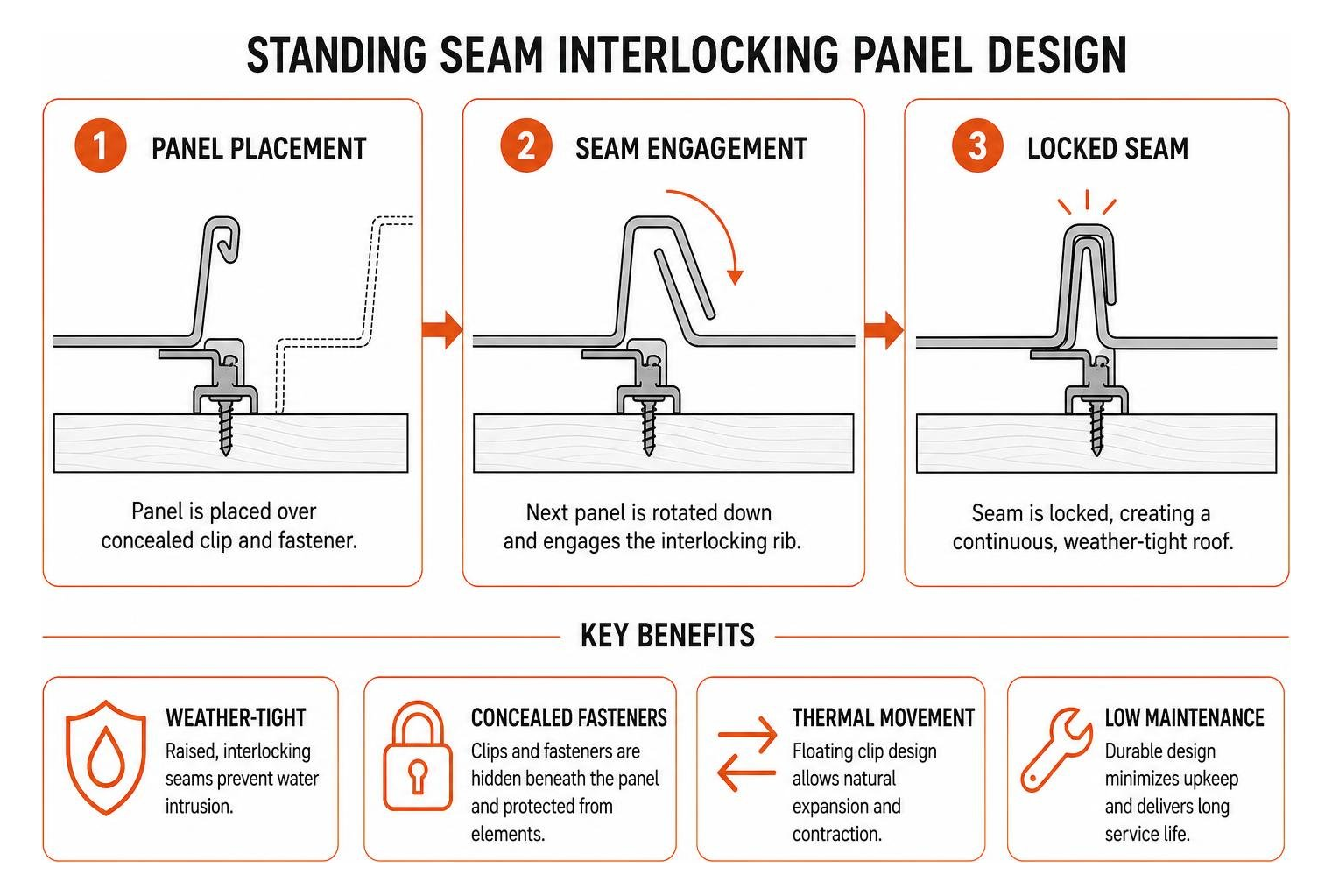
The concealed clip assembly allows the metal panels to expand and contract naturally as outdoor temperatures rise and fall throughout the day. This floating design helps prevent stress cracks, panel distortion, and loose anchor points, while raised weather-tight seams prevent water intrusion even during wind-driven rain events. Homeowners comparing different metal profiles can review hidden fastener vs exposed fastener: choosing the right metal roof for you to determine which profile fits their architectural style and long-term maintenance expectations.
Exposed Fastener Panels and Upkeep Considerations
Exposed fastener systems remain a durable, cost-effective option for many agricultural and residential applications. Unlike standing seam profiles, exposed fastener panels are secured by driving screws directly through the face of the metal into the structural decking below. Each screw relies on an integrated rubber washer to form a watertight seal around the penetration.
Over time, prolonged exposure to intense heat and ultraviolet light can cause these exposed rubber washers to dry out, crack, or lose elasticity. Additionally, daily thermal movement can occasionally back screws out slightly. As outlined in the modern metal roof guide Brevard County, exposed fastener installations benefit from regular maintenance evaluations where a professional contractor inspects the fasteners every several years to tighten hardware or replace weathered washers before minor leaks develop.
Essential Upkeep Requirements and Inspection Protocols
Although metal roofing is exceptionally resilient, routine evaluations are important to maintain system performance. Homeowners in communities like Melbourne, Palm Bay, and Rockledge should schedule a professional visual assessment once or twice annually, as well as following significant storm activity. Manufacturer maintenance guidance from Berridge similarly emphasizes routine roof checks, gutter clearing, and prompt attention to minor surface issues before they become larger repair concerns. Engaging a licensed contractor for metal roofing Brevard County assessments ensures all roof planes are evaluated safely without risking panel surface damage or personal injury.
A standard professional maintenance check evaluates:
- Drainage paths and valleys: Ensuring tree leaves, twigs, and pine needles are cleared so moisture drains freely without pooling.
- Eaves and drainage channels: Removing trapped organic matter to eliminate prolonged water contact along roof edges.
- Flashing assemblies: Checking perimeter transitions, chimney flashings, skylights, and pipe boots for seal integrity.
- Surface condition: Spotting minor coating scratches, airborne debris impacts, or mechanical wear that may warrant touch-ups.
Protective Coatings and Finishes for Low Maintenance Metal Roofing
The longevity and easy maintenance of metal roofing rely heavily on factory-applied protective finishes. Advanced architectural coatings act as a durable barrier against the elements, protecting the underlying steel or aluminum substrate.
Commonly specified finishes include:
- PVDF (polyvinylidene fluoride): High-performance resin finishes provide industry-leading chalk, fade, and chemical resistance, maintaining color stability and resisting UV degradation across decades of exposure.
- SMP (siliconized modified polyester): A tough, scratch-resistant coating commonly used on residential and post-frame buildings to deliver durable finish protection.
- Multi-layer metallic barrier systems: Advanced zinc-aluminum alloy substrates paired with robust exterior coatings deliver enhanced corrosion protection in harsh coastal atmospheres without requiring continuous washdowns.
Energy Efficiency and Reflective Performance
Metal roofs play a major role in lowering residential cooling loads. The Whole Building Design Guide overview of cool metal roofing explains how reflective metal roofing systems use finishes and pigments to improve solar reflectance and thermal performance. Cool metal roofing products utilize specialized reflective pigments that achieve high Solar Reflectance Index values and elevated infrared emittance ratings. Rather than absorbing heat and transferring it into the attic space, reflective metal surfaces reflect a substantial portion of solar radiation back into the atmosphere.
By reducing solar heat gain, cool metal roofs can noticeably reduce building cooling energy consumption compared to traditional dark asphalt shingles. Homeowners in Viera and Merritt Island can review why energy efficient roofing is a smart investment for Florida homeowners and explore energy efficient roofing options for a sustainable home in Melbourne to maximize utility savings alongside low maintenance benefits.
Environmental Challenges and Coastal Considerations

Coastal environments present unique challenges for building materials. Salt spray carried by ocean breezes contains airborne chlorides that can accelerate oxidation on vulnerable metals. High relative humidity, persistent tropical downpours, and intense solar exposure further test exterior assemblies.
When evaluating are metal roofs good in Florida?, the answer is favorable when the system is properly tailored to the environment. Thick-gauge aluminum or marine-grade coated steel sheets offer exceptional corrosion resistance in coastal zones like Cocoa Beach, Satellite Beach, and Indian Harbour Beach. Coastal-grade product information from U.S. Steel reinforces the importance of roofing materials designed for harsh salt-air exposure and long-term weather resistance. Furthermore, maintaining clearance between overhanging tree limbs and the roof surface prevents branches from scratching protective finishes during high winds.
Preventing Corrosion and Mechanical Surface Damage
Preserving the protective finish of a metal roof requires avoiding common maintenance errors. Tradespeople should ensure incompatible metals are not placed together on the roof deck. When copper or bare carbon steel comes into direct contact with aluminum or aluminum-zinc alloy coated steel in the presence of moisture, galvanic reaction occurs, compromising the metals at the contact point. Exploring the top benefits of choosing metal roofing for your home in Melbourne FL highlights how adhering to proper material compatibility protects property value.
When cleaning becomes necessary to remove pollen or surface dust, abrasive scrubbing tools and high-pressure washing equipment must be avoided. A gentle low-pressure rinse using mild, non-abrasive detergents safely cleans the surface without damaging protective topcoats.
Professional Installation and Long-Term Reliability
The long-term upkeep requirements of a metal roof depend directly on the quality of the initial installation. Proper assembly requires precise clip spacing to satisfy local wind uplift requirements, appropriate underlayment selection, and expertly crafted perimeter flashings around eaves, valleys, and ridges. Homeowners can consult the definitive guide to finding a reliable standing seam roofing contractor to verify installer credentials, local code compliance, and manufacturer guidelines.
Lifetime Cost and Warranty Protection
While metal roofing carries a higher initial installation investment than basic asphalt shingles, its lifecycle cost is often favorable over time. Asphalt roofs generally require ongoing repairs, periodic granule loss management, and full replacement on a shorter cycle. Over several decades, an asphalt roof may need to be replaced multiple times, creating recurring labor and material expenses.
Metal roofing products typically provide comprehensive manufacturer warranty packages:
- Finish Warranties: Covering paint peeling, cracking, or excessive chalking for several decades.
- Substrate Warranties: Protecting the structural steel or aluminum against corrosion perforation over extended terms.
- Workmanship Warranties: Provided by qualified local contractors to back installation precision.
Many standing seam warranties are transferable to subsequent property buyers, adding potential resale appeal. To evaluate regional pricing variables, homeowners can review metal roofing cost Florida: compare prices & save.
When planning a roof replacement, homeowners often evaluate various financial paths to manage upfront expenses.
| Program Category | Core Structure | Repayment Required? | Best Suited For |
|---|---|---|---|
| Government Grants | Needs-based public funding | No repayment required (Subject to qualifying guidelines) | Low-income households or specific disaster-recovery applicants |
| Home Equity Financing | Secured loan against property equity | Yes, monthly repayment with interest | Homeowners with established equity seeking lower interest rates |
| Contractor Financing Plans | Unsecured fixed-rate financing | Yes, structured monthly payment plans | Property owners seeking immediate installation with flexible terms |
Grants typically do not require repayment while loans and private financing options involve structured repayment schedules, making it easier for homeowners to choose the right balance between cash flow and long-term investment.
Frequently Asked Questions About Metal Roof Upkeep
How often does a metal roof need professional maintenance?
A metal roof generally benefits from a professional visual assessment once or twice a year, as well as an inspection following severe tropical storms or hurricanes. Routine tasks involve clearing leaves from valleys, checking that drainage channels flow freely, and confirming pipe boots and flashing seals remain tight. Homeowners looking to address storm impacts can connect with the best metal roof repair near me: hire honest and highly rated contractors to assess system conditions accurately.
Can you walk on a metal roof to clean or inspect it?
While metal panels are structurally strong, walking on a metal roof presents safety hazards and can cause cosmetic or structural damage if done incorrectly. Certain profiles require stepping only on supported deck areas or panel flats to avoid bending ribs. Footwear must have soft, clean rubber soles to avoid scratching factory finishes. Homeowners should avoid DIY roof access and rely on licensed, insured roofing professionals for thorough assessments.
Do coastal environments require special metal roofing finishes?
Yes. Properties located near saltwater bodies in Brevard County benefit from materials engineered to resist salt spray and high humidity. Thick aluminum substrates or marine-grade coated steel systems equipped with high-performance resin coatings or multi-layer barrier shields help prevent salt-induced corrosion and minimize ongoing upkeep.
Conclusion
Low maintenance metal roofing delivers exceptional durability, severe-weather wind resistance, and energy savings for homeowners across the Space Coast. By eliminating common asphalt problems like shingle loss, water absorption, and UV decay, an engineered metal roof protects your home for decades with minimal upkeep requirements.
MLG Roofing provides expert inspections, customized estimates, and precision installation for residential properties across Cocoa, Sebastian, Titusville, and neighboring communities. Contact MLG Roofing today to explore professional residential metal roofing services or request assistance with emergency roof repair services.