
What Homeowners in Brevard County, FL Need to Know About Roof Repair and Maintenance

Roof repair and maintenance in Brevard County, FL looks different from almost anywhere else in the country. Between hurricane season, year-round UV exposure, salt air from the Atlantic coast, and the moisture that builds up in Florida attics, roofs here take a beating that most homeowners don’t fully notice until something goes wrong inside the house.
The good news: most roof problems start small. A failing pipe boot, a patch of lifted shingles, or a gap in flashing around a chimney can be caught early — and fixed at a fraction of what it costs once water reaches your decking or ceiling.
Here is a quick overview of what roof repair and maintenance involves, so you can quickly find what applies to your situation:
| Topic | Quick Answer |
|---|---|
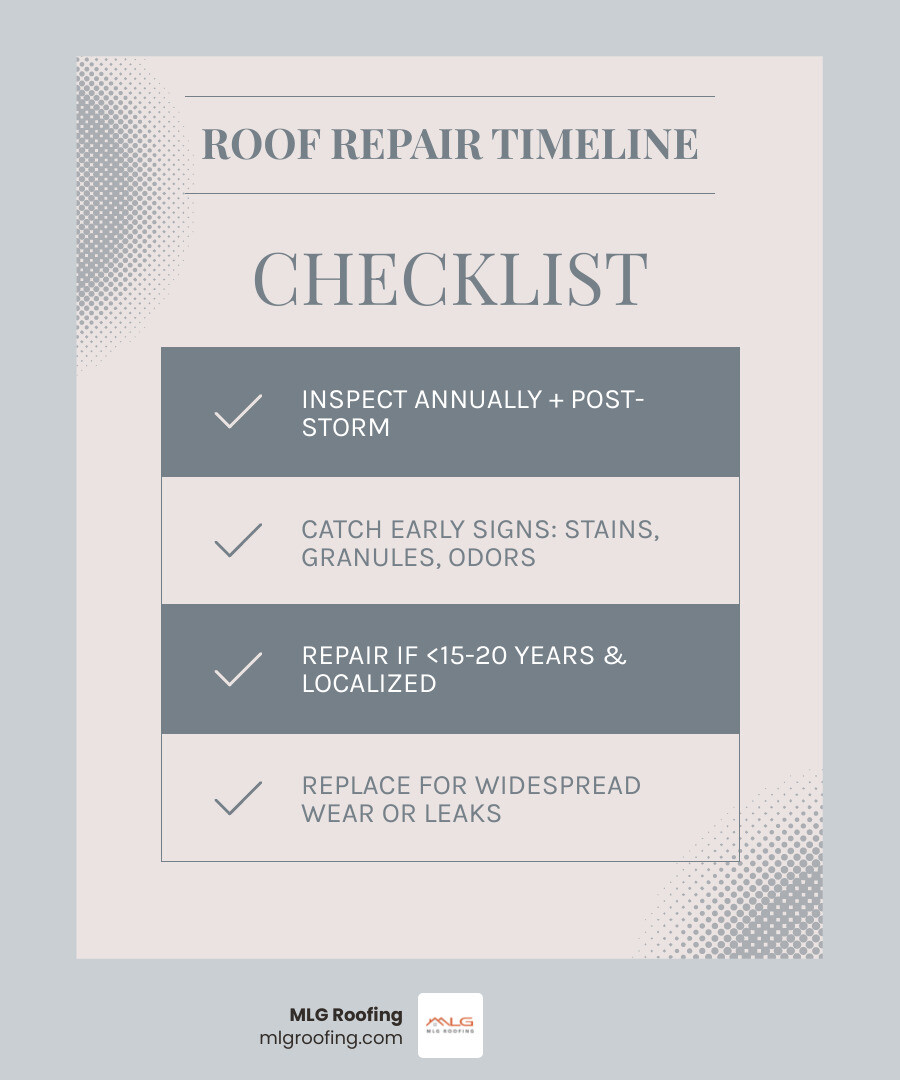
| Common warning signs | Water stains, granules in downspouts, lifted or missing shingles, musty attic odors |
| How often to inspect | At least once a year, plus after any named storm or high-wind event |
| Repair vs. replace | Repair if damage is localized and the roof is under 15–20 years old; replace for widespread wear or repeated leaks |
| Typical repair costs (Brevard County, FL) | Varies widely; full replacements generally run $12,000–$30,000+ depending on size, materials, and complexity |
| Who should do the work | A licensed Florida roofing contractor — not a door-to-door storm chaser or unlicensed handyman |
The sections below cover each of these areas in detail, from reading the early warning signs to understanding what a professional inspection actually includes, and how to make a clear-headed repair-or-replace decision.
Signs Your Roof Needs Roof Repair and Maintenance in Brevard County, FL

Roofs rarely fail all at once. Most give warnings first. The trick is knowing what those warnings look like before a small repair turns into interior water damage. Homeowners who need more detail on service options can review roof repair services.
The most common warning signs homeowners notice first
The first signs are usually the ones visible from inside the home or from the ground:
- Brown ceiling stains or wall discoloration after rain
- Drips around light fixtures or near exterior walls
- Musty smells in the attic or upper rooms
- Missing shingles after wind events
- Lifted shingle tabs or edges that no longer sit flat
- Exposed nails
- Dark streaks or algae staining
- Roofing debris on the ground after a storm
In Brevard County, FL, wind damage is especially common. A roof can lose only a few shingles and still allow rain to work its way under the surrounding courses. That is why a roof that “only lost one piece” is often not a one-piece problem.
Subtle signs of roof damage that often get missed
Some of the most important warnings are easy to overlook:
- Granules collecting in downspouts or at the ends of gutters
- Cracked or sun-dried pipe boots around plumbing penetrations
- Worn valleys where water concentrates during heavy rain
- Soffit or fascia staining near roof edges
- Damp attic insulation
- Rusted fasteners or metal components
- Uneven roof planes that may hint at decking deterioration
Granule loss matters because asphalt shingles depend on those granules for UV protection. If a homeowner starts seeing a heavy amount washing out, the roof may be aging faster than it looks from the driveway. For more on leak tracing, see roof leak detection and repair in Melbourne, FL.
Why flashing, penetrations, and transitions fail before field shingles
One of the most useful roofing facts for homeowners is this: leaks often begin at transitions, not in the middle of an open roof field. Research commonly cites that about 90% of roof leaks start where the roof changes direction or where something penetrates it.
That includes:
- Chimney flashing
- Wall-to-roof intersections
- Skylights
- Vent pipes
- Valleys
- Ridge transitions
These areas move more, hold more water, and rely heavily on proper flashing details and sealants. In Florida heat, sealants dry out and metal expands and contracts. Add wind-driven rain, and small gaps become leak points. That is why a proper diagnosis matters more than a quick patch. For an outside perspective on inspection-based leak diagnosis, see Roof leak diagnosis and long-term fixes.
Florida Weather Factors That Accelerate Roof Wear in Brevard County, FL

A roof in Melbourne, FL or Palm Bay, FL does not age the same way as a roof inland. Coastal Central Florida adds several stress factors at once: wind, heat, humidity, salt air, and long storm seasons.
How hurricanes, tropical storms, and wind-driven rain affect roof repair and maintenance
The biggest weather threat in Brevard County, FL is not just rainfall. It is the combination of uplift and water intrusion.
During tropical storms and hurricanes, roof systems may experience:
- Lifted shingles from wind uplift
- Broken adhesive seals
- Damaged ridge caps
- Flying debris impacts
- Rain forced sideways under exposed edges
- Fastener loosening on metal components
Even when a roof does not leak immediately, a storm can shorten its service life by breaking seals and weakening critical details. After any named storm or major wind event, a professional inspection is smart. If active leaking occurs, homeowners should prioritize emergency roof repair and stabilization.
Seasonal risks in Central Florida
Roofing problems vary significantly by climate, and Brevard County homes face a very different set of conditions than colder or inland regions.
Here, the usual troublemakers are:
- Intense UV exposure that dries and ages shingles
- Salt air that accelerates corrosion on exposed metal parts
- Humidity that encourages algae staining
- Long rainy periods that test flashing and underlayment
- Hurricane season with repeated wind events
Florida homes generally do not battle ice dams the way northern states do, and they do not see the same moss pressure as very wet Pacific climates. But they do deal with faster sun aging, moisture intrusion, and coastal wear. It is less “roof buried under snow” and more “roof slowly cooked, soaked, and wind-tested.”
The role of attic ventilation, moisture control, and heat buildup
Ventilation is one of the least glamorous parts of roofing, which is probably why it gets ignored until trouble shows up. But it matters.
A poorly ventilated attic can contribute to:
- Excessive attic heat
- Premature shingle aging
- Moisture buildup on decking
- Damp insulation
- Higher risk of hidden wood deterioration
Proper intake and exhaust airflow helps move heat and moisture out of the attic space. On Florida homes, that can reduce stress on the roof system and help prevent condensation-related issues. Homeowners can learn more in how to extend your roof’s life in the Florida sun.
Professional Roof Inspections and Preventive Roof Repair and Maintenance
Preventive maintenance is usually far less expensive than major repairs caused by long-term water intrusion or storm damage. Catching a failed vent boot is easier than replacing wet decking later.
How often homeowners should schedule inspections in Brevard County, FL
For most homes in Brevard County, FL, a professional roof inspection should happen:
- At least once per year
- After hurricanes, tropical storms, or major wind events
- Before listing a home for sale
- When the roof is older and nearing the end of expected service life
- When there are insurability concerns or wind mitigation questions
Asphalt shingle roofs commonly last about 15 to 30 years depending on material quality, installation, ventilation, and weather exposure. In coastal Florida, service life can be shorter if maintenance is neglected. Homeowners can read more about timing in why regular roof inspections are vital for Melbourne’s home safety.
What a professional roof inspection should include
A solid roof inspection is more than a glance from the yard. It should typically include:
- Review of shingle or metal roof condition
- Flashing inspection at walls, chimneys, vents, and valleys
- Check for lifted tabs, missing pieces, and exposed fasteners
- Inspection of penetrations such as pipe boots
- Attic review for stains, damp insulation, and daylight
- Assessment for soft decking or structural concerns
- Photo documentation
- Clear repair recommendations
The best inspections do not just point at symptoms. They trace the likely source of water entry. Since leaks can travel along decking and rafters before dripping inside, the stain on the ceiling is often not directly below the failure. For a deeper look, see the ultimate guide to roof inspections in Brevard County.
A practical roof maintenance checklist for Florida homes
A Florida roof maintenance plan does not need to be complicated, but it does need to be consistent.
Seasonal checklist:
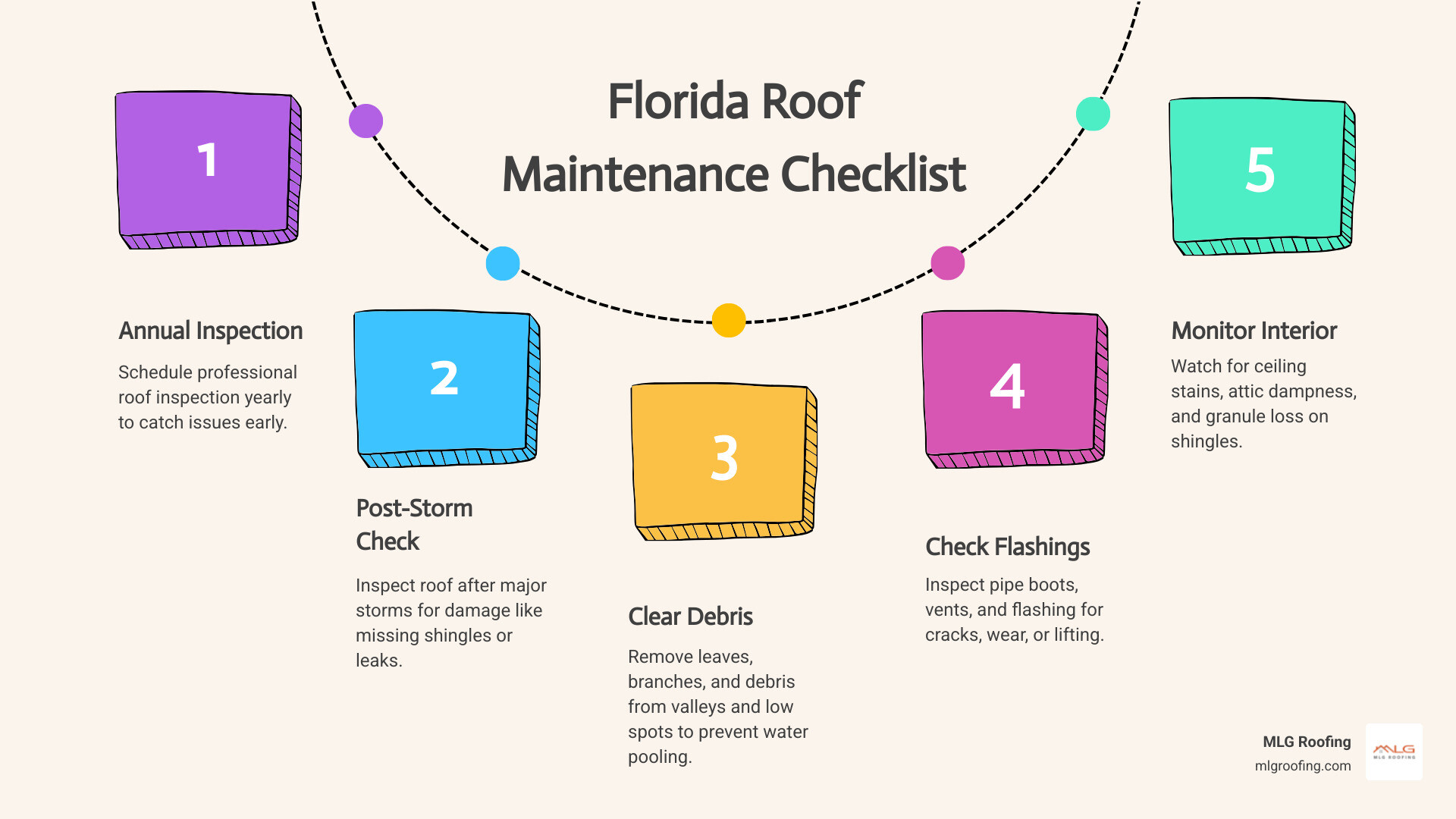
- Schedule an annual professional inspection
- Schedule an additional inspection after major storms
- Check for loose, lifted, or missing shingles
- Inspect pipe boots and flashing details
- Look for granule loss and algae staining
- Clear roof debris from valleys and low spots
- Watch for interior ceiling staining or attic dampness
- Monitor for rust or corrosion on exposed metal accessories
- Review attic ventilation performance
- Address small repairs promptly instead of “watching them for six months”
Homeowners interested in preventive care can also review the benefits of routine roof maintenance in Brevard County.
Repair or Replace? Making the Right Roofing Decision in Brevard County, FL
This is where many homeowners get stuck. A leak does not automatically mean replacement, but repeated repairs on an exhausted roof can cost more in the long run.
| Condition | Repair Usually Makes Sense | Replacement Usually Makes Sense |
|---|---|---|
| Roof age | Under 15-20 years in many cases | Near or beyond expected service life |
| Damage area | Localized to one section or one slope | Widespread across multiple slopes |
| Leak history | First known issue, source clearly identified | Repeated leaks in different areas |
| Decking condition | Deck appears sound | Soft, rotted, or damaged decking present |
| Material condition | Shingles still flexible and matchable | Brittle shingles, exposed underlayment, poor matchability |
| Code and system needs | Limited work can restore performance | Full system upgrade is more practical |
When a repair is the better option
Repair is often the right choice when:
- Damage is localized
- The roof is still within a reasonable age range
- The leak source is clearly identified
- The surrounding materials remain serviceable
- The repair can restore proper water shedding
Examples include:
- Replacing a small wind-damaged section
- Repairing flashing at a chimney or wall
- Replacing cracked pipe boots
- Correcting a limited ridge cap failure
- Addressing one confirmed leak path
For homeowners weighing both paths, roof repair vs. roof replacement in Melbourne explains the decision in more detail.
When replacement is the more practical long-term choice
Replacement is usually more practical when the roof has:
- Widespread granule loss
- Brittle or curling shingles
- Multiple active leak points
- Exposed or failing underlayment
- Significant decking deterioration
- Repeated storm-related failures
- Age near the end of expected service life
Most asphalt shingle roofs have a lifespan around 20 to 25 years, though some perform longer and some shorter depending on Florida conditions. If repairs are stacking up across several years, replacement often becomes the more economical decision.
Florida-specific replacement components and code considerations in 2026
In 2026, homeowners in Brevard County, FL should expect a full roof replacement to involve more than just new shingles. A compliant residential reroof may include:
- Decking inspection and replacement where needed
- Deck renailing where required
- Underlayment and secondary water resistance components
- Drip edge
- Starter strips
- New shingles or metal panels
- Ridge components and ventilation accessories
- New pipe flashings and other penetrations
- Permit handling and code compliance review
Those details matter in Florida because wind resistance depends on the whole system, not just the visible surface. A roof is only as good as its weakest flashing, fastener pattern, or underlayment transition.
Roof Repair Costs, Storm Claims, and Hiring the Right Contractor
What roof repair and maintenance typically cost in Brevard County, FL
Roofing prices vary a lot. In Brevard County, FL, actual cost depends on roof size, pitch, height, access, material type, extent of damage, and whether hidden decking issues are discovered.
Typical examples:
- Minor repair visits may run a few hundred dollars
- Flashing or pipe boot repairs often fall in the several-hundred-dollar range
- More extensive repairs may reach into the low thousands
- Emergency tarping adds stabilization cost
- Full residential roof replacements in 2026 commonly range from $12,000 to $30,000+
National research often cites average roof repairs around $300 to $1,000 and replacements around $5,000 to $10,000, but those figures are broad and often lower than real contractor pricing for many homes in coastal Florida. Local conditions and code requirements matter more than national averages.
For local estimate guidance, see affordable roof repair estimates in Viera, FL and homeowner roof repair cost guidance.
Storm damage documentation and insurance claim considerations
When a storm damages a roof, documentation matters. Homeowners should have a licensed roofing contractor document:
- Date and cause of visible damage
- Damaged slopes and roof areas
- Missing or creased shingles
- Ridge or flashing damage
- Interior leak evidence
- Moisture intrusion findings
- Code-related repair items when applicable
Insurance typically covers sudden, covered perils such as wind or storm damage, not ordinary wear and tear. That distinction matters. A roof that was already worn out before the storm may not be treated the same as a roof that was functioning and then suffered a specific wind event.
A professional inspection may also help identify conditions that affect insurability or wind mitigation eligibility. For post-storm guidance, see expert tips for identifying roof damage after a storm in Melbourne and storm damage roof assessment resources.
Why homeowners should avoid DIY roof repairs and common roofing scams
Roof repair is not a good weekend experiment. National safety data consistently shows falls remain one of the biggest hazards in construction, and roofing is one of the highest-risk trades. The danger is real, and the technical mistakes can be expensive.
DIY roof repair can lead to:
- Fall injuries
- Voided warranties
- Incorrect material use
- Hidden leak paths left unresolved
- Accidental damage to surrounding roof areas
- Short-term patches that fail in the next storm
Homeowners should also be careful after storms. Common red flags include:
- Door-to-door sales right after a weather event
- Pressure to sign immediately
- Claims that insurance will “pay for everything” without inspection
- Very low bids with vague scopes
- Requests for large upfront cash payments
- No proof of Florida license or insurance
A legitimate contractor should provide a written scope, explain repair versus replacement clearly, carry insurance, and understand local code and permitting. For a general repair overview, see what homeowners should know about roof repairs.
Frequently Asked Questions About Roof Repair and Maintenance
How long do most roof repairs take?
Many standard residential repairs can be completed in a single day once the scope is confirmed and weather allows. Smaller repairs may take only a few hours. More involved repairs can take longer if materials must be matched, decking must dry out, or a permit is needed for larger work. Emergency stabilization, such as tarping, is typically much faster than permanent repair.
Can one section of a roof be repaired without replacing the whole roof?
Yes, in many cases. Partial repair is common when damage is limited to one area and the rest of the roof system remains in good condition. The contractor will still need to evaluate material condition, color match, remaining lifespan, and whether the surrounding system can support a durable repair. On older roofs, a repair may be technically possible but not always the best value.
What should homeowners look for when hiring a licensed roofing contractor?
Homeowners in Brevard County, FL should look for:
- A valid Florida roofing license
- General liability insurance
- Workers’ compensation coverage where applicable
- Residential roofing experience in coastal Central Florida
- Clear written scope of work
- Warranty terms in writing
- Knowledge of permitting and code compliance
- Local project experience in places like Melbourne, FL, Palm Bay, FL, Rockledge, FL, Viera, FL, Merritt Island, FL, Cocoa, FL, and Sebastian, FL
It also helps to choose a contractor who can handle both repairs and full replacements, because the advice is usually more balanced when the company is equipped for either path.
Conclusion
Roof problems in Brevard County, FL usually start quietly. A little granule loss, a tired pipe boot, a flashing gap, a few lifted shingles after a storm. Left alone, those small issues can grow into wet insulation, damaged decking, interior staining, and bigger invoices nobody enjoys opening.
That is why regular inspections, prompt repairs, and honest repair-versus-replacement guidance matter. For homeowners in Melbourne, FL, Palm Bay, FL, West Melbourne, FL, Rockledge, FL, Viera, FL, Merritt Island, FL, Cocoa, FL, and Sebastian, FL, MLG Roofing provides licensed and insured residential roofing help focused on Florida conditions, storm exposure, and long-term roof performance.
To learn more or schedule service, visit roof repair services. If the roof is actively leaking after a storm, homeowners can also review our emergency roof repair services.