
Roofing Assistance in Brevard County, FL: How to Get Help
Roofing assistance may be available to Florida homeowners through several federal, state, and local programs, many of which are designed to help cover the cost of roof repairs or replacement for eligible properties.
Here are the primary options to consider:
- My Safe Florida Home — Matching grants for hurricane-resistant roof upgrades, subject to program funding and eligibility guidelines
- USDA Section 504 — Grants for eligible elderly homeowners in designated rural areas, or low-interest loans for very-low-income households
- FEMA Disaster Assistance — Available following a declared disaster to cover basic, emergency repairs
- SHIP Program — State-funded housing initiatives distributed through county and city offices, including within Brevard County
- CDBG Programs — Federally funded community development grants administered locally for qualifying income levels
- PACE Financing — A financing option repaid through your property tax bill, subject to local availability and equity requirements
Most programs require verification of income, homeownership, and primary occupancy. Some are specifically limited to seniors, rural residents, or disaster-affected areas.
Living on Florida’s Space Coast means your roof faces environmental pressures from seasonal winds, salt air, and intense UV exposure. When a roof is compromised, secondary damage can progress quickly. For many Brevard County homeowners, managing the cost of repair or replacement is a primary concern.
Fortunately, multiple funding options exist. Between state hardening programs, federal repair grants, and local housing initiatives, financial help may be available depending on your income, age, location, and specific situation. This guide outlines these programs to help you understand what you may qualify for and how to begin the process.
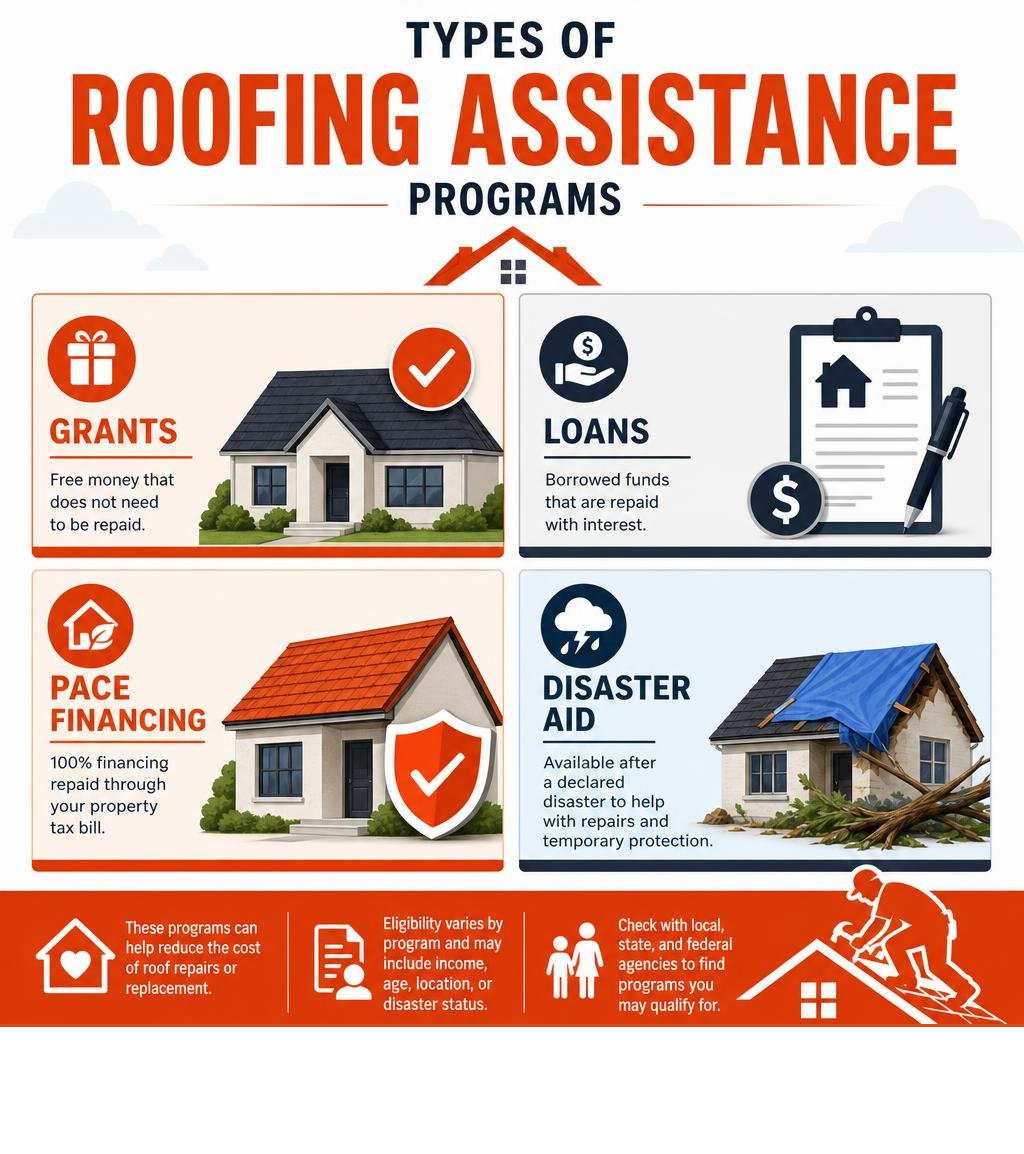
When looking for brevard county roofing companies, homeowners often seek a roof replacement program that offers financial support. Understanding these options can help you make an informed decision for your property.
Federal Programs Providing Financial Roofing Assistance

When local resources are limited, federal home repair programs often assist lower-income homeowners in restoring the structural integrity of their properties. An active leak or compromised roof structure can lead to safety hazards and structural issues if left unaddressed.
Federal agencies like the United States Department of Agriculture (USDA) and the Department of Housing and Urban Development (HUD) fund programs designed to address these critical hazards. On the Space Coast, where storm damage is a frequent concern, understanding these federal pathways can help prevent long-term structural issues. Homeowners can read the Brevard County Storm Damage Repair and Identification Guide to learn how to spot early signs of compromise before applying for federal aid.
USDA Section 504 Home Repair Loans and Grants
The USDA Section 504 program is a resource for very-low-income homeowners who need roofing assistance. While many associate the USDA primarily with farming, the agency provides housing support to residents living in designated rural areas. Within Brevard County, several less-dense communities may qualify under the USDA’s geographic definitions.
For elderly homeowners who are at least 62 years old, the USDA provides Single Family Housing Repair Grants of up to $10,000 to address health and safety hazards, which can include repairing or replacing a severely damaged roof.
For homeowners who need more than $10,000 to cover a full roof replacement, the program offers low-interest loans of up to $40,000. These loans carry a fixed interest rate of 1% and can be repaid over a 20-year term, subject to eligibility. In some cases, eligible homeowners can combine a loan and a grant for up to $50,000 in total assistance. To check eligibility and property location requirements, homeowners can visit the official USDA Single Family Housing Repair Loans & Grants page.
HUD Title I and 203(k) Roofing Assistance Programs
The Department of Housing and Urban Development offers programs that help property owners secure financing for major structural repairs like roof replacements. Unlike direct grants, these programs operate by insuring loans, making it easier for homeowners to secure favorable terms from participating lenders.
The HUD Title I Property Improvement Loan program allows homeowners to secure loans for light-to-moderate home improvements. These loans are FHA-insured, which encourages lenders to offer competitive rates to borrowers who might not qualify for traditional home equity lines of credit.
For those purchasing a fixer-upper or refinancing an existing home that needs immediate structural work, the FHA 203(k) Rehabilitation Mortgage Insurance program is an option. This program allows you to bundle the purchase price of the home and the cost of a full roof replacement into a single, primary mortgage.
Because HUD programs rely on approved private lenders, they include structured oversight that helps protect homeowners. Working with a reputable, licensed local contractor helps ensure that all estimates and completed works align with HUD’s quality guidelines.
Weatherization Assistance Program (WAP) and FEMA Disaster Aid
The Weatherization Assistance Program focuses on improving home energy efficiency, but it can sometimes provide roofing assistance when structural issues directly impact a home’s heating and cooling performance. If a roof leak has ruined attic insulation or is letting conditioned air escape, WAP funds may be used to address minor roof repairs. Homeowners can explore the Florida Weatherization Assistance Program to see if they meet the income guidelines, which generally target households at or below 200% of the federal poverty level.
When severe weather strikes the Space Coast, the Federal Emergency Management Agency (FEMA) becomes a primary source of immediate help. Following a presidentially declared disaster, FEMA’s Individual Assistance program can provide financial grants to homeowners whose primary residences were rendered uninhabitable.
These grants are meant to cover basic, emergency repairs to make the home safe and secure, rather than full cosmetic replacements. For long-term recovery, the Small Business Administration (SBA) offers low-interest disaster loans to homeowners to rebuild storm-damaged structures. Additionally, programs like Operation Blue Roof provide temporary fiber-reinforced sheeting to protect damaged roofs while homeowners arrange for permanent repairs.
Florida-Specific Roof Grants and Hardening Initiatives

Florida homeowners face unique environmental challenges, which is why the state has developed home-hardening initiatives. Coastal winds, high humidity, and intense storms mean that standard roofing practices often are not enough to keep a home safe over the long term.
Upgrading to a highly wind-resistant roof, such as a metal roof or a reinforced shingle system, can reduce the risk of structural failure during a storm. Furthermore, investing in these upgrades can lead to financial benefits beyond immediate safety. To understand how wind-mitigation features affect your monthly expenses, read about The Role of Roofing in Home Insurance: What Florida Homeowners Should Know.
My Safe Florida Home Program
The My Safe Florida Home program is the state’s premier initiative for helping residents protect their properties against hurricane-force winds. The program reopened with additional state funding following a widely utilized initial run that assisted thousands of homeowners across the state.
The program begins with a professional wind-mitigation inspection of your home. This inspection identifies weak points in your roof structure, such as weak roof-to-wall connections or the lack of a secondary water barrier.
Once the inspection is complete, homeowners can apply for matching grants of up to $10,000. Under this system, the state provides a matching contribution toward approved wind-mitigation upgrades. For low-income homeowners, the program may cover the entire cost of the upgrades up to the grant limit without requiring a personal match.
Upgrading to a FORTIFIED Roof standard is designed to significantly increase the wind resistance of a roof, help prevent water intrusion, and potentially enhance overall property value. Additionally, completing these upgrades and submitting the final inspection report to your insurance provider may help qualify you for premium discounts.
State Housing Initiatives Partnership (SHIP) and Local Brevard County Programs
The State Housing Initiatives Partnership program distributes funds directly to local governments to create housing programs tailored to their community’s needs. In Brevard County, SHIP funds are used to support lower-income homeowners who cannot afford emergency repairs or full reroofing projects.
Depending on where you live on the Space Coast, you can access these funds through county-level programs or city-specific initiatives:
- Brevard County Housing Office: The county administers the Brevard County Replacement Rehab and Repair Program, which provides deferred, forgivable loans to eligible homeowners in unincorporated areas and participating municipalities like Palm Bay and Rockledge. These loans are often forgiven over a designated occupancy period, meaning you pay nothing back as long as you continue to live in the home as your primary residence.
- City of Cocoa: For those residing within Cocoa city limits, the City of Cocoa Repair, Rehabilitation, and Reconstruction Program offers targeted assistance for critical home repairs, including structural roof work, to ensure homes remain safe and code-compliant.
Because local municipal programs rely on annual allocations, application windows can close quickly when funds are exhausted. It is always wise to contact your local housing authority early in the fiscal year to determine current availability and secure your spot on the waitlist.
Types of Roofing Assistance and How to Apply
Navigating the landscape of financial aid can feel overwhelming, especially when you are dealing with an active roof leak. The first step is understanding the difference between the types of funding available. Programs generally offer assistance in the form of grants, low-interest loans, forgivable loans, or specialized property-tax-based financing.
| Assistance Type | Repayment Terms | Credit Requirements | Best For |
|---|---|---|---|
| Grants | None (100% free funding) | None | Low-income seniors, disaster victims |
| Forgivable Loans | Forgiven over 3–5 years if you remain in the home | Low-to-moderate | Homeowners planning to stay in their primary residence |
| Low-Interest Loans | Repaid monthly at fixed rates (often 1%–3%) | Flexible | Homeowners who can afford small monthly payments |
| PACE Financing | Repaid through annual property tax assessments | No credit check | Homeowners with equity but lower credit scores |
Comparing Grants, Forgivable Loans, and PACE Financing
Grants are a highly sought-after form of roofing assistance because they do not require any repayment. They are typically reserved for vulnerable populations, such as very-low-income seniors, individuals with disabilities, or families recovering from natural disasters.
Forgivable loans, also known as soft seconds or deferred loans, operate as a lien against your property that slowly dissolves over time. For example, a local SHIP program might issue a forgivable loan for a roof replacement. If the program has an occupancy rule, a portion of the loan is forgiven each year you remain in the home. If you sell the home or move out before the term is up, you must repay the remaining prorated balance.
Property Assessed Clean Energy (PACE) financing is an alternative option for homeowners who need to replace an aging roof but do not qualify for traditional bank loans. PACE programs may allow eligible homeowners to finance energy-efficient or hurricane-hardening upgrades with no upfront costs, subject to program terms and local availability. Instead, the loan is secured by your home’s equity and repaid through a voluntary assessment added to your annual property tax bill.
While convenient, homeowners must carefully evaluate the long-term interest rates and potential impacts on their mortgages before committing to PACE. You can read our guide on Roof Repair vs Roof Replacement: Making the Best Decision for Your Melbourne Home to explore your options when dealing with an aging structure.
Step-by-Step Guide to Applying for Roofing Assistance
Securing public funding requires careful preparation and attention to detail. Government programs must verify that you meet all legal and financial requirements before releasing funds.
To streamline your application, follow these essential steps:
- Verify Your Eligibility: Check the program’s specific income limits, age requirements, and geographic boundaries. Most local programs require you to fall below designated Area Median Income (AMI) thresholds for Brevard County.
- Gather Required Documentation: You will typically need to provide proof of homeownership (such as a warranty deed), tax returns, recent pay stubs, bank statements, utility bills, and your current homeowner’s insurance declaration page.
- Secure Professional Estimates: Most programs require written estimates from licensed and insured roofing contractors. Ensure the estimates clearly detail the scope of work, materials to be used, and total cost.
- Submit Your Application: Complete all forms honestly and submit them during the designated application window. Keep copies of everything you send.
- Complete Work and Document Compliance: Once approved, your selected contractor will perform the work. Before final payment is issued by the program, you must submit final inspections and signed lien waivers from the contractor to prove the job was completed to code.
You can read our guide on Navigating Insurance Claims: A Step-by-Step Guide for Roofing Damages to learn more about managing this process alongside your provider, which can help you keep organized records from the start.
Frequently Asked Questions About Roofing Assistance
Can I get a free roof replacement in Florida?
While fully funded roof replacements are uncommon, they may be available for certain eligible homeowners. Low-income seniors, disabled residents, and very-low-income families living in rural areas may qualify for grant funding through programs like USDA Section 504, local SHIP initiatives, or post-disaster FEMA grants. For most homeowners, assistance comes in the form of matching grants (like My Safe Florida Home) or forgivable loans that require no out-of-pocket payments if you meet the residency requirements.
Does homeowners insurance cover roof replacement?
Homeowners insurance policies often cover repair or replacement costs if the damage is determined to be the direct result of a sudden, accidental event, such as hurricane-force winds, hail, or a fallen tree. Standard policies generally do not cover gradual wear and tear, neglect, or roofs that have simply reached the end of their natural lifespan. To secure coverage, you must document the storm damage promptly and have a professional inspection completed before filing your claim.
How long does it take to get approved for roofing assistance?
Approval timelines vary widely depending on the program and current funding cycles. Federal programs like the USDA Section 504 loan can take anywhere from several weeks to a few months to process. Local municipal programs funded by CDBG or SHIP may operate on annual cycles with waitlists, meaning it could take several months before your application is reviewed and approved. Because these programs are not designed for immediate emergencies, homeowners with active, severe leaks should consider temporary measures like emergency tarping while waiting for financial assistance.
Conclusion
Securing financial support for a reroofing project can feel like a daunting task, but taking the time to research your options can save you thousands of dollars. Whether you qualify for a federal USDA loan, a state-level My Safe Florida Home grant, or a local Brevard County program, these resources are designed to help you maintain a safe, secure, and storm-ready home.
Because navigating program requirements, securing accurate estimates, and coordinating inspections can be complicated, it helps to have an experienced local partner by your side. If you live in Melbourne, Palm Bay, Rockledge, West Melbourne, or the surrounding Space Coast communities, MLG Roofing can provide the professional documentation and expert guidance you need to support your application. Schedule a professional roof replacement consultation today to evaluate your roof’s condition and take the first step toward a safer home.