
Why Choosing the Right Types of Shingles Matters on Florida’s Space Coast

The types of shingles you choose for your roof matter more than most homeowners realize — especially here in Brevard County, FL. The Space Coast deals with intense UV exposure, salt air, heavy rain, humidity, and hurricane-season winds that can put any roofing material to the test. Understanding the different types of shingles can help homeowners choose a roof that matches their budget, maintenance expectations, storm-resistance needs, energy-efficiency goals, and Florida’s demanding climate.
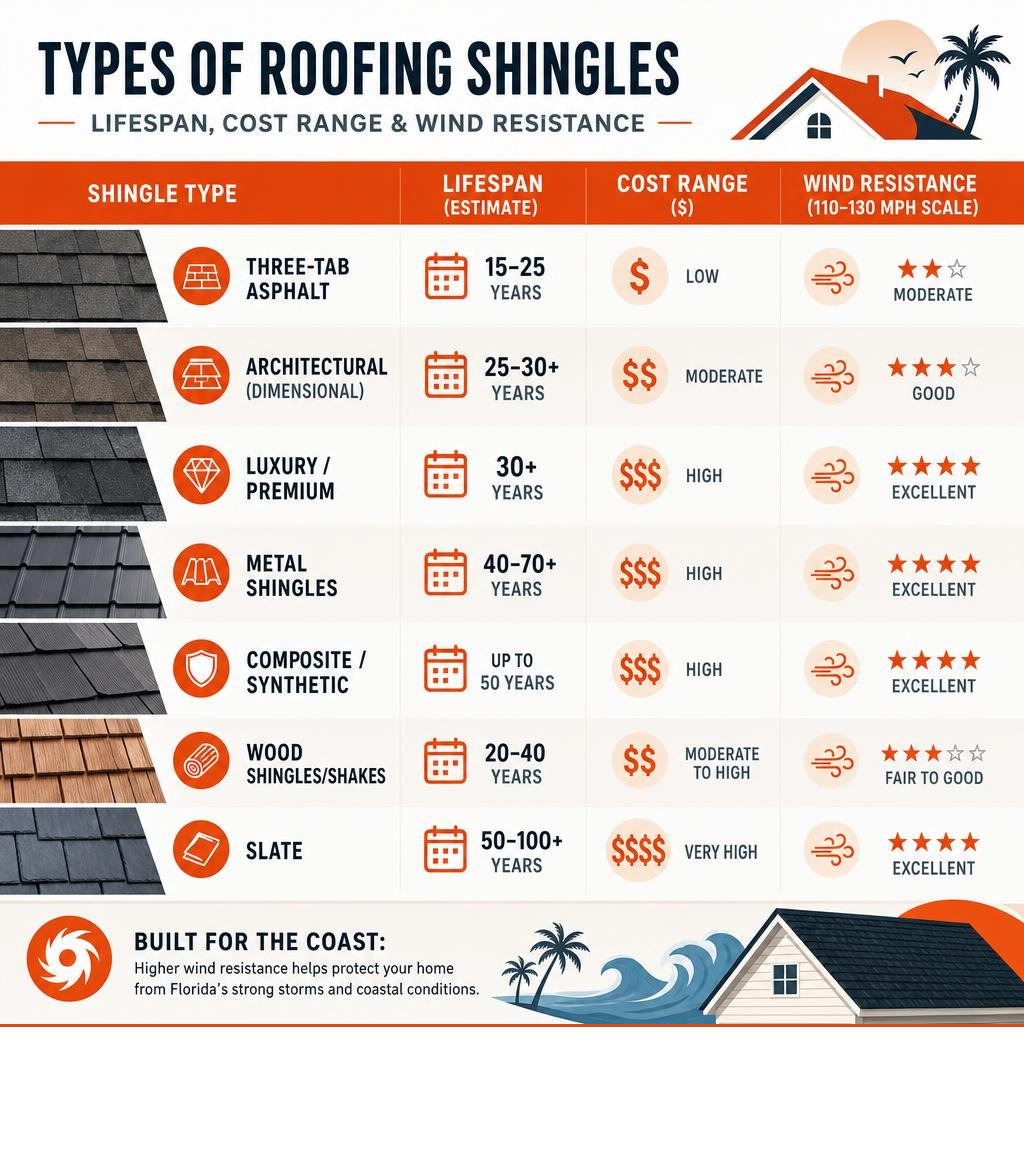
Here is a quick look at the most common shingle roof types available today:
| Shingle Type | Lifespan (Estimate) | Best For | Wind Performance | Maintenance Level |
|---|---|---|---|---|
| Three-Tab Asphalt | 15-25 years | Budget-conscious homeowners | Basic to moderate, depending on product and installation | Low to moderate |
| Architectural (Dimensional) | 25-30+ years | Most Florida homes; long-term value | Strong when installed to manufacturer and code requirements | Low |
| Luxury/Premium | 30+ years | High-end aesthetics; added storm protection | Strong to excellent, depending on product | Low to moderate |
| Metal Shingles | 40-70+ years | Longevity; energy efficiency | Strong, especially with proper coastal-rated installation | Low |
| Composite/Synthetic | Up to 50 years | Impact resistance; low maintenance | Varies significantly by manufacturer and product | Low |
| Wood Shingles/Shakes | 20-40 years | Rustic look; requires regular upkeep | Limited suitability in humid, storm-prone climates | High |
| Slate | 50-100+ years | Premium durability; heavy; high cost | Excellent when structure and installation are appropriate | Moderate |
Asphalt shingles cover a significant portion of homes across North America, and for good reason — they balance cost, performance, and style better than many alternatives. But in a coastal climate like ours, the specific type of roofing shingles you pick can affect durability, repairability, cooling performance, maintenance, and long-term ownership costs.
This guide compares today’s most common roofing shingles types, how different roof shingles perform in Florida’s conditions, and what to consider before making a decision.
Understanding the Most Common Types of Shingles for Florida Homes

When selecting a new roof for a home in Melbourne, Palm Bay, or Merritt Island, understanding how different shingle types stand up to our unique coastal environment is essential. The different styles of shingles available today vary widely in thickness, appearance, warranty terms, wind performance, and repairability. Choosing among different types of shingles is not just a design decision; it is a practical decision about how the roof will perform through Florida heat, humidity, and storms.
Three-Tab Asphalt Shingles
Often referred to as strip shingles, three-tab asphalt shingles are the most basic and economical option available. They are constructed from a single layer of fiberglass mat coated with asphalt and mineral granules, then cut into three uniform tabs. Among common shingles roof types, three-tab products provide a clean, flat appearance and represent a budget-friendly roofing option.
In coastal Florida, their lightweight nature presents a challenge. Three-tab options typically have lower wind performance than heavier laminated products, making them more vulnerable to uplift during tropical storms and hurricanes if the product or installation is not suited to the home. For homeowners working within a strict budget, they can still be a functional entry-level solution, but they require careful installation and regular inspections.
Three-tab shingles may still make sense for budget-conscious replacements, rental properties, or short-term ownership situations where keeping initial cost low is the top priority. They can also be reasonable on certain secondary structures. However, when comparing different roof shingles for a primary Florida residence, many homeowners find that the long-term value of architectural shingles justifies the added investment.
Architectural or Dimensional Types of Shingles
Also known as laminated or dimensional shingles, architectural shingles are the dominant choice in today’s residential roofing market and one of the most common types of shingle roofs on the Space Coast. Unlike single-layer three-tab options, architectural shingles are constructed from two or more layers of fiberglass and asphalt fused together. This layered design creates a thicker, multi-dimensional appearance that can mimic the look of natural wood shakes or slate while still using a familiar asphalt roofing system.
Architectural shingles dominate the residential market because they offer a strong balance of cost, curb appeal, durability, repairability, and manufacturer warranty options. They usually provide a more substantial appearance than three-tab shingles, which can improve curb appeal without moving into the higher cost and structural considerations associated with slate, tile, or some premium roof systems.
From a performance standpoint, architectural shingles are often a better fit for Florida homes than basic three-tab shingles. Their added weight and laminated construction help improve wind performance when the selected product is installed according to manufacturer specifications and local code requirements. For homeowners comparing different shingle types, architectural shingles often sit in the practical middle: stronger and more attractive than entry-level asphalt, but usually more affordable and easier to repair than many specialty systems.
Repairability is another major reason this type of shingles remains popular. If storm damage is isolated, a roofing contractor may be able to replace affected shingles without replacing the entire roof, depending on the age of the roof, availability of matching products, and the extent of damage. Because architectural shingles are so widely installed, replacement materials are often easier to source than many specialty roofing products, although color matching can still become more difficult as roofs age. Matching can become more difficult as shingles fade or product lines are discontinued, but architectural asphalt products are generally among the more repair-friendly shingle roof types.
Warranty considerations also matter. Manufacturer warranty terms vary by product, installation method, ventilation, underlayment, and whether the contractor follows the required system specifications. A higher-quality architectural shingle installed as part of a complete roofing system may offer stronger long-term value than a cheaper product installed with minimal supporting components. For many Florida homeowners, that combination of repairability, curb appeal, warranty potential, and storm performance explains why architectural shingles are the most common recommendation.
Luxury or Premium Types of Shingles
For homeowners seeking high-level storm protection and high-end aesthetics, luxury shingles represent the premium end of asphalt roofing technology. These heavy-duty laminated shingles are designed to replicate old-world materials like quarried slate or hand-split cedar shakes while offering a more substantial profile than standard architectural shingles.
Luxury shingles are significantly thicker and heavier than standard architectural options, offering enhanced impact resistance and wind uplift protection depending on the product. This thick profile can provide an extra layer of defense against flying debris during major storms. However, heavier roofing products may require evaluation of the existing roof structure before installation. Not every home is automatically suited for every premium material, so the product, roof deck, framing, and local code requirements should be reviewed before moving forward.
Which Types of Shingles Are Best for Florida Homes?
Choosing the right roofing system involves balancing your aesthetic goals, performance needs, and budget. In Florida, that decision also has to account for hurricanes, UV exposure, salt air, heavy rain, humidity, coastal corrosion, and long-term maintenance. The best roof types shingles combination for one home may not be the best fit for another.
Three-tab shingles can work when upfront budget is the main concern, but they are usually the least attractive option for long-term storm performance. Architectural shingles are the most common choice for most Florida homeowners because they offer a strong mix of affordability, wind performance, curb appeal, repairability, and familiar maintenance needs. Luxury shingles can add beauty and durability, but they may cost more and should be evaluated for weight and structural suitability.
Metal shingles can be an excellent fit for homeowners who prioritize longevity, energy efficiency, and lower maintenance. In coastal communities, corrosion resistance and correct fasteners, coatings, and installation details are especially important. Composite shingles can also perform well in humid and storm-prone areas, but product quality varies widely, so homeowners should compare manufacturer testing, warranty terms, and contractor experience before assuming all composite products perform the same way.
For most Florida homes, architectural shingles remain the most practical recommendation because they balance performance, appearance, and long-term value. Metal may be a better fit for homeowners prioritizing maximum lifespan and energy performance, while composite may make sense for those who want impact resistance or a specialty appearance without the weight of natural slate or wood.
Which Type of Shingles Do Most Florida Homeowners Choose?
Most homeowners throughout Brevard County choose architectural shingles because they balance affordability, durability, appearance, repairability, and hurricane performance. While metal and luxury shingles offer advantages for some homes, architectural shingles continue to be the most common recommendation for residential roof replacements across Florida.
Which Type of Shingles Adds the Most Home Value?
The type of shingles that adds the most home value depends on the home, neighborhood, roof condition, and buyer expectations. For many Florida homes, architectural shingles offer one of the strongest value combinations because they improve curb appeal, provide a dimensional appearance, and are familiar to buyers, inspectors, and roofing contractors.
In premium neighborhoods, luxury asphalt shingles may help a roof better match higher-end exterior finishes, especially when homeowners want the look of slate or cedar without moving into natural materials. Metal roofing can also support resale appeal for buyers who prioritize longevity, energy efficiency, and reduced maintenance, although the higher upfront cost may not be the best fit for every budget or neighborhood.
Home value is not only about appearance. Buyers may also consider expected maintenance, repair options, energy efficiency, storm performance, and future replacement costs. A roofing contractor can help compare different shingle types based on the home’s structure, surrounding properties, and long-term ownership goals.
Comparing Shingle Performance: Cost, Durability, and Lifespan
Metal Shingles and Standing Seam Metal Roofing
For homeowners looking for a highly durable alternative to traditional asphalt, metal roofing can be an outstanding option. Metal shingles are individual shingle-like panels designed to resemble asphalt, wood shakes, slate, or tile. Standing seam metal roofing is technically a different roofing system, using long vertical panels with raised seams rather than individual shingles.
Both systems can offer excellent longevity, but they look, install, and perform differently. Metal shingles may appeal to homeowners who want the look of traditional roofing shingles types with the benefits of metal. Standing seam is often chosen for a cleaner, modern appearance and strong water-shedding performance.
Using metals like aluminum or steel, these systems can last several decades under optimal conditions. Aluminum is often favored in coastal communities because of its natural resistance to saltwater corrosion. Metal roofs also excel in solar reflectance, bouncing heat away from your home to lower cooling demand during Florida summers.
Composite and Synthetic Shingles
Engineered from advanced polymer resins, recycled rubber, and plastics, composite shingles are designed to replicate the look of natural slate or wood shakes without the heavy weight or intense maintenance requirements. Some synthetic products are designed to replicate slate or cedar while weighing substantially less. These different styles of shingles can appeal to homeowners who want a specialty look with less upkeep than natural materials.
Some composite materials carry strong impact ratings and are designed to resist rotting, warping, and moisture absorption. However, manufacturers and product performance vary significantly. Homeowners should compare testing, wind ratings, fire ratings, warranty terms, Florida approvals where applicable, and real-world installation experience before choosing this type of roofing shingles.
Key Factors to Consider When Selecting Your Roof Shingles

Before making your final selection, it is important to look beyond just the color and style. Several technical and regional factors should guide your decision to ensure your new roof complies with local standards and performs well in Florida’s climate.
Hurricane and Wind Resistance Ratings
In coastal areas subject to high winds and intense wind uplift, wind performance is a major consideration. Rather than focusing on one rating alone, homeowners should compare manufacturer wind ratings, product approvals, warranty requirements, and installation specifications for the different shingle types they are considering.
Wind resistance depends on both the roofing product and the complete roofing system. Proper installation is just as critical as the shingle rating itself. A professional contractor should follow the manufacturer’s required nailing patterns, underlayment requirements, flashing details, ventilation standards, and applicable local code requirements. That complete system approach is what helps different types of shingles perform as intended during Space Coast storms.
Energy Efficiency and Cool Roof Technology
With Florida’s year-round sunshine, energy efficiency should be a major consideration. Many modern shingles are manufactured with solar reflective granules. These cool roof technologies reflect more solar radiation rather than absorbing it into your attic. By keeping attic temperatures lower, the right shingles roof types can help reduce the load on your air conditioning system and support lower monthly utility bills.
How Much Do Different Types of Shingles Cost?
The cost of different roof shingles depends on far more than the material alone. Roof size, roof pitch, number of valleys, dormers, skylights, penetrations, and overall complexity all affect labor and material requirements. A simple one-story roof is usually less expensive to replace than a steep, complex roof with multiple transitions.
Material choice also plays a major role. Three-tab asphalt is usually the lowest upfront cost, architectural shingles fall in the middle for many homeowners, and luxury, metal, composite, slate, or specialty products typically cost more. Other cost factors include tear-off, disposal, underlayment, ventilation corrections, permitting, flashing replacement, decking repairs, and wind mitigation upgrades.
Rather than relying on fixed price ranges that may become outdated, homeowners should compare written estimates that explain the selected product, installation method, supporting components, warranty terms, and any code-related or ventilation improvements included in the project. Homeowners should also compare manufacturer warranties and workmanship warranties, since these can vary significantly between roofing contractors. The lowest estimate is not always the best value if it excludes underlayment replacement, flashing updates, ventilation improvements, or other important components.
Repair vs. Replacement: Does Shingle Type Matter?
Shingle type can affect whether a roof is practical to repair or whether replacement is the better long-term choice. Architectural asphalt shingles are often easier to repair than many specialty products because replacement shingles may be more readily available, but matching color and profile can still be difficult if the roof is older or the product has been discontinued.
Three-tab shingles may be inexpensive to repair when matching materials are available, but widespread brittleness, granule loss, or repeated wind damage can make replacement more sensible. Metal, composite, luxury, and specialty systems may require more product-specific repair expertise, and discontinued products can complicate partial repairs.
Age, storm damage, roof deck condition, leak history, insurance requirements, and local code considerations all matter. A professional inspection can help determine whether a repair will extend the roof’s service life or whether replacement is the more reliable investment.
Frequently Asked Questions About Roofing Shingles
What is the most popular type of shingle for Florida homes?
Architectural shingles are by far the most popular choice for homes in Melbourne and the surrounding areas. They offer a strong balance of cost-effectiveness, dimensional curb appeal, repairability, and wind performance. Among the different types of shingles available today, they are often the most practical fit for Florida homeowners who want dependable performance without moving into the premium budget of luxury shingles or metal roofing systems.
Are architectural shingles worth the extra cost?
For many Florida homeowners, architectural shingles are worth the added cost because they generally offer better curb appeal, stronger wind performance, better repairability, and longer-term value than basic three-tab shingles. They are not always the cheapest option upfront, but they often provide a practical balance between affordability and performance for a primary residence.
How long do different types of shingles typically last in coastal climates?
While standard three-tab shingles might last fifteen to twenty-five years under ideal conditions, their lifespan in coastal Florida is often shortened by intense UV rays, humidity, salt air, and high winds. Architectural shingles may last twenty-five years or more under favorable conditions, while premium metal and composite options can offer extended lifespans. The quality of the professional installation, ventilation, and overall roof system maintenance play a significant role in reaching these estimates.
Which type of roofing shingles lasts the longest?
Natural slate and some metal roofing systems can offer the longest potential lifespan, but they are not always the best fit for every Florida home. Among asphalt shingle roof types, luxury and high-quality architectural shingles generally last longer than basic three-tab products. The longest-lasting option depends on the home’s structure, coastal exposure, maintenance expectations, and installation quality.
What are the different styles of shingles available today?
The main different styles of shingles include three-tab asphalt, architectural asphalt, luxury asphalt, metal shingles, composite shingles, wood shingles or shakes, and slate. These different shingle types vary in appearance, weight, cost, maintenance, repairability, and storm performance. Homeowners comparing roofing shingles types should consider both the look they want and how the material performs in Florida’s climate.
Which types of shingles offer the best hurricane resistance?
Architectural, luxury, metal, and some composite products often offer stronger hurricane resistance than basic three-tab shingles when installed correctly. However, the product rating alone is not enough. The full roof system, including underlayment, flashing, fasteners, ventilation, roof deck condition, and installation according to manufacturer specifications and local code requirements, plays a major role in storm performance.
How do I know if my shingle roof needs a minor repair or a full replacement?
Deciding between a minor repair and a full roof replacement depends on the age of your roof, the extent of the damage, the type of shingles installed, and current project requirements. If your roof is relatively new and has isolated damage from a falling branch, a spot repair may be the most cost-effective path. If the shingles are brittle, losing protective granules, difficult to match, or showing widespread storm damage, a full replacement may be the stronger long-term option.
Conclusion
Selecting the best types of shingles for your home is one of the most important decisions you will make to protect your property and your family. Choosing among different types of shingles is easier after a professional inspection evaluates the home’s structure, roof condition, budget, long-term goals, and Florida storm exposure. A roofing contractor can also explain how different shingle types may affect long-term maintenance, repair options, energy efficiency, and future replacement costs.
At MLG Roofing, we bring local expertise, professional installation, and high-quality materials to homes across Melbourne, Palm Bay, Rockledge, Viera, Merritt Island, Cocoa Beach, and the wider Space Coast. Whether you are comparing architectural shingles, metal roofing, composite products, or another roofing material, our team can inspect your roof, explain your options, and provide honest replacement recommendations.
If you are dealing with active leaks or storm damage, you can learn more about emergency roof tarping and urgent repair services. For comprehensive assistance, you can also schedule a professional roof inspection or replacement service with our team.