
Why a Brevard Tile Roof Inspection Matters
A professional Brevard tile roof inspection helps homeowners in Brevard County, FL catch cracked or displaced tiles, worn underlayment, loose flashing, and storm-related damage before small issues lead to interior leaks. For a new tile or slate roof in unincorporated areas, the permitting process generally requires two county inspections: a dry-in inspection before tiles are installed and a final inspection after the roof covering is complete.
For an existing roof, a comprehensive inspection should look beyond the visible tiles. A roofing professional should assess the water-shedding layer beneath them, flashing at valleys and roof penetrations, attachment points, and signs of wind, UV, or salt-air wear common on the Space Coast.
Tile roofs can perform well in Florida, but individual tiles may crack or shift while the more important waterproof layer below becomes harder to see. Regular professional inspections are especially useful after major storms, when buying or selling a home, and when arranging a wind mitigation or 4-point inspection. Homeowners considering tile roofing should also understand how architectural roof tiles and traditional profiles such as imbrex and tegula perform in coastal conditions.
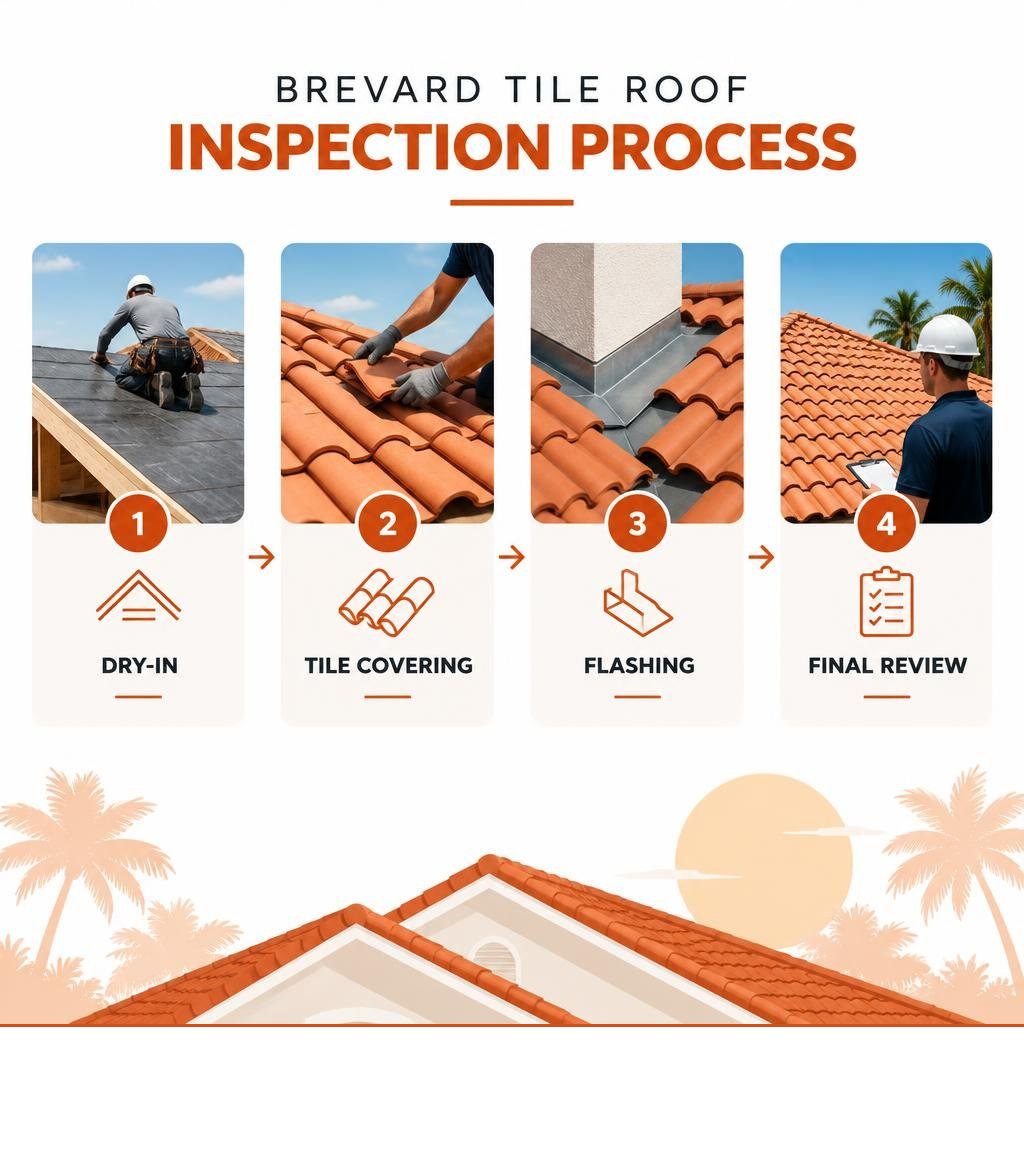
Why a Brevard Tile Roof Inspection Supports Code Compliance
Staying compliant with local building regulations protects both property value and structural integrity. Florida experiences intense wind uplift pressures, heavy tropical rains, and constant ultraviolet radiation. Consequently, building officials strictly enforce the Florida Building Code to ensure roofing assemblies can withstand coastal storm conditions.
When undergoing a roof replacement or major renovation, local regulations mandate rigorous oversight. Because barrel, concrete, and clay tiles add significant weight to a structure, proper load distribution and deck fastening are critical. Tile roofing systems rely on specific engineering guidelines to prevent uplift during high-wind events.
Understanding what a roof inspection costs helps homeowners appreciate the value of thorough assessments. Regular inspections ensure that every component—from the roof deck to the ridge caps—meets mandated safety standards, keeping home warranties intact and supporting overall structural resilience.
The Two Important Inspection Stages: Dry-In vs. Final Covering
Unlike standard shingle or certain metal installations that typically require only a single building department check, tile and slate roofing systems in unincorporated areas require two separate regulatory inspections.
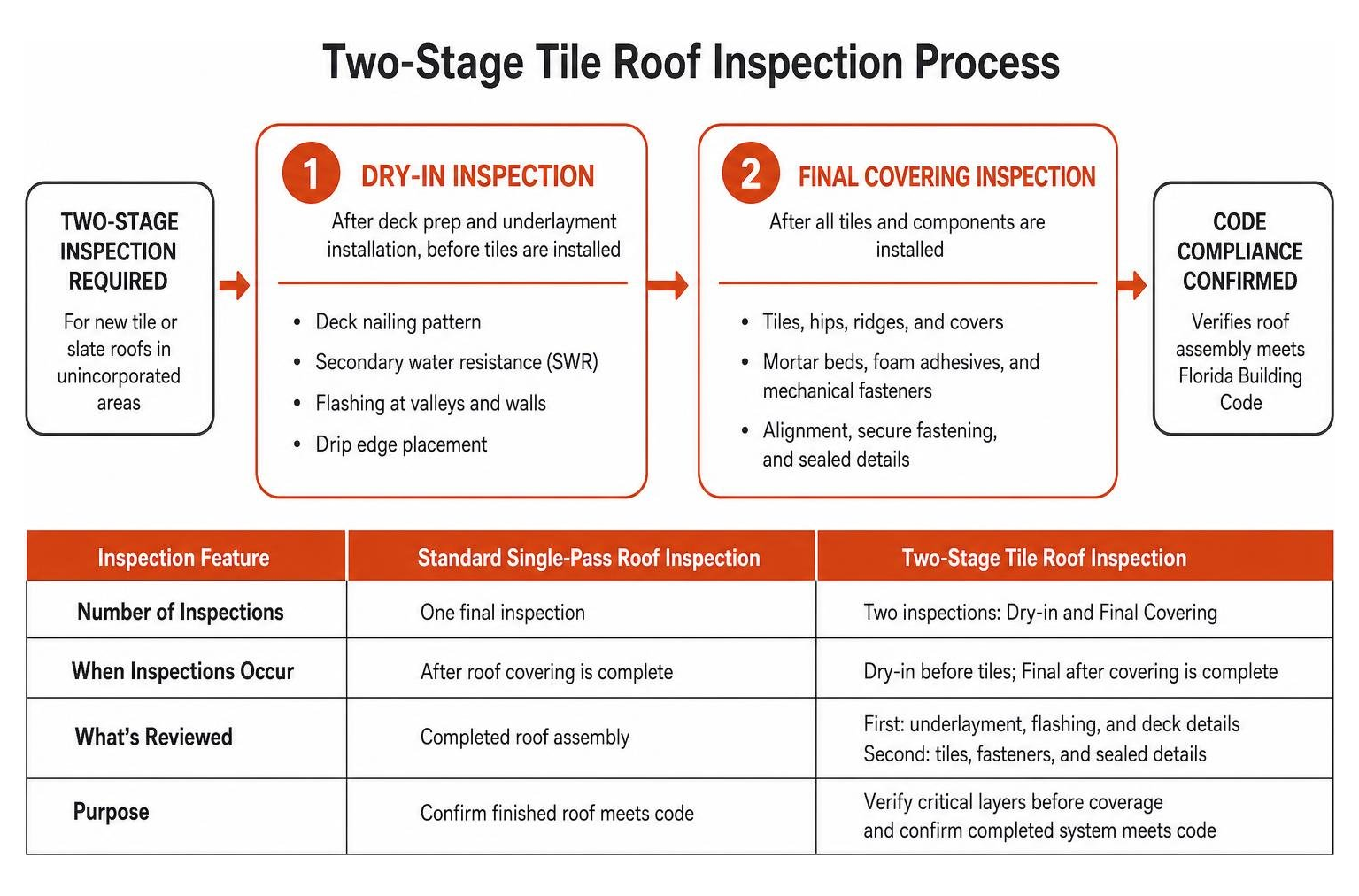
- The Dry-In Inspection: This first phase occurs after the deck is prepped and the waterproof underlayment is installed, but before any tiles are fastened. The inspector verifies the deck nailing pattern, secondary water resistance (SWR) application, flashing details along valleys and walls, and drip edge placement.
- The Final Covering Inspection: Once the tiles, hip and ridge details, mortar beds, foam adhesives, and mechanical fasteners are completely installed, the building official conducts the final review. This step ensures that all surface materials are securely fastened, aligned, and sealed according to code.
| Inspection Feature | Standard Single-Pass Roof Inspection | Two-Stage Tile Roof Inspection |
|---|---|---|
| Applicable Systems | Standard Asphalt Shingles | Clay, Concrete Tile, and Slate |
| Initial Check (Dry-In) | Not typically scheduled separately | Mandatory before tile placement |
| Components Inspected | Surface covering, flashing, visible deck | Underlayment, deck fastening, SWR, flashing |
| Final Check | Single comprehensive pass | Surface fastening, tile adhesion, final detailing |
| Permit Sign-Off | Upon passing single inspection | Requires both dry-in and final approvals |
Jurisdiction Differences: Unincorporated Brevard County vs. Incorporated Cities
Building enforcement varies depending on where a property is located on the Space Coast. In unincorporated areas, Chapter 22 of the local county code governs building standards, placing oversight directly under the Brevard County Building Official.
However, incorporated municipalities such as Cocoa, Titusville, Melbourne, and Palm Bay maintain their own building departments. While all Florida jurisdictions adhere to the baseline Florida Building Code, individual cities enforce their own administrative procedures, permit submission guidelines, and inspection scheduling workflows.
Whether working with municipal building departments or county personnel, following a clear roof replacement guide helps ensure every project moves smoothly through plan review, on-site checks, and final permit closure.
Critical Components Evaluated During a Professional Assessment

A comprehensive assessment examines all functional layers of the roofing assembly. In coastal environments, salt spray and intense sun accelerate the wear of exposed metals and adhesives.
Key areas evaluated during an evaluation include:
- Underlayment Condition: The true waterproofing barrier beneath the tiles. Inspectors look for signs of brittleness, tearing, or moisture intrusion beneath the surface.
- Flashing and Transitions: Valleys, sidewalls, dormers, and chimney flashings are checked for rust, sealant degradation, or gaps where wind-driven rain could penetrate.
- Tile Integrity and Attachment: Technicians inspect for cracked, broken, or sliding tiles, as well as deteriorating foam adhesive or rusted mechanical screws.
- Attic and Decking Structure: From inside the attic, inspectors check for wood rot, water staining, adequate ventilation, and proper insulation depth.
Promptly identifying storm damage repair needs prevents hidden moisture leaks from spreading into ceiling framing, insulation, and interior drywall. For properties near the ocean in Satellite Beach or Cocoa Beach, checking for salt corrosion on metal drip edges and fasteners is equally essential.
Insurance Savings and the Wind Mitigation Connection
Maintaining documented inspection records directly benefits insurance planning. In Florida, windstorm insurance premiums represent a major portion of ongoing property expenses. Property insurance carriers evaluate documented roof geometry, fastening methods, and water barriers when reviewing property risk. While inspection reports provide critical verification, actual insurance coverage, policy pricing, and discount eligibility depend on individual policy language, deductibles, exclusions, roof age provisions, and carrier underwriting decisions. Homeowners should also note that optional Ordinance or Law coverage within a policy may assist with code-required upgrades when extensive repairs or replacements occur.
The Uniform Mitigation Verification Inspection Form (OIR-B1-1802), managed through the Florida Office of Insurance Regulation, provides underwriters with standardized verification of a home’s wind-resistive features. Homeowners who maintain their tile roofs and document key protective upgrades can often unlock valuable policy credits. Adopting proven strategies for extending a roof’s life in the Florida sun protects the physical structure while supporting long-term insurance documentation.
Maximizing Insurance Discounts with a Brevard Tile Roof Inspection
Under updated wind mitigation guidelines, precise documentation of roof characteristics can lead to premium savings. Inspectors look for several specific elements:
- Roof Geometry: Hip roof designs commonly receive substantial premium discounts compared to gable roofs due to their aerodynamic profile in high winds.
- Secondary Water Resistance (SWR): A self-adhering polymer-modified bitumen underlayment applied directly to the sheathing acts as a backup barrier if surface tiles shift, qualifying the home for significant mitigation credits.
- Roof-to-Wall Attachments: Documenting hurricane clips, single wraps, or double wraps that anchor roof trusses to exterior walls provides substantial wind mitigation savings.
- Deck Fastening: Verifying nail size and spacing patterns ensures compliance with modern wind uplift standards under current ASCE 7 wind speed mapping.
Wind mitigation reports are generally valid for five years unless major structural alterations occur. For many residents in Palm Bay and Melbourne, the premium savings generated by a verified report easily offset the cost of the inspection.
Preparing for a Brevard Tile Roof Inspection and Wind Mitigation
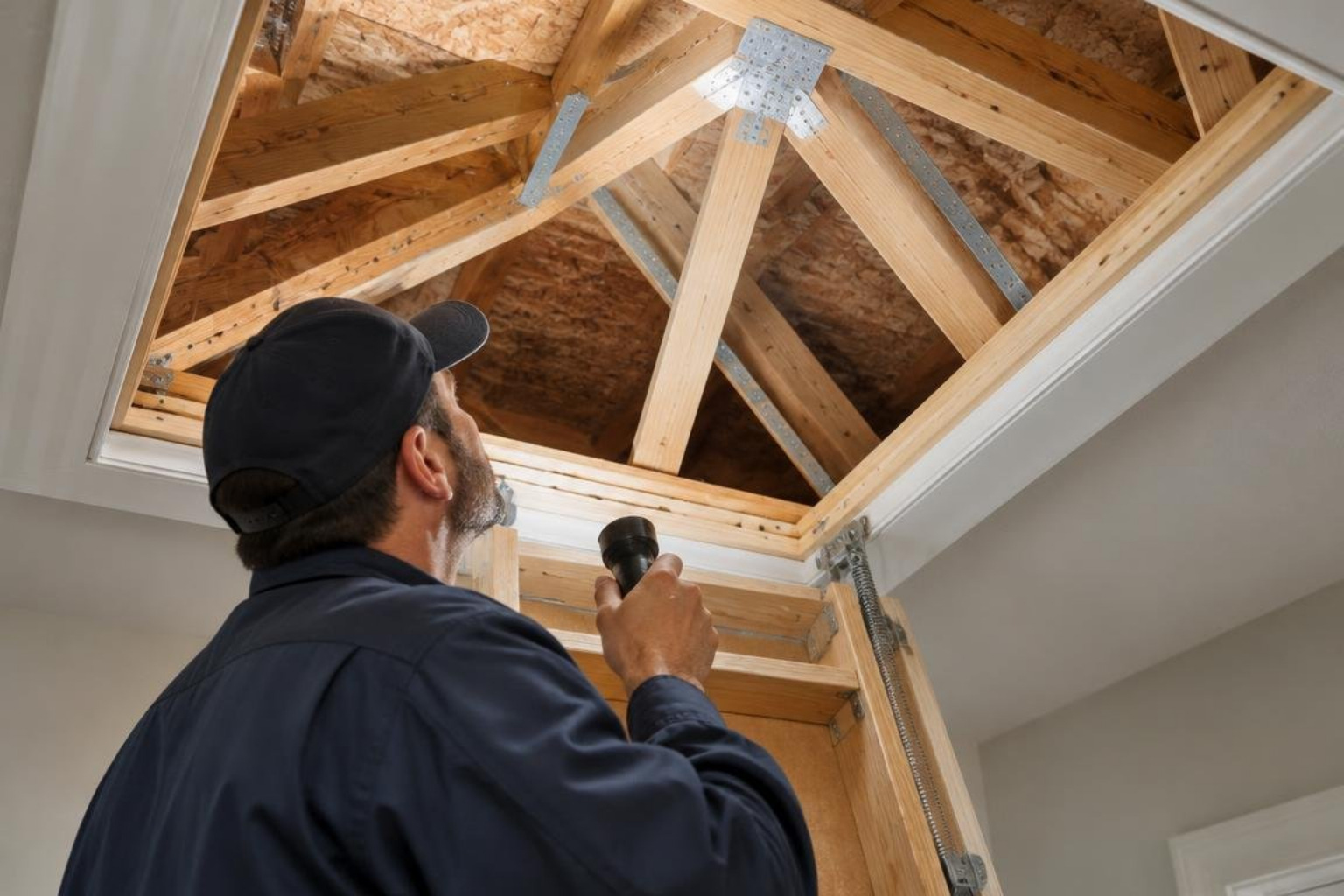
Proper preparation helps the inspector complete their assessment efficiently and gather all necessary evidence for insurance paperwork:
- Clear Attic Access: Ensure closets, garages, or hallways leading to the attic hatch are completely unobstructed so the inspector can examine roof trusses, nail patterns, and hurricane straps.
- Gather Documentation: Have permit histories, previous inspection reports, and manufacturer product approvals ready for review.
- Secure Pets: Provide a safe, quiet environment for pets while the technician accesses the roof and attic spaces.
- Provide Opening Protection Details: If the home features impact windows or hurricane shutters, have the product notices of acceptance (NOA) or visible rating stamps accessible.
Coordinating your general roof check alongside wind mitigation and 4-point inspections streamlines scheduling and provides comprehensive documentation in a single visit.
Penalties and Permitting Risks of Uninspected Tile Roofs
Attempting to install, modify, or replace a tile roof without securing required permits and passing official inspections carries serious financial and legal consequences.
When required inspections are skipped:
- Withheld Certificates: The building official will not issue a Certificate of Completion or Certificate of Occupancy, leaving the permit open indefinitely on public records.
- Forced Tile Removal: If a dry-in inspection was missed, the county or municipal building department may require sections of finished tile to be removed so inspectors can verify the underlying membrane and fasteners.
- Local Code Fines: Active construction without approved inspections can lead to stop-work orders and daily municipal fines.
- Insurance Complications: Because insurance coverage decisions and claim settlements depend on specific policy terms, deductibles, and exclusions, unpermitted roofing work or missing inspection sign-offs can complicate underwriting reviews and claim processing.
- Real Estate Transaction Delays: Open permits or uncertified work can stall home sales during title searches, often requiring costly retro-permitting and structural certifications before closing.
Frequently Asked Questions About Brevard Tile Roof Inspections
Does the dual tile roof inspection apply inside city limits?
Municipalities such as Rockledge, Cocoa, and Titusville operate independent building departments that enforce the Florida Building Code alongside local administrative rules. While unincorporated county areas mandate the dual-stage process under county code, many incorporated cities apply similar two-stage protocols for tile and slate assemblies. Always verify specific scheduling procedures with your local municipal building official.
What specific elements are examined during the dry-in inspection?
During the dry-in phase, the inspector focuses on the weatherproofing foundation. This includes verifying the self-adhering underlayment or felt application, deck nail spacing, seam sealing, valley metal installation, and drip edge flashing along eaves and rakes before any tiles obscure these components.
Can a tile roof inspection support a wind mitigation or 4-point inspection?
Yes. Combining these assessments during a single service appointment is an efficient way to evaluate structural condition and insurance eligibility at the same time. The technician can evaluate surface tiles, verify underlayment integrity, inspect attic trusses and hurricane straps, and complete insurance forms in one visit.
Conclusion: Safeguard Your Space Coast Home with Expert Inspection
Regular assessments protect your home against severe weather, preserve curb appeal, and ensure strict compliance with Florida building standards. Whether verifying storm readiness or confirming permit closeouts, professional evaluations provide peace of mind for every homeowner in Brevard County, FL.
MLG Roofing delivers expert inspection, maintenance, and replacement services tailored to coastal Florida conditions across Melbourne, Palm Bay, Rockledge, Viera, and surrounding Space Coast communities.
Contact MLG Roofing today to schedule your comprehensive tile roof evaluation or learn more about tile roofing services in Brevard County. If you notice active leaks or storm damage, reach out through our emergency roof repair services for rapid assistance.