
How to Prevent Wind-Driven Rain Intrusion in Brevard County, FL
To reduce wind-driven rain intrusion, have a roofing professional check roof edges, soffits, vents, flashing, and shingle condition before storm season. Ask about sealing roof deck seams when you replace the roof. If you see a leak after a storm, contain the water, photograph the damage, and arrange a comprehensive inspection. Do not climb onto a wet roof.
On the Space Coast, wind can push rain sideways against walls and upward beneath roof coverings. That is why a home may stay dry in ordinary rain but leak during a windy storm. The entry point may also be far from the ceiling stain, so finding it matters more than sealing the stain.
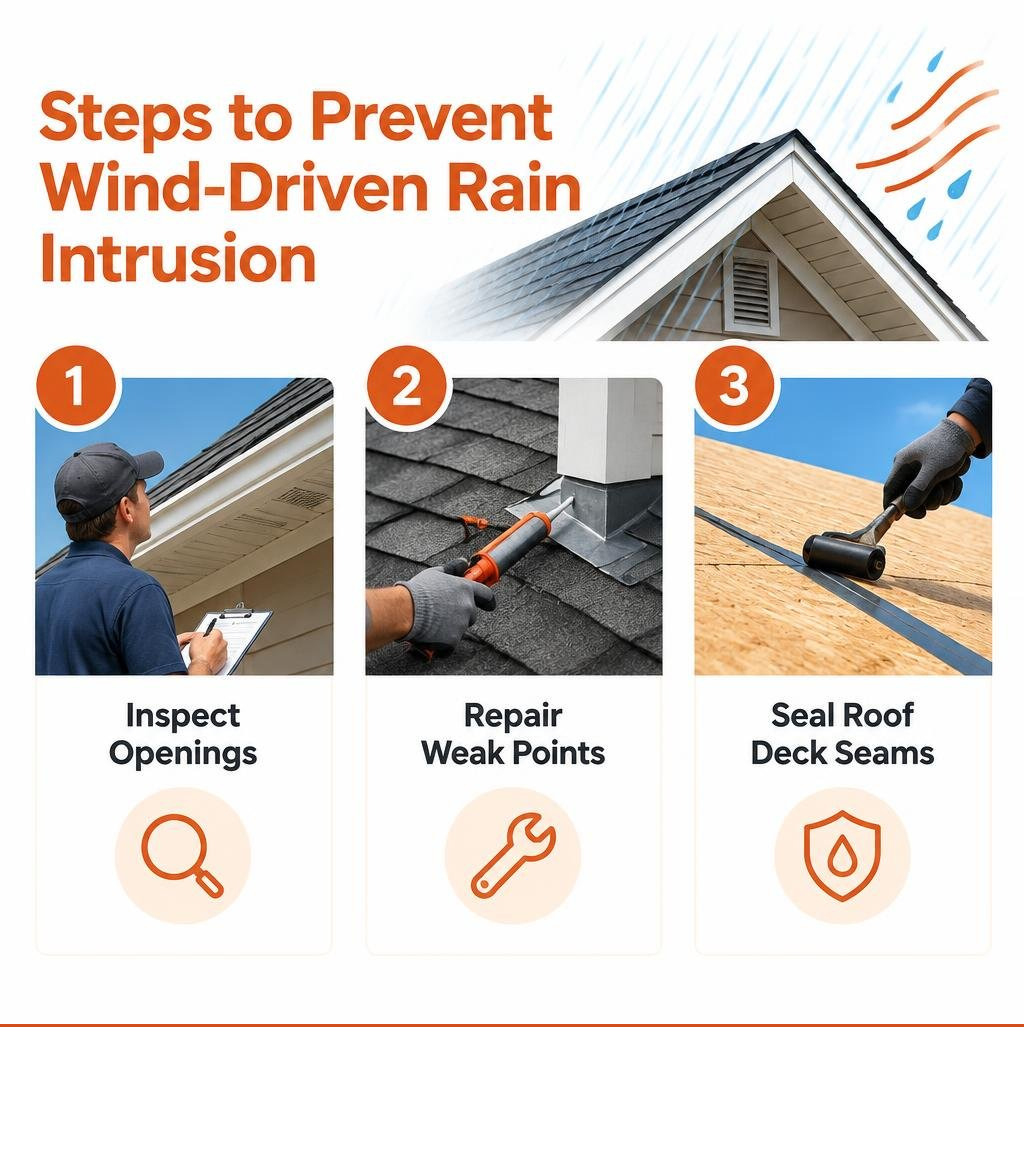
Understanding how wind-driven rain intrusion affects your home often begins with recognizing related storm damage. A hurricane damaged roof shingle can create an opening that allows water to enter under pressure, while broader wind damage to roof assemblies may expose hidden seams. When a leak is active, arranging fast emergency roof repair helps limit interior damage before a full assessment is conducted by a licensed professional.
Understanding Wind Driven Rain Intrusion and Building Physics
Standard residential roofing systems rely on gravity to manage water. When rain falls vertically, gravity pulls droplets downward across overlapping shingles, toward drainage pathways, and away from the foundation. However, tropical storms and coastal fronts alter this dynamic by introducing horizontal velocity and severe wind pressures across the exterior envelope.
Wind-driven rain occurs when high winds propel water droplets sideways or upward against building assemblies. As wind strikes a structure, it creates localized positive pressure zones on the windward side and strong negative suction on the leeward side and over the roof ridge. This aerodynamic force pushes water uphill beneath overlapping materials or forces it through micro-fissures in siding, vents, and joints.
Research published in A Framework to Model Wind-Induced Building Losses demonstrates that wind pressure, airborne debris, and rain properties combine dynamically to challenge exterior cladding. The study highlights that building vulnerability increases substantially when structural components age, lowering resistance against lateral water ingress during major storm events.
Why Watertight Roofs Fail During Severe Storms
A common misconception among homeowners in Melbourne and Palm Bay is that a roof is completely waterproof. In reality, traditional steep-slope roofing systems are water-shedding assemblies engineered to shed water moving downward, not necessarily to withstand pressurized water driven horizontally or pushed upward.
When storm winds escalate, building materials experience severe stresses:
- At 45 to 50 mph, wind can begin to stress loose or aging shingles, breaking fragile sealant strips.
- At 50 to 75 mph, shingle tabs often lift, exposing underlying fasteners and allowing horizontal rain beneath overlapping edges.
- Above 75 mph, significant uplift can dislodge shingle sections, exposing unsealed roof decking seams directly to driving rain.
- Above 90 mph, major envelope deformation may occur, allowing bulk water infiltration.
Homeowners evaluating long-term durability often review metal roof wind uplift resistance to understand how mechanical attachment methods perform under coastal weather conditions.
Primary Entry Points for Wind Driven Rain Intrusion
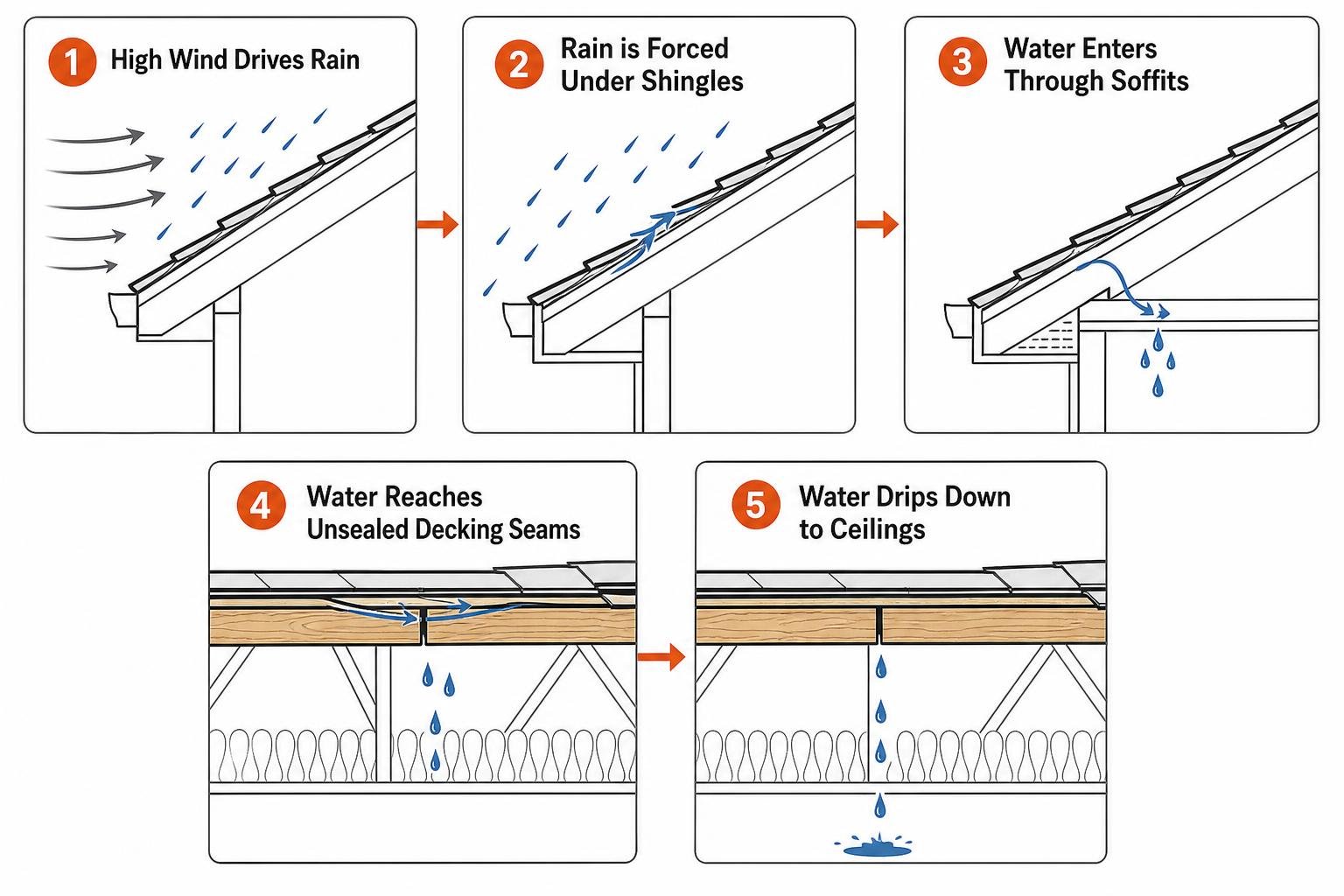
When wind forces water past primary exterior surfaces, it commonly exploits specific transition areas and penetrations:
- Soffits and Fascia: Upward wind currents force water through perforated soffit panels or loose fascia joints directly into attic overhangs.
- Off-Ridge and Ridge Vents: Standard attic ventilation openings can admit horizontal rain if they lack internal weather baffles.
- Roof Valleys and Wall Intersections: High volumes of runoff combined with lateral wind drive water beyond standard valley flashing widths.
- Chimneys and Skylights: Step flashing and counter-flashing designed for gravitational flow can be bypassed when water is driven sideways.
- Window Frames and Sliding Door Tracks: Wind pressure pushes water past window weep holes and across sliding door tracks into wall cavities.
Identifying Storm-Specific Leaks vs. Chronic Roof Defects
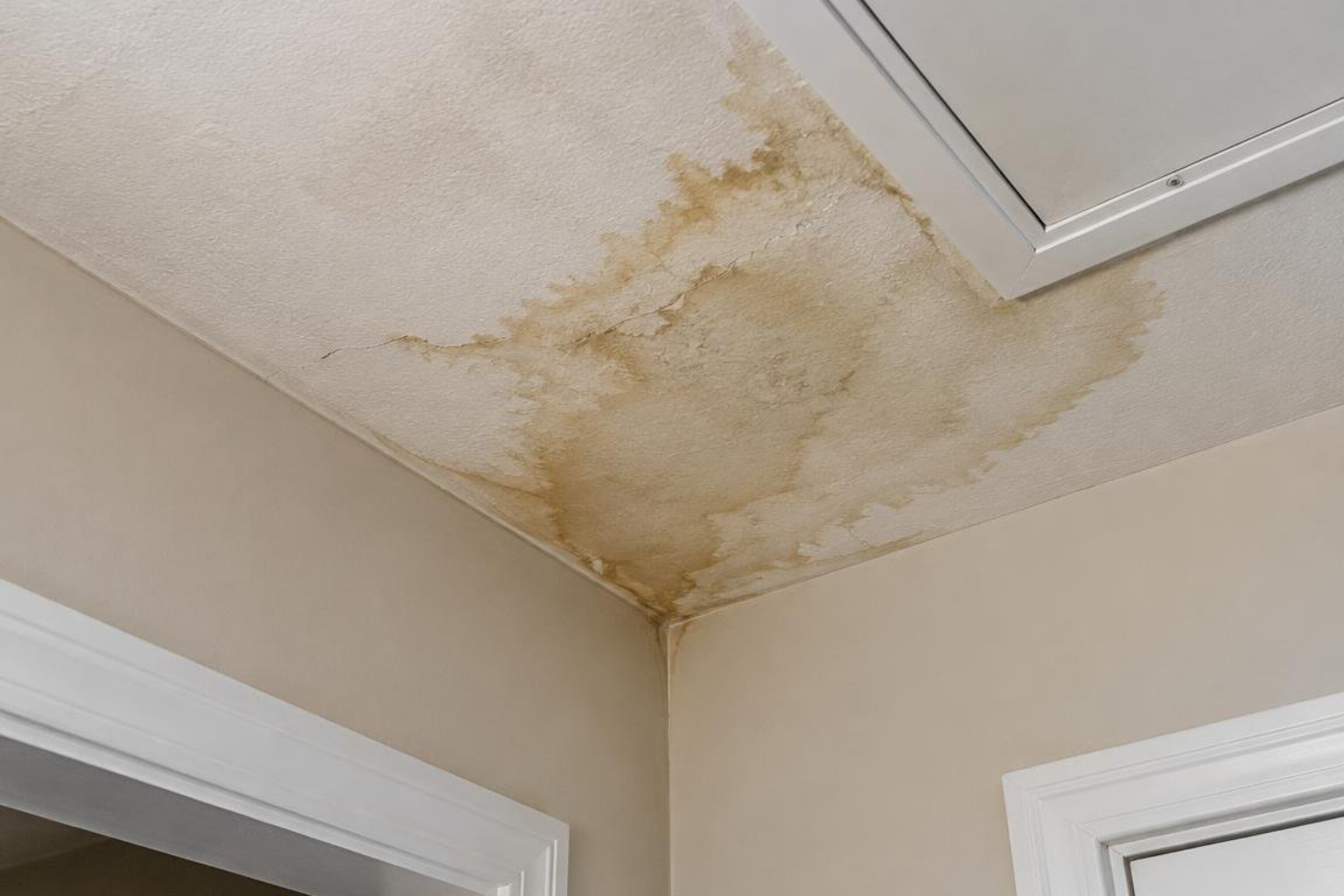
Discerning whether an interior stain stems from an ongoing roof defect, plumbing issue, or wind-driven rain intrusion requires analyzing storm characteristics. An intermittent leak that manifests exclusively during severe, directional windstorms—and remains completely dry during normal afternoon showers—strongly indicates wind-driven rain penetration.
Directionality provides an important clue. If water stains appear on walls or ceilings facing south and east after a storm that blew in from the Atlantic, the leak path correlates directly with the storm’s windward exposure. In contrast, chronic roof defects or failing plumbing vent boots typically leak during any sustained rainfall, regardless of wind speed.
Attic condensation can also mimic roof leaks in hot, humid coastal climates. When warm, moisture-laden air enters an unconditioned attic and meets cold ductwork or drywall, condensation forms and drips onto ceilings. A professional attic evaluation helps distinguish between ambient condensation issues and exterior water ingress.
Hidden Structural Damage Caused by Intermittent Water Ingress
Even when a storm-related leak appears minor on the ceiling, significant moisture may remain trapped within internal cavities. Water entering through the roof deck or soffits frequently tracks along trusses and top plates before pooling in low spots.
Hidden consequences of unchecked water intrusion include:
- Saturated Insulation: Blown-in fiberglass or cellulose insulation loses thermal resistance when wet and holds moisture against structural framing.
- Decking and Truss Rot: Repeated dampness weakens plywood or oriented strand board sheathing, reducing fastener holding capacity over time.
- Concealed Mold Colonization: Warm, dark wall cavities and attic spaces foster mold growth quickly following persistent water exposure.
- Corroded Fasteners and Electrical Hazards: Trapped water accelerates corrosion on truss gusset plates, junction boxes, and wiring runs.
Periodic checks, such as routine tile roof inspections, allow property owners in Rockledge and Viera to catch subtle moisture pathways before structural framing decays.
Fortifying the Building Envelope Against Future Storms
Proactive fortification prevents wind-driven rain from crossing the boundary between exterior cladding and structural framing. In coastal regions, modern building practices prioritize secondary water barriers beneath primary coverings.
Installing a self-adhering modified bitumen membrane across the entire roof deck creates a continuous, watertight seal. If high winds dislodge shingles or metal panels during a tropical system, this sealed roof deck helps prevent bulk water from entering the seams between structural sheathing panels, protecting the interior living space.
Comparing Building Envelope Upgrades for Wind-Driven Rain Defense
| Upgrade Strategy | Protection Mechanism | Primary Target Area | Durability Impact |
|---|---|---|---|
| Sealed Roof Deck (Peel-and-Stick) | Creates a continuous secondary water barrier over all sheathing joints | Entire roof deck plane | Extends backup protection for the entire lifespan of the roof covering |
| Baffled Hurricane Vents | Internal deflector plates block horizontal water while maintaining airflow | Attic exhaust and intake zones | High; resists wind-driven rain entry without mechanical moving parts |
| Reinforced Flashing Assemblies | Wider metal flanges with closed-cell backing and continuous sealant | Valleys, chimneys, and roof-to-wall transitions | Prevents lateral water penetration under sustained wind pressure |
| Impact Openings & Track Shields | Gasketed seals and drainage systems prevent pressure-driven bypass | Windows, sliding glass doors, and entryways | Protects perimeter joints against wind-forced water infiltration |
Immediate Post-Storm Actions and Mitigation Steps
When water enters a home following a severe storm, swift action minimizes structural deterioration and supports future insurance documentation:
- Contain Interior Runoff: Place buckets beneath active drips and move furniture, electronics, and rugs away from wet zones.
- Relieve Trapped Ceiling Water: If drywall is visibly sagging with trapped water, carefully relieve the pooled water into a container to prevent widespread drywall failure.
- Document All Damage: Capture clear, well-lit photos and video recordings of interior water stains, active leaks, damaged exterior soffits, and dislodged roofing materials.
- Circulate Air in Living Spaces: Run dehumidifiers and fans in safe, dry indoor areas to reduce ambient moisture levels.
- Request Professional Evaluation: Contact a licensed contractor for urgent roof repair and temporary protective measures if the exterior envelope is compromised.
Navigating Insurance Claims and Proving Wind-Created Openings
Filing a property insurance claim for storm-related water damage requires understanding specific policy language. Many standard homeowners policies contain a “rain limitation” clause. Under these provisions, interior water damage is typically covered only if wind or hail first damages the exterior roof or walls, creating an opening through which the rain enters.
When wind drives water through pre-existing construction gaps, worn sealant, or unbaffled vents without causing visible exterior structural damage, insurers may attribute the intrusion to maintenance deficiencies or wear and tear. Legal resources like Proving Wind-Caused Openings in Property Insurance illustrate how claim outcomes often rely on proving a direct, storm-created breach in the building envelope.
Policyholders should carefully review coverage parameters, deductibles, and whether estimates reflect Actual Cash Value or Replacement Cost Value. Additionally, Ordinance or Law coverage may help offset expenses related to mandatory building code upgrades during major repairs. Because coverage depends entirely on individual policy terms, exclusions, and adjuster findings, homeowners should maintain thorough documentation of all maintenance and storm impacts.
Professional Diagnostics to Pinpoint Wind Driven Rain Intrusion
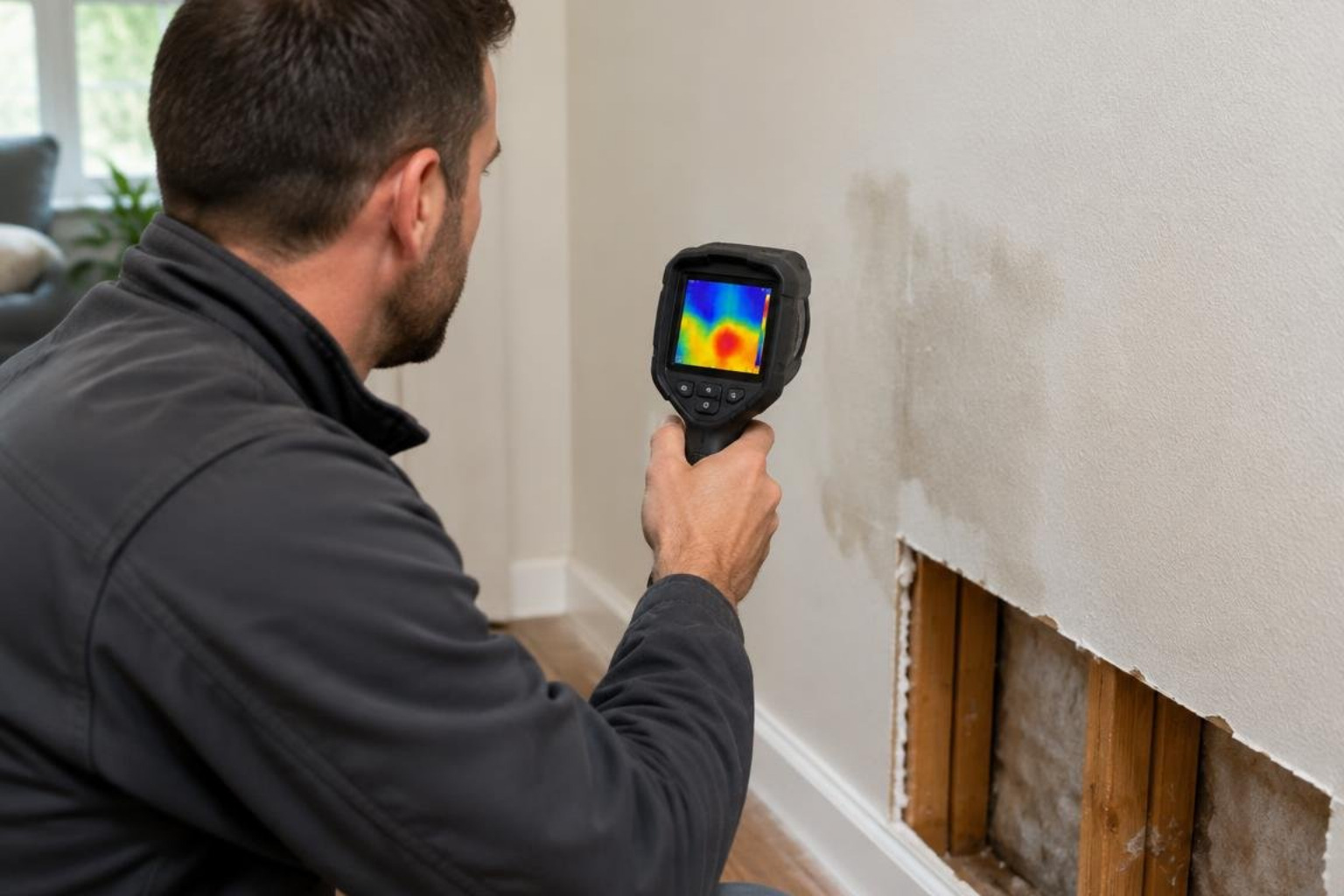
Locating the exact entry point of wind-driven water requires specialized diagnostic tools. Because water can enter at a high ridge vent and travel along rafters before dripping down an interior wall thirty feet away, visual inspection alone is often insufficient.
Trained professionals employ non-invasive diagnostic equipment, including:
- Infrared Thermal Imaging: Detects subtle temperature variations across ceilings and walls to map hidden moisture paths behind finished drywall.
- Calibrated Moisture Meters: Measures electrical resistance or capacitance in wood framing and drywall to determine whether materials are safely dry or actively saturated.
- Borescope Cameras: Allows inspectors to examine concealed wall cavities and attic spaces through minimal openings without major demolition.
- Water Intrusion Assessments: Uses systematic inspection methods following a storm damage roof assessment to verify whether penetrations or post-solar roof installations contributed to water entry.
Frequently Asked Questions about Wind-Driven Rain
Why does my ceiling only leak during windy storms and not regular rain?
Standard downpours rely on gravity to move water down your roof’s slope. During severe wind events, high velocity pushes rain horizontally and upward, forcing water beneath shingle laps, behind wall flashings, and into unbaffled attic vents that are completely sheltered during calm weather.
Does homeowners insurance cover interior water damage from wind-driven rain?
Coverage generally depends on whether wind forces created a distinct physical opening in the roof or exterior walls. If water enters through sudden exterior storm damage, repairs are often covered subject to your deductible. If water enters through unsealed gaps, deteriorated caulking, or deferred maintenance, carriers may exclude interior repairs.
How do I stop wind-driven rain from entering through my soffits and vents?
Upgrading to hurricane-rated soffit systems with secure structural fastening prevents panels from blowing out or flexing under pressure. For roof ventilation, replacing standard off-ridge vents with baffled, wind-resistant models prevents horizontal rain from entering the attic space while maintaining proper airflow.
Fortifying Your Home Against Coastal Storms
Building envelope resilience requires preparing your home before severe weather develops. Because coastal storms generate intense dynamic wind pressures, regular preventative maintenance on flashings, roof penetrations, and underlayments provides essential protection against costly structural and interior water damage.
Whether your home has experienced an active storm leak or you want to evaluate your roof’s readiness for hurricane season, professional guidance ensures your property remains protected. Property owners in Brevard County, FL can consult with the experienced team at MLG Roofing to inspect critical envelope details or access professional roof repair services tailored to local coastal conditions, ensuring long-term peace of mind.